
Arturia AudioFuse X8 IN / OUT — eight-channel ADAT converters for the studio
Maxim Liadov
French manufacturer Arturia continues to expand its range. In 2024 it introduced the AudioFuse X8 IN and AudioFuse X8 OUT ADAT converters, providing eight inputs and eight outputs respectively. The official video offers a clear introduction to the Arturia AudioFuse X8 IN / OUT:
As usual, our review goes beyond the information available from official sources.
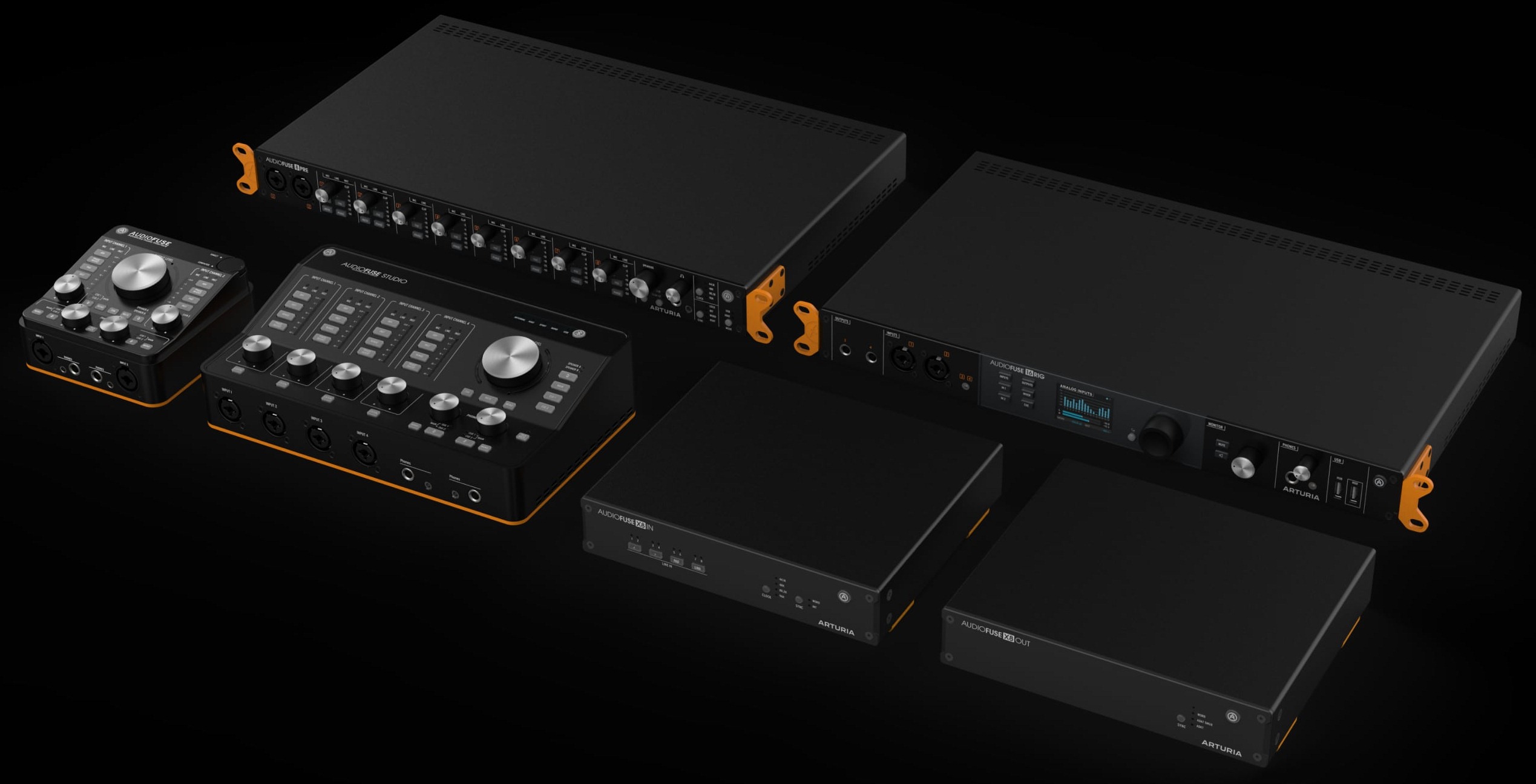
The complete AudioFuse interface range now looks considerably more appealing: even the entry-level model can gain extra channels easily and inexpensively through its ADAT ports. You can find reviews of every Arturia interface right here on our website.
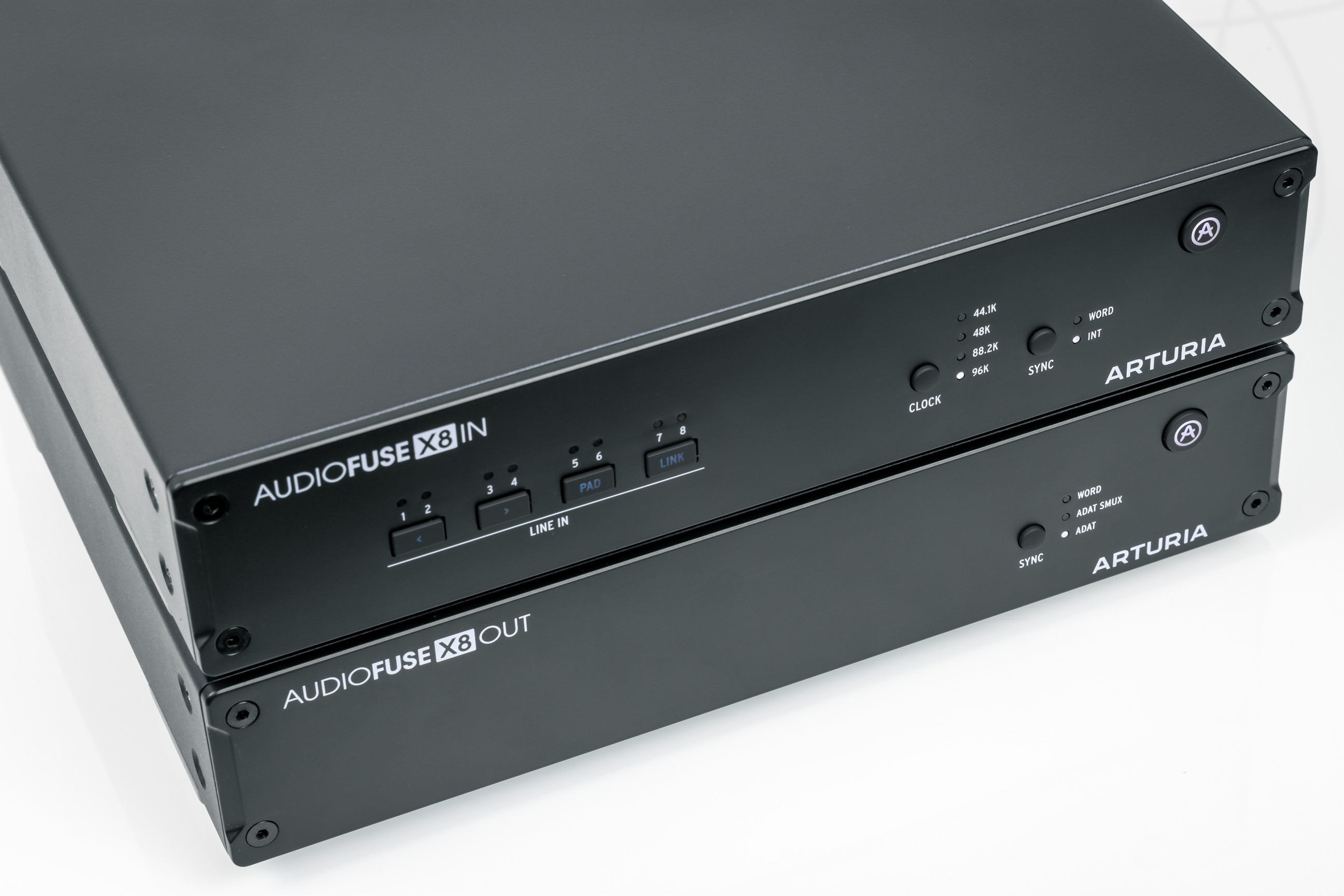
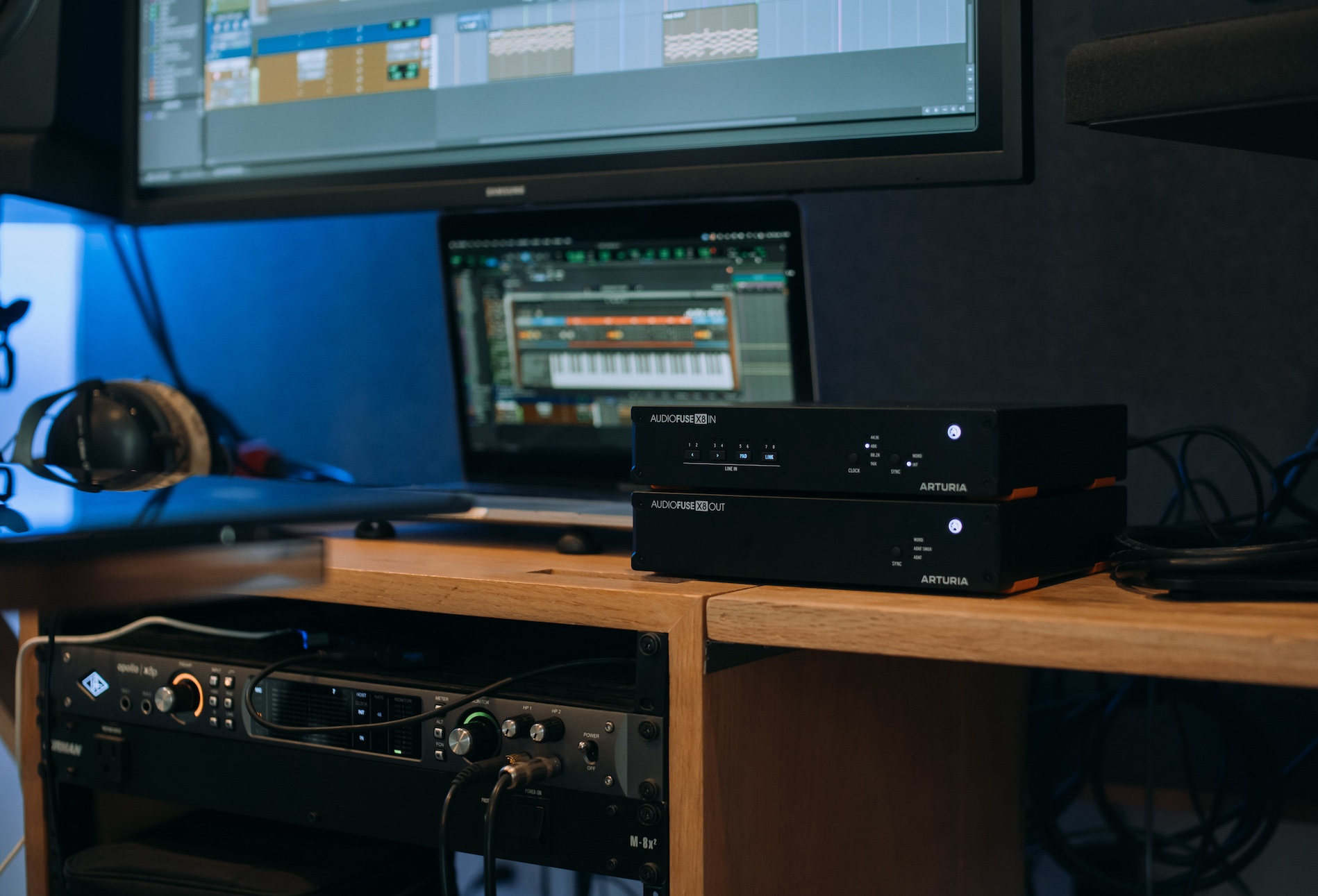
These new converters are interesting both for their modular division into the input-only X8 IN and output-only X8 OUT, and for the ability to combine any two units into a single 1U rack assembly. All necessary mounting hardware is included and secured to the underside of the enclosure, so it is unlikely to go missing. If you do not need rack mounting, four rubber feet protect the surface underneath.

The converters can connect to any ADAT-compatible recording interface, from Arturia or another manufacturer. One reason to choose the Arturia AudioFuse X8 IN / OUT is their high-quality circuitry, built around modern AKM and ESS converters. Comparable competing products have often gone years without an update and still use much older electronics. Arturia also gives owners of other interfaces an incentive with the bundled AudioFuse Creative Suite software.
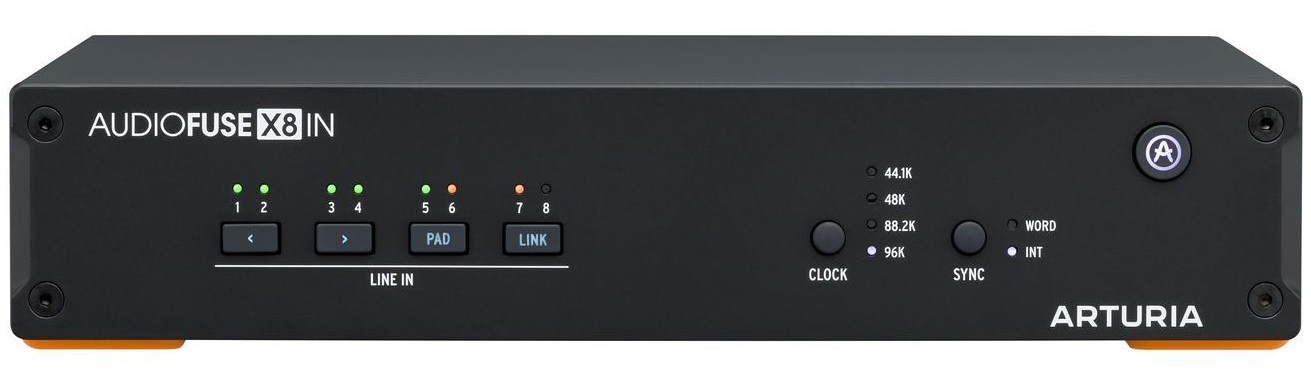
The LED colours indicate approximate signal levels. An unlit LED means a level below -60 dB; green indicates below -6 dB, orange below 0 dB, and red 0 dB or higher. The PAD button applies 12 dB of attenuation to the input selected with the arrow buttons. LINK groups inputs into pairs.
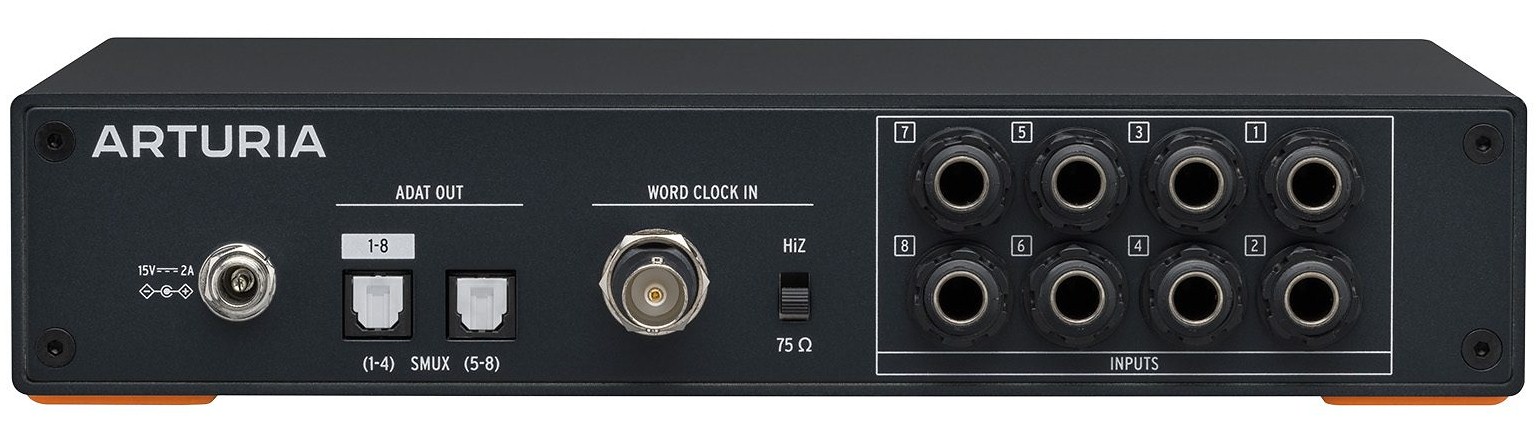
A useful feature is support for SMUX as well as standard ADAT. This allows operation at 88 or 96 kHz using two optical cables to carry all eight channels at the highest supported sample rates. There are no special cable requirements; ordinary Toslink cables work.
The Arturia AudioFuse X8 IN offers specifications at least as good as the flagship AudioFuse 16Rig: 119 dB dynamic range, -112 dB distortion and a maximum signal level of +24 dBu. The TRS connections are, of course, balanced.
The Arturia AudioFuse X8 OUT likewise matches the specifications of the AudioFuse 16Rig's line outputs: 120.5 dB dynamic range, -105 dB distortion and a maximum level of +24 dBu. Both balanced and unbalanced connections are supported.
You might ask what is remarkable about that. Surely they simply borrowed the circuitry from the more expensive model? Interestingly, the internal electronics are actually different.
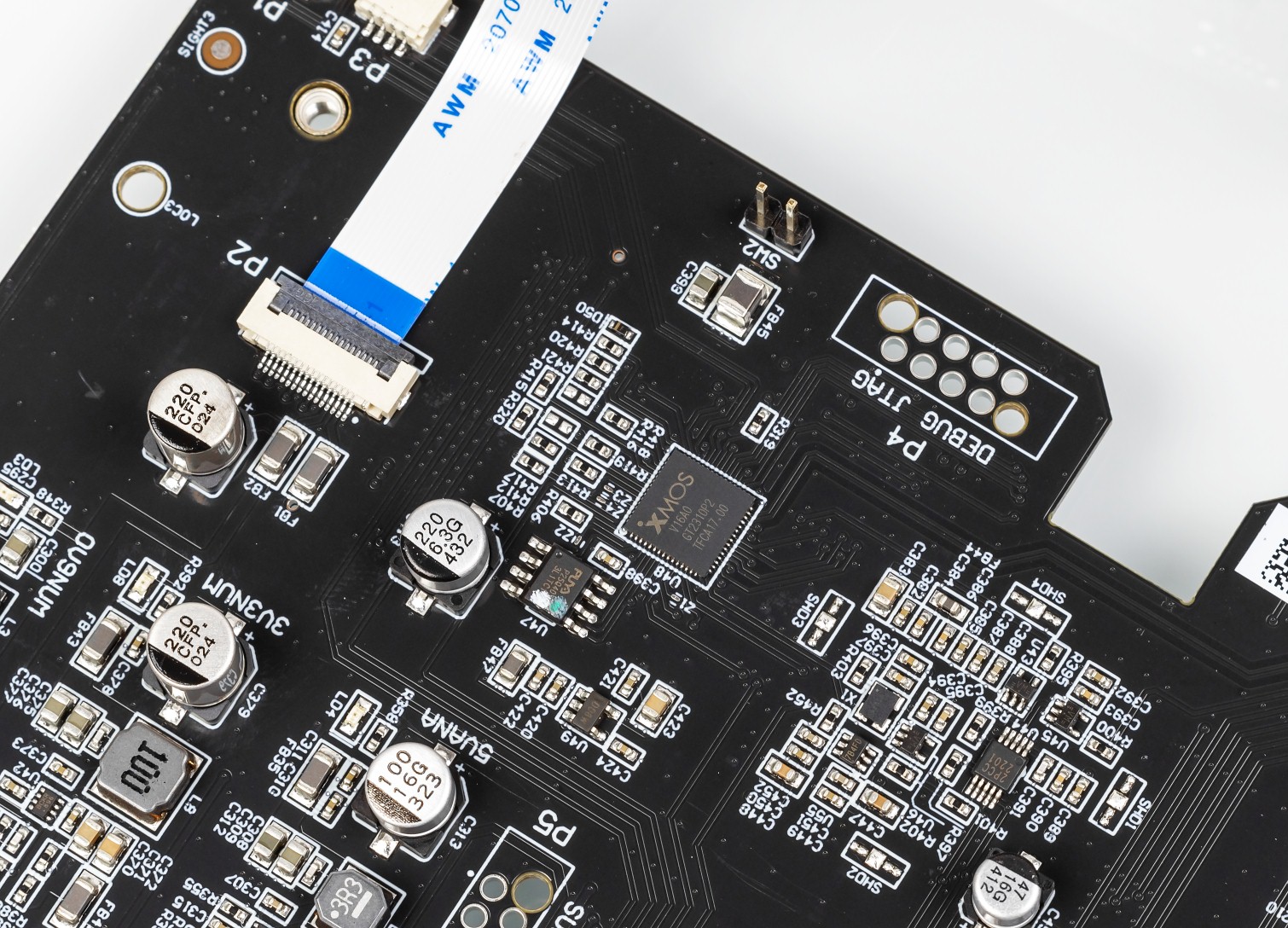
The XMOS XU316 processor normally handles USB connectivity, but it can also work with ADAT. Most unusually, the boards even have a USB-C connector that is not accessible from outside the enclosure. It is probably used solely for production-line testing, which would be less convenient over ADAT.
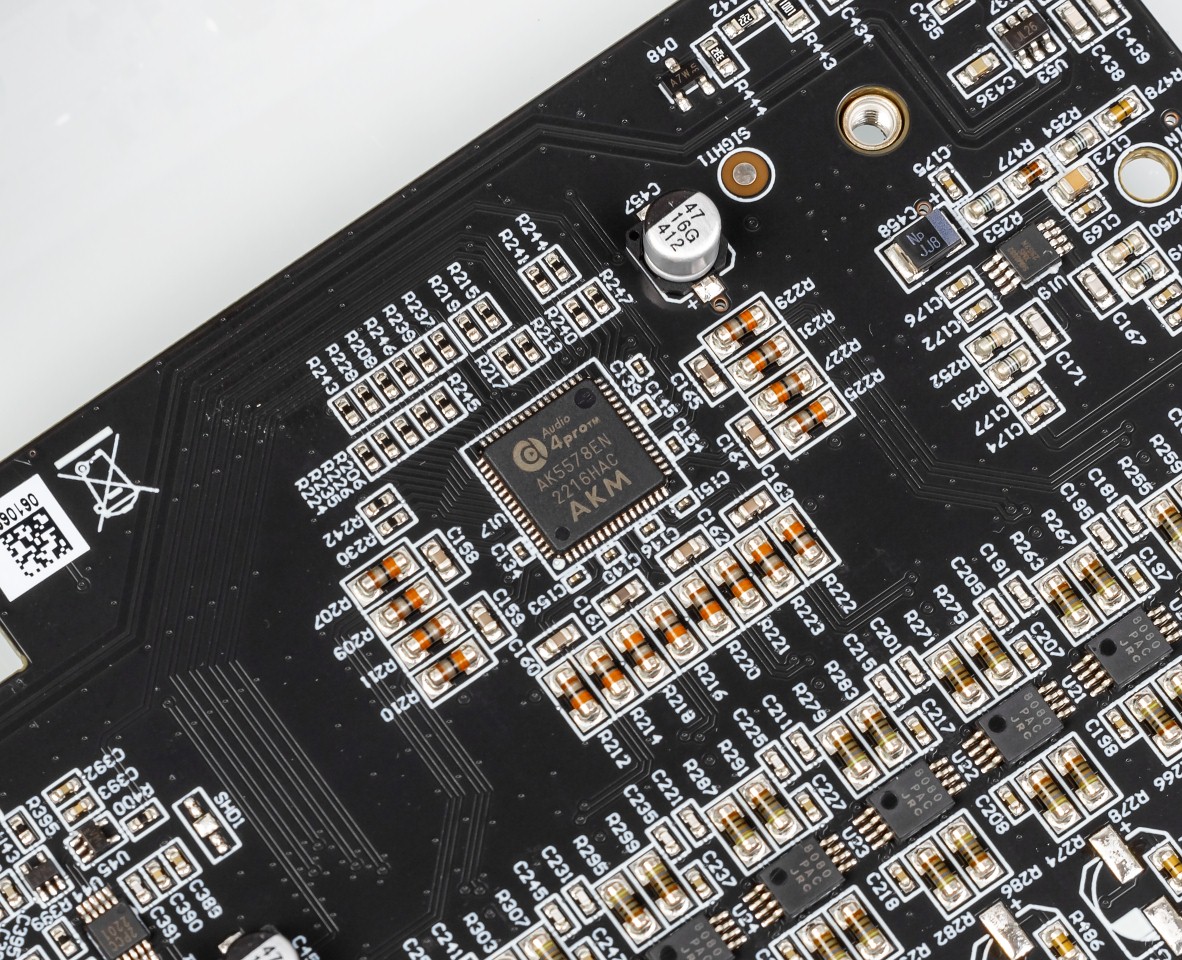
Analogue-to-digital conversion uses a familiar eight-channel chip, the AKM AK5578, which we have seen, for example, in the Arturia AudioFuse Studio. Its dynamic range is 121 dBA and THD+N is -112 dB.
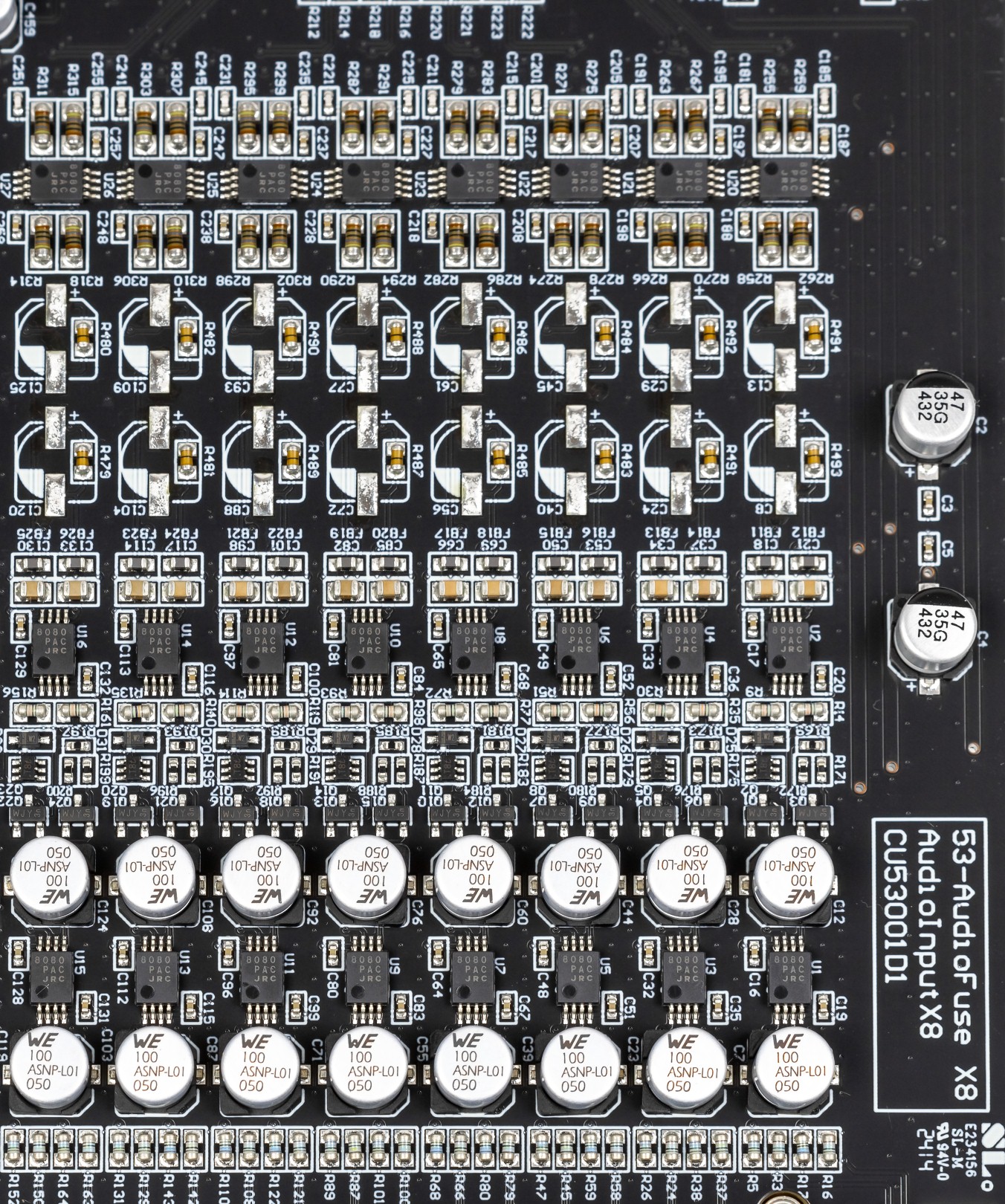
All op-amps on the ADC board are JRC8080 devices. High-quality resistors and capacitors are visible alongside them.
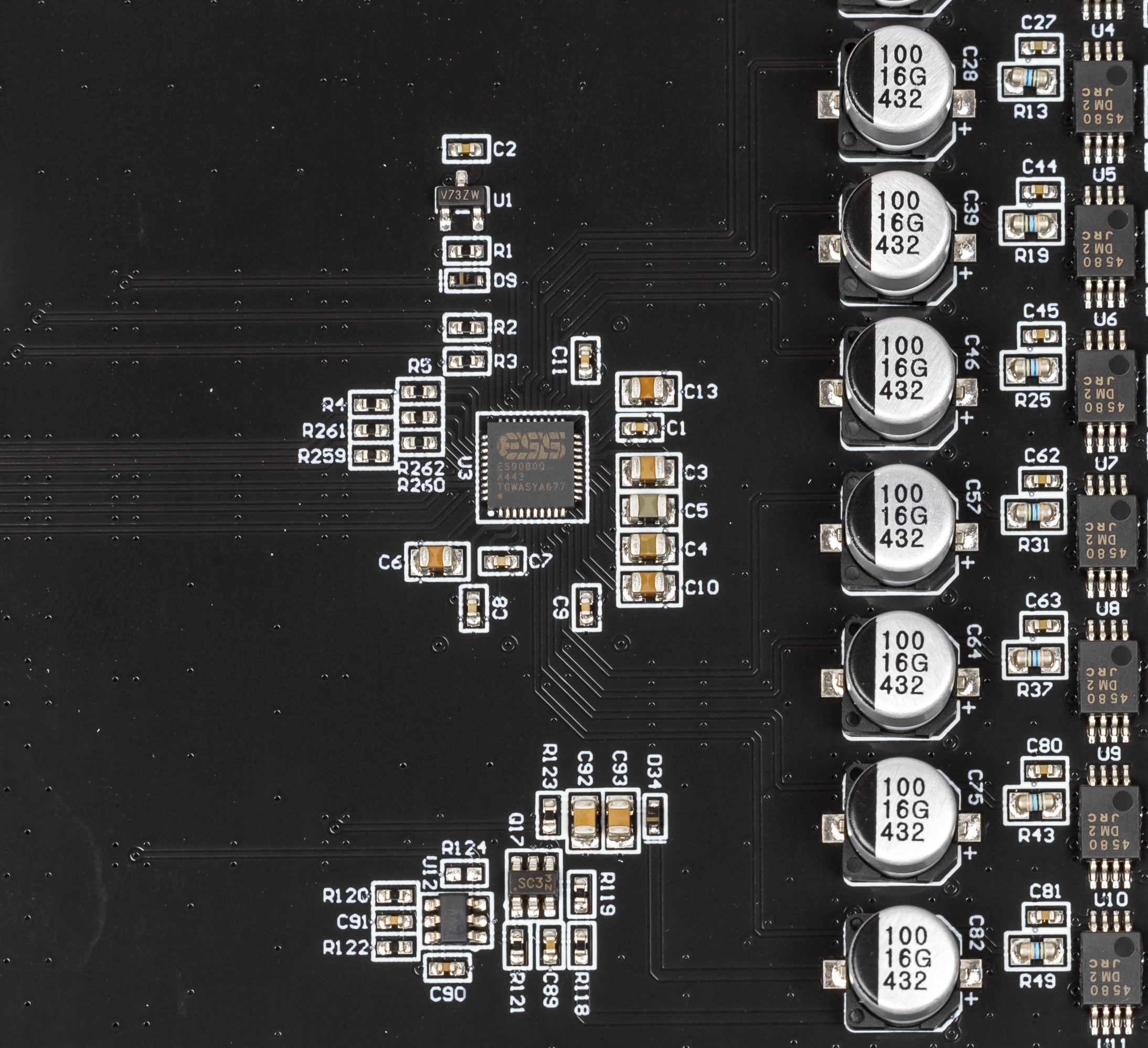
The AudioFuse X8 OUT, on the other hand, follows the circuit design of the flagship Arturia AudioFuse 16Rig. The line outputs use the eight-channel ESS ES9080, rated at 120 dBA dynamic range and -108 dB THD+N, with JRC4580 op-amps.
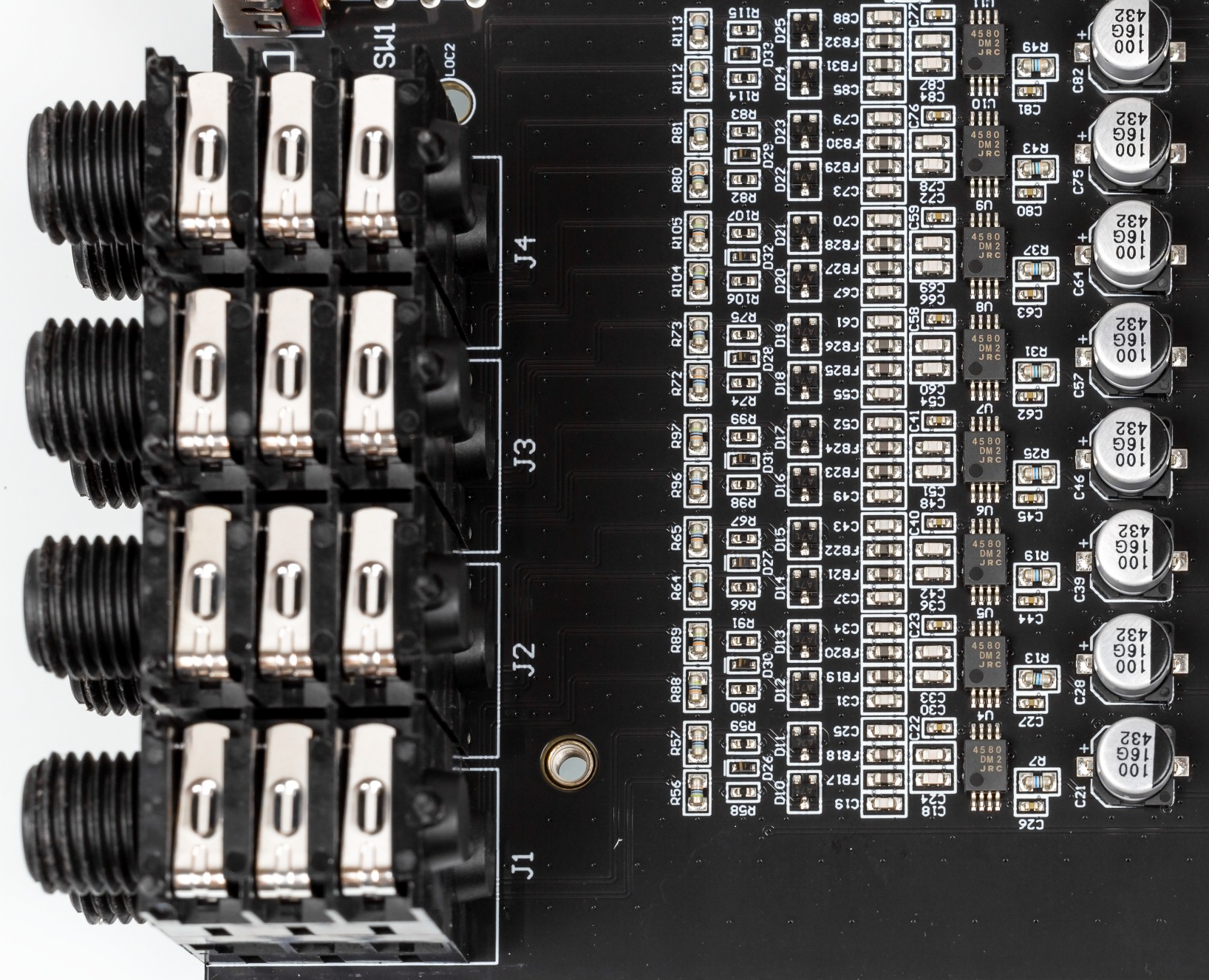
The manufacturer deserves credit for getting the finished products close to the ADC and DAC chips' published specifications. The figures suggest that the design makes good use of their capabilities.
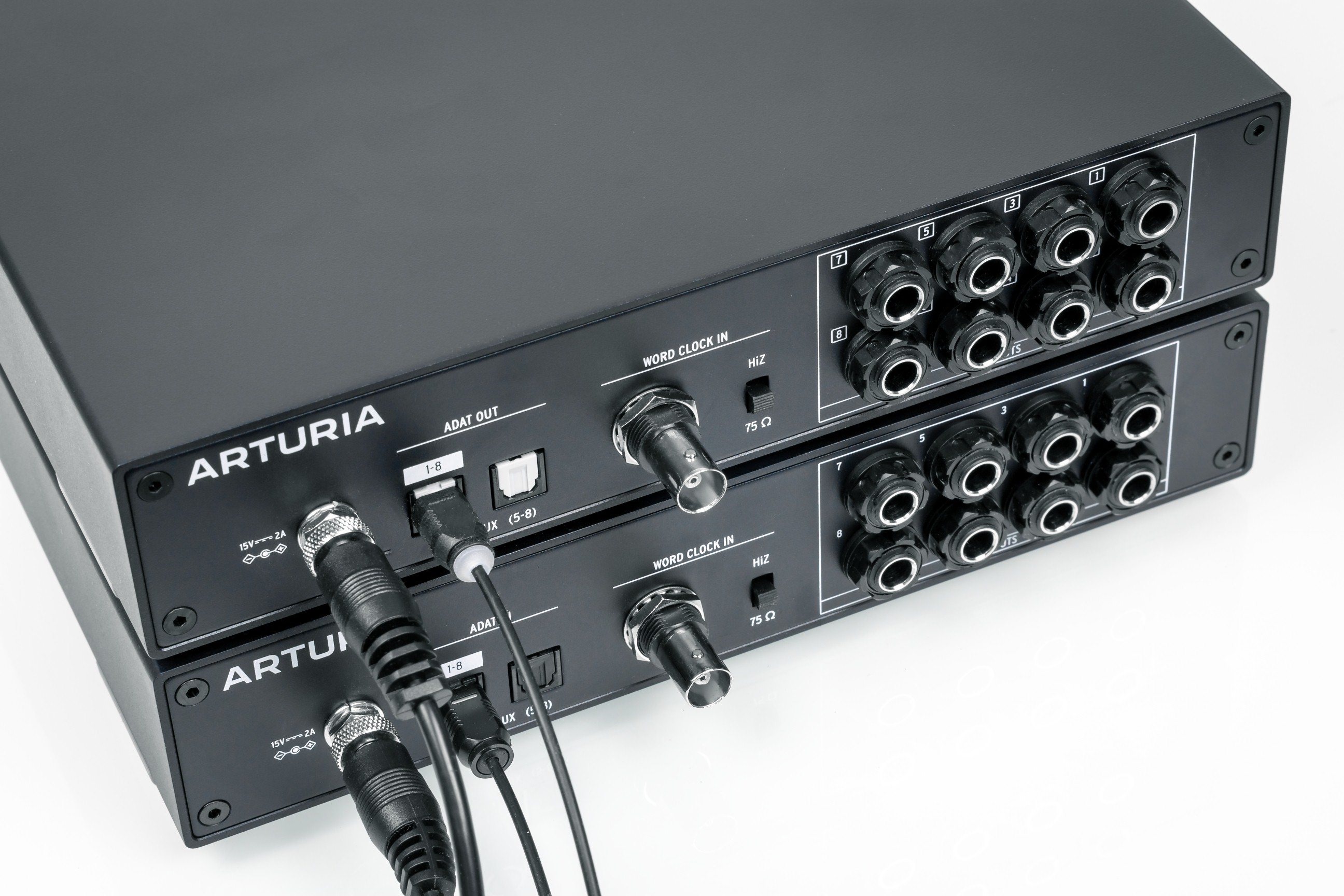
We connected the units under test via ADAT to the flagship Arturia AudioFuse 16Rig. Everything worked immediately, with no pitfalls that we could identify. We used ordinary inexpensive Toslink cables.
RMAA testing
We connected a balanced output to a balanced input and measured the following:
| Device under test | [ASIO] AudioFuse ASIO Driver |
| Operating mode | 24-bit, 44 kHz |
| Audio interface | ASIO |
| Signal path | Loopback |
| RMAA version | 6.4.5 PRO |
| 20 Hz–20 kHz filter | ON |
| Signal normalisation | ON |
| Level change | -0.2 dB / -0.2 dB |
| MONO mode | OFF |
| Calibration signal frequency, Hz | 1000 |
| Polarity | correct/correct |
| Frequency response (40 Hz–15 kHz), dB | +0.01, -0.11 |
Excellent |
| Noise level, dB(A) | -118.0 |
Excellent |
| Dynamic range, dB(A) | 118.1 |
Excellent |
| Total harmonic distortion, % | 0.00022 |
Excellent |
| Total harmonic distortion + noise, dB(A) | -98.4 |
Excellent |
| Intermodulation distortion + noise, % | 0.00265 |
Excellent |
| Stereo crosstalk, dB | -116.2 |
Excellent |
| Intermodulation at 10 kHz, % | 0.00203 |
Excellent |
| Overall assessment | Excellent |
Detailed input measurements at 24-bit/44 kHz in the RMAA report
The results are excellent across the board and fully substantiate the high specifications quoted by the manufacturer.
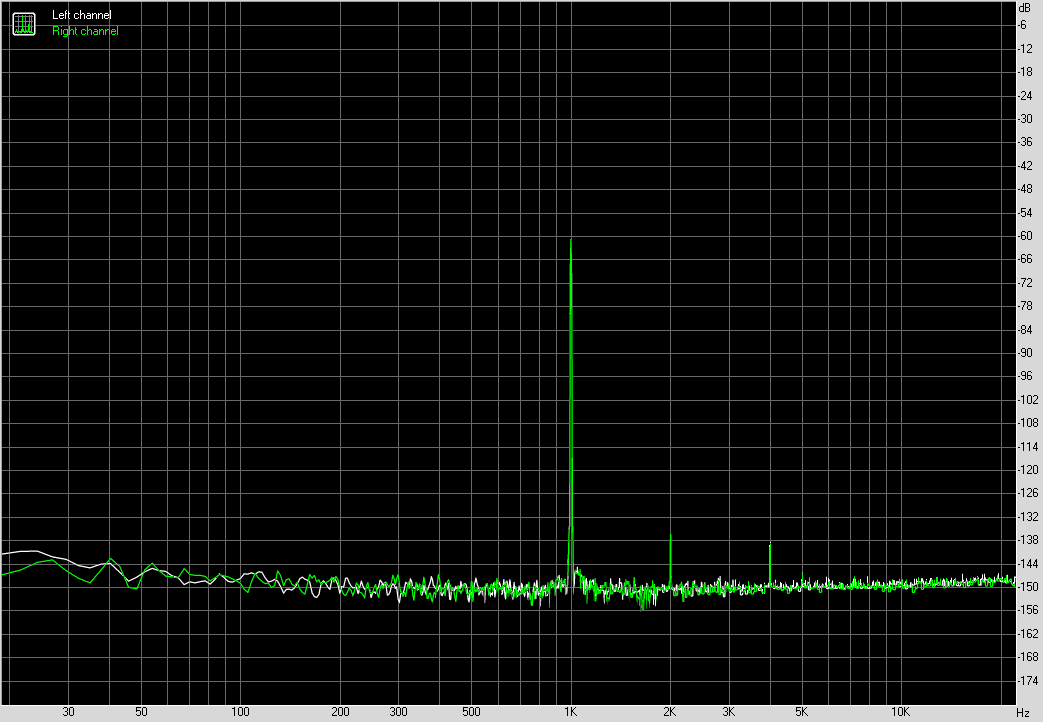
There is no interference visible in the spectrum. All parameters are very good considering the modest price of these units.
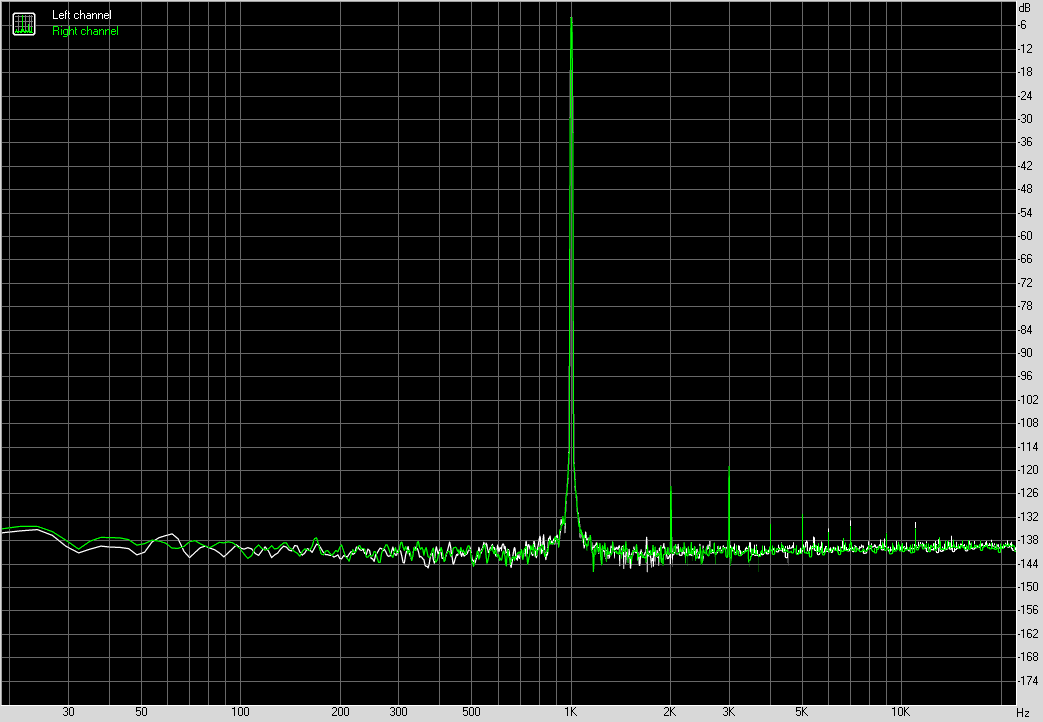
Distortion figures are also very low. The second and third harmonics make the main contribution to THD, a favourable distortion profile for audio.
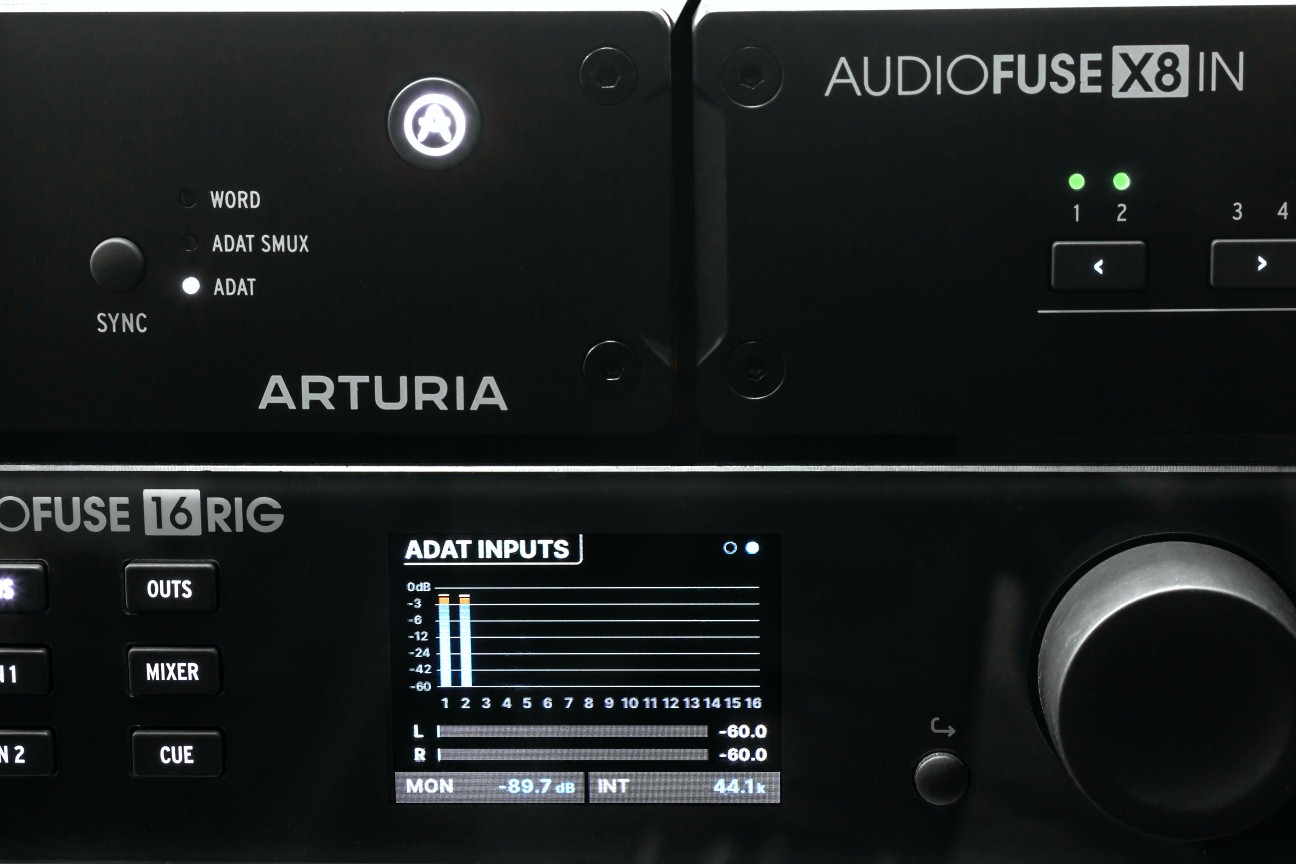
In a direct comparison, subjective sound quality was entirely on a par with the Arturia AudioFuse 16Rig . Recorded timbres sound natural, and we encountered no operational problems. The input peak meters provide a useful indication of signal level, while PAD is helpful when recording loud sources.
Conclusions
Our tests showed that the Arturia AudioFuse X8 IN and AudioFuse X8 OUT offer excellent internal components and performance matching the flagship Arturia AudioFuse 16Rig. At a very affordable price, owners of any ADAT-equipped audio interface, even the entry-level AudioFuse, can quickly add channels while retaining top-quality sound. SMUX support provides eight additional recording or playback channels at sample rates up to 96 kHz. Word clock synchronisation extends their usefulness to larger commercial recording studios. The Arturia ADAT units look good on a desktop and are easy to install in a rack. AudioFuse Creative Suite comes with every AudioFuse interface, but may be particularly useful to owners of other brands.


We would welcome further development of Arturia's ADAT range. For example, a pair of combination mic/line inputs would be useful alongside the line inputs, while a pair of headphone outputs on the output model could provide backing tracks for musicians during recording.
Note. This is an adapted machine translation into English. It follows the “In simple terms” approach. Read the original article at https://prosound.ixbt.com/interfaces/arturia-audiofuse-x8.shtml.