
Focal Solo6 ST6 — two-way active monitors with a 6.5" woofer
The Focal Solo6 ST6 active monitors are especially interesting to us. We have already tested the earlier Solo6 Be and know it very well. We were pleased to find that the updated Solo6 ST6 is a full redesign. The changes go well beyond its appearance. The French manufacturer offers significant design improvements, new technologies and more features.
The table below shows the main differences:
| Feature | Focal Solo6 Be (previous version) | Focal Solo6 ST6 (new version) |
|---|---|---|
| Power-saving mode | No | Yes (can be disabled) |
| Focus mode | No | Yes (footswitch-operated) |
| TMD surround technology | No | Yes (reduces midrange distortion by half) |
| Tweeter waveguide | Standard mounting flange | Improved asymmetric design |
| 160 Hz EQ | No | Yes (to reduce the effect of desk reflections) |
| Low-cut filter | No | Yes (45/60/90 Hz cutoff) |
| Cabinet panel thickness | Standard | Increased (22 mm) |
| Weight (per monitor) | 11.0 kg | 13.0 kg |
As the table shows, the Solo6 ST6 is clearly different from the Solo6 Be and is a real step forward in studio monitor design.
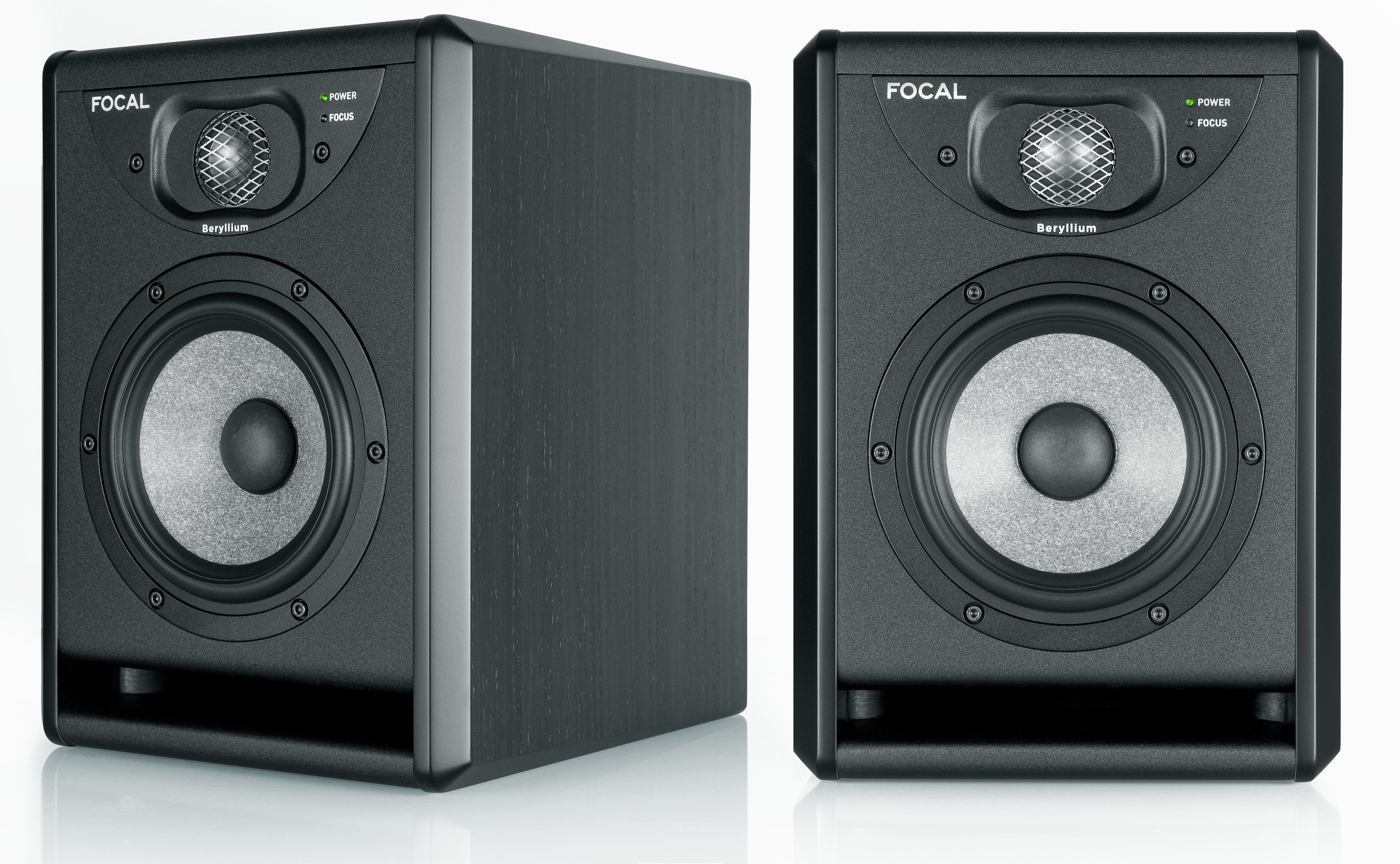
Before we look at the new features, let us explain the technology behind them.
Focal is one of the few brands that designs and makes its own drivers. Focal does not buy drivers from other factories. A separate division, Focal Professional, develops its active professional speakers and focuses on sound quality. The French engineers have followed the same idea for many years. They want neutral, uncoloured sound for the studio and an emotional connection with music at home. These two goals can work together. Music made in a studio will later be played at home, including on expensive audiophile systems. It should still connect with the listener. In 2026, a flat frequency response alone is not enough for a studio monitor. We also need clear, detailed sound that matches the most expensive audiophile equipment. This requires advanced technology. A well-known brand name alone cannot provide it.
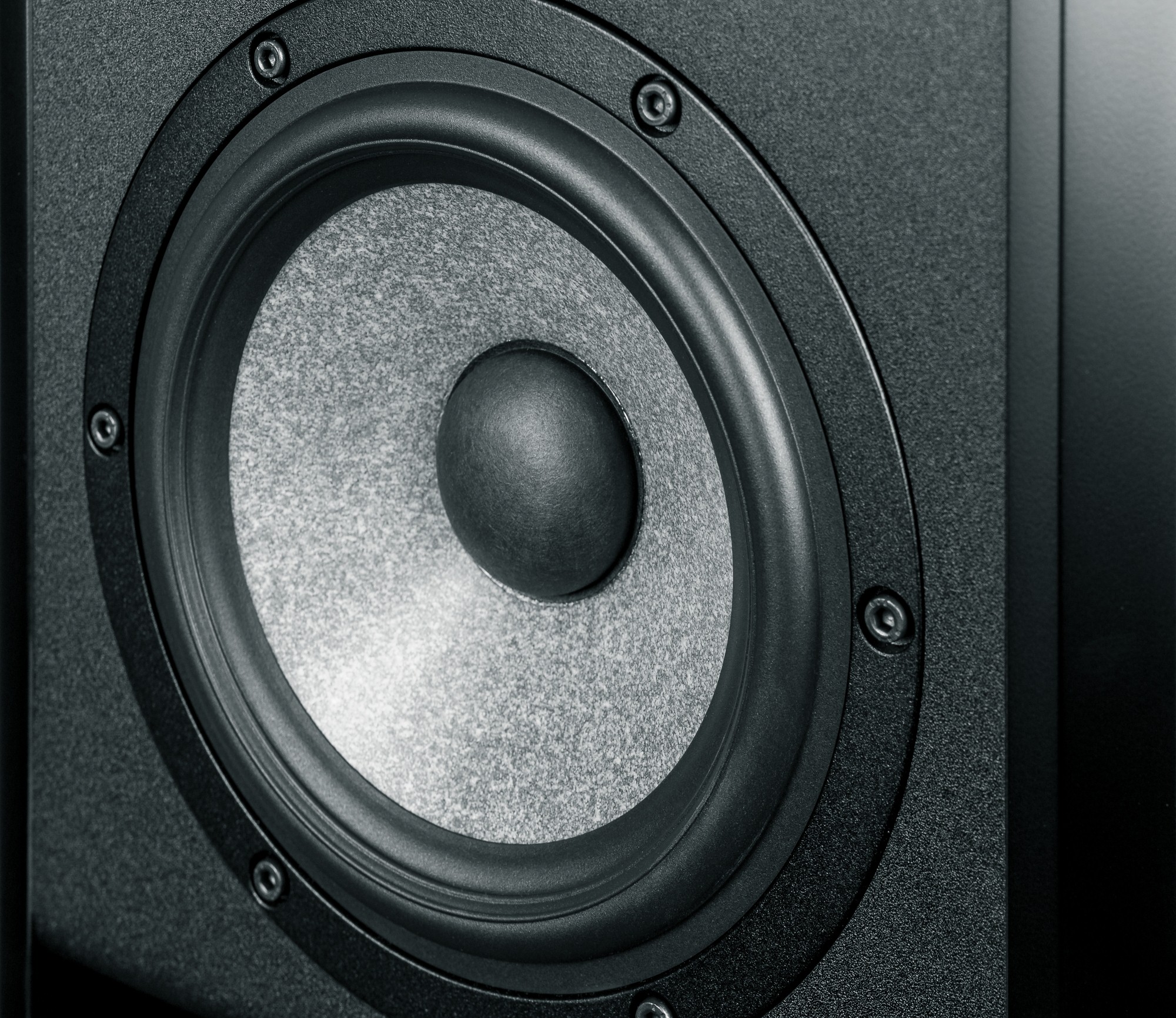
The W-cone technology is a key part of Focal's design. The 'W' stands for Verre-Verre, which means glass-glass in French. The cone is a multilayer sandwich. The cone has fibreglass on both sides and a layer of polymethacrylimide foam in the middle. This is Rohacell foam, also used in aerospace products. The material is stronger than Kevlar and lighter than paper. It also adds no sound coloration of its own. Focal can adjust the material for different uses. The stiffness and weight are chosen for each driver and its frequency range. A bass woofer uses thicker foam and several layers of fibreglass. A midrange driver uses very thin foam and one thin layer of fibreglass. This helps it respond quickly and reproduce fine detail. Standard polypropylene cones are cheap and made by automated machines in very large numbers. W-cones, however, are made entirely by hand at Focal's factory in Saint-Étienne, France. Focal uses them only in its top domestic speakers, such as Utopia and Sopra, and professional monitors, including SM9, ST6 and Trio. How does this affect the sound? The cone keeps its shape even at high volumes and frequencies. Sound therefore reaches the listener at the same time from the whole cone surface. The fast response helps preserve fine detail and clear sound in the upper midrange. Our hearing is particularly sensitive in this range. The ST6 also uses a new surround design called TMD, or Tuned Mass Damper. Special damping features on the woofer surround reduce intermodulation distortion by half in this important range.
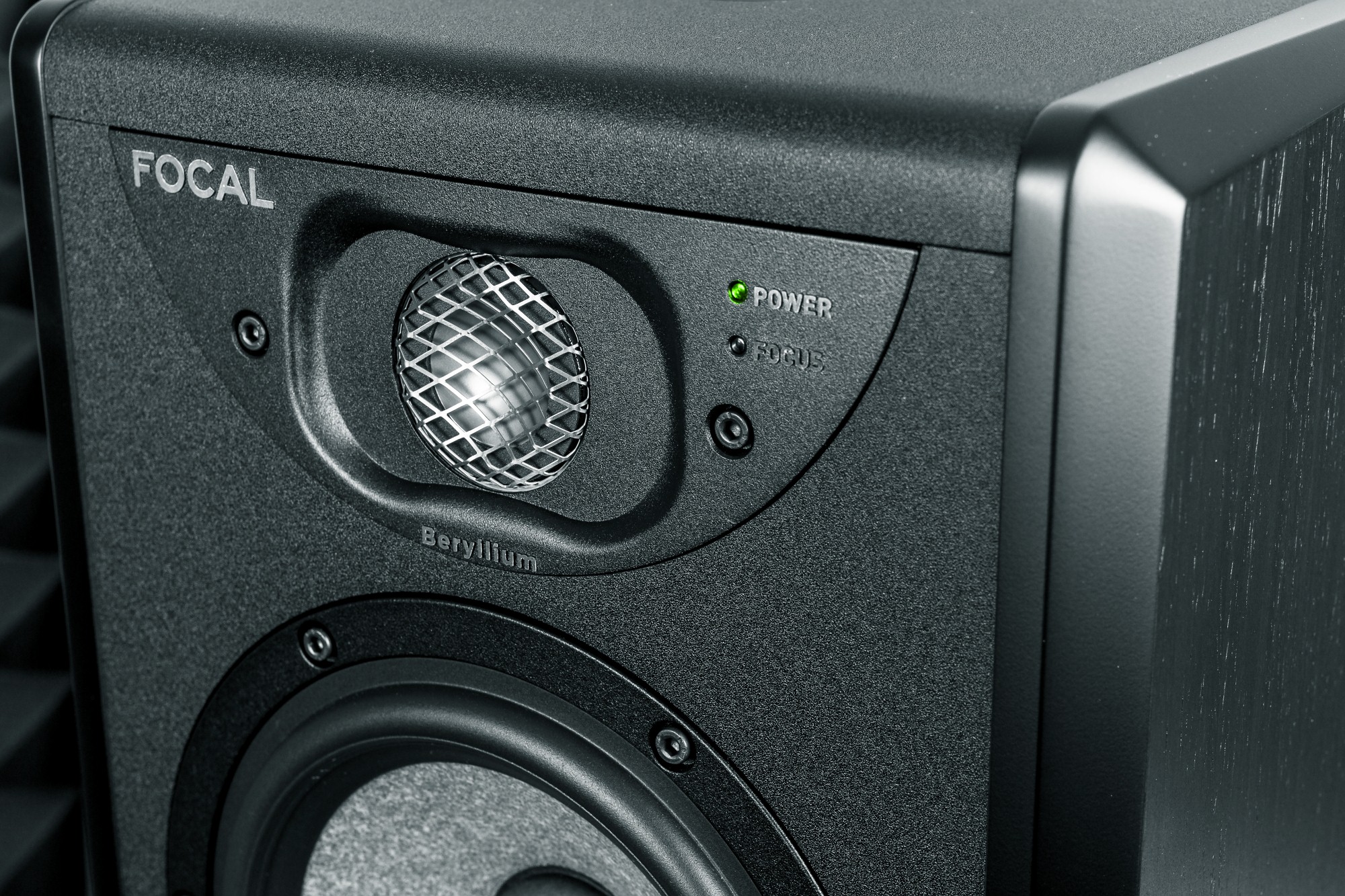
The inverted beryllium dome with an M-shaped profile is also Focal's own design. Why did the engineers choose this unusual material? Why not use an aluminium-magnesium alloy, as in the entry-level models? At the same weight, beryllium is seven times stiffer than aluminium or titanium. Beryllium is also the only metal that can scratch glass. The tweeter covers a very wide range, from 1,000 Hz to 40,000 Hz. The 'M' describes the new shape of the diaphragm's cross-section. Focal first used it in the premium Utopia M series. This diaphragm design later appeared in ST6 studio monitors and higher-end hi-fi products. The older Be model used a one-inch tweeter. The new model has a larger 1.5-inch beryllium tweeter and a lower crossover frequency. These changes have a major effect on the Solo6 ST6's performance. The tweeter now handles the whole 1–3 kHz range without help from the woofer. This is an important range for our hearing. It includes vocal formants and the attack of guitars and snare drums. The heavier 6.5-inch cone no longer has to make very small, fast movements to reproduce the upper midrange. This improves the already high level of detail. The ST6 also has an M-shaped protective grille and an asymmetric waveguide. The waveguide improves sound dispersion and gives the listener a wider sweet spot.
The ST6 cabinet is stronger. It uses thicker 22 mm medium-density fibreboard (MDF) panels and new internal bracing. These changes reduce unwanted cabinet resonances at high volumes. They also increase the weight of each monitor from 11 kg for the Be version to 13 kg.
The ST6 has angled sides. The top and bottom edges of the front baffle are rounded to reduce diffraction. The slot-shaped bass-reflex port also has a new shape with rounded edges. These changes promote laminar airflow through the port. The smoother airflow removes unwanted port noise and gives better-controlled bass.
Focal Solo6 ST6 specifications
| Parameter | Specification / value |
|---|---|
| System type | Active two-way studio monitor |
| Maximum sound pressure level (SPL) | 110 dB peak at 1 m |
| Frequency response | 45 Hz–40 kHz (-3 dB) |
| Low-frequency extension | 40 Hz (-6 dB) |
| Frequency response (Focus mode) | 110 Hz–10 kHz (single-driver operation without the tweeter) |
| LF/MF driver | 6.5 inches (16.5 cm), W-cone sandwich composite, TMD surround |
| HF driver | 1.5 inches (38 mm), inverted beryllium dome with an M-shaped profile |
| Input connectors | XLR (balanced, 10 kΩ impedance) |
| Input sensitivity | Switchable: +4 dBu or -10 dBV |
| LF/MF amplifier | 80 W RMS, BASH technology |
| HF amplifier | 50 W RMS, Class AB |
| Built-in equaliser (EQ) | • LF shelf: ±3 dB (below 250 Hz) • HF shelf: ±3 dB (above 4.5 kHz) • LMF EQ: ±3 dB (at 160 Hz, Q=1) |
| High-pass filter | Switchable: full range / 45 Hz / 60 Hz / 90 Hz (12 dB/octave) |
| Focus mode control | 6.3 mm TS input and output for a standard footswitch |
| Cabinet construction | 22 mm (7/8-inch) MDF panels with internal bracing |
| Acoustic loading | Bass reflex with a front-mounted laminar port |
| Indicators and protection | LED indicator (power / clipping / thermal protection) |
| Power consumption | Standby: <0.5 W |
| Dimensions (H × W × D) | 33.4 × 24.6 × 29.5 cm |
| Weight (per speaker) | 13 kg |
| Country of manufacture | France (Saint-Étienne) |
The BASH name stands for Bridged Amplifier Switching Hybrid. This bridged hybrid amplifier combines the sound quality of traditional Class AB with the energy efficiency of Class D. A normal transformer supplies a fixed high voltage. The amplifier then turns unused energy into heat and releases it through heatsinks. BASH instead uses a power supply that provides a lower voltage when less power is needed. The power supply uses pulse-width modulation, with the music signal controlling its operation. This gives 95% efficiency, reduces unwanted heat and makes the amplifier smaller and lighter. The Solo6 ST6 therefore stays only slightly warm, even after many hours of hard use.
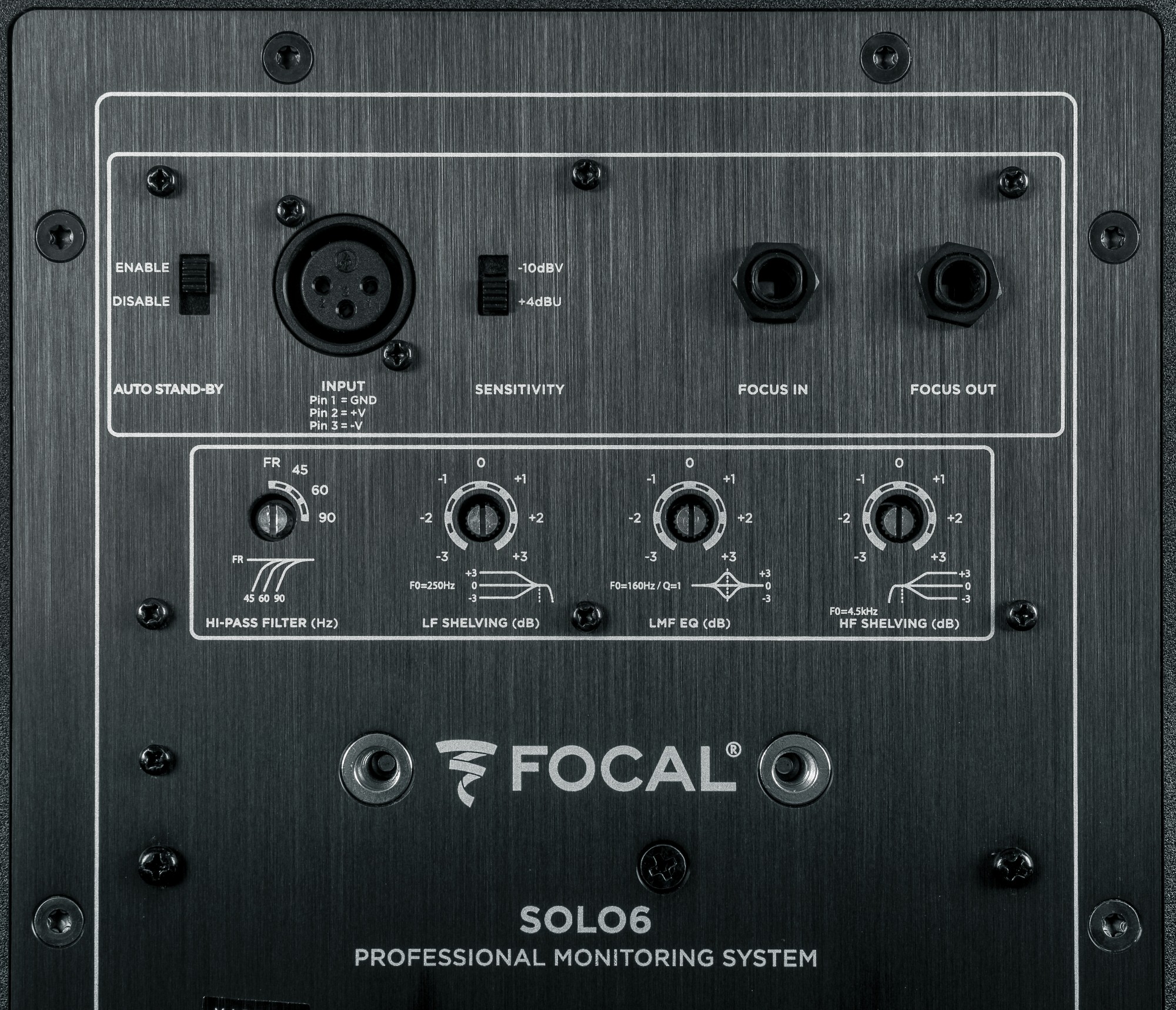
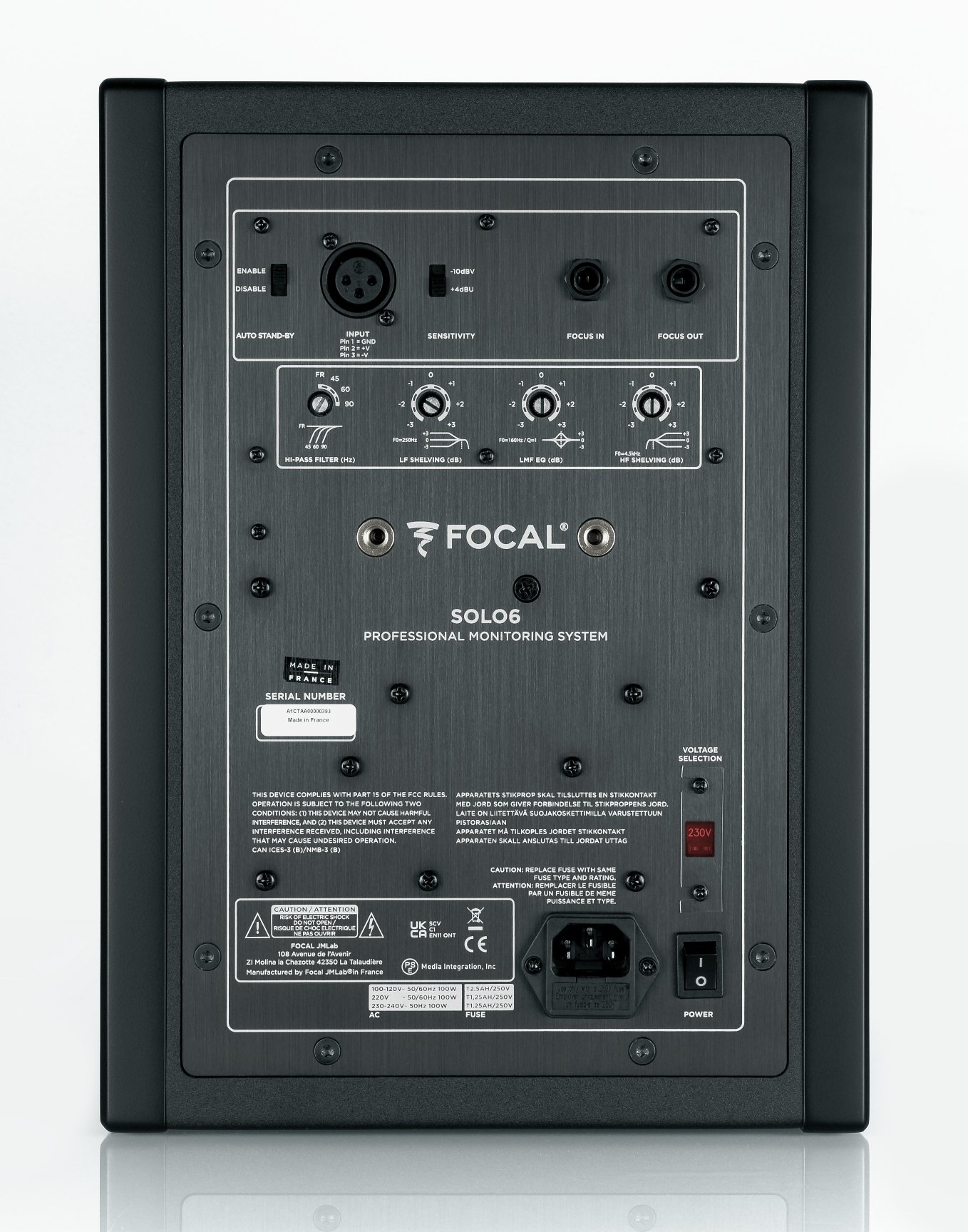
The Solo6 Be had relatively few controls. It did include high- and low-frequency shelving adjustments. The Solo6 ST6 offers many more options. It adds a low-cut filter to help match the monitors with a subwoofer. There is also an LMF parametric equaliser at 160 Hz with ±3 dB of adjustment. This is very useful when the monitors stand on a desk or console. Reflections from these surfaces can increase the lower-midrange level, and the EQ helps correct this.
Focus Mode changes the monitor from a two-way speaker into a single-driver speaker. Only the LF/MF driver works in this mode. The frequency range is limited to 110 Hz–10 kHz. It can fully replace small cube monitors such as the Avantone MixCubes, which use a 5.25-inch full-range driver. Studios often use these speakers to check midrange balance and hear how a mix will sound on consumer devices.
Measurements
Our measurements use the RightMark™ Audio Analyzer PROhardware and software measurement system. Our measurement microphone is the Earthworks M50.
We took the measurements in an acoustically treated room. The microphone was 50 cm from the speaker.
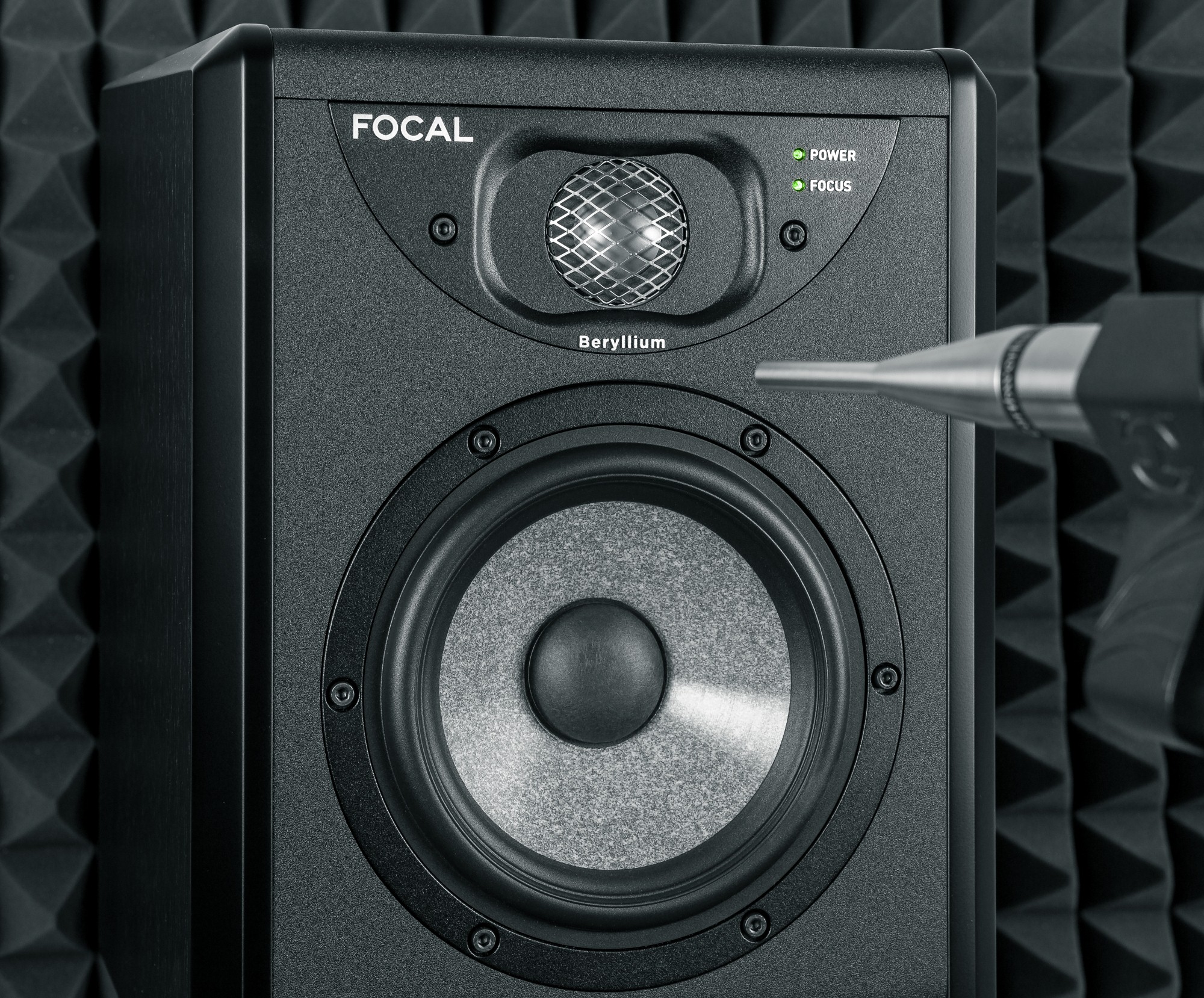
Our measurements offer something that many frequency-response plots online do not. We use an expensive ($2,000) measurement microphone with a completely flat response up to 50 kHz. This allows us to check Focal's claim that the beryllium tweeter reaches 40 kHz.
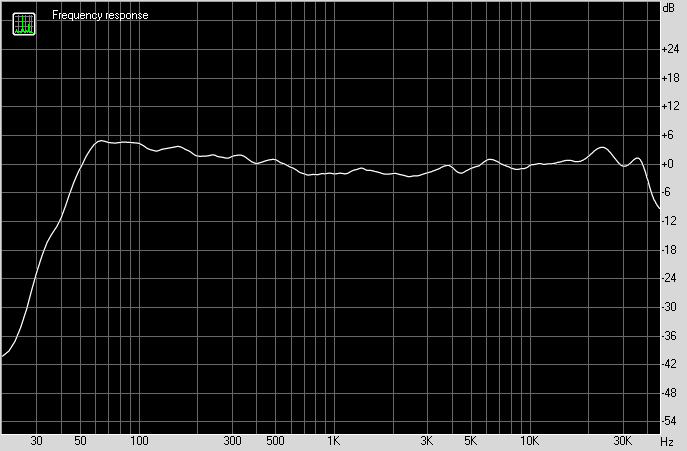
Frequency response in full-range monitoring mode
The flat frequency response is very impressive. This is especially true because the monitors use analogue Class AB power amplification and no digital correction. Modern low-cost monitors with digital signal processing (DSP) can use almost any drivers. Their response can then be corrected digitally. But this does not improve the quality of the driver itself. A $2 chip inside the monitor cannot add detail to the sound. Our measurements fully confirm the claimed lower limit of 45 Hz at -6 dB. In our view, there is little reason to seek the deepest possible bass from a 6.5-inch driver. This should not be the main factor when choosing speakers. If you need accurate bass monitoring, rather than just high sound pressure, you need multiway midfield or main monitors.
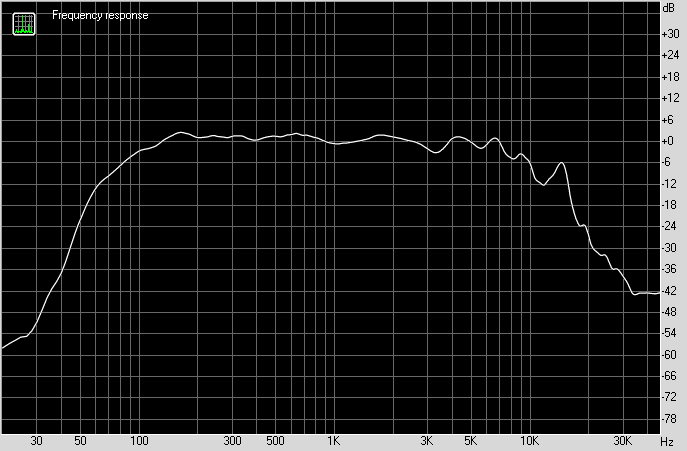
Frequency response in single-driver Focus mode
Focus mode shows that the woofer can reproduce the whole midrange and much of the high-frequency range on its own. Our measurements confirm the specified 110 Hz–10 kHz range. This mode helps you find problems in the midrange of a mix. Removing the bass and treble makes it easier to focus on this part of the sound. The monitors have a linear frequency response in this range, with smooth roll-offs at both ends.
Sound quality
Some background will help explain our listening impressions. The author has preferred German ADAM Audio studio monitors for many years. The higher-end SX range used HexaCon sandwich cones. These combined Kevlar treated with epoxy resin and an internal layer of Nomex foam. The mainstream AX range used carbon fibre or fibreglass with Rohacell foam. Another German company, ETON, made these drivers to ADAM's specifications. The drivers had stronger voice coils and motor systems. These high-quality, expensive woofers and the analogue amplifiers explain much of the good sound of ADAM AX/SX monitors. In professional audio, however, ADAM is better known for its Air Motion Transformer (AMT) tweeters. These use a yellow pleated Kapton diaphragm. The author owns five ADAM Audio monitor models and knows their sound very well. Compared with them, the original Focal Solo6 Be sounded more like a hi-fi speaker. It had a soft, comfortable sound, while the German models sounded sharper. ADAM's carbon-fibre cones have a brighter character and resonances at higher frequencies. Even fourth-order active crossover filters do not remove these resonances completely. Still, the author clearly preferred the German monitors. Unfortunately, ADAM stopped using sandwich cones in its latest models because they were expensive. The ADAM SV series also uses a different driver, DSP correction and an analogue-to-digital converter (ADC) at the input. In our view, these changes completely reversed the design approach and changed the sound. ADAM's founders also left the company and started their own brands. Klaus Heinz founded HEDD Audio, and Roland Stenz started EVE Audio. Both brands make interesting products. But they are much smaller and have not achieved the same success as ADAM Audio. The older ADAM SX, AX and ARTist ranges are no longer made. According to our information, this is because the ETON drivers cost too much to produce.
This is why we welcome Focal's decision to keep and improve its fibreglass-and-foam sandwich technology. Focal first developed these technologies for its Utopia high-end speakers, which cost between 5 and 35 million roubles. The technology later reached professional speakers. Fortunately, the Solo6 ST6 costs much less than those hi-fi models. The Solo6 ST6’s built-in amplifiers provide 130 W per channel. Of course, these compact monitors cannot compete with floorstanding speakers designed for large rooms. These compact monitors do not need to fill large rooms. The Solo6 ST6 is designed for one listener, with the speakers placed on stands or a mixing console.
We liked the new Focal Solo6 ST6 much more than the older Solo6 Be. The new drivers offer what we liked in the German monitors. The sound is fast, detailed and clear, without being too sharp or aggressive. Measurements published online show midrange distortion of a few tenths of a percent at a standard listening level of 86 dB. Our listening tests support this. The midrange sounds very clean and open. The overall sound is also better suited to professional monitoring. Attacks and sibilants are no longer blurred or softened. Problems in a recording are much easier to hear. If you know these brands, the comparison is simple. The Solo6 ST6 reveals detail as sharply as ADAM, but is as comfortable to listen to as Genelec and Neumann. We did not expect this result, and Focal's work impressed us.
We were less happy with the effort to extend the bass to 45 Hz. The lowest notes last too long. The large cone movements needed for the bass-reflex system also affect the midrange. We heard this even with bass traps that are 25 cm wide and 2 m tall. The bass would sound even boomier in an untreated room. But the sound improved greatly when we switched on the monitors' low-cut filter at its lowest setting. This removed frequencies below 50 Hz. The cone movement became controlled, and the bass boom disappeared. We recommend trying the built-in filters to find the best settings for your room.
The high frequencies are very clean and detailed. Beryllium adds no unusual sound coloration. These monitors also have very wide dispersion. Their tonal balance stays consistent when the listener moves away from the central position.
What would we improve in the Focal Solo6 ST6? We would like a continuously adjustable input sensitivity control, as other manufacturers offer. The current -10/+4 settings follow standard reference levels. At these input levels, the monitors reach their maximum volume. But consumer and professional audio sources often use different levels. Modern professional interfaces and consoles deliver +14 to +24 dBu. This is 4–12 Vrms instead of 1.2 Vrms. You do not always need the monitors to produce their maximum 110 dB SPL when the volume control is fully turned up. We would also like an unbalanced RCA input for consumer audio sources. Many other monitors have one.
Conclusions
The Focal Solo6 ST6 performed very well in our tests. The new model is a significant step forward for Focal. We found the older Solo6 Be too soft in its sound, and the new model solves this problem. The sound is cleaner and more useful for professional work. The Solo6 ST6 clearly supports Focal's long-standing idea. Professional monitors can and should match expensive high-end audiophile speakers. A flat frequency balance and a high level of detail can work together if enough effort goes into the design. The Solo6 ST6 is not cheap. Still, it costs about half to two-thirds as much as models from British monitor brands such as PMC or ATC. We therefore consider the price reasonable for commercial recording studios and serious audio enthusiasts. The manufacturer's warranty is two years.
Note. This is an adapted machine translation into English. It follows the “In simple terms” approach. Read the original article at https://prosound.ixbt.com/monitors/focal-solo6-st6.shtml.