
Simgot Supermix 5 review and test — five-driver hybrid in-ear headphones
Maxim Liadov
According to the official information, Simgot is a Chinese brand with many years of experience. The name comes from the words simple and elegant. The EN700 model, which went through several versions, helped establish the brand. Today, the manufacturer offers many in-ear models, wireless headphones, several full-size headphones and USB DACs for mobile devices.
We are reviewing a new model for 2026: the Supermix 5 hybrid in-ear headphones. The model uses five drivers based on very different ways of producing sound:
- 8 mm DLC dynamic driver with a flexible surround
- 2 large balanced-armature drivers
- Micro-planar driver
- 10 mm Custom Coil Bone Conduction driver
The Supermix 5 follows the earlier Supermix 4. The new model uses a more advanced driver system and aims for a more balanced tonal response. The Supermix 4 used a piezoelectric driver. The Supermix 5 replaces that driver with a bone conduction transducer. This deserves a closer look.

Unlike the normal sound path through the outer and middle ear, bone conduction stimulates the inner ear through vibration. A firm silicone eartip presses against the curves of the outer ear and passes vibration to the ear cartilage and then to the temporal bone, carrying it to the inner ear. Low-frequency sound reaches the cochlea without going through the eardrum, which has limited sensitivity at the lowest frequencies. Bone conduction was first used in hearing aids for people with hearing loss caused by eardrum damage. In audiophile products, bone conduction is used to make bass in music and films feel more powerful, rather like the low-frequency effects channel in a home cinema. The aim is a physical sense of bass without extra boom or distortion.

Prices vary widely. The range includes inexpensive sports headphones that use only bone conduction and premium multi-driver audiophile models costing up to $4,500, such as the Multiverse Mentor. In cheap $20 Chinese models, a bone conduction driver is largely a marketing feature. Deep, physical bass should not be expected at that price. Leading models are found in the $150–200 range. It is important to distinguish two categories: wireless sports models with a large headband, and wired multi-driver audiophile models. The Supermix 5 belongs to the second group. Its 10 mm driver uses a custom coil. This suggests that the manufacturer has taken the design seriously and put considerable work into integrating bone conduction with the other drivers.
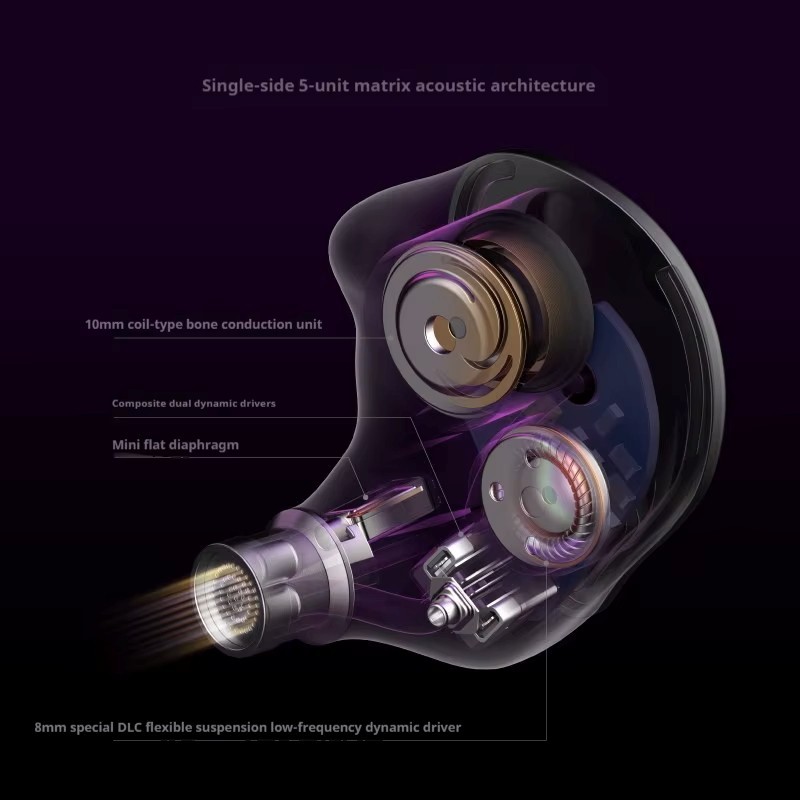
A medium-size 8 mm dynamic driver handles the bass. Its DLC diaphragm, made from diamond-like carbon, resists bending deformation and helps reduce unwanted distortion. Despite the diaphragm's high stiffness, the manufacturer also highlights the flexible surround around its edge.
Using 3D-printed resin parts, the manufacturer gives each driver its own sound tube and aligns the phase of all drivers. Internal RC crossover filters divide the frequency bands between the drivers. This reduces their overlapping output, avoids resonances and aims for accurate tonal balance. The stated target is the Harman Target Curve for IEM 2019 v2, as printed on the back of the box.
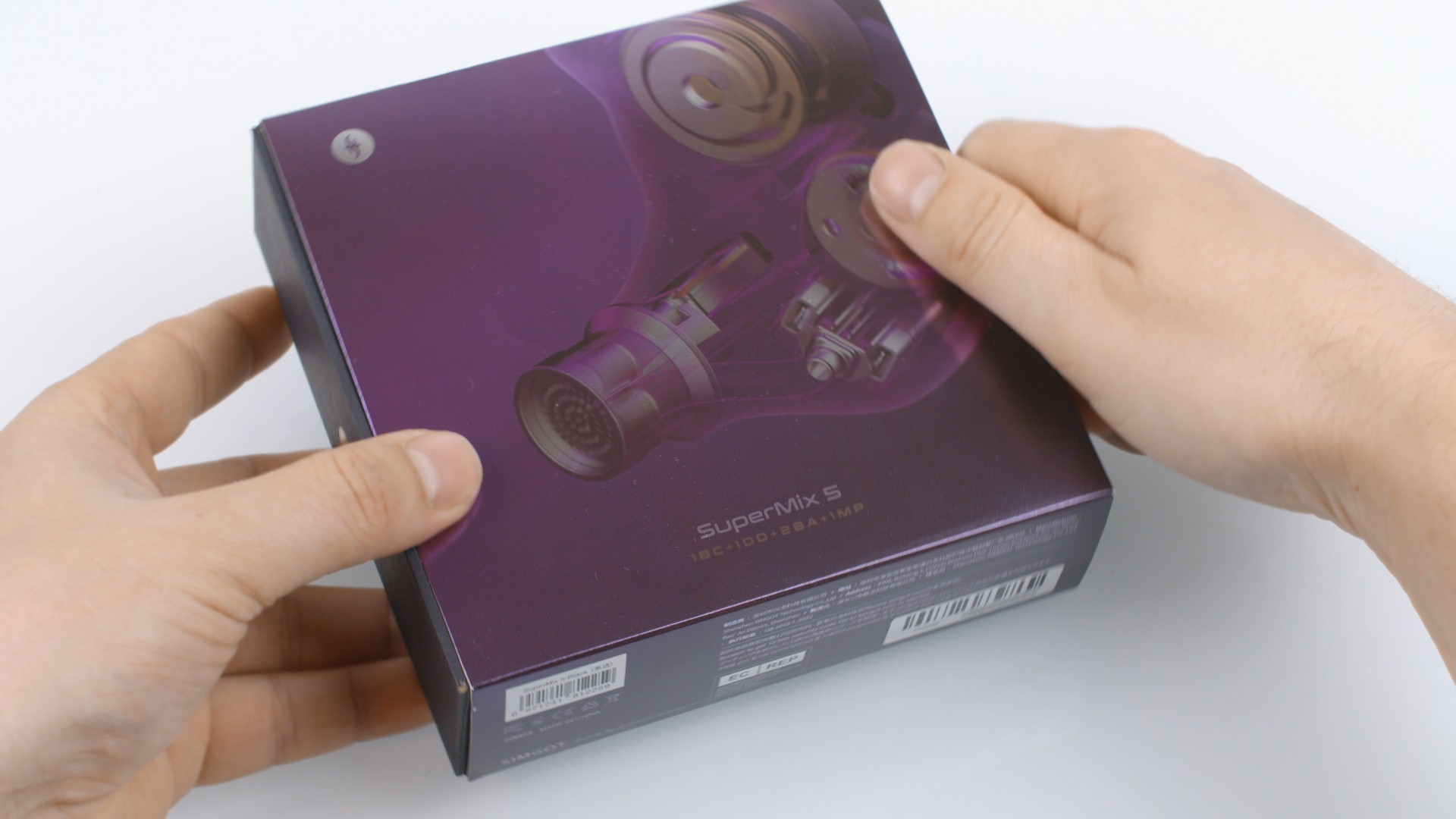
The cardboard box has a removable outer sleeve with a raised print showing the internal construction of an earpiece.
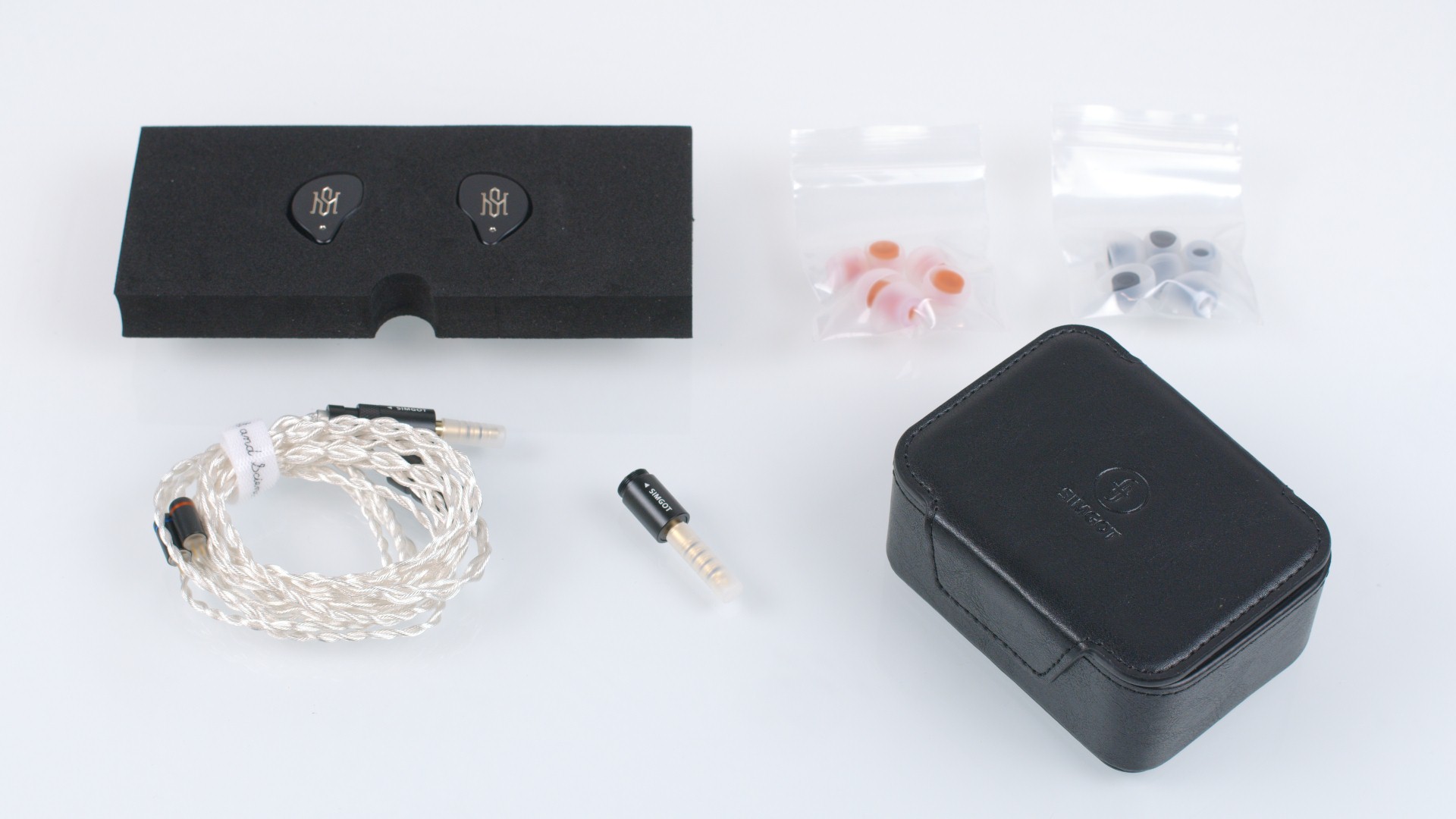
Simgot Supermix 5 specifications
- Drivers: 8 mm dynamic + 2 balanced armatures + planar + 10 mm bone conduction (1DD+2BA+1MP+1BC)
- Impedance: 19 ohms ±15%
- Sensitivity: 120 dB/V
- Frequency range: 8 Hz–40 kHz
- Earpiece connector: 0.78 mm two-pin
- Cable: silver-plated, multi-strand oxygen-free OCC Litz
- Interchangeable plugs: 3.5 mm and 4.4 mm
The specifications highlight a very wide claimed frequency range, high sensitivity and a low impedance of 19 ohms. The headphones should work with any audio source and do not need a powerful amplifier.
The oxygen-free Litz cable consists of many fine strands, each with its own insulating enamel coating. This protects the wire from oxidation, keeps it flexible and increases the total conductor surface available for high-frequency signals. The manufacturer also mentions silver plating, which provides similar oxidation protection and carries high-frequency signals in the surface layer. The effect of expensive cables on sound is often overstated, but its effect cannot be dismissed. Materials, manufacturing methods and durability matter at least as much. These are difficult to verify, so we regard the more expensive cable as the higher-quality choice. More importantly, the cable is detachable. Users can replace it with another cable of their choice, provided the connectors are compatible.
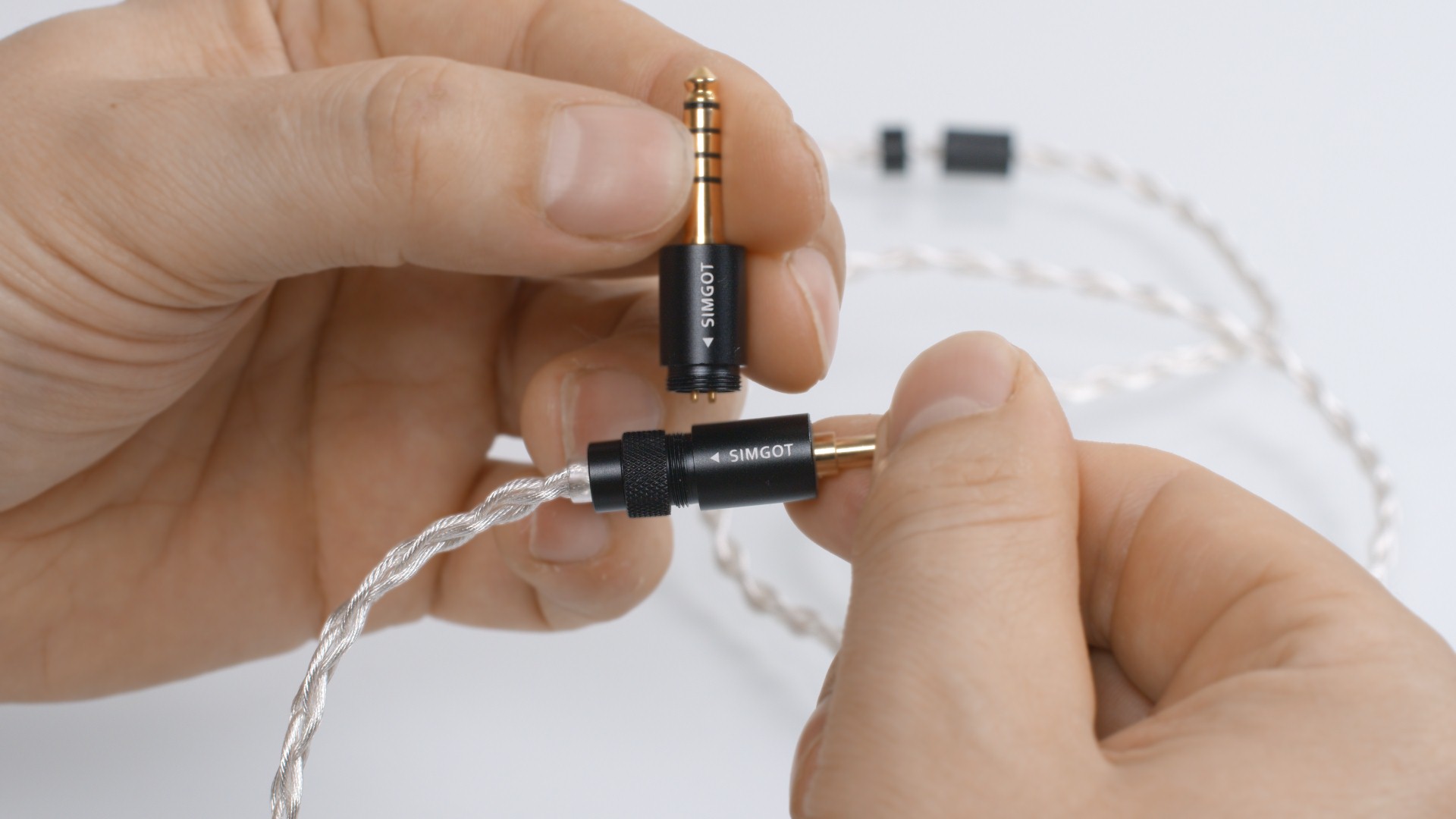
Two plugs are available: a 3.5 mm minijack and a 4.4 mm Pentaconn plug. The 4.4 mm plug is for a balanced source connection, with a separate pair of wires for each earpiece. The headphones do not need much power, but this connection can slightly improve channel separation.
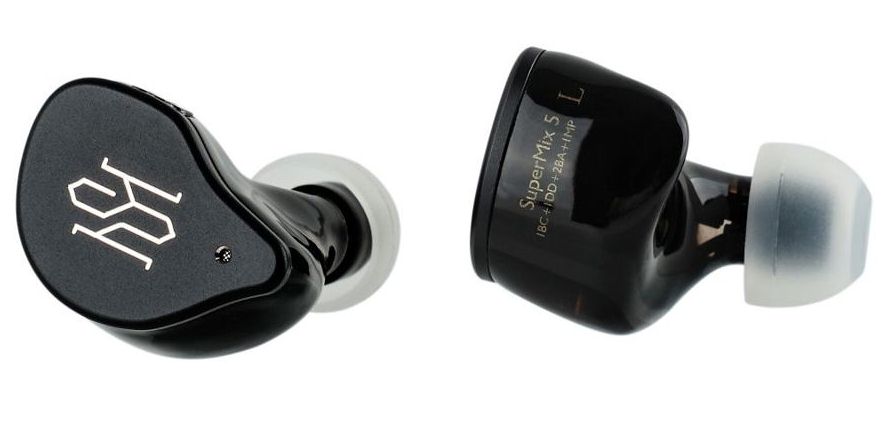
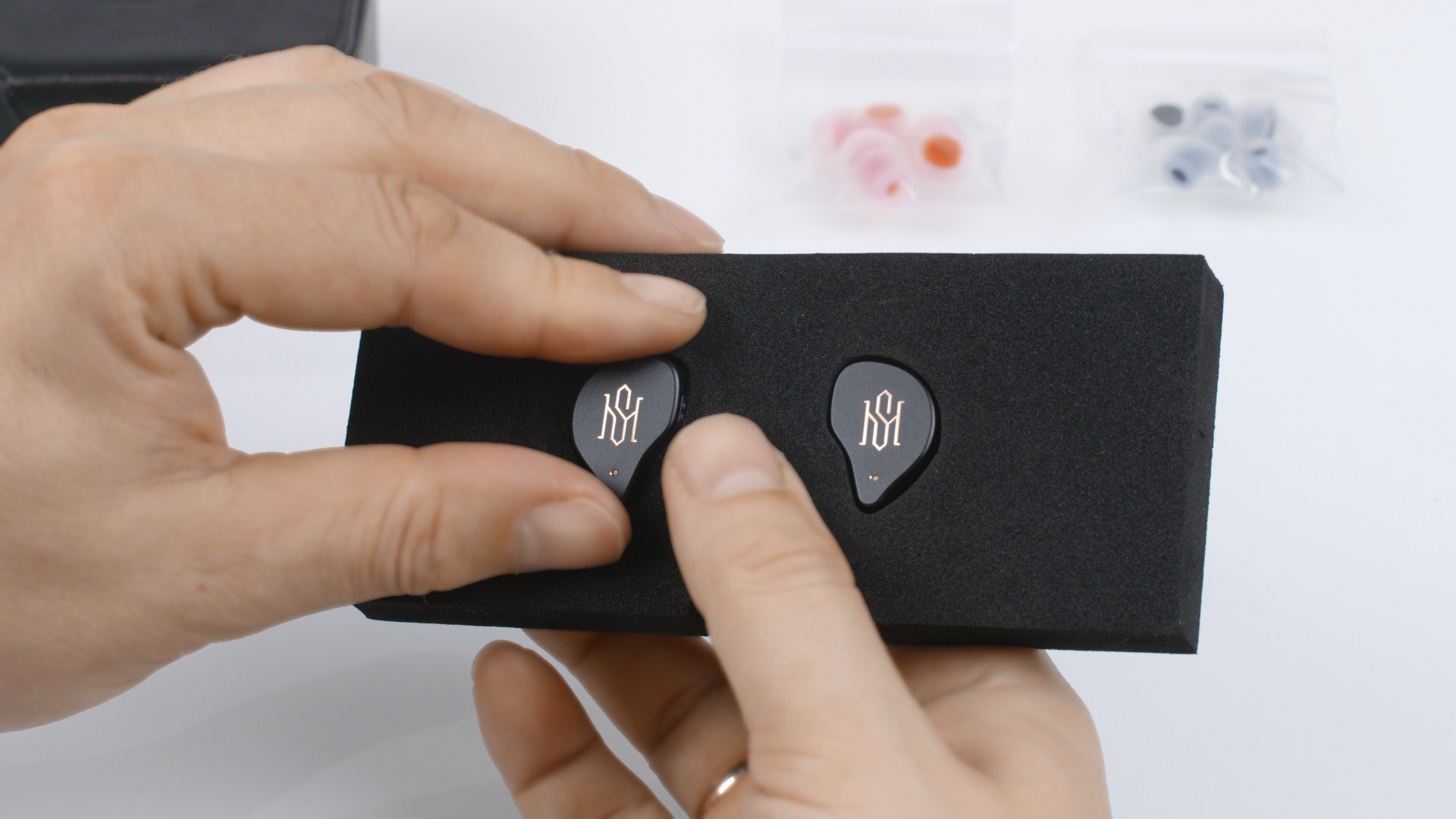
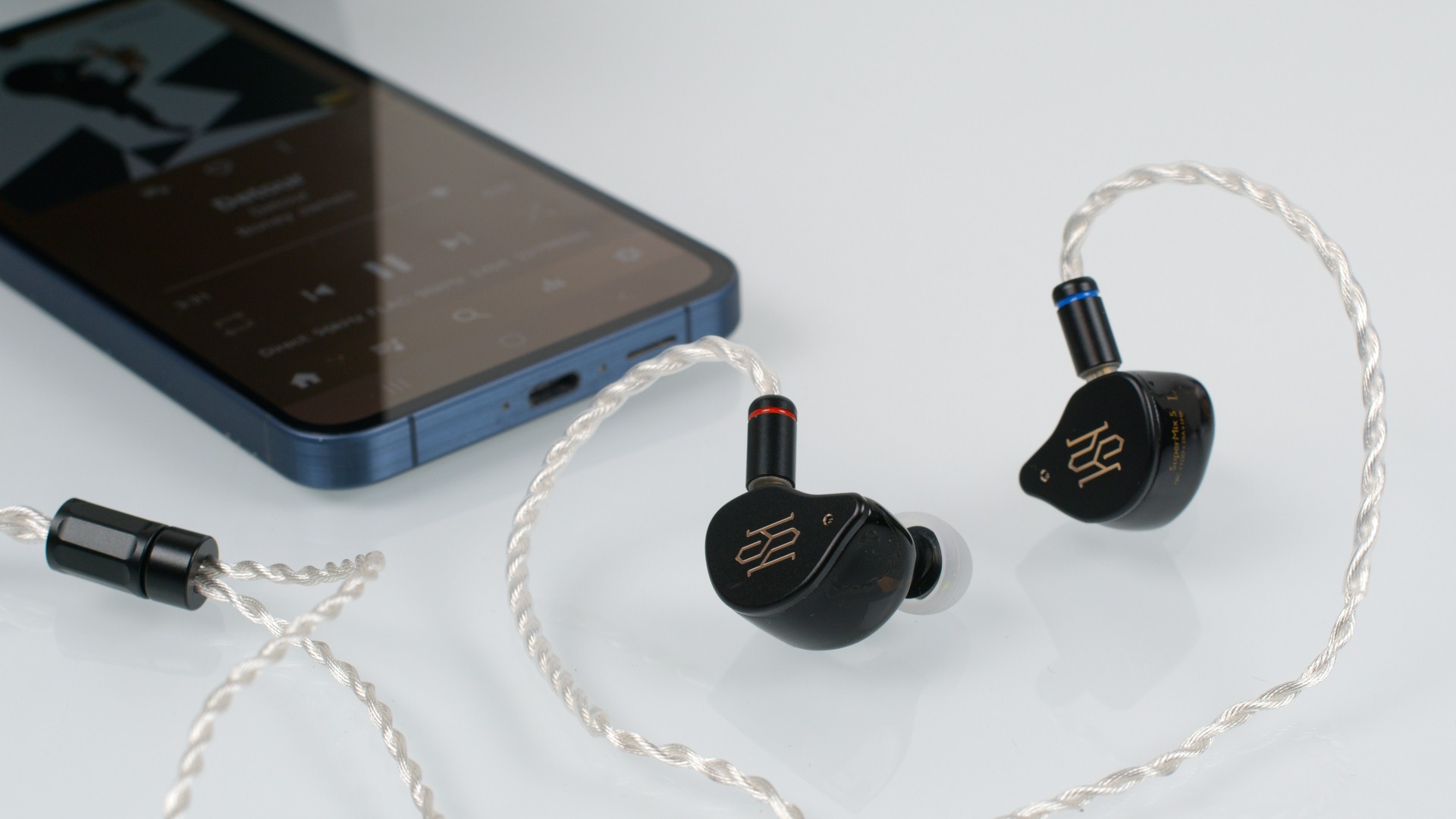
The resin earpiece shells are 3D-printed and have metal outer faceplates. We found the appearance attractive. High-quality 3D printing gives the shells a smooth, pleasant surface. The earpieces are light, fit well and are comfortable to wear.
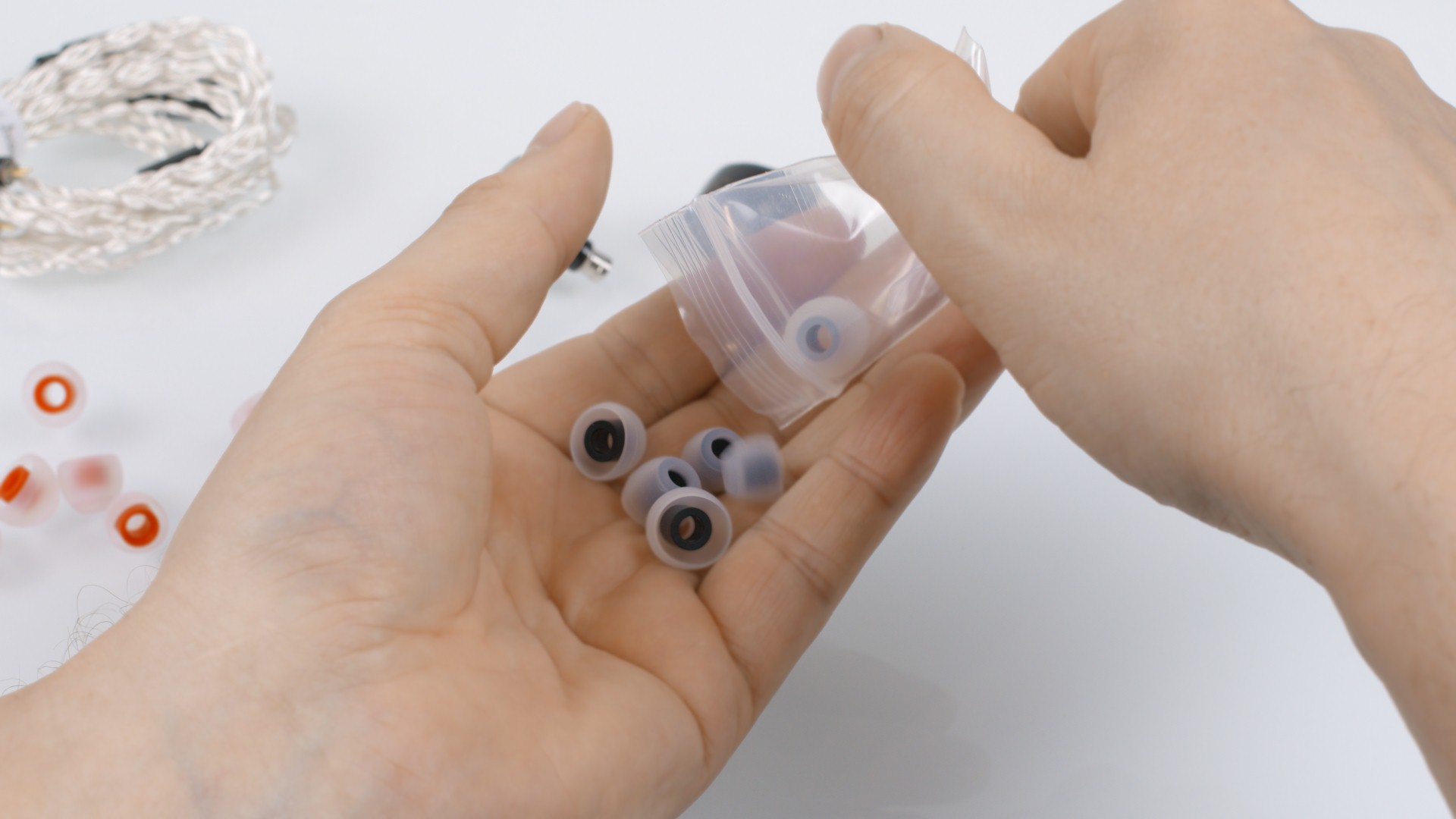
Two types of silicone eartips are supplied, each in S, M and L sizes. The leather case holds the accessories and has a separate section for the eartips.
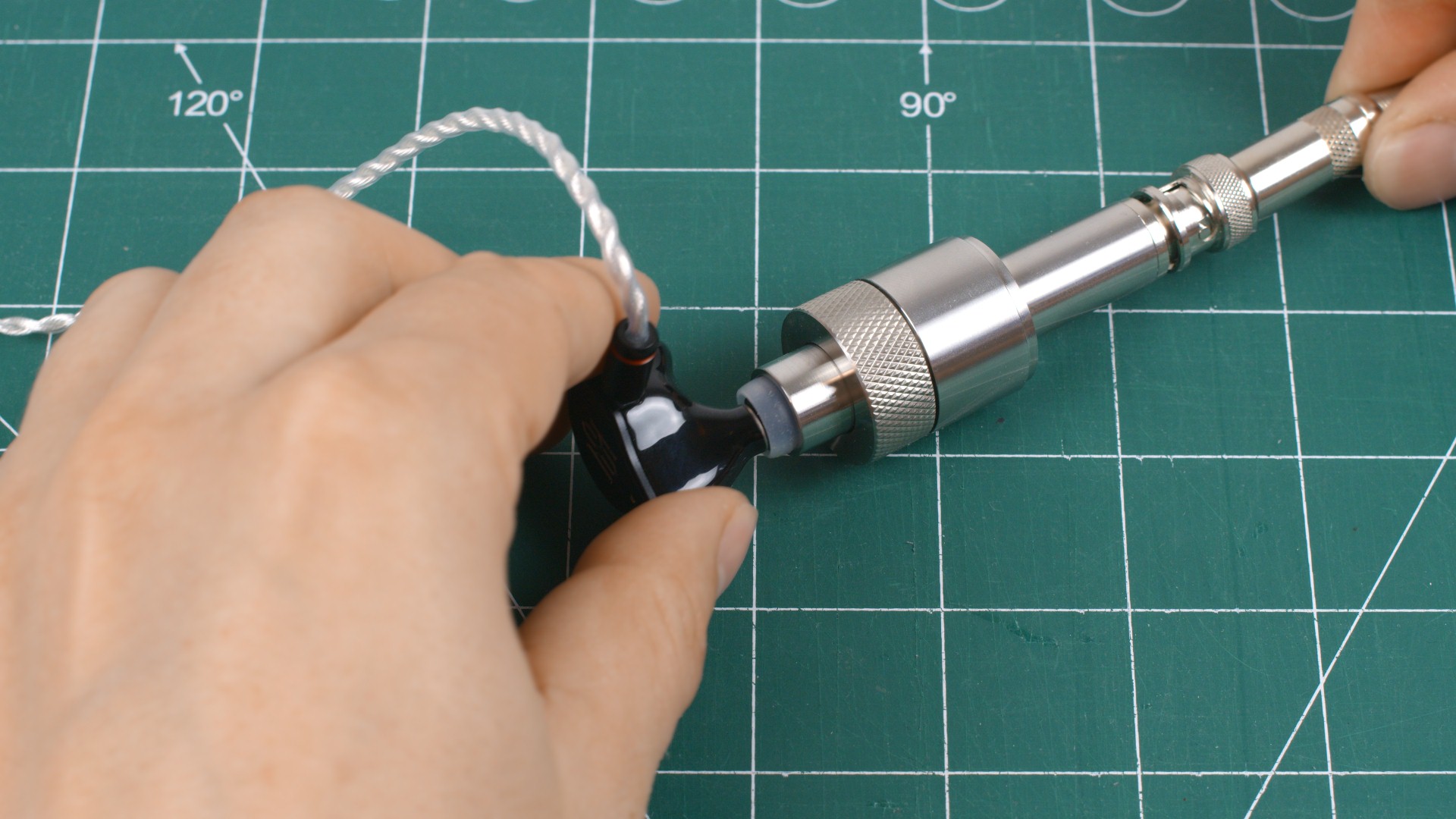
For our measurements, we used an IEC 60318-4 ear-canal acoustic impedance simulator with a built-in microphone.

The screenshot shows our frequency response measurements. The graph agrees well with other measurements of this model published online and with the manufacturer's official graph.
What does the frequency response show? All frequency bands are well represented, with no sharp peaks or dips. This is typical of many modern in-ear monitors, or IEMs, above the budget level. Many manufacturers now use the Harman Target Curve for IEM 2019 v2 as a reference. Dr Sean Olive's research suggests that this curve simulates listening to speakers in a room. For most listeners, it therefore provides a natural tonal balance. Early studies produced slightly different results. The curve was smoothed in 2019 to simplify equalisation and make calculations easier for headphone manufacturers. However, any target curve will differ from an individual listener's idea of a flat response. Age, ear anatomy, eartips and even small changes in earpiece position each time the headphones are inserted will all affect the result.
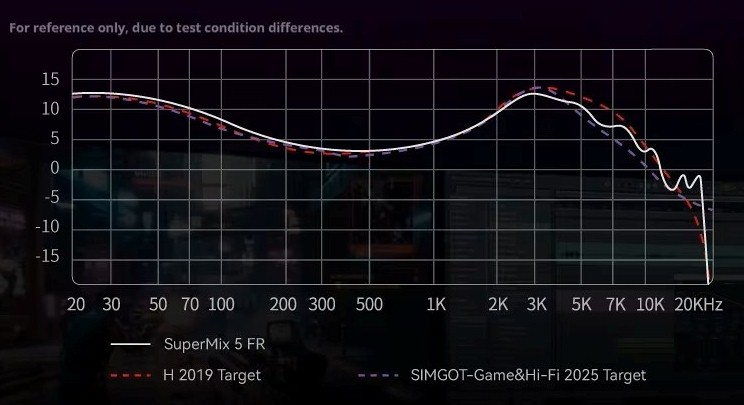
The manufacturer publishes the headphone response together with two target curves used during development. Manufacturers increasingly carry out their own experiments instead of following only Harman's criteria. Simgot has done that here. For gamers and music listeners, the engineers slightly reduced the V-shaped treble emphasis to improve comfort. The aim is to avoid fatigue during long listening sessions. This is also the manufacturer's first model with such an even response. Simgot headphones usually have more treble and a less smooth frequency response.


We used a desktop source based on the CS43198 with a 2,000 mW discrete transistor amplifier and zero output impedance. We also used a mobile DAC based on the AKM AK4377 with an integrated amplifier rated at 400 mW into 16 ohms, again with zero output impedance. Low positions on the volume control were enough, with an output of around 0.5 Vrms. The headphones therefore worked well at roughly 15 mW. However, connecting a model at this price to a basic laptop or smartphone headphone output makes little sense. A good DAC and headphone amplifier are still worth using. Compatibility with almost any source is a useful extra, rather than a reason to choose a poor source.
The main feature of the Simgot Supermix 5 is its comfortable, even sound, with no audible artefacts. All five drivers work together as one system. At the same time, the sound does not lack any frequency range or become dull. Detail is good, without tiring peaks. This clearly differs from earlier models. Owners often described those models as strongly treble-focused and assumed that this was the brand's characteristic sound. The engineers have now aimed for a more balanced response, and our tests show that they have succeeded. Even at high volume, music remains suitable for long listening sessions without an uneven balance or audible distortion. Listeners who prefer a V-shaped response can still use an equaliser to adjust the balance to taste.
The bone conduction feature deserves a separate comment. Its contribution is subtle and is mainly heard with electronic music that has sharp attacks and strong bass notes. With that material, there is a sense of extra bass energy and a lift in the sub-bass. The effect is small, however, and can become inaudible with acoustic music and quiet, lyrical songs.
Conclusions
The Simgot Supermix 5 impressed us with its engineering and the careful design of its five-driver system. The manufacturer has achieved the main goal: a balanced sound based on its own tuning profile. The bone conduction driver gives the model a distinctive feature and adds impact to music and films. The brand already has many fans online. They should appreciate both the sound and Simgot's efforts to improve its technical design. The Supermix 5 is easy to drive with almost any amplifier, but we still recommend using a good source.
Note. This is an adapted machine translation into English. It follows the “In simple terms” approach. Read the original article at https://prosound.ixbt.com/monitors/simgot-supermix5.shtml.