
Arturia KeyStep MK2 — the second-generation KeyStep controller with a hardware sequencer/arpeggiator
Grigory Liadov
Arturia has finally turned its attention to its hardware synthesizer controllers, introducing a new-generation device in late 2025. More than ten years have passed since the first controller in the series appeared. With regular updates to Arturia's MIDI keyboards, a new generation of Step controllers was only a matter of time.
So far, the most compact model in the range has been updated: the KeyStep MK2. We will undoubtedly see upgrades to other models in future. For now, let us look closely at the changes and improvements in the KeyStep MK2.
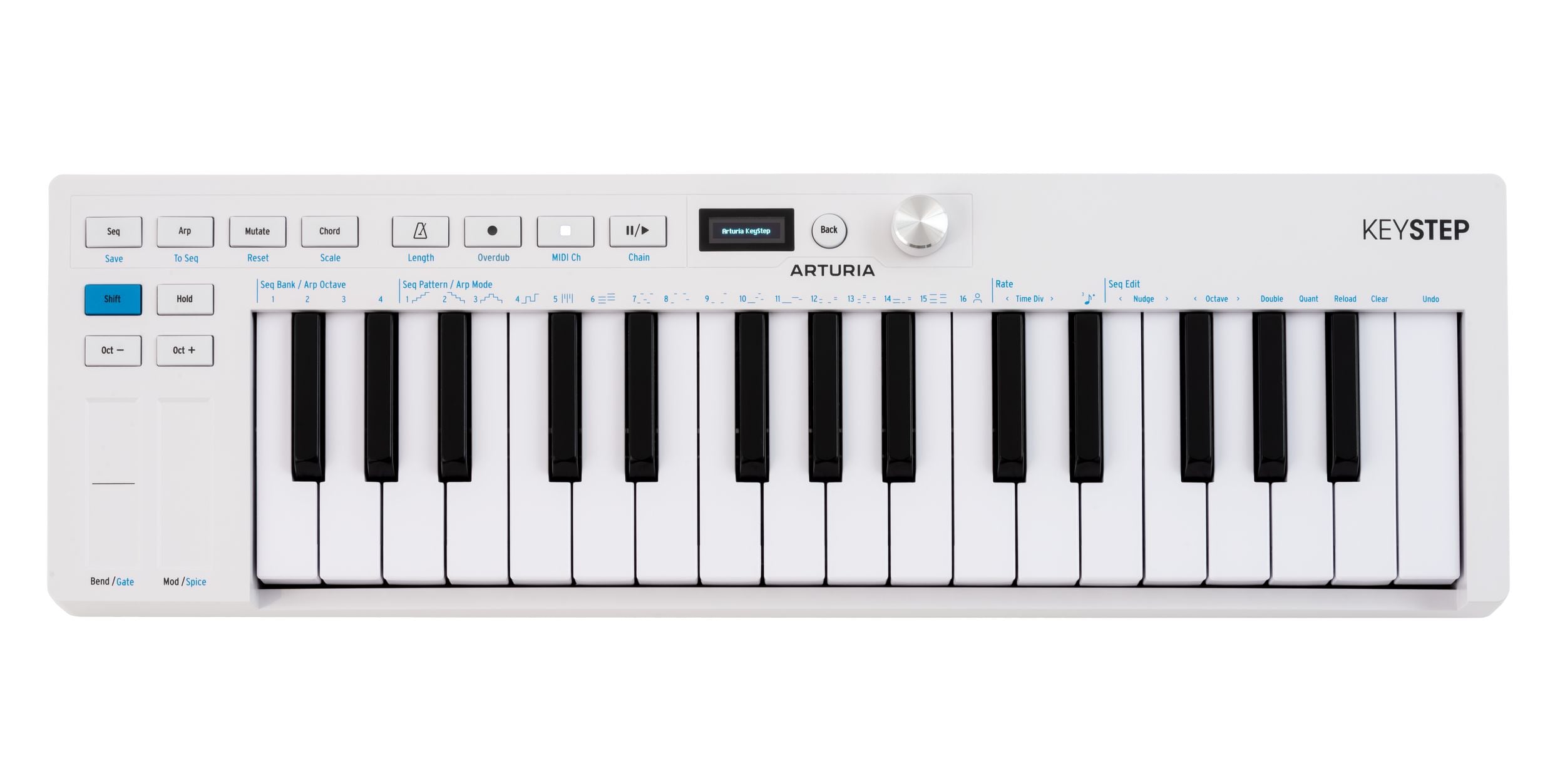
The new generation looks only slightly different. The enclosure is almost identical in size but is now entirely plastic, without the metal base plate used previously. The controls, however, have been redesigned completely, and a display has been added.
As before, this is a USB MIDI controller with a built-in hardware sequencer/arpeggiator. It is particularly convenient for controlling analogue synthesizers because it provides several connection options. Alongside USB and MIDI ports, it has analogue CV outputs.
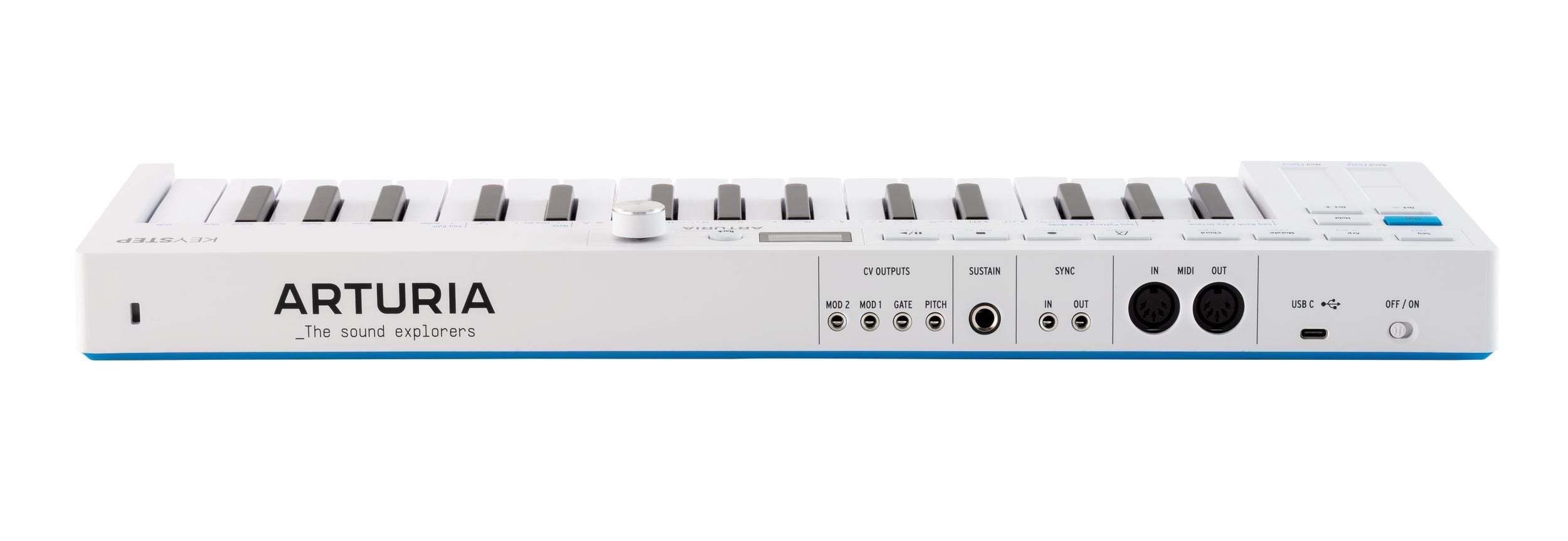
Power now uses the more practical and versatile USB Type-C connector. A high-quality branded cable with a braided sleeve is included. All connectors are now conventionally positioned on the left. A power button has also been added, so the unit can be left connected.
One of the most noticeable additions is the display, an OLED similar to those used in Arturia MiniLab MIDI keyboards. It is small but high-resolution, showing both the value being adjusted and the main settings for the current mode.
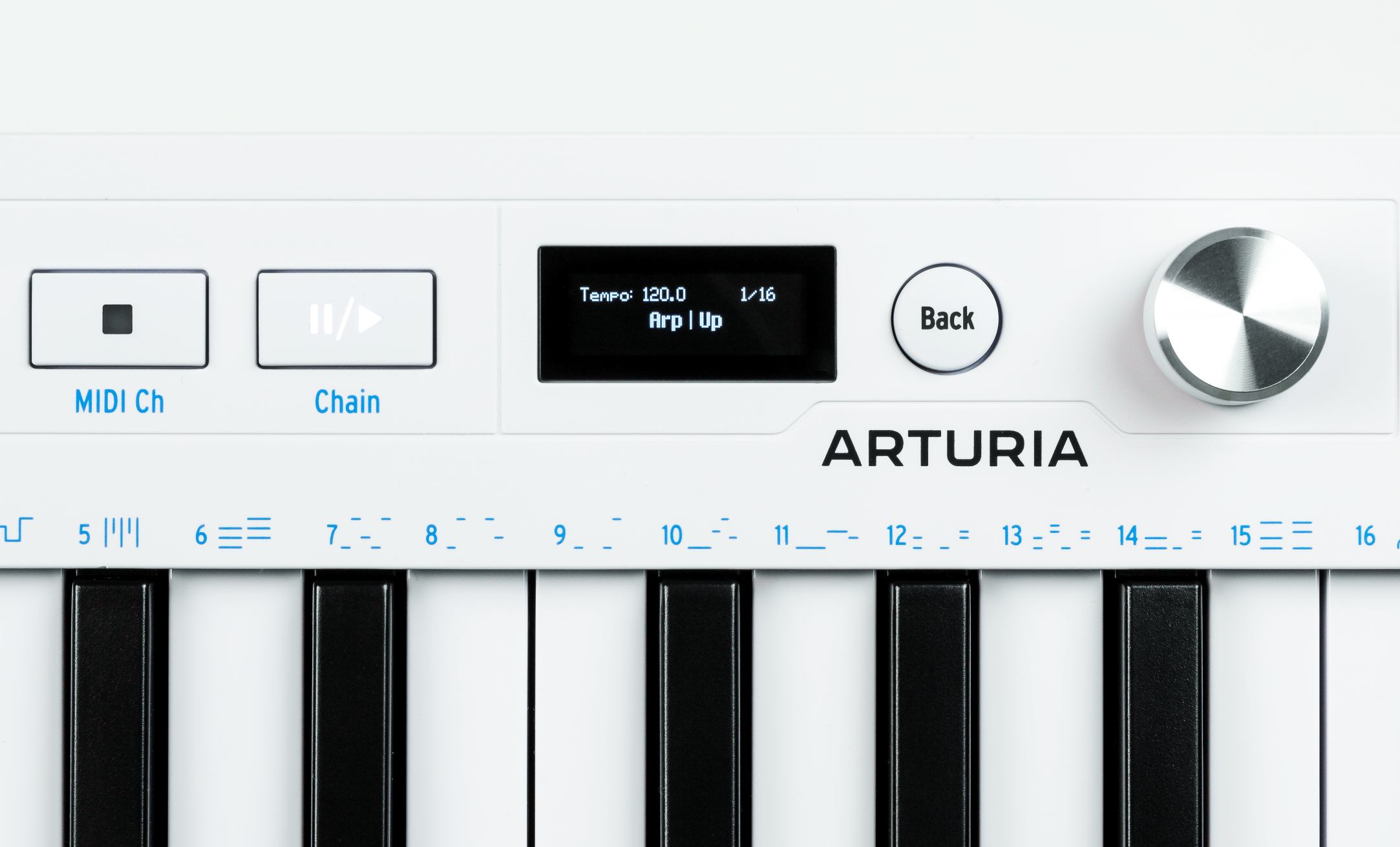
A rotary control and Back button now handle menu selection and navigation. All controller settings can therefore be adjusted directly on the device without Arturia MCC software. The main and most frequently used sequencer and arpeggiator parameters are still accessed through the keys rather than the menu.
It is good to see that the advanced step sequencer has been retained, allowing polyphonic sequences up to 64 steps long, with up to eight notes per step. The unit stores 64 sequences, grouped into four banks of 16. Depending on the settings, switching occurs immediately, after the current sequence ends, or at the next bar. Sequences can also be chained to create much longer patterns. Hold SHIFT and press the corresponding key to select or change a sequence.
Creating a sequence is straightforward. In record mode, play the keys in order: each new keystroke records a note or chord to the next sequencer step. Notes can be lengthened, rests inserted and notes tied. An Undo button reverses the last action, and sequences can be edited afterwards with a visual display of the notes in each step. Real-time recording is also possible, though it requires greater playing skill.
You can also play the keyboard over a running sequence. More interestingly, the keys can transmit on a different MIDI channel from the sequencer, letting you play another synthesizer's sound while the sequence continues.
The KeyStep MK2 arpeggiator retains all its key features. It generates varied patterns from a user-played chord, with up to 64 notes and 16 playback modes, including polyphonic options.
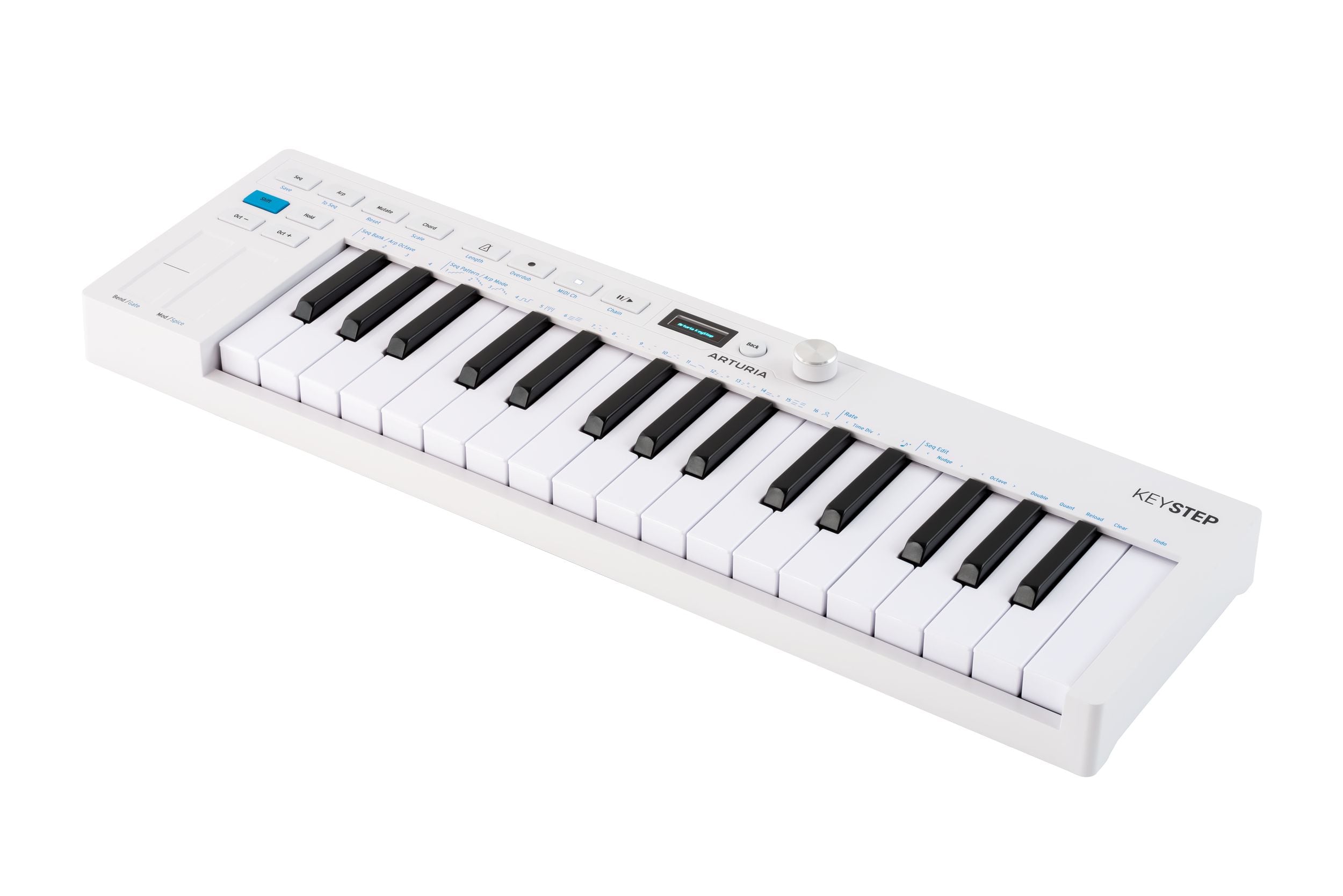
A key addition is the creative Mutate mode. It lets you introduce controlled variation into existing sequences or arpeggios. Pressing Mutate changes selected notes unpredictably, and holding it longer changes the pattern more substantially. The algorithm is musical rather than completely random, altering patterns while preserving their identity. Crucially, you can always return to the original pattern, making it easy to explore alternatives and keep the most suitable one.
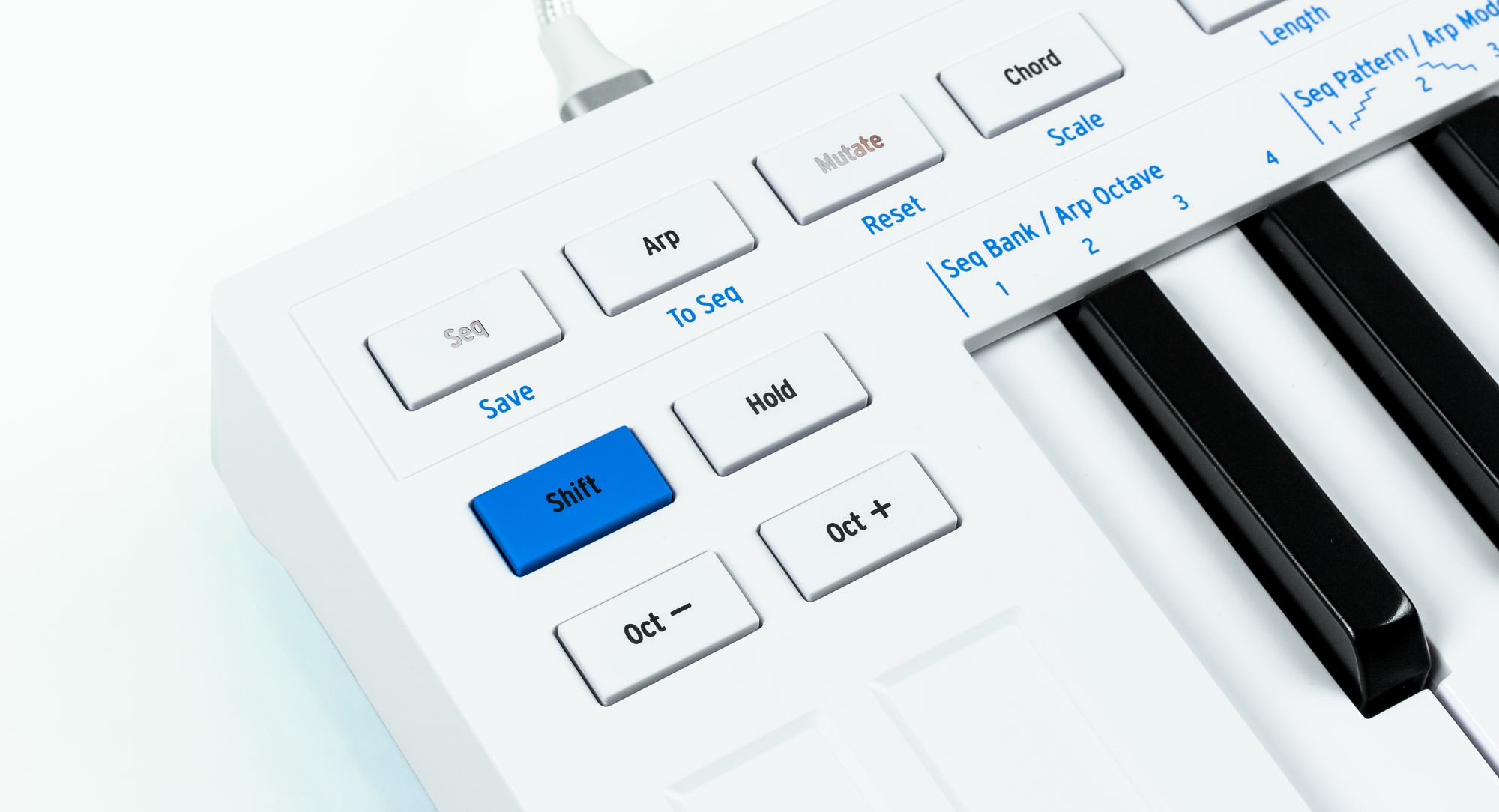
The first-generation device used dedicated rotary switches to select and configure modes. On the new model, almost everything is controlled through the musical keys. The function accessed by holding Shift is printed in blue above each key.
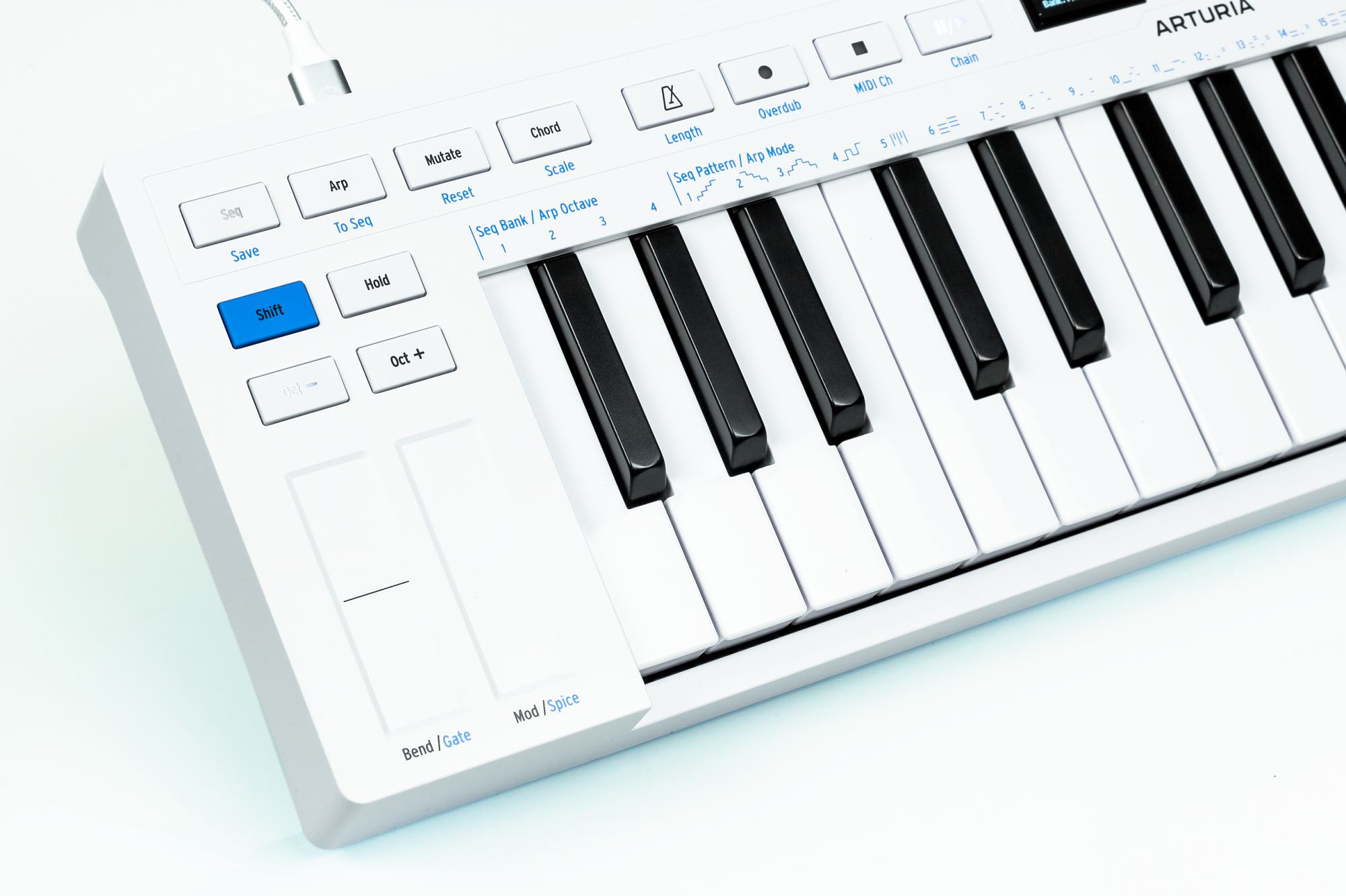


Chord mode has been expanded to offer 12 chord types: User, Octave, Major Triad, Minor Triad, Sus 2, Sus 4, Major 7, Minor 7, Major 9, Minor 9, Major 11 and Minor 11. The User preset can hold any chord of up to 16 notes. Playback options are particularly interesting. In addition to sounding all notes together, a velocity-dependent voicing mode makes the chord spread wider as you strike harder. Aftertouch can also add notes to the chord. Alternatively, notes can be strummed like a guitar, either from the lowest note upwards or from the highest downwards.
The KeyStep MK2's keyboard looks just like those on Arturia's other compact controllers. It is one of the better miniature keybeds with aftertouch available. The action is comfortable and moderately firm, making different velocities easy to play. There are three velocity curves and a fixed mode with a value of 100. Aftertouch sensitivity also offers Low, Medium and High settings.
Conclusion
The new KeyStep MK2 looks excellent. It shows where Arturia intends to take this controller range, and we welcome the increased emphasis on creativity. Mutate is undoubtedly the defining feature of the new generation. The KeyStep MK2 now feels like a complete tool for developing and realising creative ideas, rather than a basic arpeggiator.
The new key-based control system is straightforward and convenient, though different from its predecessor. As with any hardware device with its own workflow, some adjustment time will be needed.
Note. This is an adapted machine translation into English. It follows the “In simple terms” approach. Read the original article at https://prosound.ixbt.com/keyboards/arturia-keystep-mk2.shtml.