
Axelvox HD660 PRO MK2 — professional monitoring headphones
Maxim Liadov
In recent years, Axelvox has actively developed its range of professional monitoring headphones. The range now has more than ten models with different specifications, designs and looks for different uses. The HD660 PRO MK2 is positioned as a professional closed-back studio model with a high impedance of 150 ohms. The first version had an impedance of 32 ohms and is no longer on sale.
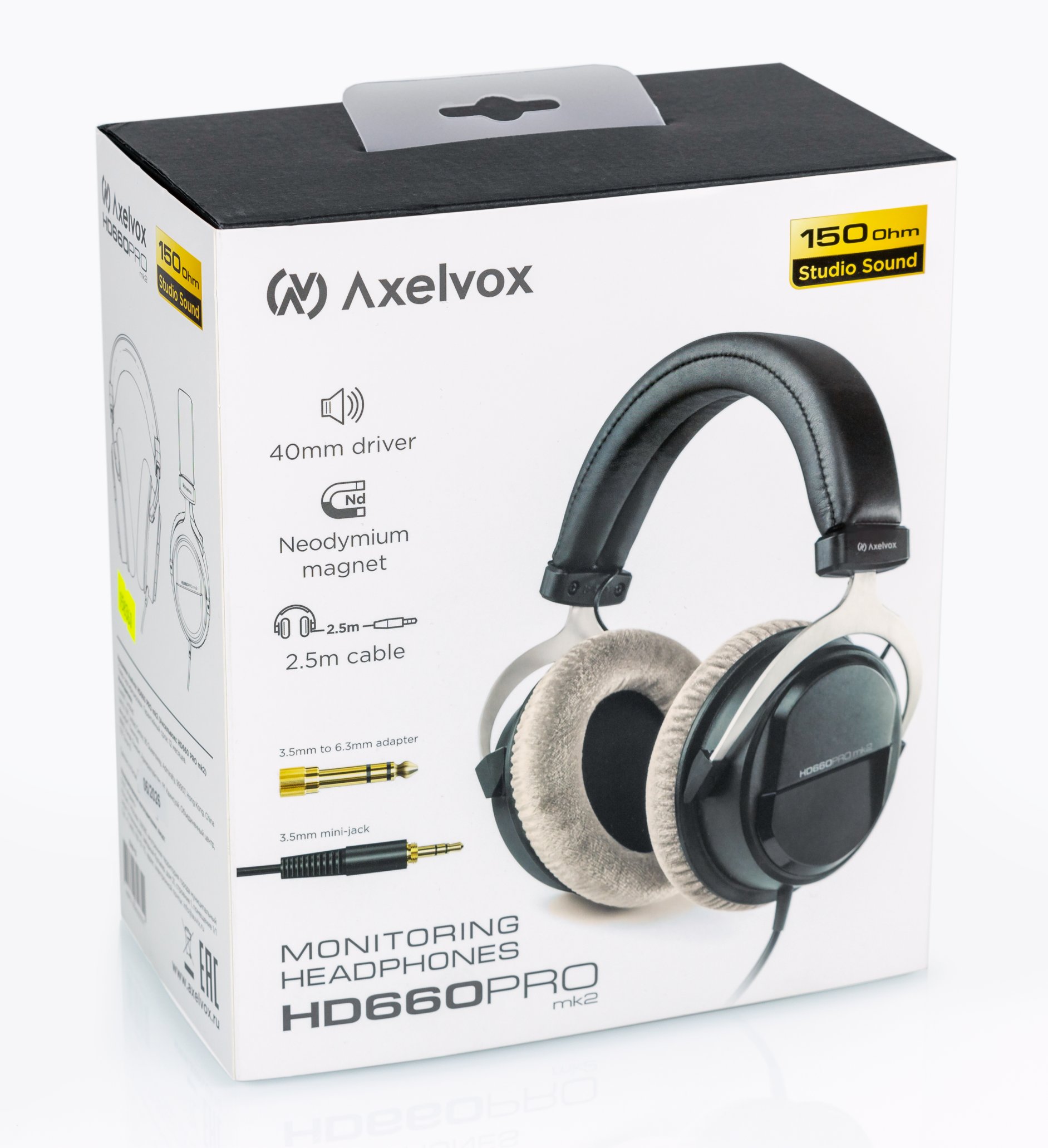
Following a proven design can work better than developing a poor design from scratch. For readers familiar with headphones, the model name may suggest the Sennheiser HD660. The first HD660 version also had an impedance of 150 ohms. However, the Axelvox headphones look like the Beyerdynamic DT770 PRO and use a similar construction. The manufacturer probably wants to offer an alternative to these famous brands at a very attractive price of just RUB 5,990. We do not expect technical breakthroughs in this price range. But can Axelvox surprise us? Let us find out.
Axelvox HD660 PRO MK2 specifications
| Design | Closed-back |
|---|---|
| Frequency response | 10–30,000 Hz |
| Diaphragm diameter | 40 mm |
| Impedance | 150 ohms |
| Sensitivity | 98 dB |
| Cable | 2.5 m, fixed |
| Connector | 3.5 mm |
| Included accessories | 3.5 mm to 6.3 mm adapter, carrying pouch |
| Weight | 320 g |
The published specifications meet the requirements for professional headphones. The stated frequency range of 10 Hz to 30 kHz extends beyond the audible range. The 40 mm drivers with neodymium magnets are typical of this type of headphone. The box gives a sensitivity of 98 dB, while the manufacturer's website lists 92 dB. Neither source says whether the figure is in dB/mW or dB/V. In our tests, the Axelvox headphones were slightly louder than the Beyerdynamic DT770 PRO, rated at 96 dB/mW. We therefore consider 98 dB/mW the more likely figure. With an impedance of 150 ohms, the Axelvox headphones need an audio interface or a separate headphone amplifier, just like the Sennheiser HD660 and Beyerdynamic DT770.
Construction
The headphones come in an attractive box with a glossy outer sleeve. The packaging looks fully professional and can match that of international brands. The text is in Russian. The box names the Russian company Auvix as the authorised representative. The headphones are made in China.
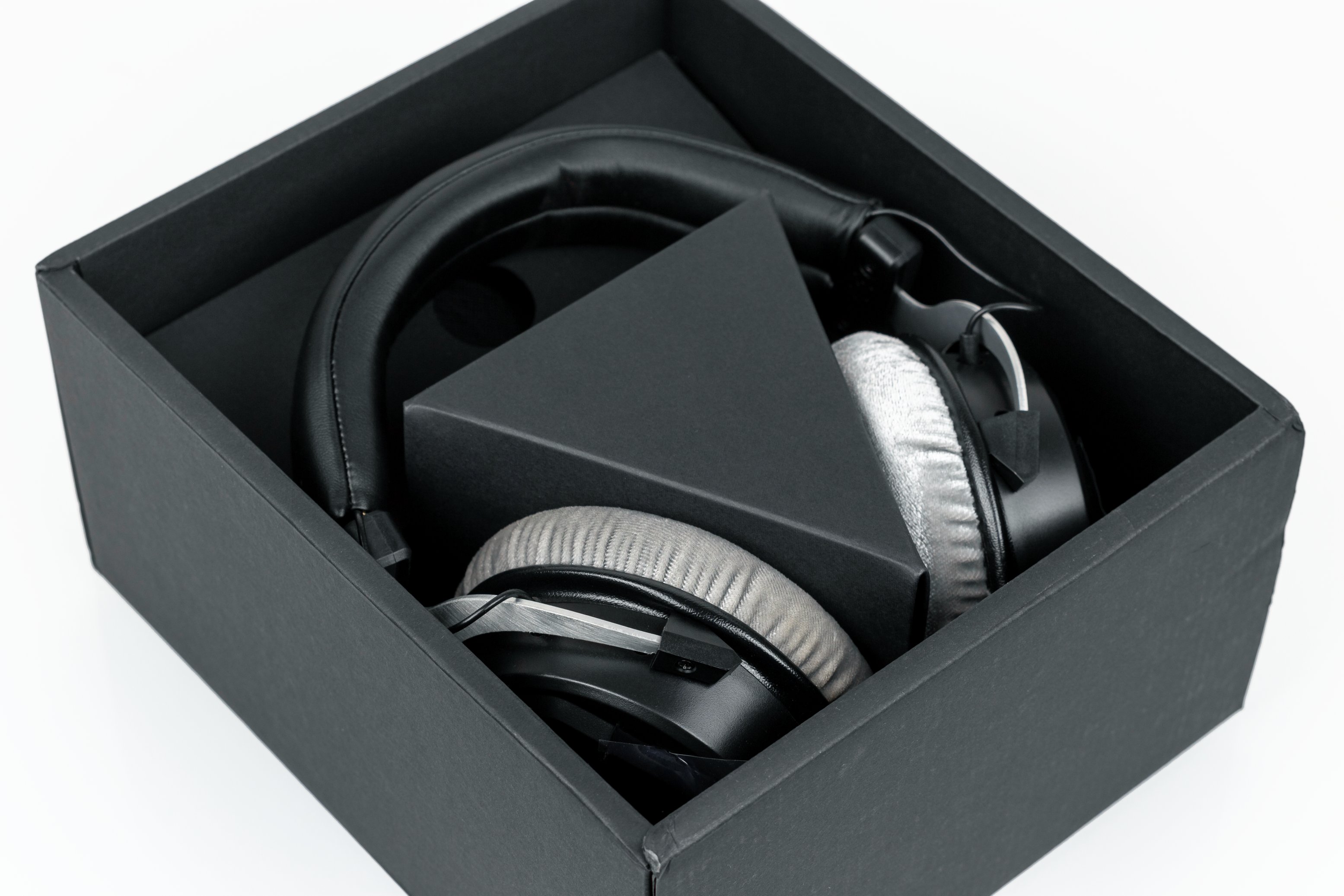
The headphones use a classic studio design. The padded headband is adjustable. The closed-back earcups provide reasonably good passive isolation from external noise. This matters when recording in a studio.
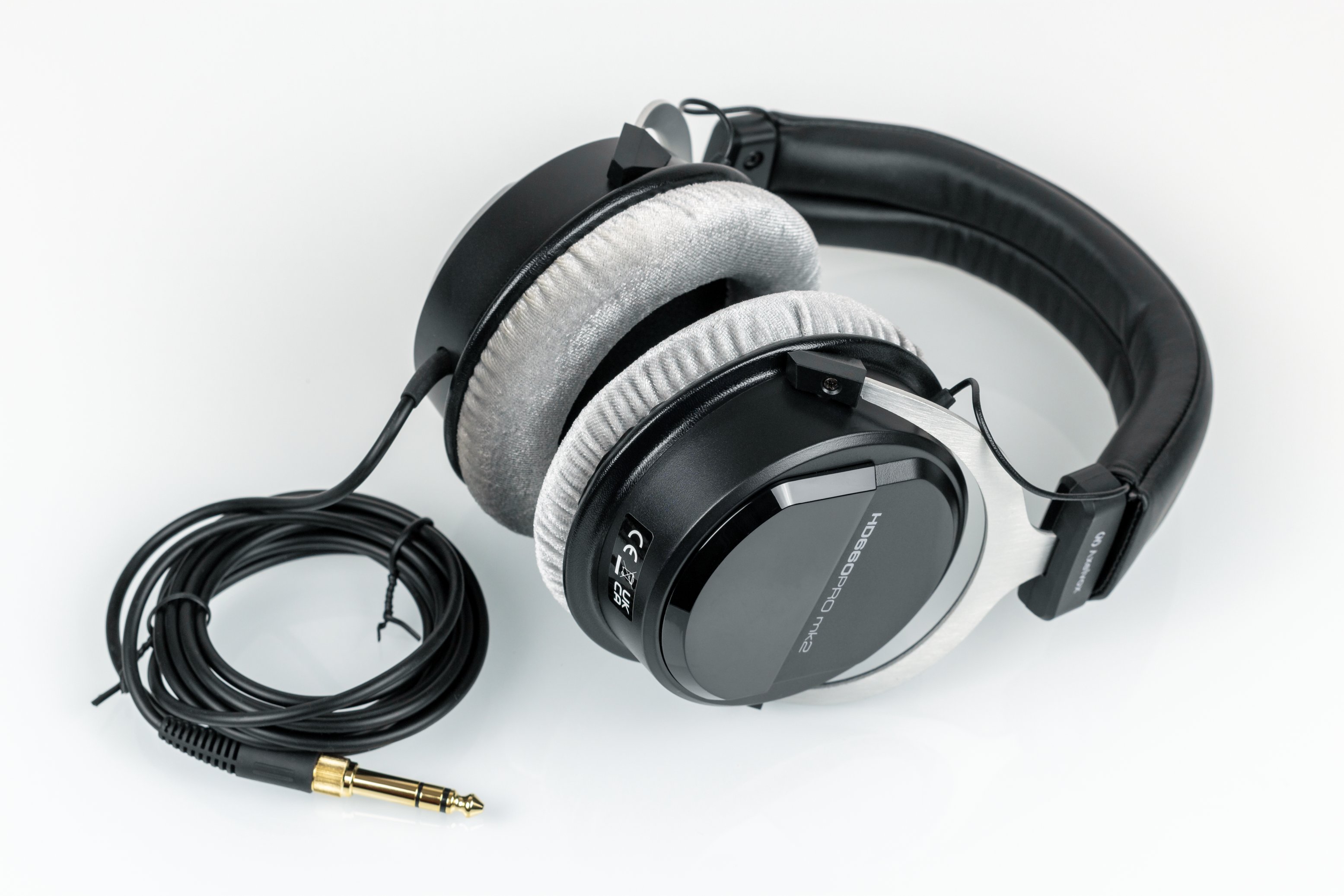
The folding construction makes the headphones easy to transport. A pouch is included for carrying and storage. The package also includes a 3.5 mm to 6.3 mm adapter for use with professional equipment.
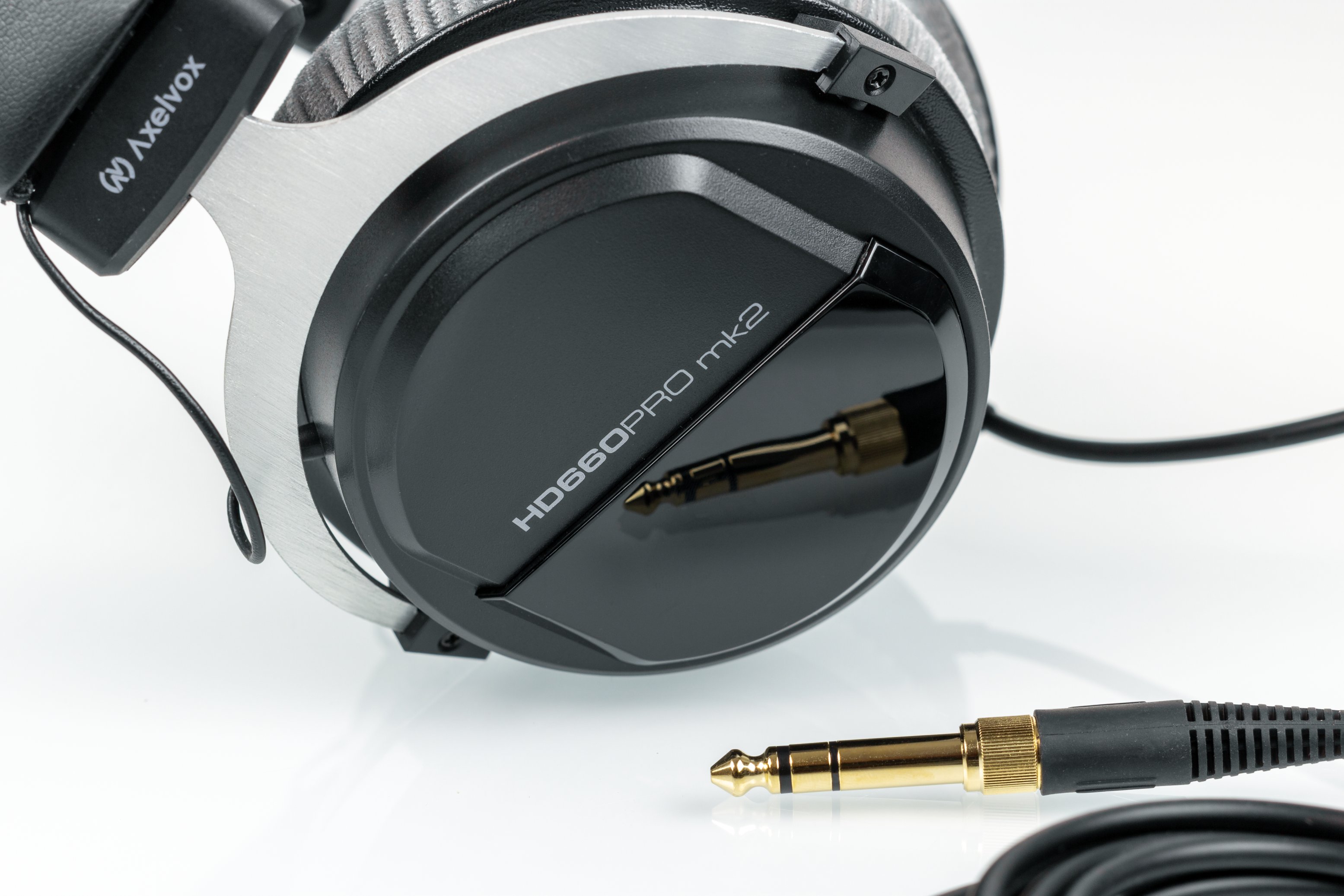
The fixed cable is 2.5 metres long. This is enough for studio use. However, a detachable cable would be easier to repair or replace with a cable of a different length. Our main criticism is that the cable is straight rather than coiled, which makes the design more suitable for home listening. The glossy earcups give the model its own look, but also make the headphones look cheaper. A glossy finish is not very practical in daily use.
Frequency response measurements
For our measurements, we use the hardware and software test system RightMark™ Audio Analyzer PRO. We used a Brüel & Kjær 4153 Artificial Ear/Ear Simulator (IEC 60318-1).
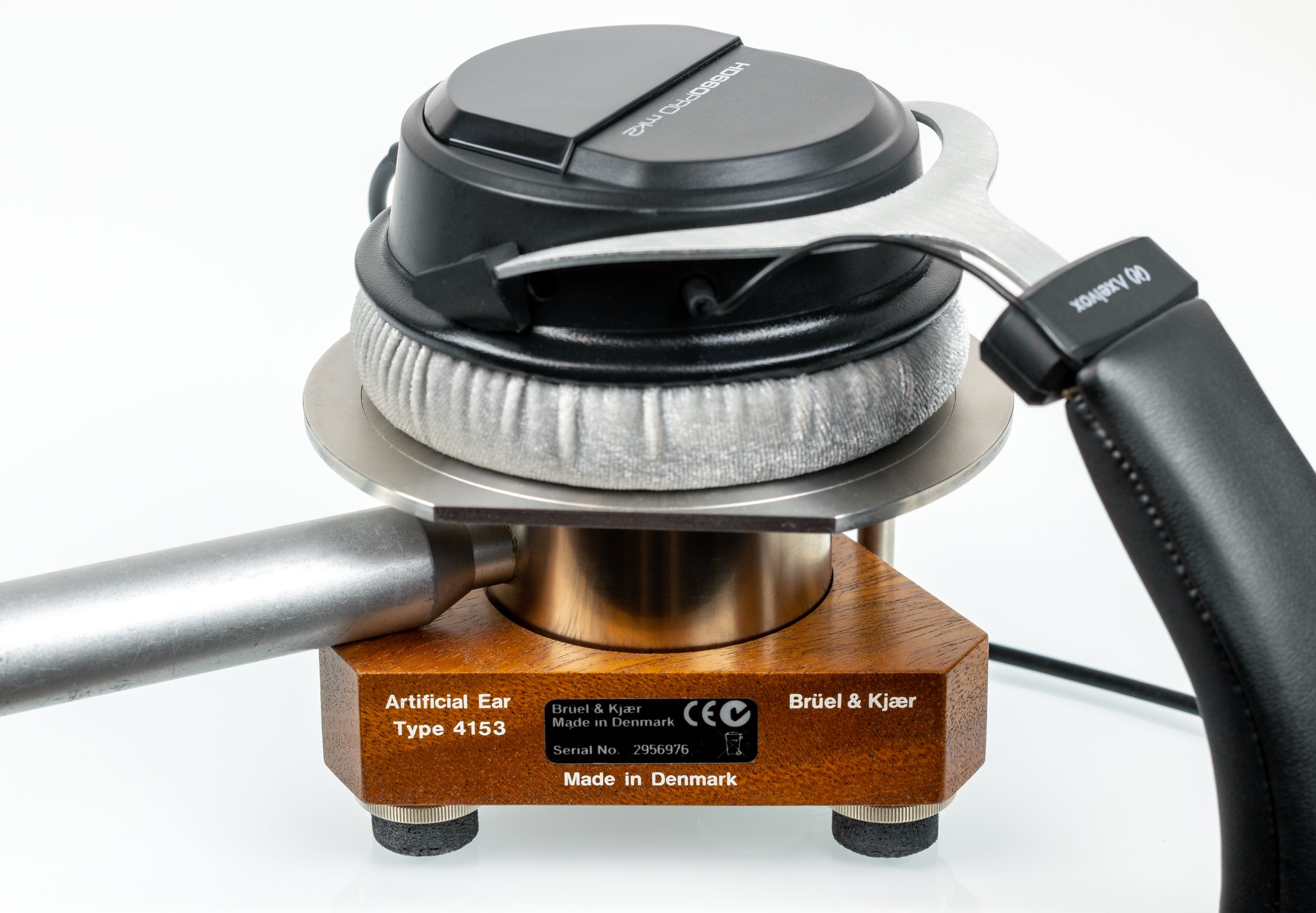


The Brüel & Kjær fixture effectively simulates the acoustic impedance of the ear up to 16 kHz. These frequency response measurements are provided for reference only. They should not be used on their own to predict how the headphones sound.
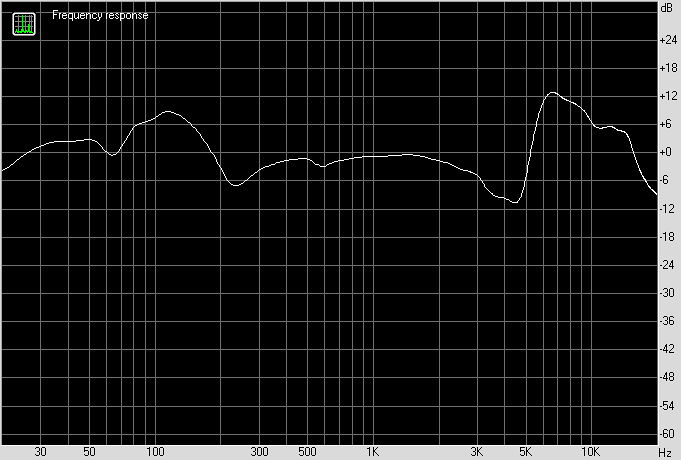
The frequency response is almost identical to that of the Beyerdynamic DT 770 PRO. The small difference on the graph should not be treated as significant. Even the two earcups of a single pair of headphones show some variation. The result also depends on the fit on the measurement fixture and changes slightly when the headphones are repositioned.
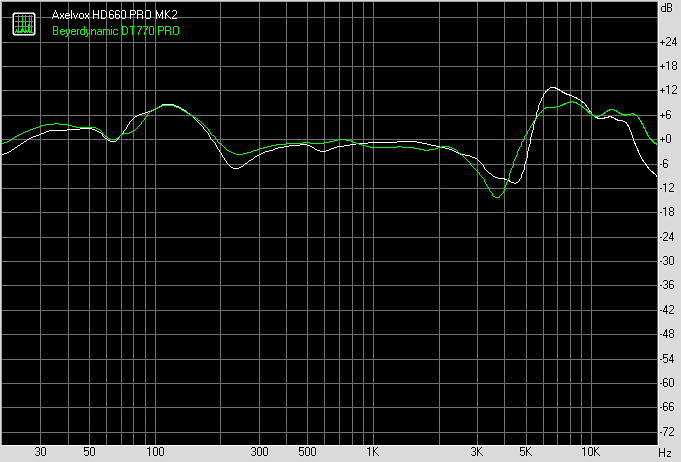
Measurements published online also show a difference of only 1 dB between the two models. This supports our view that the Axelvox is a direct equivalent of the Beyerdynamic DT 770 PRO, including its appearance, drivers and velour earpads. A direct comparison between the original and the lower-cost alternative should therefore be interesting. Our Beyerdynamic DT 770 PRO was bought at full price from an official, authorised Beyerdynamic distributor. We are comparing the Axelvox with a genuine product, rather than a questionable copy from an online marketplace.
Listening tests
For listening tests, we used a Lisk Audio Lisa Pro professional PCIe audio interface with a high-quality discrete headphone amplifier. The amplifier delivers several watts, providing plenty of power even for quiet recordings. Its 0-ohm output impedance provides effective damping. Remember that 150-ohm headphones place higher demands on the source. A smartphone or a laptop's built-in audio output may not provide enough volume. This is particularly important in professional use, because recordings are normally made with headroom for signal peaks. For an ordinary music listener playing heavily mastered pop recordings with peaks near 0 dB, even an inexpensive amplifier may be loud enough.
The closed-back construction provides good isolation. The headphones reduce incoming external noise and limit sound leakage. This matters when working close to microphones in a studio. A closed-back design also limits the sense of space: the soundstage is less open than with open-back headphones. For monitoring while recording, this is an acceptable compromise.
In a direct comparison with the 250-ohm Beyerdynamic DT 770 PRO, the Axelvox HD660 PRO MK2 sounds very similar. We were pleasantly surprised. The overall sound is much the same, although the tone is slightly different and the Axelvox sounds a little sharper. Users familiar with the Beyerdynamic DT 770 PRO should be able to switch to the Axelvox PRO MK2 without having to adjust to a different sound. The headphones offer the familiar Beyerdynamic tonal balance: deep, solid bass and detailed, emphasised treble. The amplifier requirements are also the same, so there is little to add on that point.
The construction and fit also feel very close to the Beyerdynamic DT 770 PRO. Our German headphones have been used for years, so the Beyerdynamic pair currently feels more comfortable. The new Axelvox HD660 PRO MK2 has a stronger clamping force and firmer foam inside the earcups. This is normal for new headphones. The fit should become softer with use, so we do not consider this a problem.
Conclusions
The Axelvox HD660 PRO MK2 is an option for anyone looking for affordable, high-impedance closed-back monitoring headphones. The model is suitable for a home studio with the right equipment, as well as for ordinary music listening. The similar model name should not be a concern: the very good sound makes these headphones worth considering.
High-impedance headphones need a good source and a capable amplifier. The amplifier should provide enough power, low distortion and effective damping. Without a suitable amplifier, the headphones cannot deliver their best sound. If you already have a suitable audio interface or amplifier, the HD660 PRO MK2 could be a useful addition to your studio equipment.
Despite the name, these headphones have no real similarity to the Sennheiser HD660. They are a close equivalent of the Beyerdynamic DT 770 PRO. The construction, earpads and ergonomics follow the Beyerdynamic DT 770 PRO, a studio standard for decades.
There are a few small drawbacks. These include the straight cable instead of a coiled one and the questionable glossy earcup finish, although the finish is a matter of taste. More importantly, the Axelvox HD660 PRO MK2 works very well for monitoring during recording, editing and basic mixing tasks. For critical listening and mastering, it may be worth considering more expensive options.
Note. This is an adapted machine translation into English. It follows the “In simple terms” approach. Read the original article at https://prosound.ixbt.com/monitors/axelvox-hd660pro-mk2.shtml.