
FiiO M15S review and test: ES9038PRO portable media player
Maxim Liadov
Readers know Guangzhou-based FiiO well. Our player reviews, from its flagship FiiO M17 to the affordable FiiO M11S , show its aim to offer a wide range for different tastes and budgets without heavily restricting features. FiiO players focus on technical capabilities rather than marketing limits. All use customized Android, supporting many apps from FiiO Music to popular streaming services with hundreds of millions of tracks, including high-resolution audio.
The player FiiO M15S was introduced in 2023, three years after the original non-S FiiO M15. It develops that popular model further.
The official video explains its main features:
FiiO's many models can be confusing to newcomers. Our comparison table makes their positions clear. It shows how the M15S compares with the discontinued M15 and current models M17 and M11S:
Media player specification comparison
| M15S | M17 | M15 | M11S | |
| CPU | Snapdragon 660 | Snapdragon 660 | Exynos 7872 | Snapdragon 660 |
| Processor cores | 8 | 6 | 6 | 8 |
| DAC | ES9038PRO | ES9038PRO×2 | AK4497×2 | ES9038Q2M×2 |
| Chips | Snapdragon 660, OPA926 ×2, NDK femtosecond clocks ×2, Bluetooth: QCC5124 | Snapdragon 660, THX AAA-788+*2, BT: QCC5124 | Exynos 7872, OPA2211*2+ OPA1622*4+ OPA1612*4, BT: CSR8675 | Snapdragon 660, OPA926 ×2, NDK femtosecond clocks ×2 |
| Bluetooth version | 5.0 | 5.0 | 4.2 | 5.0 |
| Bluetooth transmission | SBC, AAC, aptX, aptX LL, aptX HD, LDAC, aptX Adaptive | SBC, AAC, aptX, aptX LL, aptX HD, LDAC | SBC, AAC, aptX, aptX HD, LDAC | SBC, AAC, aptX, aptX HD, LDAC, LHDC |
| Bluetooth reception | SBC, AAC, aptX, aptX HD, LDAC, LHDC | SBC, AAC, aptX, aptX LL, aptX Adaptive, LDAC | SBC, AAC, aptX, aptX LL, aptX HD, LDAC | SBC, AAC, LDAC |
| USB | TYPE C USB3.0 | TYPE C USB3.0 | TYPE C USB2.1 | TYPE C USB3.0 |
| IPS display | 5.5" | 5.9" | 5.15" | 5.0" |
| Resolution | 1440×720 | 2160×1080 | 1440×720 | 1280×720 |
| RAM | 4 GB | 4 GB | 3 GB | 3 GB |
| Card slot | Micro SD | Micro SD | Micro SD | Micro SD |
| Maximum capacity | 2 TB | 2 TB | 2 TB | 2 TB |
| Internal flash storage | 64 GB | 64 GB | 64 GB | 32 GB |
| Available capacity | 46 GB | 46 GB | 52 GB | 16 GB |
| Color | Black | Black | Black | Black |
| Dimensions, mm | 140x80x18.9 | 156.4*88.5*28 | 134*75*18 | 134*75*18 |
| Weight, g | 345 | 610 | 307 | 307 |
| Battery, mAh | 6200 | 9200 | 7490 | 7490 |
| Charging time, hours | <3.5 (QC3.0) | <4.5 (QC) | <3.5 (DC 12V/1.6A) | <3.5 (DC 12V/1.6A) |
| Playback time, hours | >9 | >8 | >9 | >15 |
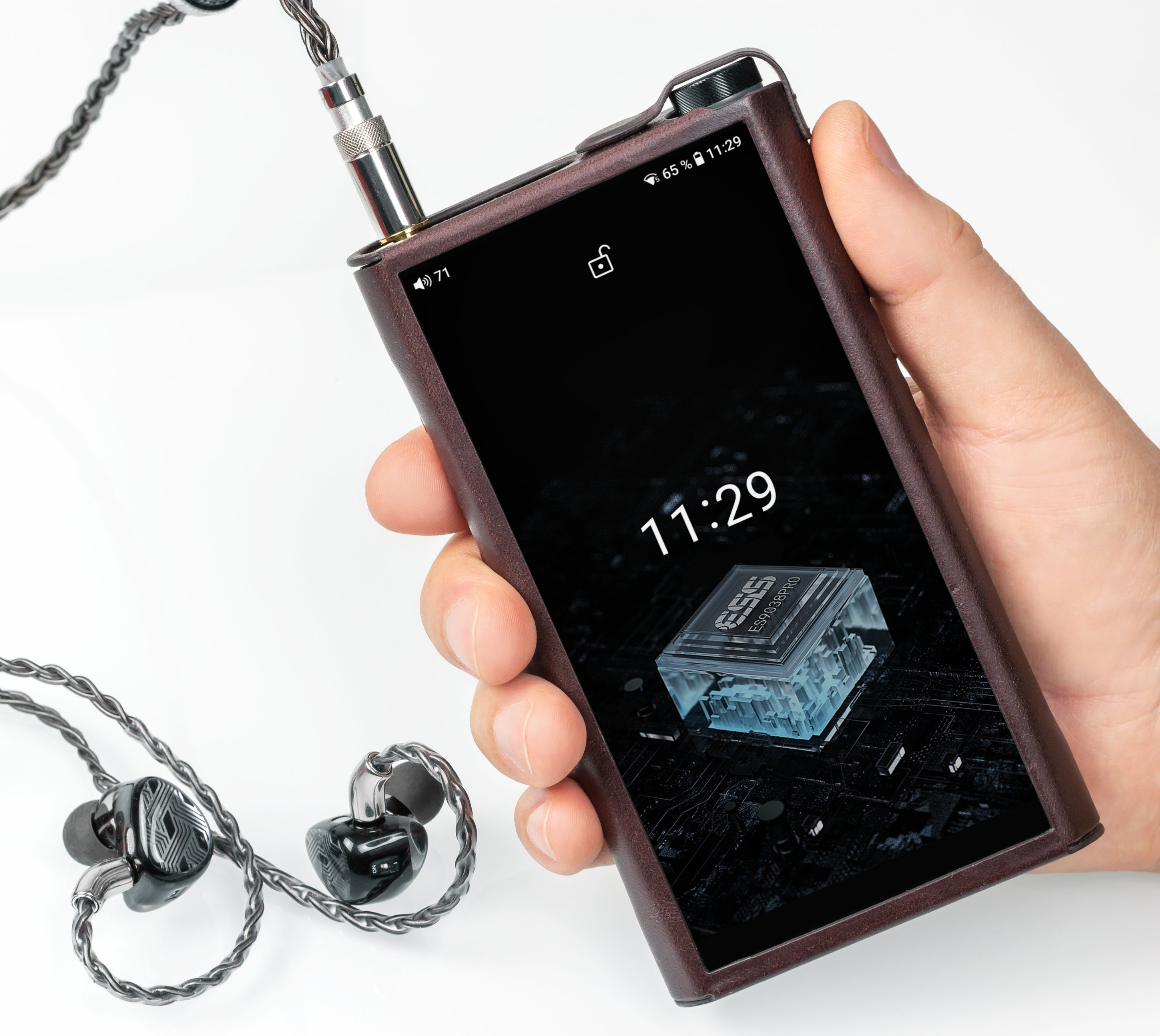
As with the M11S name, S seems to indicate a move from AKM to ESS chips. The headphone amplifier is also completely new, as in M11S. Why does the smaller M11S have two ES9838Q2M chips while the higher-end M15S has just one ES9038PRO? Q2M is a two-channel DAC, whereas PRO has eight channels. In effect, an ES9038PRO contains the equivalent of 4 stereo Q2M sections. Mouser lists an ES9038PRO at about $85, against about $20 for an ES9838Q2M. Manufacturers pay less in volume, but the ratio remains similar. One 9038PRO is therefore no worse than four parallel 9038Q2M chips. FiiO is so proud of it that its image appears on the Android desktop and lock screen.
The digital hardware is more modern. An 8-core processor replaces the 6-core model, and RAM increases from 3 GB to 4 GB. Bluetooth 4.2 becomes 5.0. USB 2.1 is replaced by the more modern USB3.0. The display is larger too. Despite the stronger hardware, battery life remains a high 9 hours.
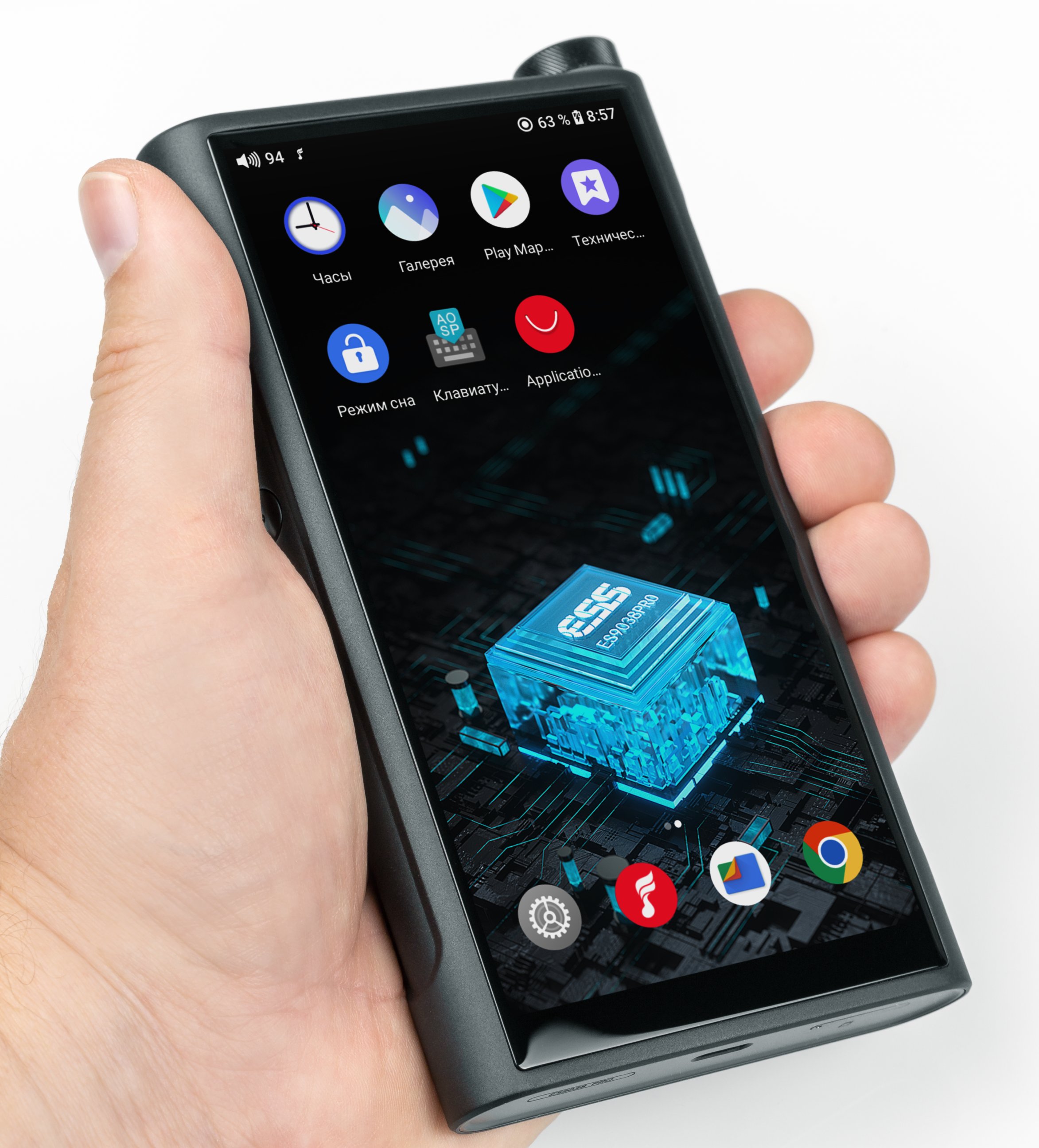
FiiO describes the M15S as a portable player with desktop-class performance. Stationary use brings extra benefits. Desktop mode disconnects the battery and uses external power only, increasing supply voltage and output power significantly. An actively cooled stand is included. This gives strong desktop performance without sacrificing portable size and weight. The M17 player and Q7 amplifier use the same approach.
Our table summarizes specified output power and distortion into typical loads:
| M15S | M17 | M15 | M11S | |
| 3.5 mm headphone amplifier | ||||
| Power into 16 ohms, mW | 535 | 1400 | 405 | 300 |
| Power into 32 ohms, mW | 580 | 1100 | 490 | 200 |
| Power into 300 ohms, mW | 93 | 126 | 70 | 23 |
| Signal-to-noise ratio, dBA | 121 | 122 | 121 | 123 |
| Output impedance, ohms | 1.4 | 1 | 1.4 | 1.5 |
| THD+N into 32 ohms, % | 0.0005 | 0.0007 | 0.0005 | 0.0007 |
| Channel separation, dB | 80 | 75 | 77 | 79 |
| Noise, µV | 3.2 | 3.5 | 3 | 1.8 |
| Balanced 2.5 mm / 4.4 mm headphone amplifier | ||||
| Power into 16 ohms, mW | 531 | 1500 | 420 | 550 |
| Power into 32 ohms, mW | 1200 | 3000 | 800 | 670 |
| Power into 300 ohms, mW | 368 | 500 | 280 | 90 |
| Signal-to-noise ratio, dBA | 120.5 | 123 | 122 | 123 |
| Output impedance, ohms | 2.3 | 2 | 3 | 2.6 |
| THD+N into 32 ohms, % | 0.00075 | 0.0007 | 0.0006 | 0.00043 |
| Channel separation, dB | 105.6 | 108 | 103 | 112 |
| Noise, µV | 5.2 | 7 | 5.2 | 3.1 |
We checked the specifications in our laboratory with 10 W load resistors connected to the 3.5 mm and 4.4 mm outputs. Results were:
- Single-ended 3.5 mm output into 16 ohms Battery-powered output: 370 mW; with external power: 560 mW
- Single-ended 3.5 mm output into 32 ohms Battery-powered output: 280 mW; with external power: 500 mW
- Balanced 4.4 mm output into 32 ohms Battery-powered output: 840 mW; with external power: 1250 mW
We repeated the tests three times and are confident in the results. These are the maximum outputs before overload.
The figures are excellent and provide enough power for almost any headphones, including IEMs, full-sized models and planars. For low-sensitivity headphones, we recommend 4.4 mm. It delivers much more level and better channel separation because there is no shared ground wire.
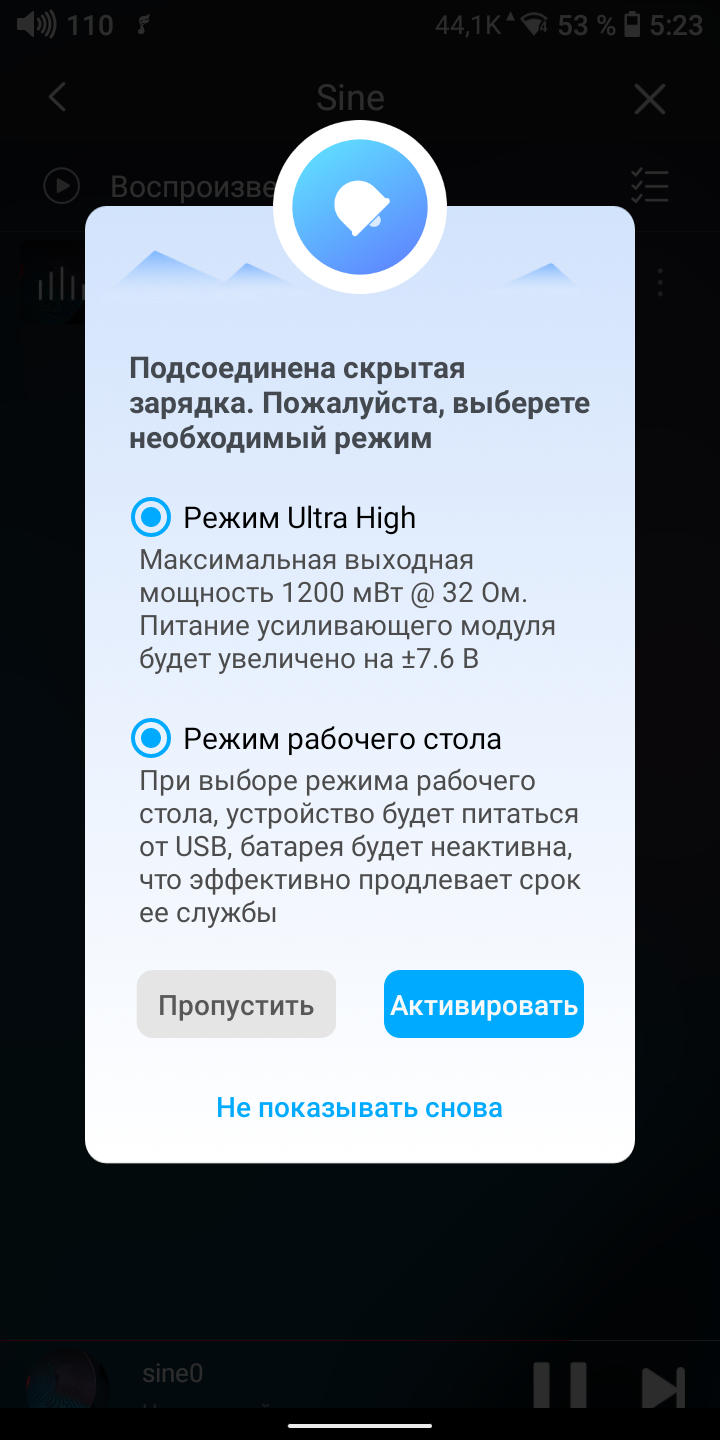
The highest figures come from the balanced 4.4 mm output with external power in Desktop mode, which disconnects the battery completely. This is the mode used for the official specifications. Battery operation gives roughly 1.5 times less power, still very high for a portable player.
The amplifier is clearly powerful, limited mainly by the power supply and heat within a portable case. Extreme output power is rarely needed in practice and increases size and weight. A large, heavy player is simply less convenient in daily use.
There are 4 gain settings on battery power and 5 with external power. Our measurements correspond to output levels of 1, 2, 4 and 6 V RMS. Low gain safely supports sensitive IEMs without excessive power from a sudden volume adjustment.
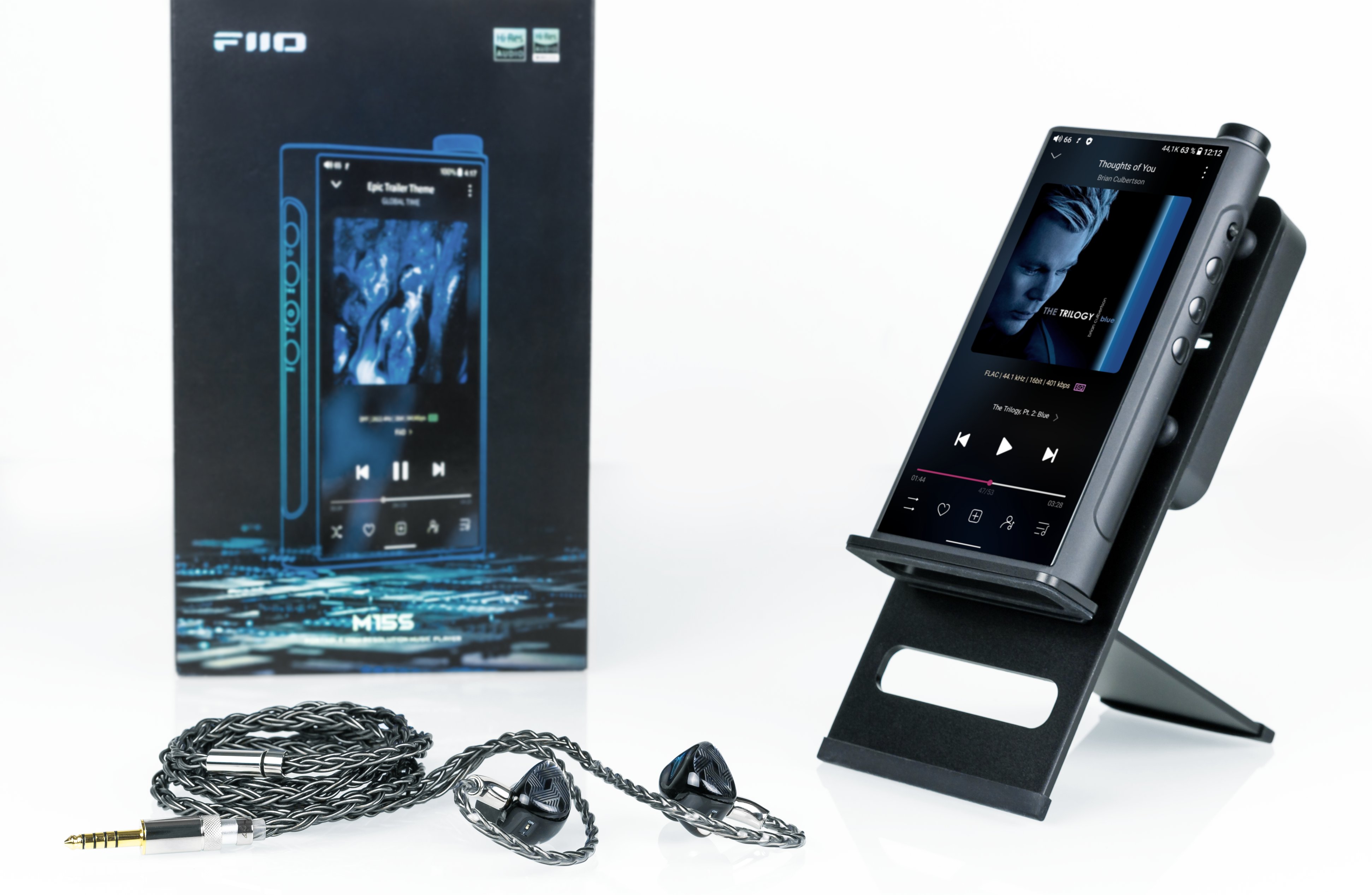
The case remained barely warm even after several minutes of full-level sine-wave output. Music has much lower average power, so heat should not be a concern. The included metal desktop stand has USB power and a fan. We find it useful even without the fan because its angle allows convenient listening and charging.
Like other modern models, the player uses a Snapdragon 660 main processor. Audio passes to a fourth-generation FPGA, then a PLL generates I2S/DSD signals for the DAC. Balanced headphone amplifiers use custom OPA926 current buffers.
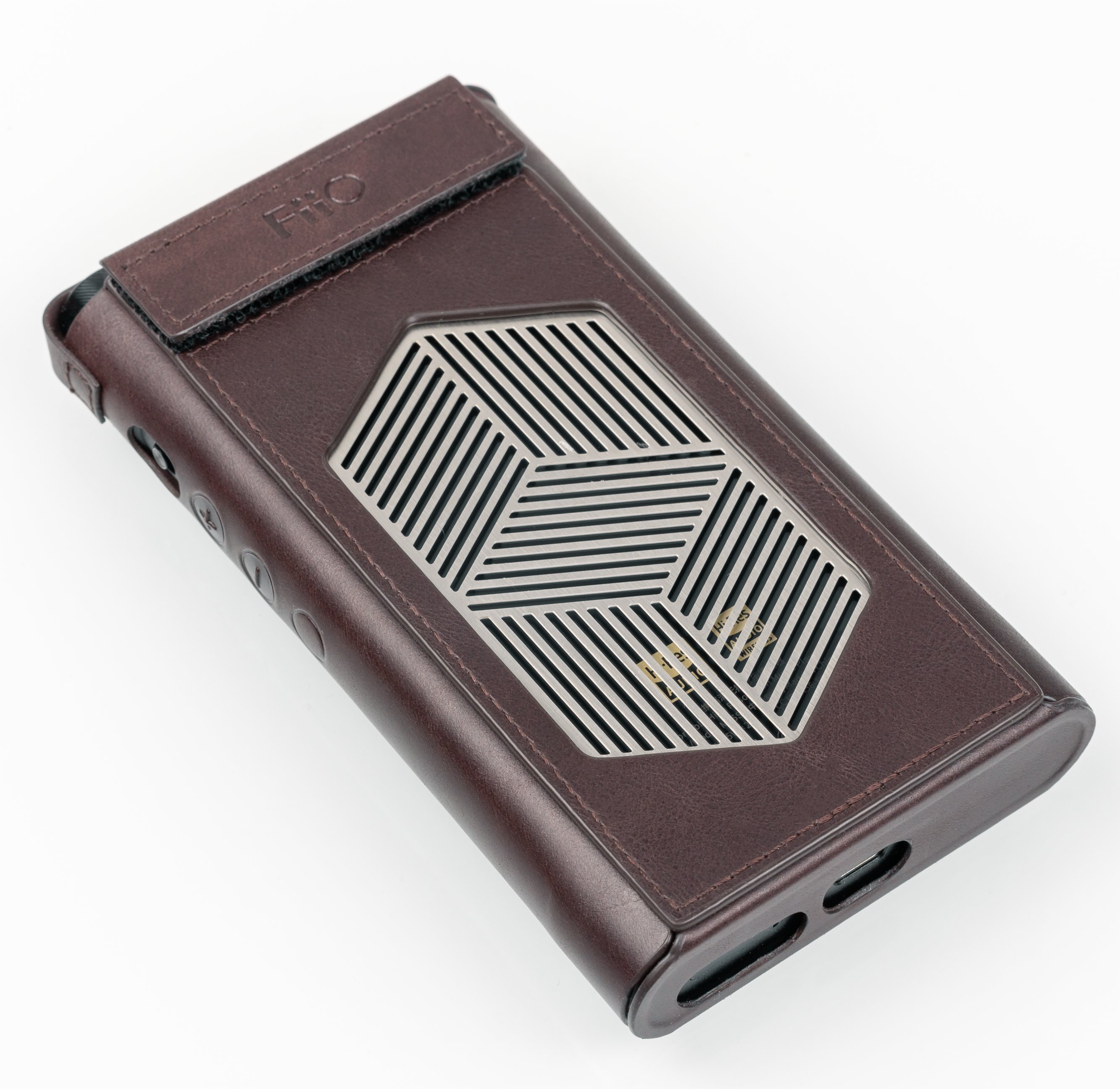
The advanced power system has three stages: battery, bipolar DC-DC conversion and regulators. Each section is separated and isolated. Digital circuitry, DAC, op-amp preamplification and headphone amplification have separate supplies, so headphone load current does not disturb other sections. LDO regulators use current more efficiently and greatly reduce heat.
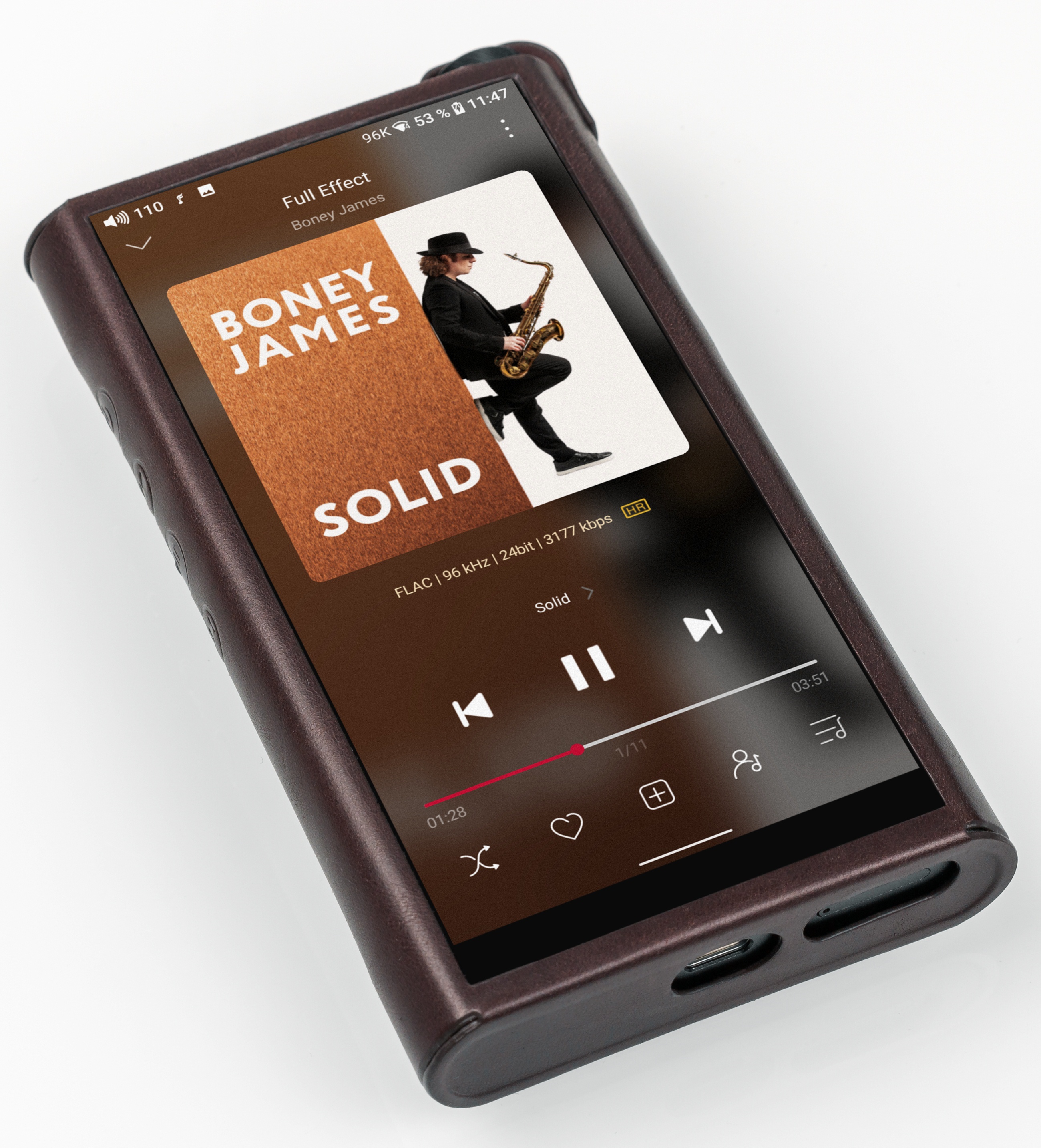
The M15S runs customized Android 10. Unlike ordinary phones, FiiO players bypass the operating-system mixer for bit-perfect playback. Apps also face no restrictions on audio bit depth or sample rate.
There are 6 modes, including Roon Ready and Roon Tested. The latter is something like AirPlay for audiophiles, supporting formats up to 32-bit/768 kHz and DSD512.
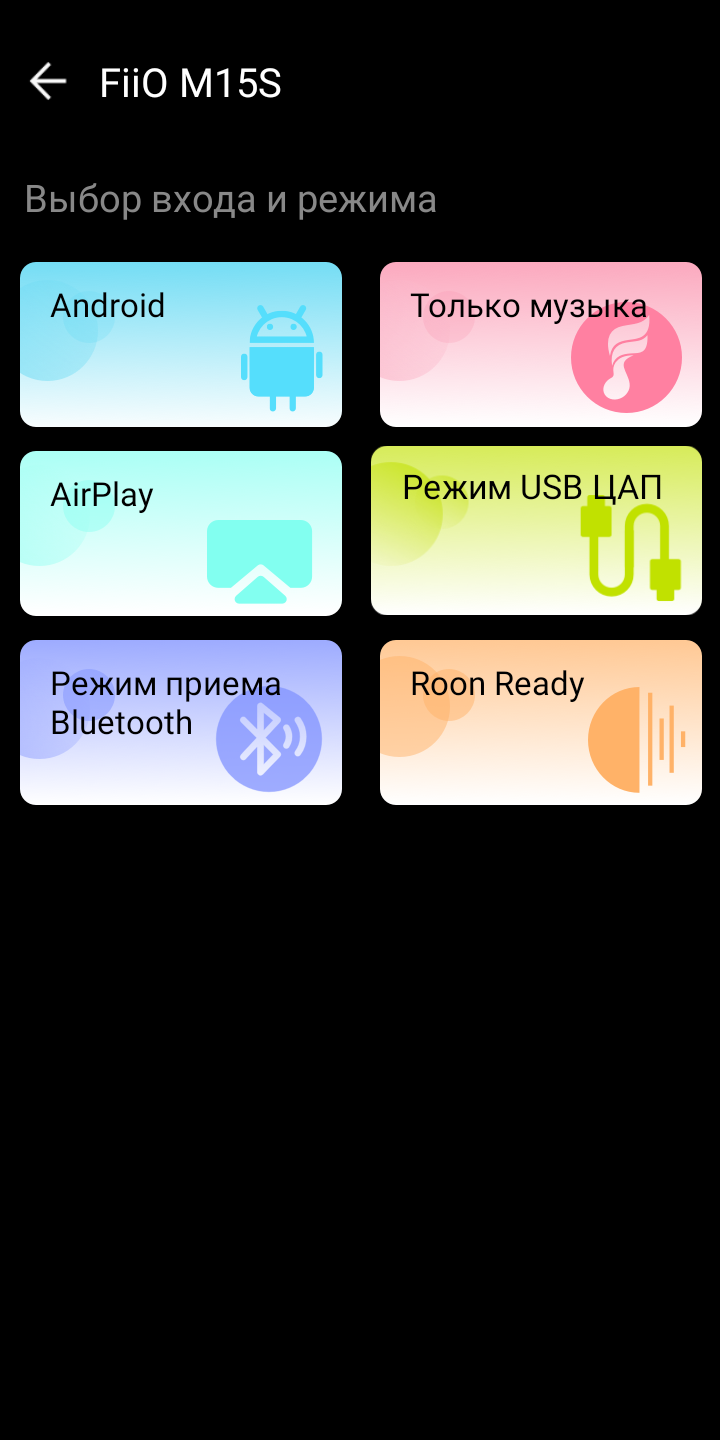
FiiO Music is the main mode. At startup, only the dedicated player appears, unnecessary services stop and the operating system stays out of sight.
Android apps install from FiiO Store without registration or from Google Play with an existing account.
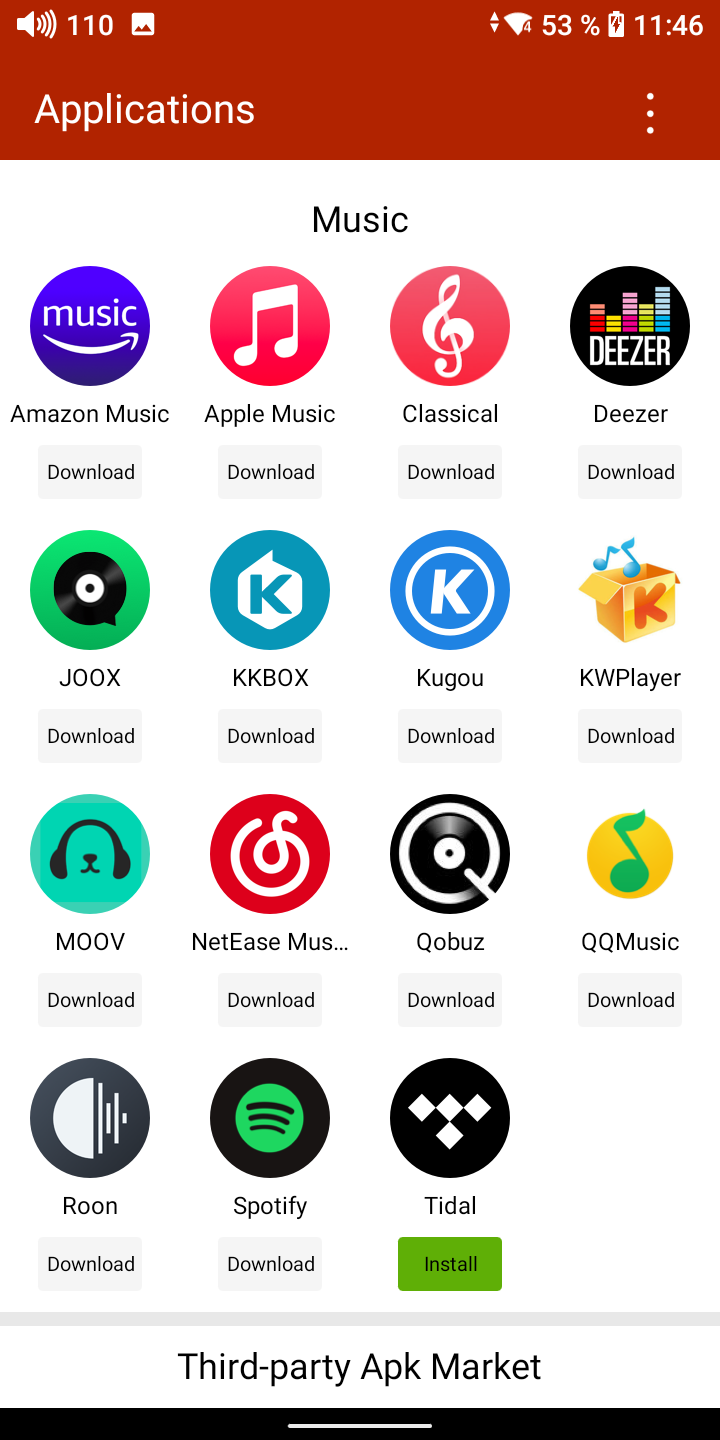
We installed Tidal from FiiO Store. It worked but was an old version requesting an update. FiiO Store is essentially a list of APK links rather than a full app store. We then installed the free APKPure app and used it to install the latest version in one step, without registration. Apps are therefore available even without Google Play or a Google account. The screenshot shows the result.
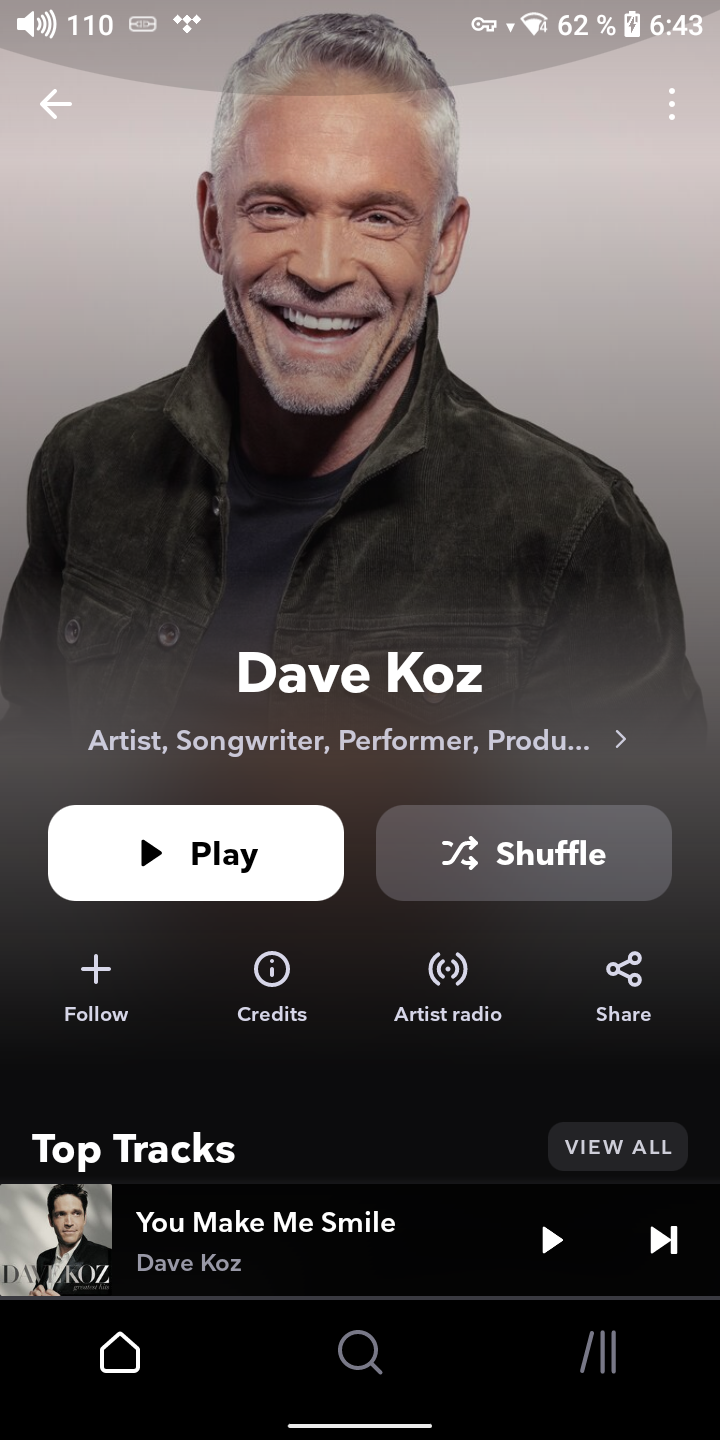


Russian users need a VPN and a suitable account for Tidal. Audio enthusiasts have faced harder obstacles: during the Iron Curtain era, Western records sometimes crossed borders in diplomatic mail, and a few buyers paid a whole month's salary. Today's difficulties and a $10 monthly fee for 100 million tracks are minor by comparison. Other streaming services are available too. Local files remain an option, with 46 GB of fast usable flash storage and microSD expansion up to 2 TB.
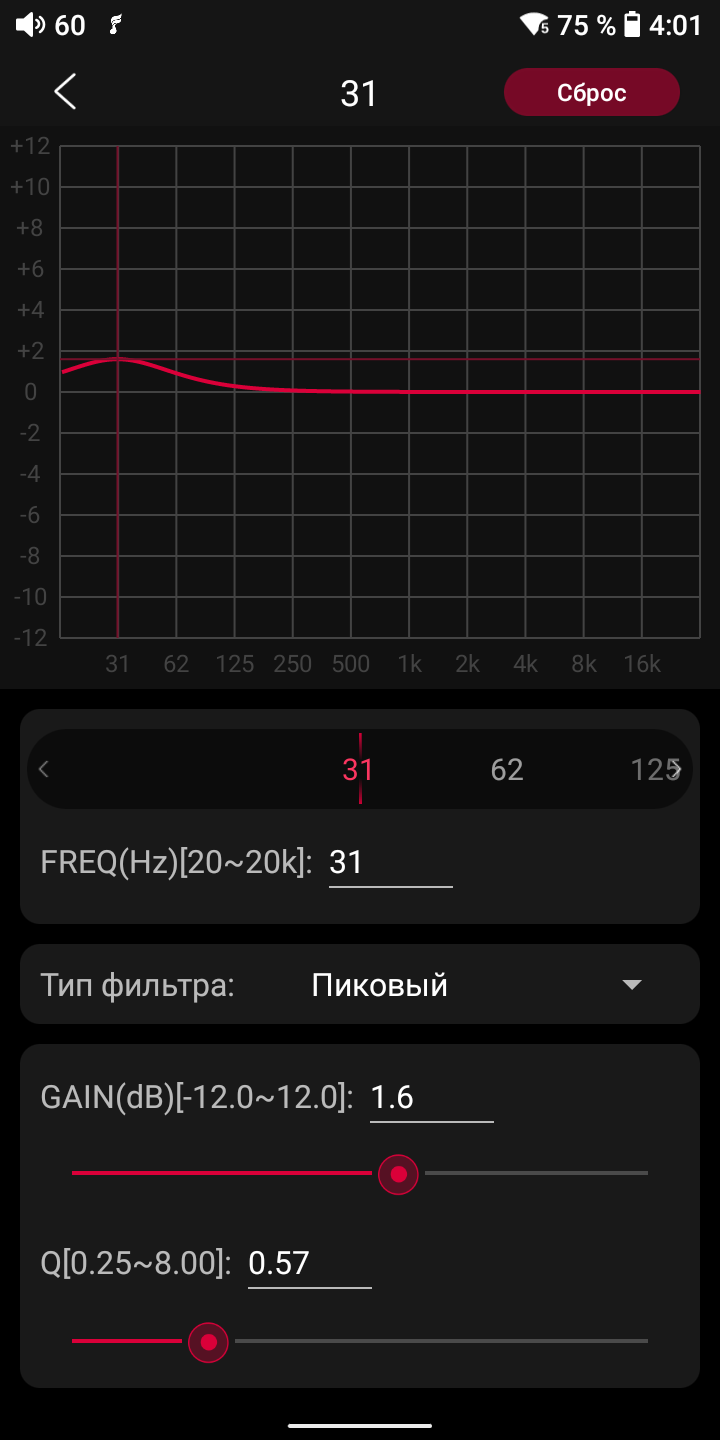
FiiO recently added parametric EQ (PEQ), normally associated with professional equipment. Users can set any filter frequency and Q, with changes drawn on screen.
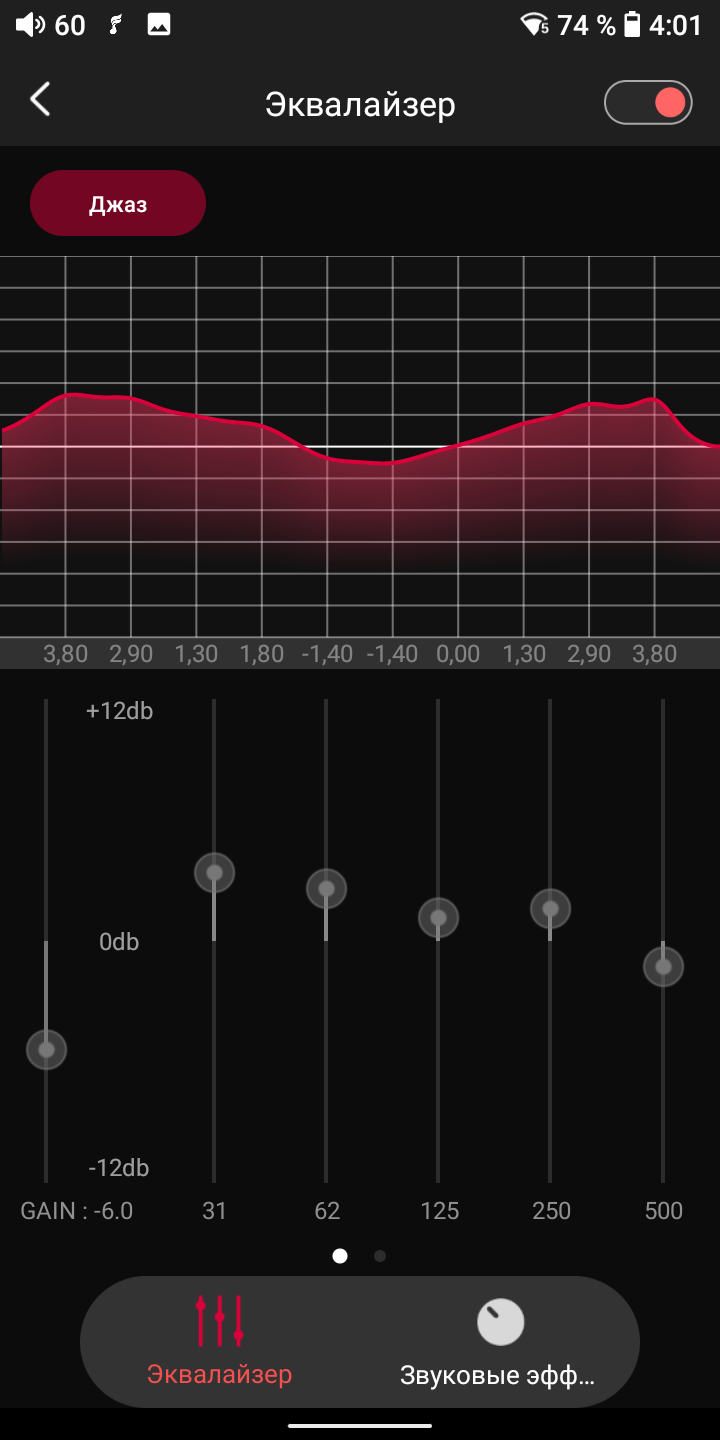
This allows much more precise correction for a headphone model. Conventional 10-band EQ is also available from 31.5 Hz to 16 kHz. We do not recommend its Pop, Rock and Jazz presets: their choices are often questionable, and studios have already set the recording's frequency balance. However, personal headphone-response adjustment is entirely reasonable.
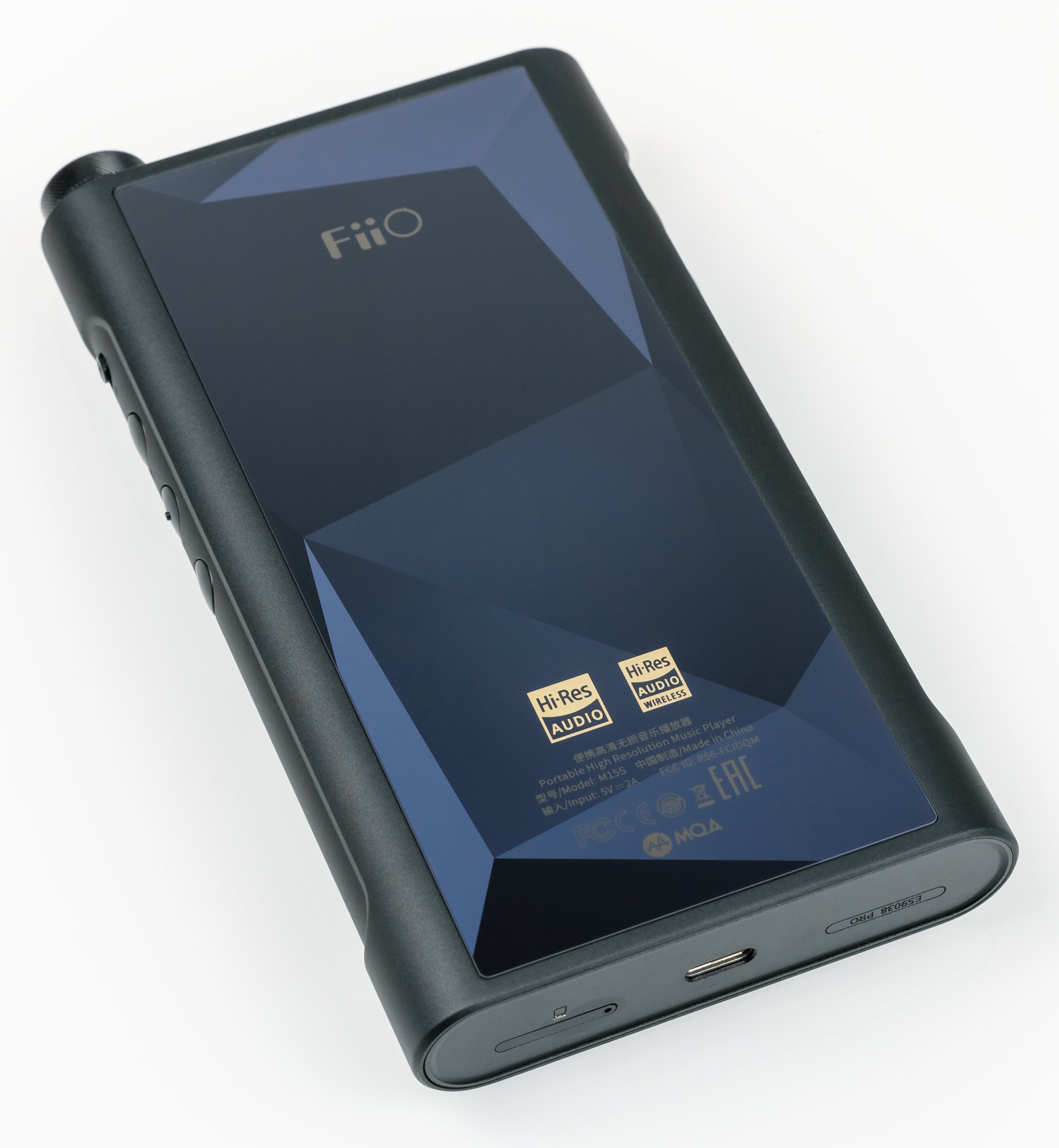
The FiiO M15S also works beyond ordinary player duties:
- As a USB DAC for a desktop or laptop computer
- As a digital source or streamer feeding an external USB DAC
For USB DAC mode, FiiO supplies Windows drivers with ASIO support on the internal storage. Bluetooth reception and transmission also support modern high-quality AAC and LDAC. An SPDIF output is available if needed. This is more like an advanced media centre than a simple player, as are other current FiiO models.
RMAA measurements
We tested the 3.5 mm output in line mode at a fixed 2 V, recording through a Lisk Audio MUX 2.
| Frequency response variation (40 Hz–15 kHz), dB | +0.01, -0.01 |
Excellent |
| Noise level, dB(A) | -121.1 |
Excellent |
| Dynamic range, dB(A) | 121.0 |
Excellent |
| Harmonic distortion, % | 0.00023 |
Excellent |
| THD+N, dB(A) | -108.0 |
Excellent |
| Intermodulation distortion + noise, % | 0.00056 |
Excellent |
| Stereo crosstalk, dB | -85.7 |
Excellent |
| Intermodulation at 10 kHz, % | 0.00056 |
Excellent |
| Overall rating | Excellent |
Detailed 24-bit/44 kHz line output measurements
Results were excellent and consistent with the specifications: FiiO claims 124 dB signal-to-noise, and we measured 121 dB.
We also checked performance under load, using 16-ohm resistors at a moderate 2 V output, corresponding to 250 mW.
| Frequency response variation (40 Hz–15 kHz), dB | +0.00, -0.01 |
Excellent |
| Noise level, dB(A) | -118.9 |
Excellent |
| Dynamic range, dB(A) | 118.9 |
Excellent |
| Harmonic distortion, % | 0.00078 |
Excellent |
| THD+N, dB(A) | -99.2 |
Excellent |
| Intermodulation distortion + noise, % | 0.00091 |
Excellent |
| Stereo crosstalk, dB | -77.0 |
Very good |
| Intermodulation at 10 kHz, % | 0.00095 |
Excellent |
| Overall rating | Excellent |
Detailed 24-bit/44 kHz headphone amplifier measurements into 16 ohms
A 16-ohm load is especially demanding because current rises significantly. Figures decline slightly as expected, but remain very high. They agree with the manufacturer's <0.0005% specification into 32 ohms.
Sound
We assessed the FiiO M15S with many headphones, from hybrid IEMs to high-impedance full-sized models and demanding low-impedance planars. Music ranged from classical to jazz and pop, in standard 16/44 and high-resolution formats, including modern streaming services.
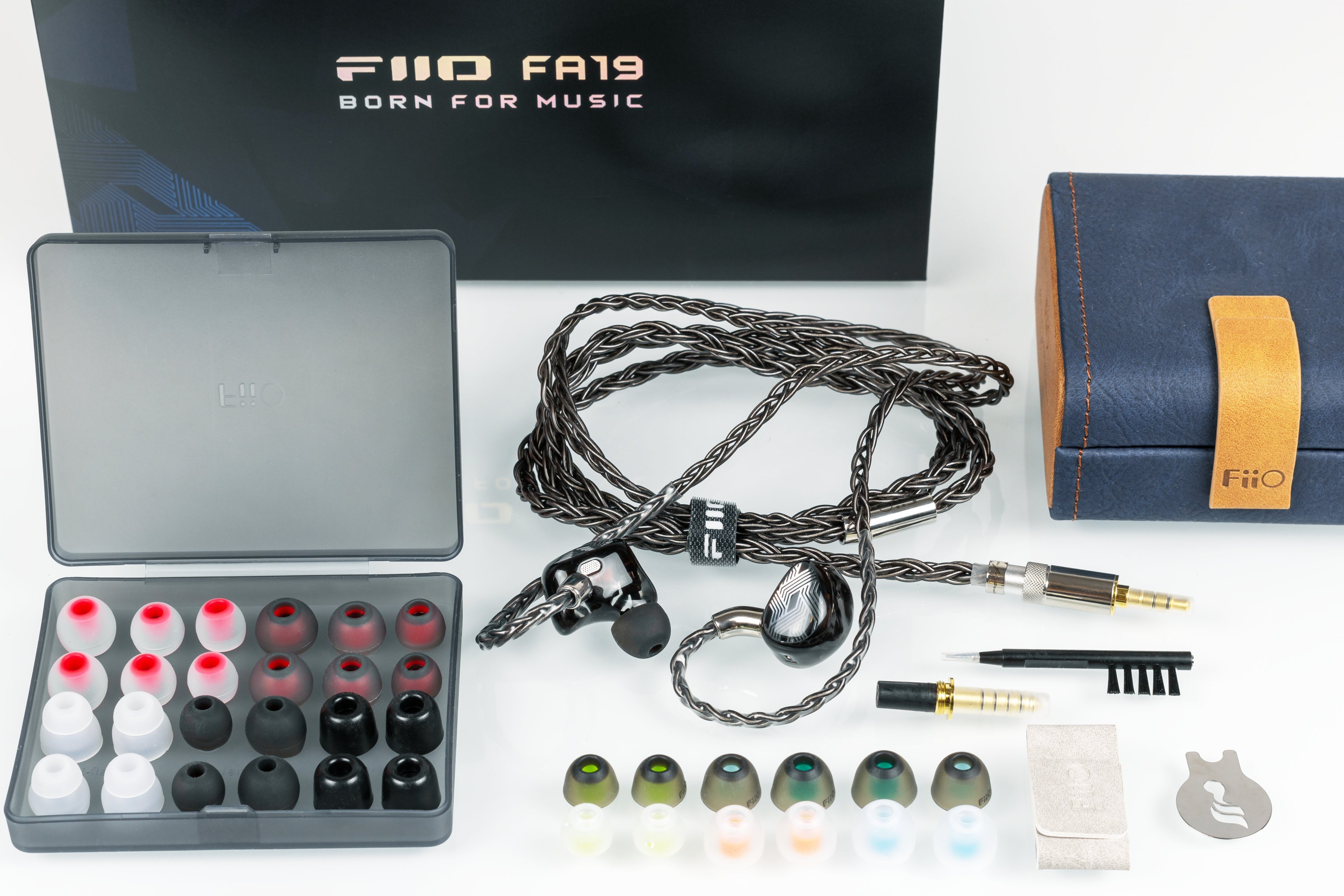
For balanced 4.4 mm and standard 3.5 mm testing, we used FiiO FA19 headphones. This flagship has 10 custom Knowles balanced-armature drivers. The M15S drove them easily even at low gain. Like other FiiO players, it works well with demanding full-sized headphones but is also optimized for sensitive IEMs, its main portable use. Low gain switches the hardware into a suitable operating mode. Without it, high power could raise idle noise or risk headphone damage if 500 mW were selected accidentally. FiiO has planned for this properly. The FA19's extensive accessories offer connection options and tips to suit anatomy and preferences. We preferred the white tips to the standard grey ones.
The M15S sounds very similar to the flagship M17, with recognizable character and presentation. It shares the M17's strengths, and the ES9038PRO's advantages are clear. However, we felt the M17's tuning was deliberately strong and distinctive, probably because of its unusual powerful amplifier. The M15S is more balanced and should suit a wider audiophile audience. We think the newer M11S-style amplifier helps. Compared with the M11S's pleasant, slightly sweet and relaxed sound, the M15S has much greater dynamics, detail and force. This suits modern IEMs aiming for an even Harman-target balance, which can sound slightly dull with ordinary players. Expensive models are another matter: the FiiO FA19 works excellently with this player and makes listening very engaging.
Balanced 4.4 mm suits low-sensitivity full-sized headphones and planars especially well. We heard slightly better dynamics and stereo imaging. The difference from 3.5 mm is not dramatic, however; that output remains good.


Conclusions
The M15S fills an important gap in FiiO's range. Its combination of features makes it an excellent choice for listening at home and while travelling. The flagship M17 remains number one, but is large and heavy, and not every headphone needs its power. The M15S gives up very little sound quality and may be more attractive in other specifications and price. It improves on the original M15 in every area. Fans of AKM converters can consider the new FiiO M23 with flagship AK4499EX chips. The M11S with ES9038Q2M is another interesting option for a smaller budget. FiiO now offers a wide choice for different budgets and preferences.
Note. This is an adapted machine translation into English. It follows the “In simple terms” approach. Read the original article at https://prosound.ixbt.com/interfaces/fiio-m15s.shtml.