
Snorry Joule review and test — high-sensitivity planar magnetic headphones from Russia
Maxim Liadov
Snorry headphones have been made for more than 10 years and are well known to experienced audiophiles. This is a 100% Russian manufacturer specializing successfully in the design and production of its own planar headphones in Russia. Planar, planar magnetic, and isodynamic describe the same technology. Those familiar with Snorry know it as an expensive, impressive audiophile brand. Its headphones compete successfully with leading international brands while retaining their own identity and sound.
Good news arrived in 2024: the Snorry Joule, a model with unusual capabilities. It is the manufacturer's first attempt at a mass-market headphone with a relatively affordable planar price. Snorry promises to save on appearance and accessories, not sound. Exceptionally high sensitivity reduces amplifier demands, so no expensive dedicated amplifier is required. According to the manufacturer, the Joule works with almost anything, including tablets, smartphones, and audio interfaces. Where ordinary planars play too quietly or distort, these problems should not arise. Let us test that claim.
Snorry Joule specifications
| Headphone type | Open-back, over-ear |
| Driver type | Planar magnetic (isodynamic) |
| Sensitivity | 103.5 dB/mW (100 Hz–10 kHz) |
| Impedance | 28 ohms |
| Cable length | 1.2 meters |
| Cable connector | 3.5 mm, with 6.3 mm adapter |
| Weight | 400 g |
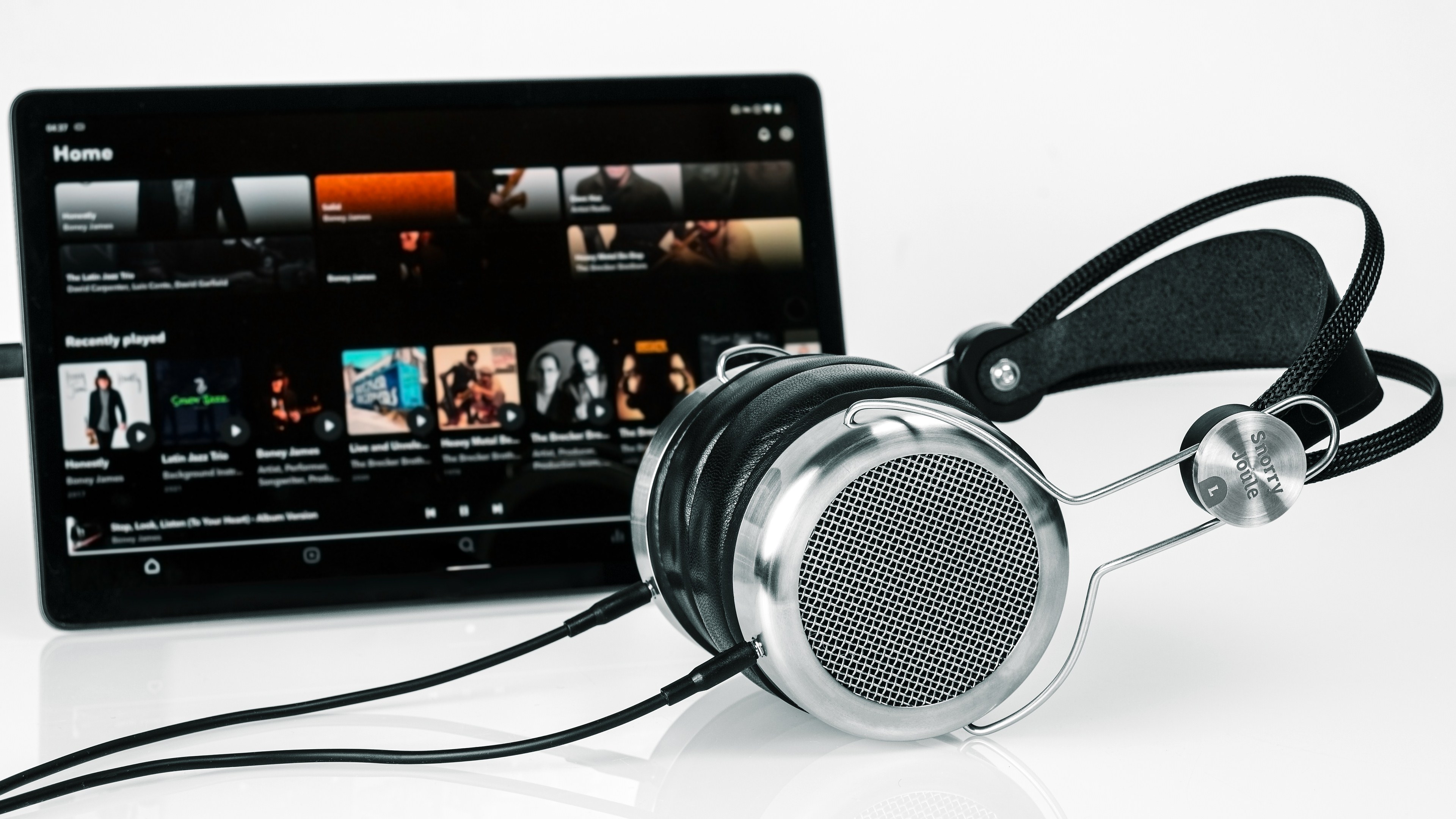
We immediately wanted to test whether a planar headphone could really work from almost any output. We connected an ordinary Lenovo tablet with a quiet headphone output. Volume had to be set to maximum, but playback remained clean and comfortable. For comparison, we connected the Hifiman Sundara Closed, one of the louder competing planar models. It was barely audible and no longer comfortable to listen to.
Hifiman specifies 98 dB/mW sensitivity, versus Snorry's 103.5 dB/mW. These are nominal figures, usually measured with a single 1 kHz sine wave. If a headphone response has peaks and dips, perceived loudness can differ greatly from the specification. Why publish figures at all? Often it is tradition and reassurance for customers. A round number may look more reassuring, while small print allows specifications to change without notice. Material properties vary slightly between batches, so figures do change over time. Knowing this, we should not place too much weight on marketing numbers.
The practical test is simple: put on the headphones and play familiar music. Modern recordings are useful because they cover the whole spectrum. In our comparison, the volume knob indicated a 6 dB loudness difference, apparently agreeing with the specifications. But Snorry had much more bass, while Hifiman had more treble and sounded subjectively louder there. Equalizing the balance and reducing treble resonances makes Hifiman quieter, requiring another two or three decibels of gain.
Bass requires the most energy, and we increase it with amplifier volume. Why not boost it with EQ? Modern recordings since 2000, including remasters, are usually mastered close to 0 dB, filling the available digital range. There is no headroom to increase RMS level, so boosting can cause clipping immediately. Good modern equalizers normalize automatically by lowering overall level without drawing attention to it. Rather than relying on automation, it is wiser to reduce the excessive frequency range and then raise amplifier volume instead of boosting missing frequencies.
The effective sensitivity difference then reaches 9 dB, which is clearly audible and strongly limits source choice. Ordinary planars cannot be driven properly by typical phones and tablets. A separate USB-C DAC becomes necessary, with the additional risk of damaging the delicate charging socket if its cable is pulled.
The experiment showed that the Snorry Joule is indeed very sensitive. It currently leads mainstream planars in this respect and suits consumer sources. We chose one of Hifiman's louder models as the close competitor. Models such as the HE400SE, rated at 91 dB/mW, demand a powerful amplifier; even some desktop amplifiers will struggle.
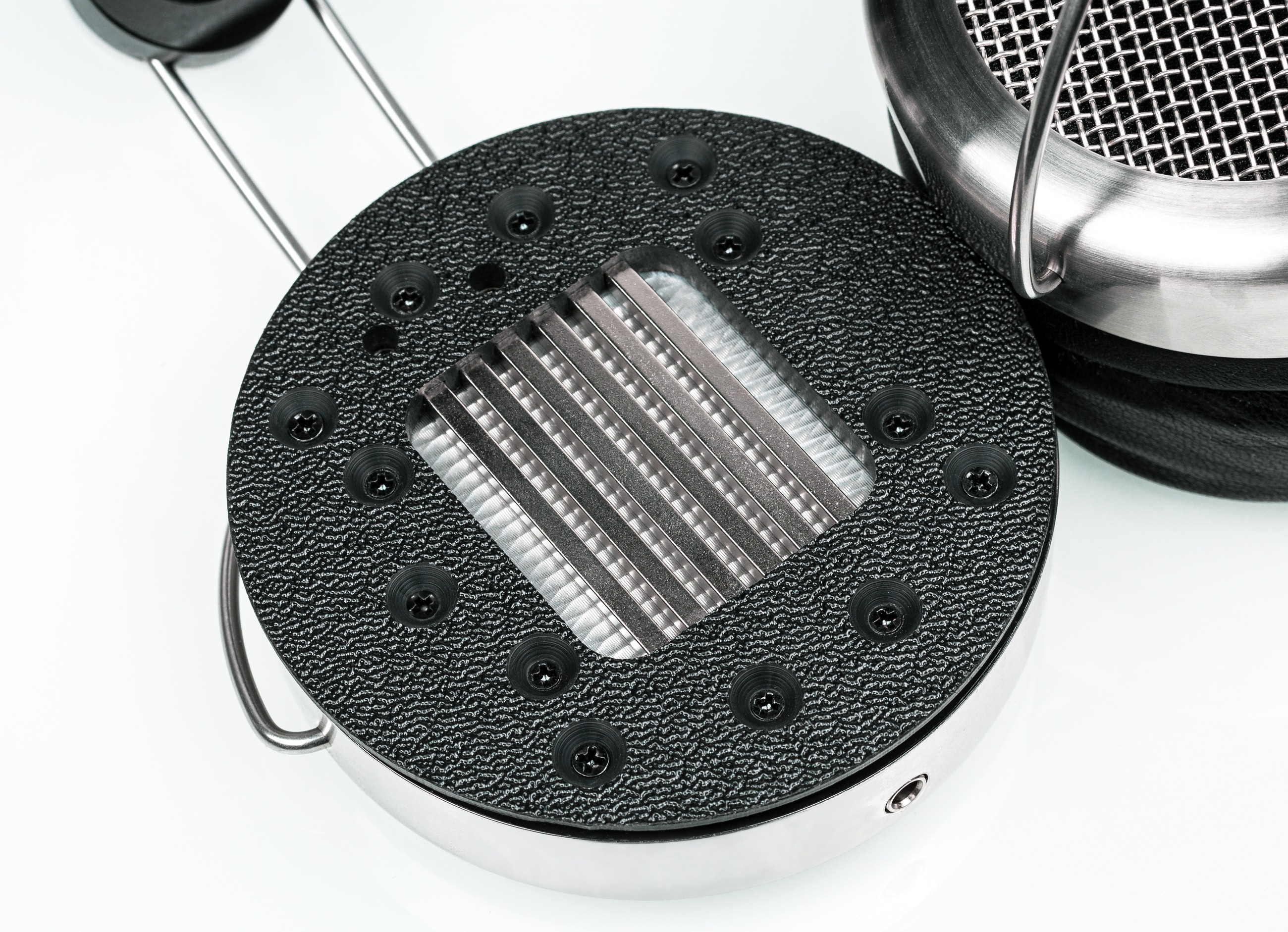
How did the Russian developers achieve this? Until recently, planar headphones struggled to approach 100 dB. The Joule uses a patented magnetic system based on a Halbach array and powerful N52 neodymium magnets. The manufacturer plans to explain this development on its website. We were more interested in practical performance.
The second test used the MOTU M2 professional audio interface. With Hifiman, the problem was not simply volume headroom: audible, unpleasant distortion appeared around the 60% knob position, especially on peaks. The amplifier could not handle the demanding 20-ohm load. It was sufficient for Snorry, however. At 50%, sound was loud, clean, and undistorted. Increasing volume further added level without distortion. Joule's higher 28-ohm impedance helps by drawing less current and avoiding overload. A typical headphone amplifier reaches peak power around 32 ohms, where both current and voltage are sufficient. High-impedance headphones can lack voltage and sound quiet and weak; very low-impedance headphones can demand too much current and sound harsh and distorted.
The MOTU M2 amplifier was therefore enough for the Joule. What did comfortable volume mean numerically? A 0 dBFS sine wave measured 0.5 Vrms. Squaring voltage and dividing by impedance gives only 9 mW, enough for modern recordings through the Joule. Above 0.9 Vrms, the MOTU M2 amplifier clipped sharply, cutting off signal peaks and sounding harsh. That is only 25 mW into 32 ohms. Yet this is far from the worst or quietest professional interface output: it uses a TI OPA1688 dedicated low-distortion headphone amplifier. Some interfaces use a basic cheap op-amp producing only 6 mW.
We then tried an even simpler source: integrated audio. Our advanced ASUS motherboard's Realtek ALC897 produced only 0.3 Vrms in headphone mode; line mode was quieter still. The Realtek ALC256 in an expensive recent ASUS laptop with an OLED screen and Harman Kardon speakers gave exactly the same result. Even maximum volume was insufficient for some recordings. The muddy, flat sound also made us want to stop listening. Claims that modern integrated audio now satisfies everyone did not match our experience with several reasonably expensive computers. In our tests, mainstream Realtek audio was often worse than before. Perhaps the belief that integrated audio is always enough encourages even ASUS and other manufacturers to pay it too little attention.
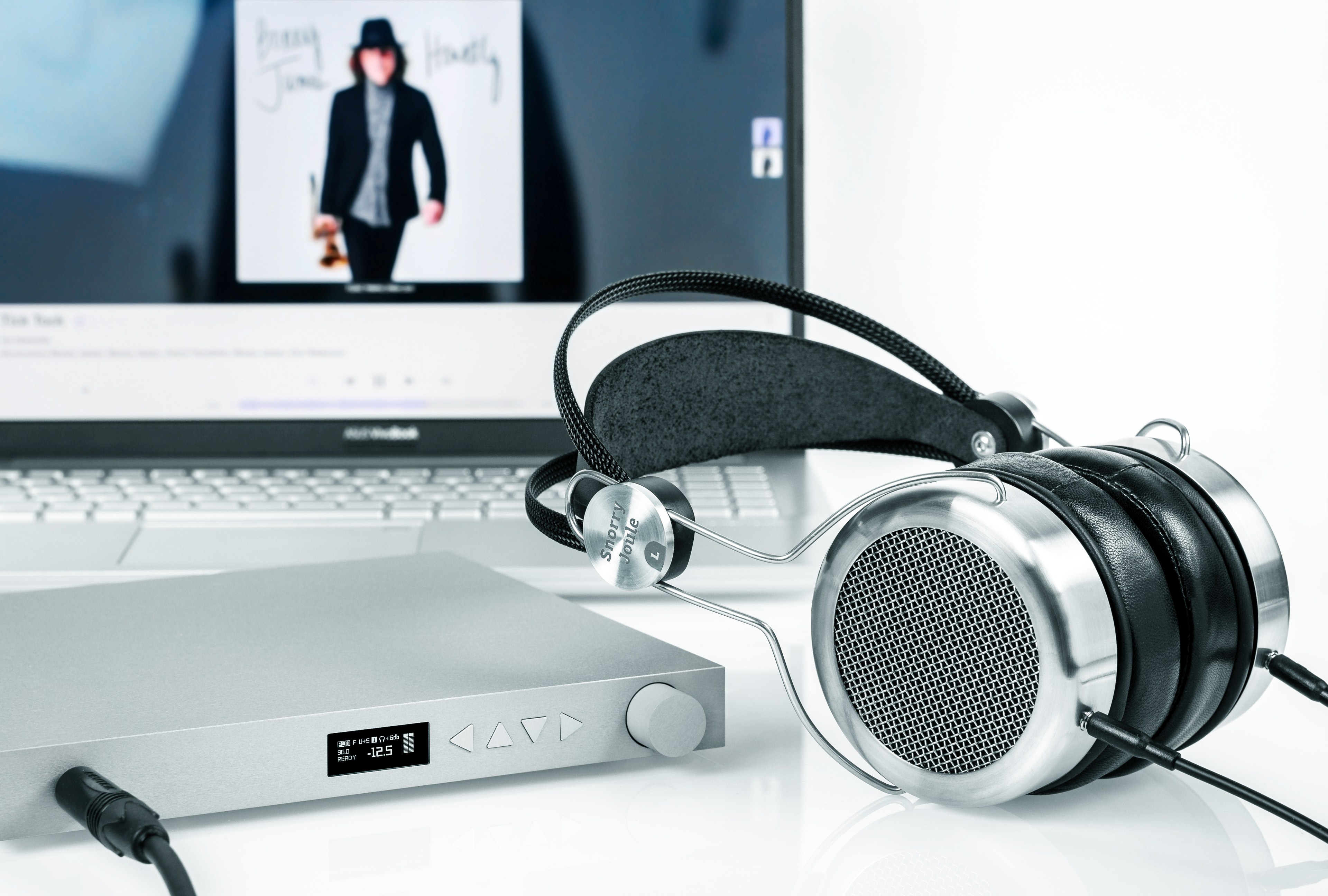
We next used a high-quality audiophile source to explore the headphones' full potential. Would replacing compromised mass-market outputs with a proper DAC and amplifier change the sound? We connected the Russian high-end Lisk Audio MUX 2 interface, priced at RUB 250000. It uses dual-mono CS43198 chips and a discrete transistor amplifier delivering 1000 mW of undistorted power into 32 ohms. A linear power supply, good cables and connectors, and the other requirements of an audiophile system were provided.
The improvement with the high-end source and amplifier was easy to hear. The Joule therefore works well with audiophile equipment as well as mainstream devices. The lowest hardware gain setting provided enough volume. Sound was excellent. The DAC's high detail partly balanced the headphones' softness, making a good combination. The DAC's interpolation filter can be selected for a sharper or softer presentation.
Comparison with Snorry's flagship Trion clarifies the Joule's position. First, the Joule is smaller and lighter. To photograph Trion from the same angle, we had to move the camera half a meter farther away. Second, prices differ greatly: RUB 45000 for Joule versus RUB 230000 for Trion. Third, amplifier requirements differ enormously. Trion needs at least 500 mW; integrated audio or the MOTU interface is unsuitable. We tried anyway: music was barely audible, and a small volume increase quickly produced harsh distortion.
This explains Snorry's wish to bring planar magnetic technology and its benefits to ordinary users at a reasonable price. A large, continuous diaphragm with a flat coil moves coherently, creating a strong unified wavefront like a good full-size floorstanding speaker with bass drivers. Dynamic drivers struggle to reproduce this effect: their diaphragms are often several times smaller and can develop bending motion and high distortion. The sound is also open because the diaphragm moves in a magnetic field without rear pressure. Planars have disadvantages too: size, weight, amplifier demands, and the need for careful handling. A fall from a meter onto concrete can tear the thin tensioned diaphragm. Dynamic headphones are much tougher because their thicker diaphragms are not stretched in the same way. These factors traditionally made planars specialist products for careful listeners with good, expensive audio systems.
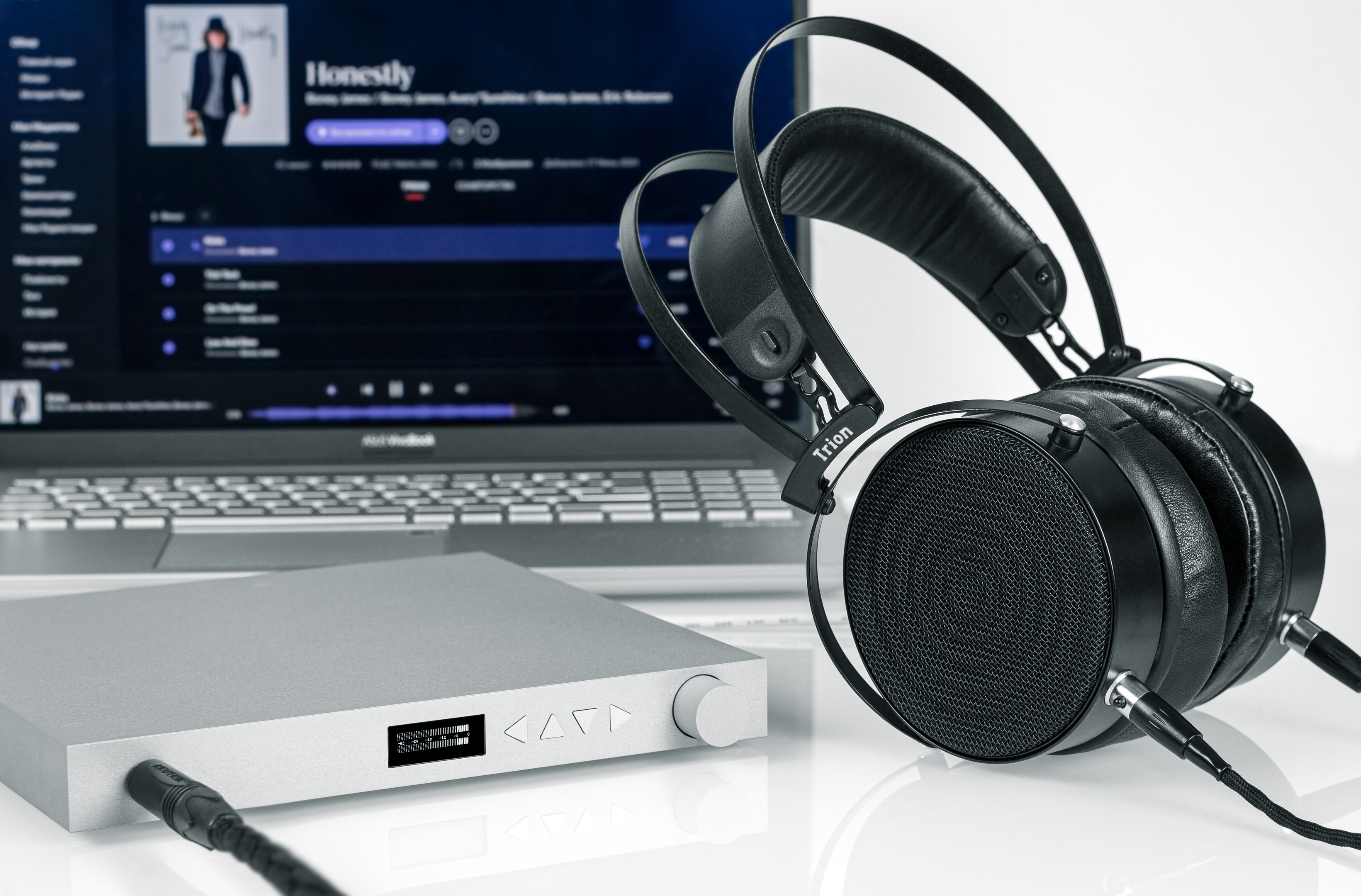
We also compared the RUB 230000 Snorry Trion with two acknowledged top models, the Audeze LCD-4z at RUB 500000 and LCD-5 at RUB 530000. Trion sounds very different but belongs to the same high class. It is closest to the LCD-5, with similarly softened, reduced treble. Planar enthusiasts should hear it. Choosing among headphones of this class is personal taste. Construction and ergonomics match or sometimes exceed the competitors. The included cable is clearly better than Audeze's basic braid, while Audeze sells a silver Premium cable separately for $600. Snorry includes a proper cable from the start. Audeze wins on the carrying case and exclusive shell materials. Snorry is more functional in appearance, closer to the LCD-X. In sound it can compete with anything and offers excellent value. People can debate preferences for hours without agreement. We like all these top models for different reasons. Snorry holds its own among many brands and has found an audience; otherwise it could not have made products for 10 years and patented new developments.
The Joule resembles the Trion and shares its sound approach: coherent, pleasant bass without boom, even midrange, and reduced upper-midrange energy around the ear's main 2 kHz resonance. This is deliberate, supporting higher levels and long listening without fatigue. Reduced treble detail deserves criticism. The treble is present but softened and slightly recessed. Many enjoy this; others prefer a more neutral or aggressive presentation. There can be no single best headphone for everyone. A balanced response is not automatically enjoyable either: excessive pursuit of uniformity can produce dull, unclear sound with no individual character. We prefer distinctive models. Listeners adapt quickly to response and tonal character; enjoyment then matters most. If music produces no emotional response, graphs and arguments are of little value. Overall, Joule is simpler than Trion, but highly competitive and interesting against its own price class. Personal preference decides the rest, so listening before choosing is essential.
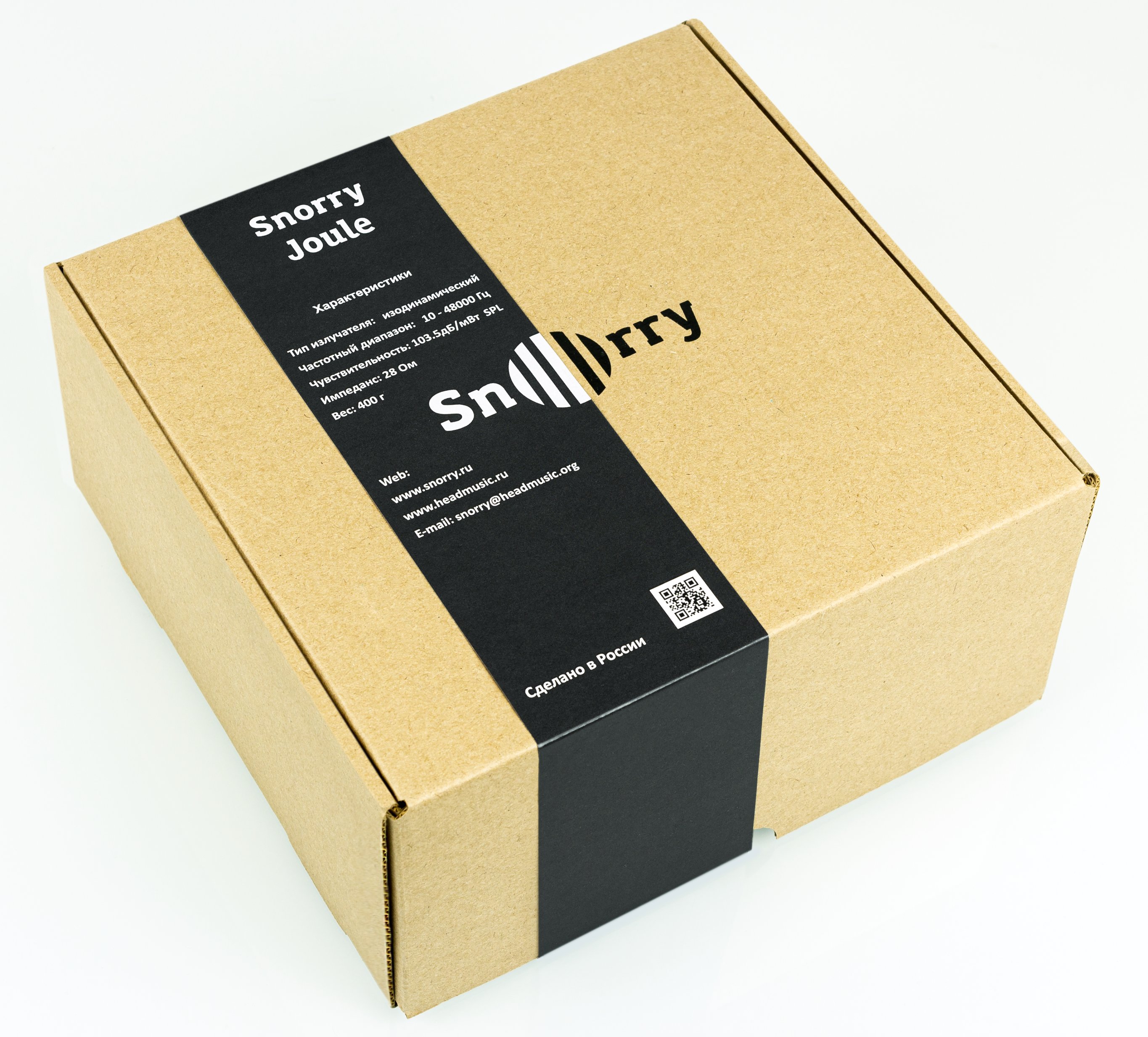
The headphones can be ordered from the official store https://headmusic.ru. They arrive in cardboard packaging.
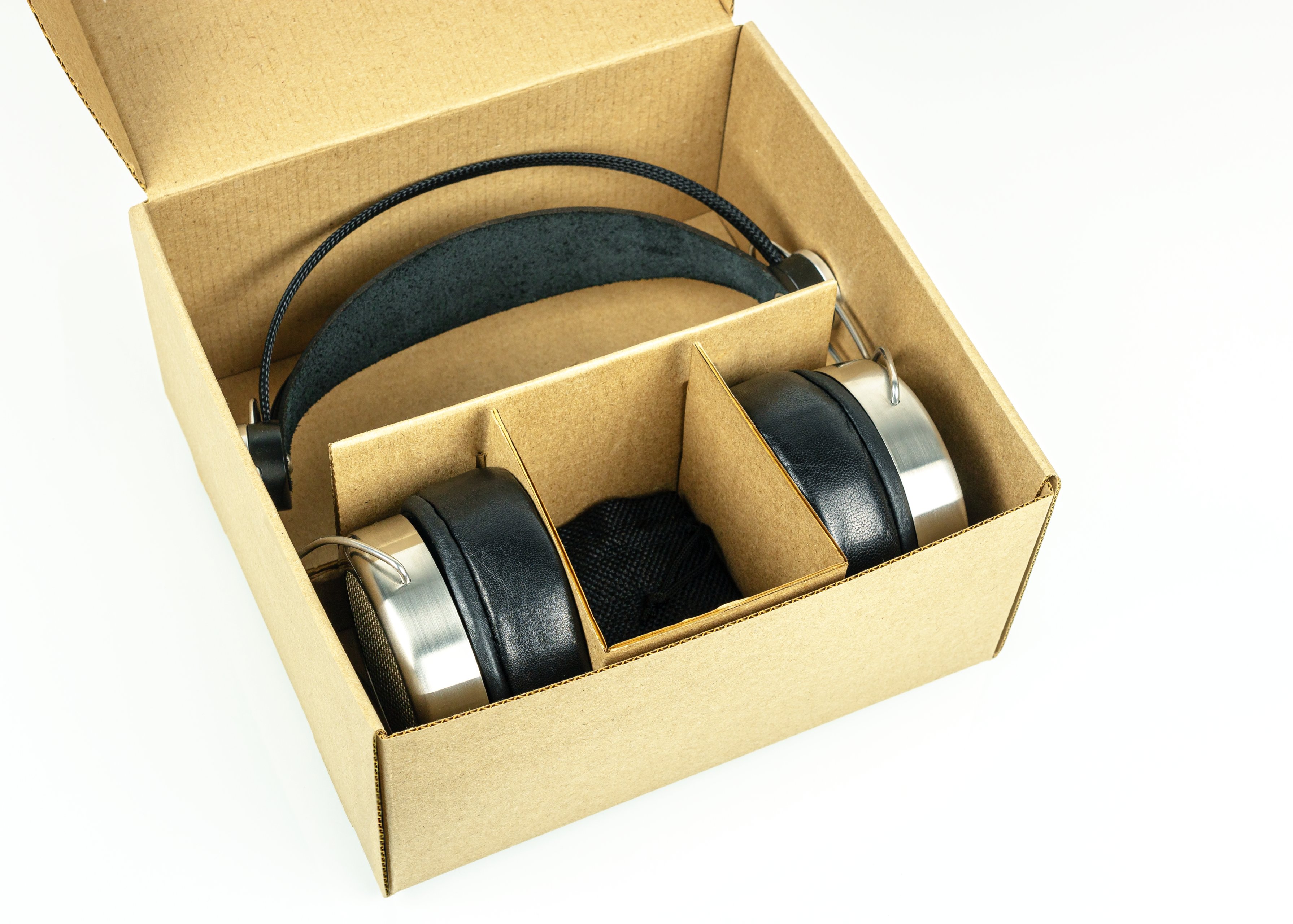
Unlike the flagship models, packaging is kept very simple. The buyer avoids extra cost and can purchase any additional accessories later.
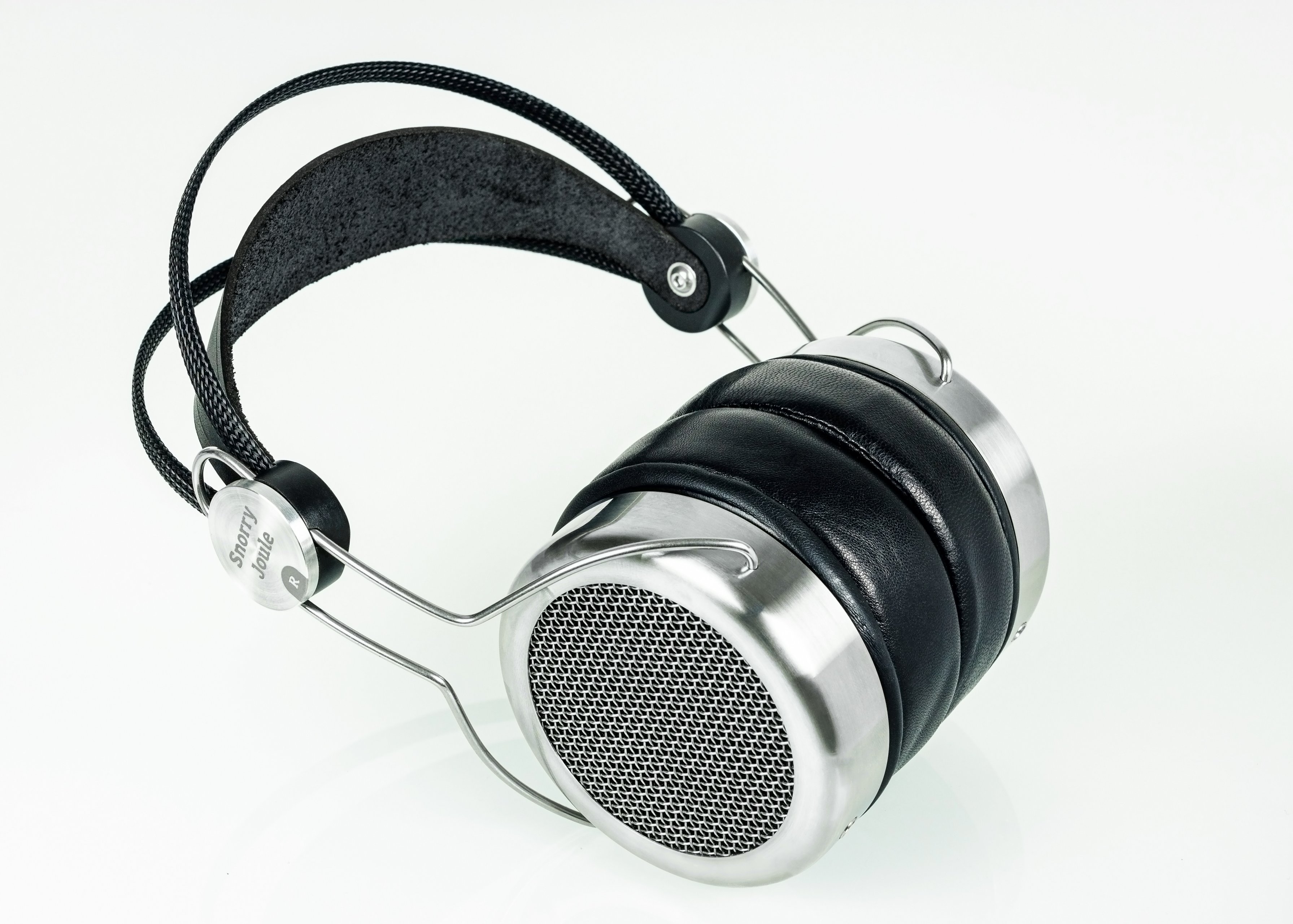
Build quality pleased us. Cups and supports are stainless steel, giving a strong, reassuring construction. The appearance immediately distinguishes the Joule from other models, although it may be too functional for a mainstream product. We asked about other cup finishes. Color choices are planned, but the model is still new and the current version is ready to order. The manufacturer is studying demand and welcomes requests.
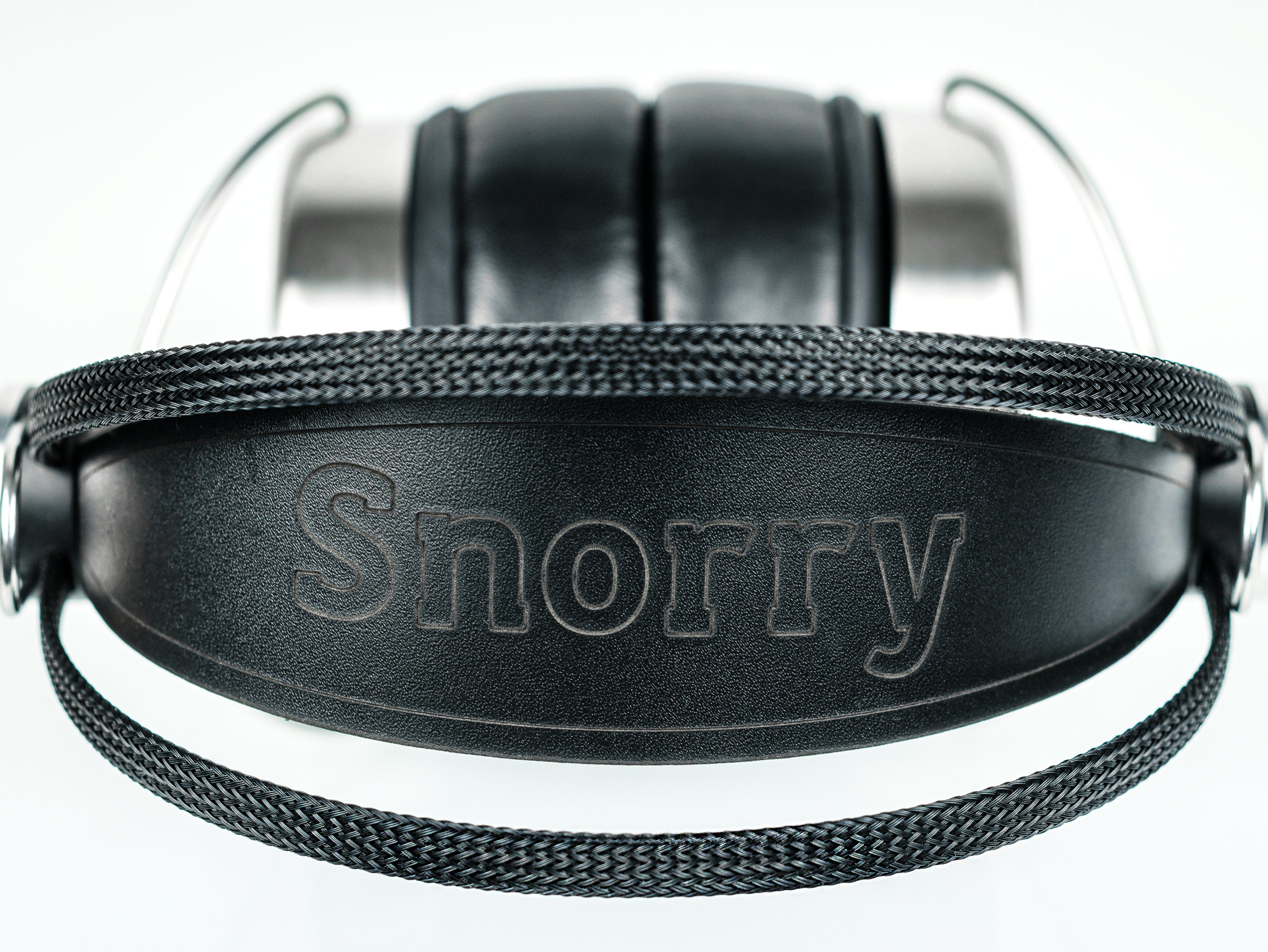
The headband is leather, and materials generally feel pleasant. Functionality and comfort are very good.
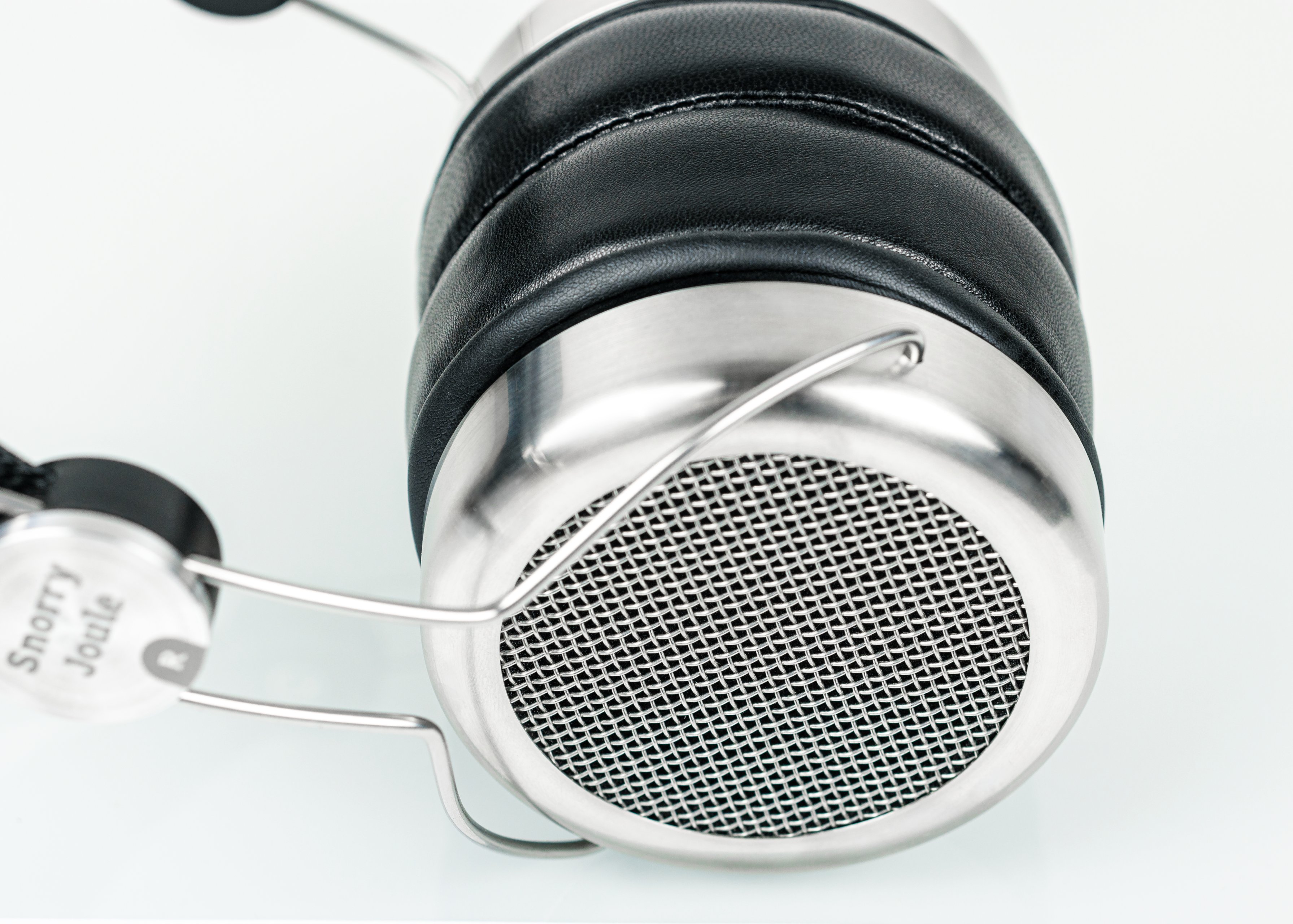
Although the cups do not swivel, specially shaped pads give a comfortable clamp. This also makes the structure stable and quiet when handled. Nothing rattles or moves loosely. Hifiman headphones can rattle when shaken; Snorry has no such problem.
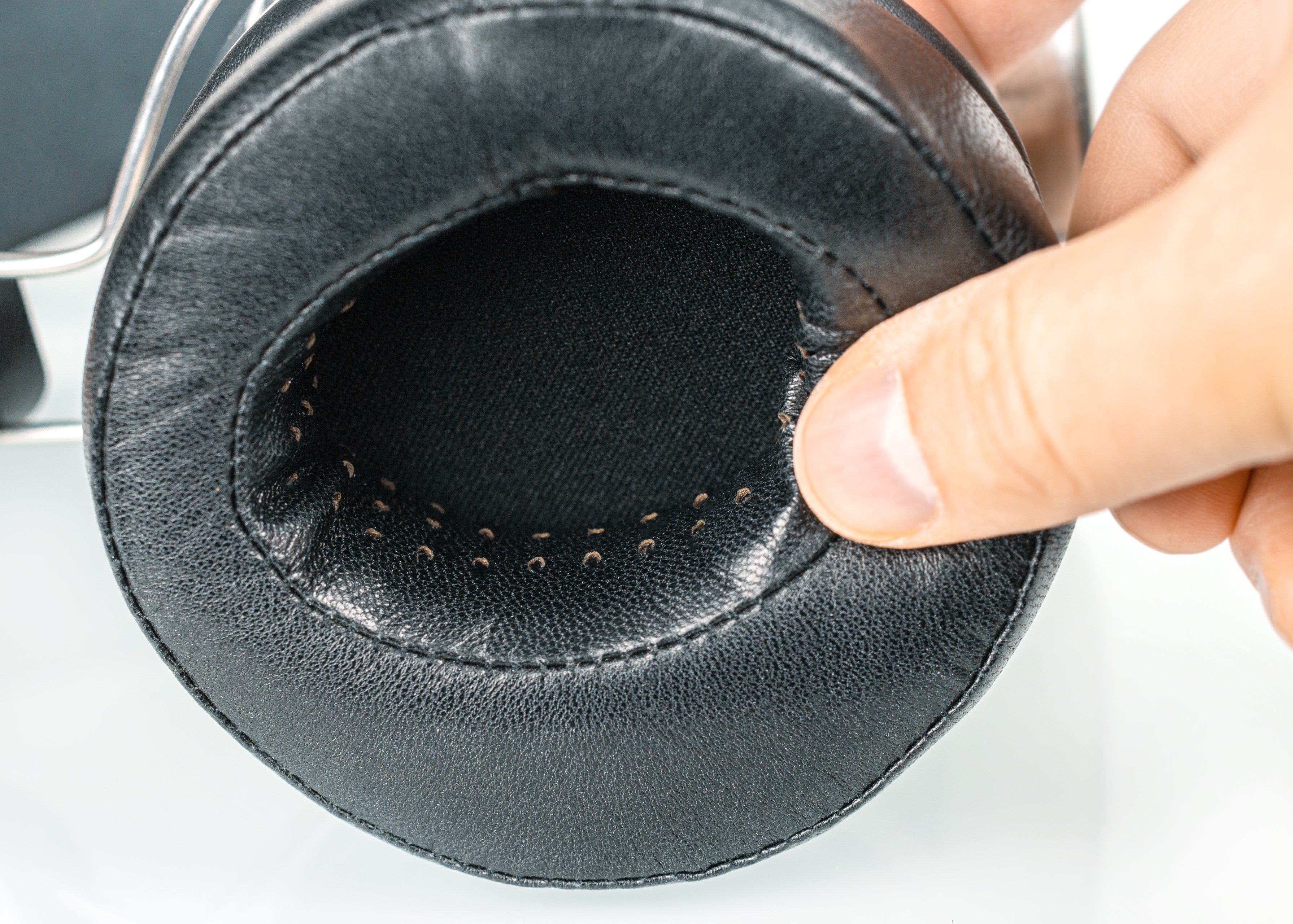
The pads use perforated leather and soft foam cushions. They are replaceable and shaped to follow the head. In our experience, very large ears may need more room. The manufacturer is approachable and asks customers to mention any need for wider pad openings in advance.
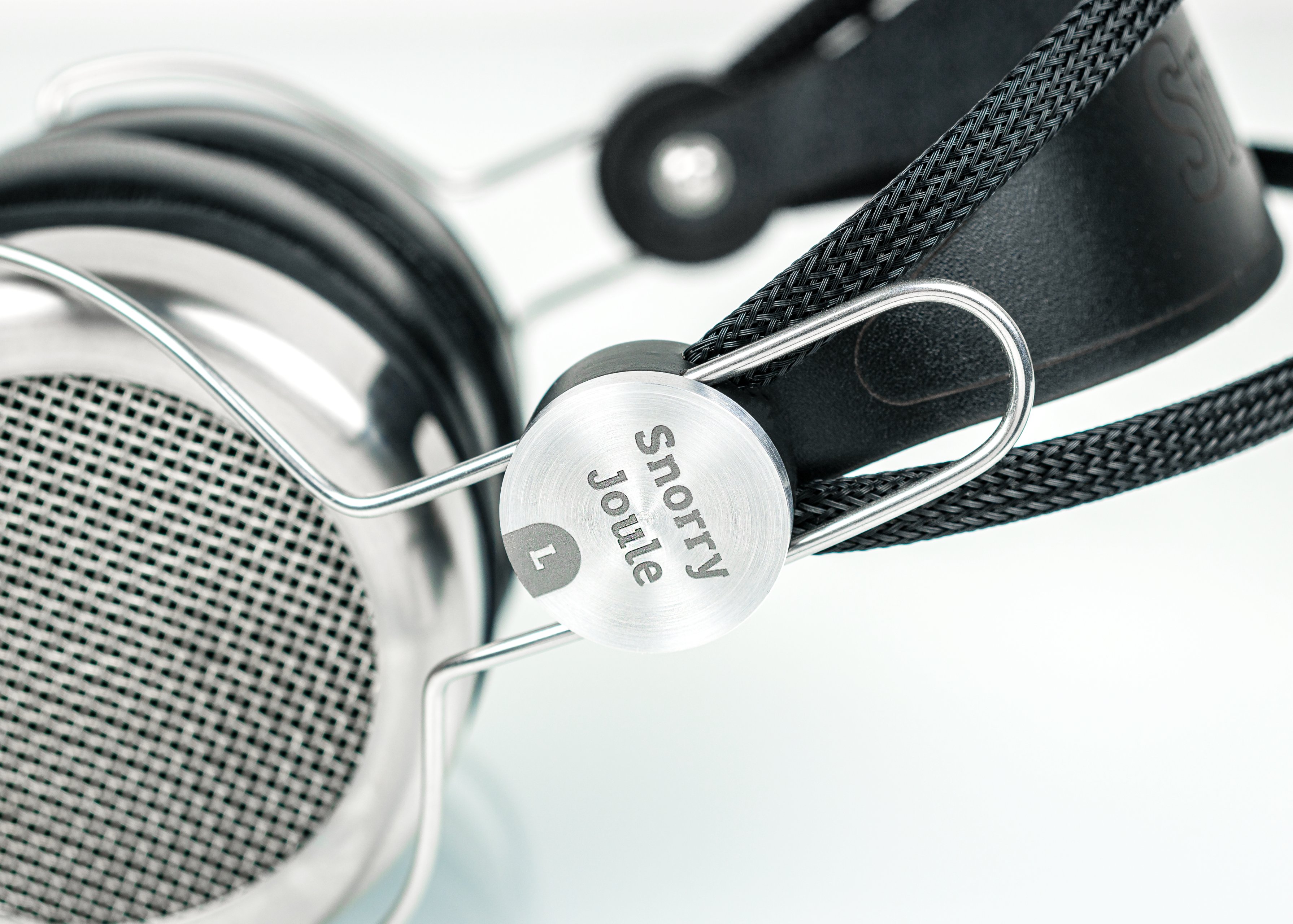
Fit adjustment works well. There was ample extension for the author's large head, and the headband also adjusts for smaller heads. Clamping felt comfortable, neither loose nor excessive.
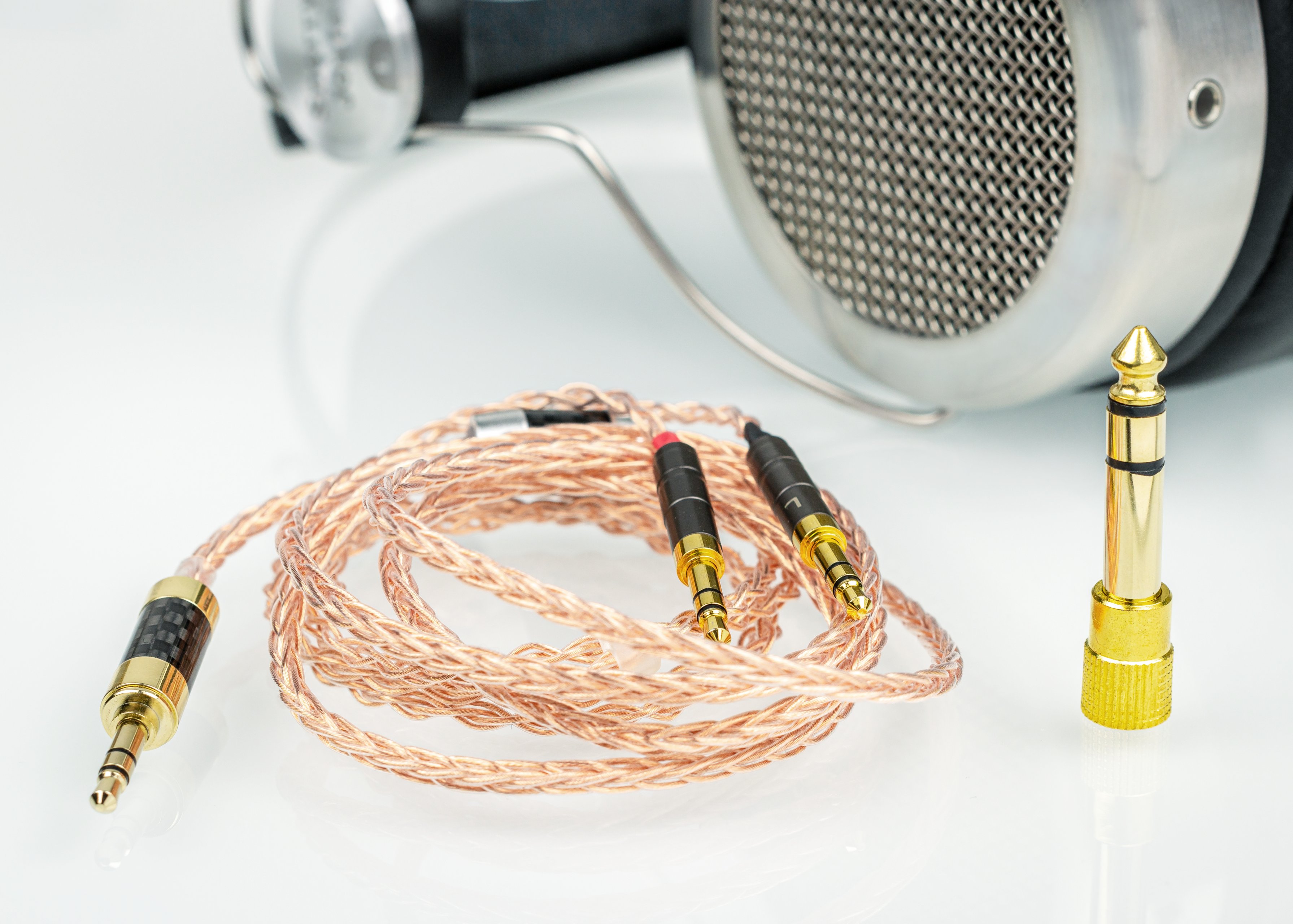
A detachable cable is appropriate for an audiophile product. The included inexpensive cable does not particularly match the visual design, but was chosen for its sound. It can be replaced, including with a balanced cable. Standard 3.5 mm cup sockets make alternatives easy to find. A 3.5 mm to full-size 6.3 mm adapter is included.
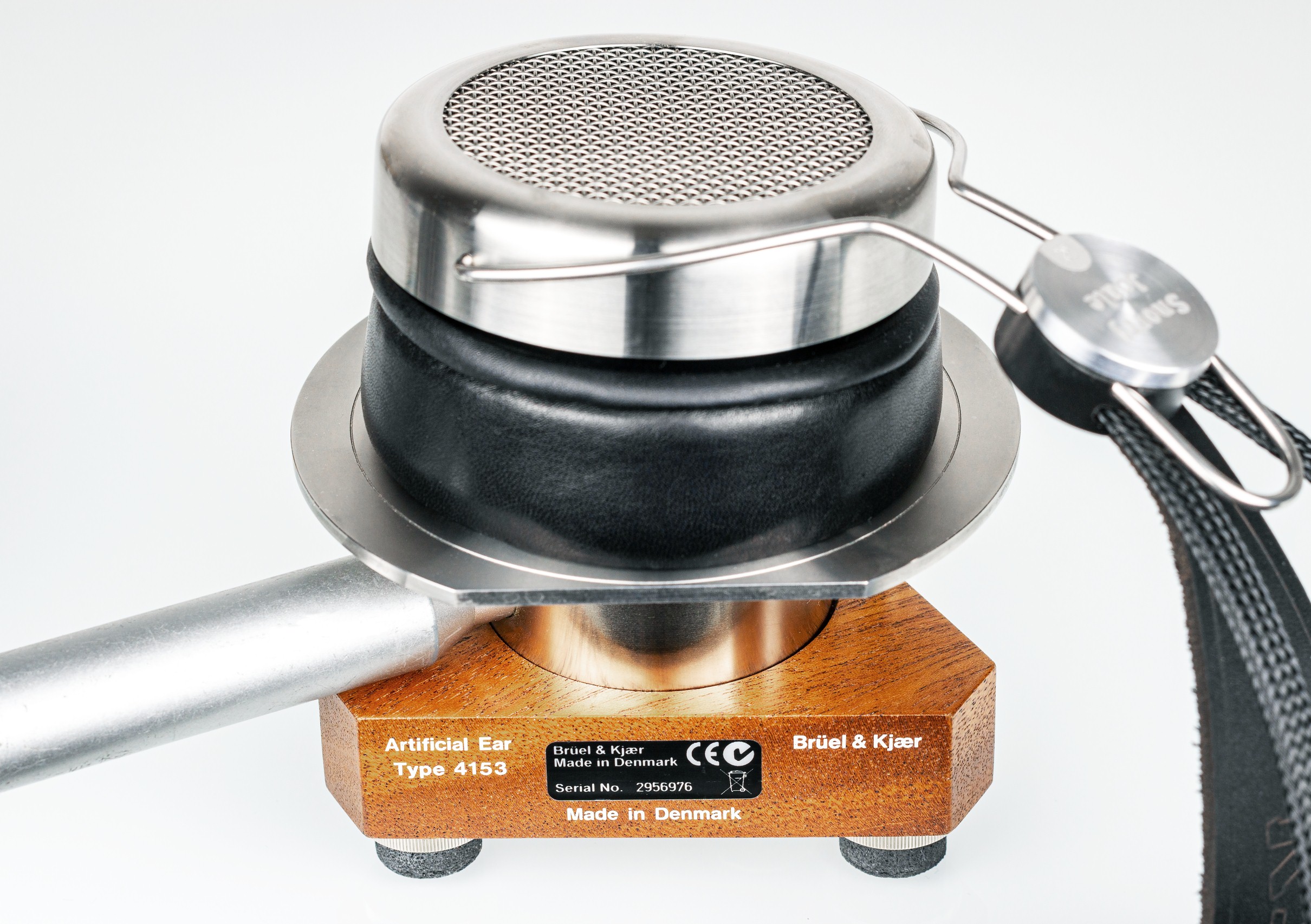


Measurements used the hardware and software measurement system RightMark™ Audio Analyzer PRO. A Danish-made Brüel & Kjær 4153 Artificial Ear/Ear Simulator (IEC 60318-1), costing about 5000 euros, was used.


These measurements are for reference, not for predicting sound. The Brüel & Kjær fixture effectively simulates average ear acoustic impedance up to 16 kHz.
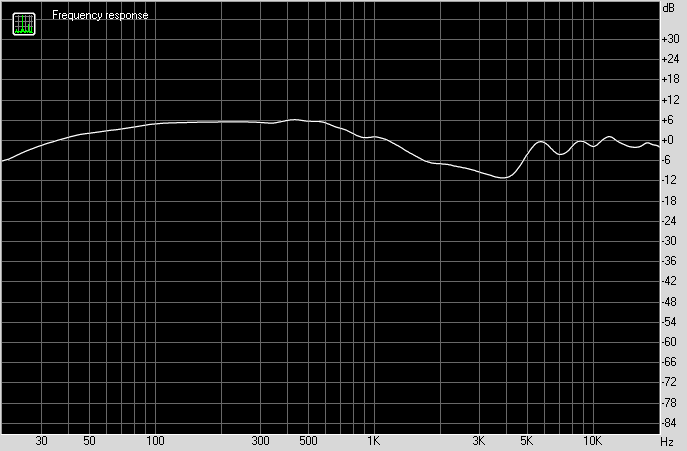
The graph broadly follows the Harman target for full-size headphones and resembles responses from other brands. Modern headphones deliberately reduce the 2–4 kHz range, where hearing is most sensitive, to limit fatigue. The Joule reproduces every range fully and is reasonably even in the most important region. The graph says little beyond that. Frequency response describes relative output at different frequencies, not sound quality. Otherwise, EQ would turn any cheap headphone into a flagship. It cannot remove the many problems and distortions in inexpensive models that listening reveals. Treat the graph as interesting supporting information, then return to listening to music.
Conclusions
Our tests showed that the Snorry Joule is an unusual, interesting planar magnetic headphone. First, it is affordable and targets a broad audience, without expensive exotic materials. Second, its high sensitivity allows use with almost any output. Third, moderate size and weight for a planar make it competitive even with conventional dynamic headphones. We liked both sound and comfort. It is fully competitive, with its own identity, sound, and appearance. Designed and made in Russia, it is a result its creators can be proud of. Existing owner reports and online reviews support more than just our own positive opinion.
We believe the Joule deserves audiophile equipment as well as inexpensive sources to reveal more of its sound. It can suit anyone, especially listeners previously discouraged by large, heavy planars and difficult amplifier matching. Those problems are absent here: choose a system you like without prolonged difficulties. The manufacturer also collects feedback and listens to user requests. Our own requests are cup color choices and a black cable matching the design.
Note. This is an adapted machine translation into English. It follows the “In simple terms” approach. Read the original article at https://prosound.ixbt.com/monitors/snorry-joule.shtml.