
ESI eXtra 10: ESI headphones with dSONIQ Realphones modelling software
Grigory Liadov
We first tried the ESI eXtra 10 headphones in 2019 when reviewing the recording bundle ESI U22XT cosMik Set. However, a review of several products cannot give each device enough attention. We therefore decided to write a separate, full headphone review. The ESI eXtra 10 are especially interesting because they directly support dSONIQ Realphones modelling software. The included Realphones ESI Edition can correct headphone frequency response and simulate different types of speakers.

The ESI eXtra 10 are inexpensive headphones aimed at a wide audience. Even so, they look attractive and do not give the impression of a budget model.
| ESI eXtra 10 headphone specifications | |
| Design | Dynamic, closed-back |
| Frequency range | 15 Hz–29 kHz |
| Driver | 50 mm, neodymium magnet |
| Impedance | 32 ohms |
| Sound pressure level | 94 dB |
| Maximum power | 1200 mW |
| Cable length | 2.5 m |
| Connection | 1/8-inch TRS; 1/4-inch adapter included |
| Weight | 240 g |
The ESI eXtra 10 headband design follows the classic AKG 200 series studio headphones. That design has inspired many similar models and copies. It is strong, light and practical. We see nothing wrong with manufacturers using successful solutions in their products. In any case, sound quality depends on the drivers and acoustic design, rather than the headband.

The headband has two steel bands. A springy leather strap on elastic cords adjusts the fit. There are no hinges, so nothing rattles or hangs loose. The two bands can move independently, making the headband very flexible.

The ear pads are removable. The common cup shape should make replacements easy to find. The round pads use foam covered in artificial leather. The headphones fit comfortably, with enough space inside the pads for the ears and no extra pressure. However, softer foam would be welcome.

The headphones are closed-back but have vents to improve bass performance. Openings on the outer cups are covered with dense fabric. This is why the manufacturer calls the design half-closed. Some music leaks through these vents, so the headphones are less suitable for critical vocal recording close to a microphone.


The eXtra 10 use a dynamic driver with a large 50 mm diaphragm, positioned centrally. The internal cavity is damped, and a plastic grille protects the diaphragm from damage. A straight, fixed 2.5-metre cable enters the left cup and ends in a mini-jack. A screw-on 1/4-inch TRS adapter is included. The headphone impedance is just 32 ohms, allowing use with almost any device.
Frequency-response measurements
Measurements used the hardware and software measurement system RightMark™ Audio Analyzer PRO. We used a Brüel & Kjær 4153 Artificial Ear/Ear Simulator (IEC 60318-1), made in Denmark.
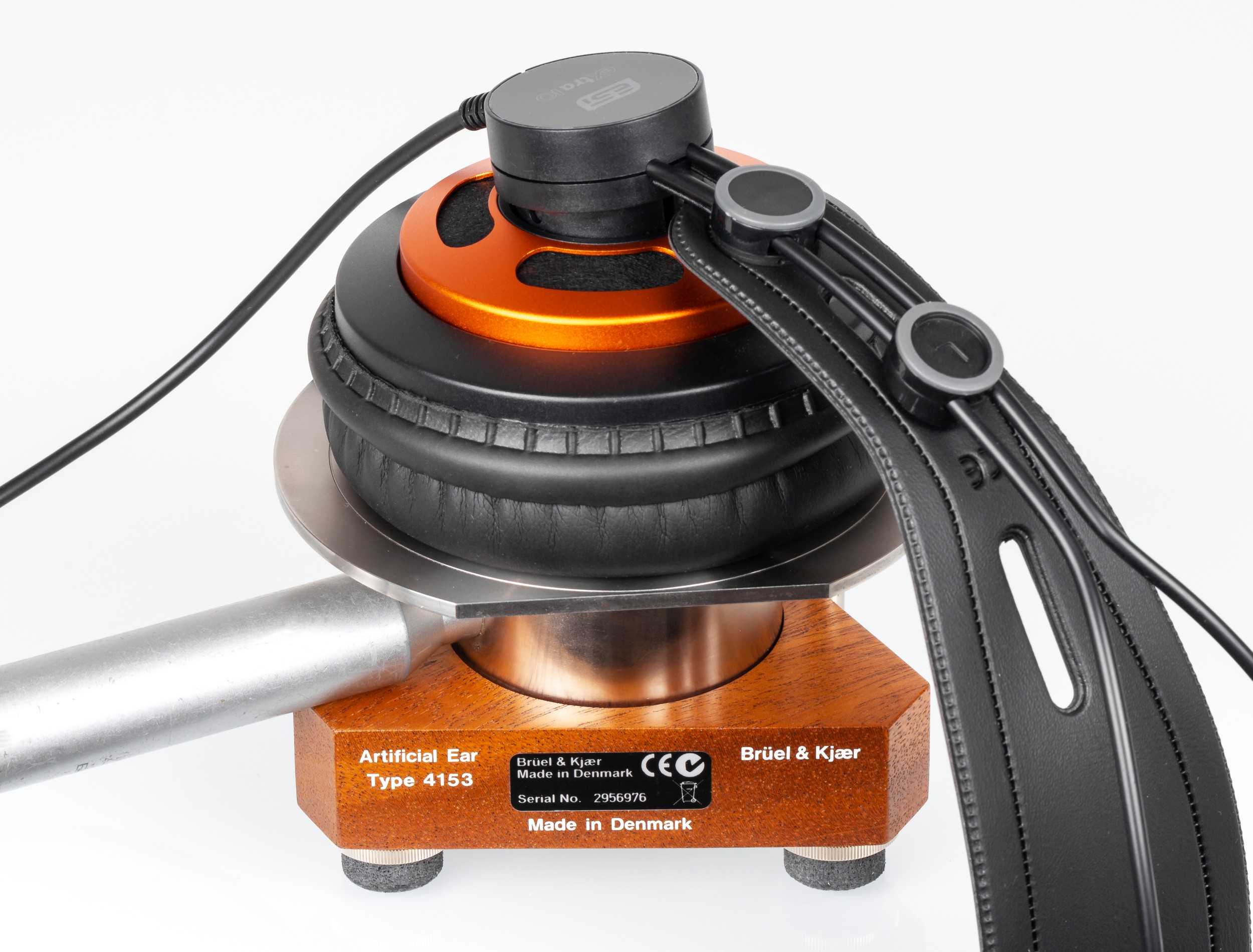
These measurements are provided for reference. They should not be used to predict the model's sound on their own. The Brüel & Kjær fixture effectively simulates the ear's acoustic impedance up to 16 kHz.
The ESI eXtra 10 measurements are typical of entry-level headphones. The graph shows boosted bass and a peak at 7 kHz. This makes it especially interesting to try the correction available in Realphones ESI Edition.
Realphones is a separate application for correcting headphone frequency response and simulating different rooms and speaker systems. It is available as a standalone application and as a VST and AU plug-in. The ESI eXtra 10 include a limited version called Realphones ESI Edition. It does not allow room selection, and its monitoring settings are locked. It also cannot process audio from ordinary Windows applications such as players, web browsers and games. Frequency correction therefore works only in a DAW or the player built into Realphones. Even these features are useful, and you can upgrade to the full version. ESI Edition owners receive a 20% discount.

In our view, the main value of Realphones is headphone frequency response correction. Room and monitor simulations are less likely to suit professional work. They are more like extra effects with an attractive interface that extend the software's features. In theory, these modes should help assess how a mix will sound on monitors with different characteristics. In practice, the sound of any speaker system differs so much from headphones that even very complex algorithms cannot replace checking a mix on real speakers.

Realphones is easy to use, which is a clear advantage. There is no need to import graphs or measurements. Simply select your headphone model: the software already contains the correction settings. You only need to choose a suitable preset.
There are three correction presets for the ESI eXtra 10. Clean Correction applies 50% of the measured correction; Optimised Correction applies 75%. Full Correction brings the response as close as possible to a flat line. These presets apply frequency response correction only, without other processing.

You can also use the three-band Tone Control equalizer and add treble presence with the Presence control. Pressure adjusts the balance between high and low frequencies. Density and Warmth provide additional bass processing. Density adds harmonics, while Warmth raises bass smoothly with characteristic peaks at 50 Hz and 200 Hz to simulate room reflections. With so many processing options, watch the output level to prevent clipping. An output limiter is provided. To keep the limiter from affecting the wanted signal, the level can be reduced precisely to 0 dB according to the overload caused by equalization. All settings can be saved as user presets for quick switching.
What matters most is the effect on sound. As noted earlier, the ESI eXtra 10 sound like typical inexpensive headphones: bass dominates, with a strong treble emphasis. When using them with a computer, we strongly recommend Realphones ESI Edition. Correction changes the sound significantly. We chose Full Correction, which worked best for these ESI headphones in our test. It balanced the tone and removed the unpleasant treble emphasis. The midrange became more even and neutral. We then added a little bass and treble with the other controls and achieved an excellent result. The difference before and after processing is very clear. Of course, the drivers' physical abilities have not changed. But within those limits, Realphones ESI Edition is highly effective. The tonal balance moves much closer to the reference.
Conclusion
The ESI eXtra 10 and Realphones ESI Edition make an interesting package. Realphones processing greatly improves the headphone sound and makes its timbre more neutral, which is useful for professional work. The application also helps when listening to favourite music: the many processing options let you adjust the sound to your taste. The ESI eXtra 10 are a reasonable choice on their own too. This is the manufacturer's first headphone model, so we look forward to more ambitious and more expensive ESI models.
Note. This is an adapted machine translation into English. It follows the “In simple terms” approach. Read the original article at https://prosound.ixbt.com/monitors/esi-extra10.shtml.