
Beyerdynamic DT 700 PRO X review and test — closed-back headphones
Maxim Liadov
In 2021, Beyerdynamic introduced a long-awaited new generation of professional headphones. The full-size closed DT 700 PRO X supports recording and monitoring, with good isolation and long-session comfort. New STELLAR.45 drivers offer 48-ohm impedance and high sensitivity. This reduces amplifier demands and provides enough level from sources ranging from phones to video cameras. It changes the familiar view of professional Beyerdynamic headphones as difficult to drive. The classic 250-ohm DT 770 PRO required a powerful desktop amplifier. A high-quality source still helps reveal any headphone's full potential.
The official video introduces the new model:
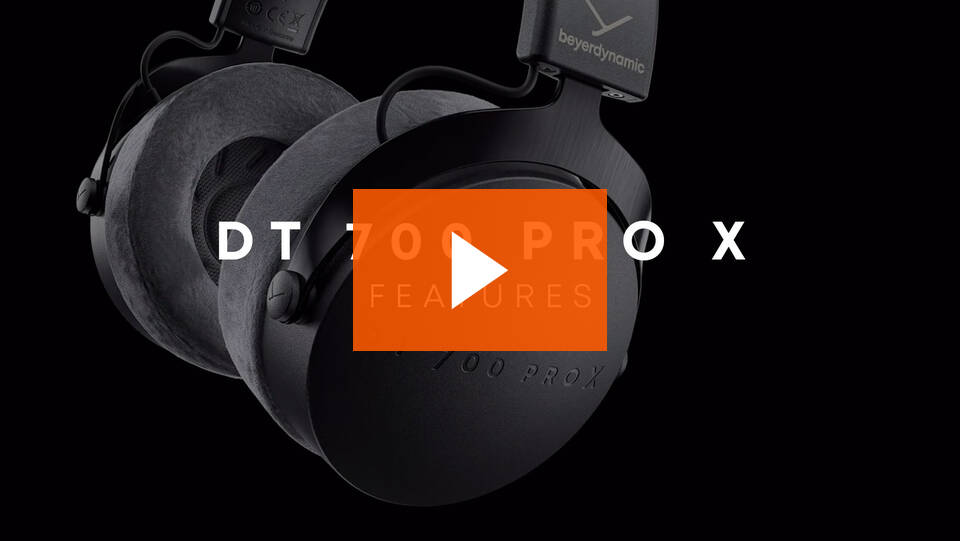
The reliability and build quality of German-made Beyerdynamic headphones have been established over decades. The entirely new STELLAR.45 driver is therefore the most interesting feature.

A neodymium ring magnet moves a copper-coated high-tech wire coil, reducing impedance to 48 ohms without sacrificing sound quality. High voltage swing and extreme amplifier power are no longer required. More interesting still is the diaphragm. Developed and manufactured in Heilbronn, it uses a special material and a damped three-layer structure for natural tone. Despite this innovation, the familiar Beyerdynamic character remains: energetic sound with recognizable emphasis.

Long-time users will notice new packaging after the rebrand. An attractive black-and-orange presentation box with the familiar bird logo replaces the plain white carton.

Beyerdynamic appears to have reconsidered product presentation: everything inside suggests a high-class headphone. There is a well-printed fold-out booklet and a message beginning Dear Creator, positioning the model for content makers. As before, PRO headphones suit audiophile music listening as well as audio work.
Beyerdynamic DT 700 PRO X specifications
- Acoustic principle: dynamic, closed-back
- Fit: over-ear
- Frequency response: 5–40000 Hz
- THD: 0.05% (1 kHz, 1 mW)
- Impedance: 48 ohms
- SPL: 114 dB (500 Hz, 1 Vrms)
- Maximum power: 100 mW peak, 30 mW continuous
- Headphone connector: 3-pin mini-XLR
- Cables: straight 3 m, straight 1.8 m
- Plug: 3.5 mm mini-jack (1/8-inch), with 6.3 mm (1/4-inch) adapter
- Weight: 350 g without cable
The maximum-power specification highlights reduced amplifier demands. A laptop output, digital piano, or synthesizer provides ample volume. This matters because earlier PRO designs dating from the 1980s had very low sensitivity and required high output power and voltage. Despite good musical qualities, that discouraged many buyers. The DT 700 PRO X solves this problem.

The DT 700 PRO X detachable cable allows replacement after wear and a choice of type and length. Two are supplied. The 3-meter cable suits artist recording or an audiophile sitting far from the equipment rack. The 1.8-meter cable is more practical at a mixer or laptop, where extra length gets in the way. A drawstring fabric pouch supports storage and transport.

The design is more modern and premium, while retaining classic strengths such as a strong frame and solid steel supports. A refined metal texture now shows through the supports' paint, and their curves look better. Only black with gray velour pads is available.

Pads combine softness for comfort with sufficient internal density for strong isolation and minimal bass leakage.

Removable pads are easy to clean and replace after years of use.

A damping layer in front of the diaphragm serves protective and acoustic functions.

The driver is open centrally behind a protective grille. Special material around the edges lets the cup volume reinforce bass.

Fit adjustment is extensive, with some cup-angle movement. Ergonomics match the high standard expected of Beyerdynamic. Holding the DT 700 PRO X also gives a strong impression of solidity and reliability.

Headband padding now attaches underneath rather than wrapping around the whole band. Matte textured plastic helps hide scratches from daily use.

The soft headband padding caused no discomfort. Fit was excellent.

A standard mini-XLR cable connects only to the left cup. This keeps wires out of the way when playing instruments, working at a mixer, or using a computer.

Connection to different sources is straightforward. The adapter thread protrudes much less than on earlier models, making it easier to reach recessed sockets common on portable equipment.
We tried high-quality professional and consumer sources. The DT 700 PRO X is highly sensitive and now needs less voltage than many mainstream consumer models, changing the old assumptions about Beyerdynamic PRO headphones.
Sound
Sound meets expectations at this level. It is full and energetic, with slightly emphasized bass and treble. Midrange is balanced and natural, with no gaps, and remains clearly audible. Treble is less prominent than on the 770 but somewhat coarse compared with more expensive models such as the 1770.
There is clear progress over the 770/990 generation. Beyond individual details, new materials and development have produced a real evolution in the DT 700 PRO X.
Beyerdynamic's character remains. The company knows users want the 770's best qualities plus new capabilities, so it has refined rather than removed that presentation. For a flatter sound, consider the DT 1770 PRO, a much more extensively reworked design with Tesla 2.0 magnets and even balance. The new 700 remains closer to the original 770 than to the 1770.
Earlier Beyerdynamic models are not suddenly obsolete. Whether a 770 owner needs the 700 depends on priorities. The 770 needs a powerful high-voltage amplifier; the 700's sensitivity and impedance suit phones and inexpensive interfaces. The 770 retains appeal for strong-bass listeners who already own suitable equipment for its 250-ohm load. Its lighter, less full midrange can make electronic music especially striking. The 700 could be added alongside it before choosing a favorite.

DT 700 PRO X vs. DT 770 PRO
The 770 is known for powerful bass, even midrange, and some treble emphasis. The 700 reduces bass and treble emphasis, bringing midrange forward. Vocals and lead instruments are more delicate, and the overall sound fuller and more solid. The 770 remains impressive but lighter. It is not a bad headphone, simply more demanding of the source and desktop amplifier. We clearly prefer the DT 700 PRO X for professional work, while music listeners may still favor the DT 770 PRO.
The 770 has used slightly different driver generations over the years. We compared a recent production pair and found it good. Reports suggest newer drivers improve on examples from 15 years ago. This helps explain conflicting opinions, from strong praise to rejection. Results depend on generation and equipment. The DT 700 PRO X is more predictable and less source-dependent.
DT 700 PRO X vs. DT 900 PRO X
The usual closed/open contrast between the 770 and 990 is less pronounced in the new 700 and 900. Their sound is more balanced and closer together. The closed DT 700 PRO X has stronger bass, but hearing adapts within a minute of switching. Both give equally good overall impressions and have individual strengths. For 20 dB external isolation and a little more bass, the DT 700 PRO X is the clear choice.
DT 700 PRO X smartphone use
An LG phone with the modest ES9218P chip, delivering up to 2 Vrms, provided enough volume at only half level. Even listeners wanting high volume should find 75% sufficient. In contrast, the older high-impedance 770 reached only moderate level at 100% with modern music and left no headroom for quiet classical recordings.
Frequency-response measurements
Our measurements use the hardware and software measurement system RightMark™ Audio Analyzer PRO. A Danish-made Brüel & Kjær 4153 Artificial Ear/Ear Simulator (IEC 60318-1), costing about 5000 euros, was used.


The Brüel & Kjær fixture effectively simulates ear acoustic impedance up to 16 kHz. Frequency-response measurements are for reference only and should not be used to guess the sound.

The response is broadly neutral, with small edge emphasis likely to suit many users. The Harman target similarly includes raised bass and treble.

Comparison with the classic DT 770 PRO response suggests a more natural tonal presentation from the new model.
Conclusions
The DT 700 PRO X is a successful reinterpretation of the PRO classic. It retains familiar strength and comfort, adds cable choice through a detachable connection, and improves the driver for greater versatility, including smartphone use. Listeners discouraged by the 770's strong bass and treble emphasis may welcome the more refined 700 PRO X. It is a worthy modern version of a classic engineering design.
The very low price of the familiar 770 sometimes caused buyers to underestimate it. The DT 700 PRO X has a higher price that better reflects its construction and sound level.
Note. This is an adapted machine translation into English. It follows the “In simple terms” approach. Read the original article at https://prosound.ixbt.com/monitors/beyerdynamic-dt700prox.shtml.