
SWA The Red One — a large-diaphragm studio condenser microphone
Maxim Liadov
Since late 2024, Pyotr Glushkov, founder of the Latvian brand SimpleWayAudio, has continued to develop the company and its own production in Russia under the SWAudio name. Audio professionals know him for innovative devices with unique discrete circuits. These designs have proved themselves over years of stage and studio use. The team around Pyotr Glushkov shares a deep commitment to sound. Every device is tested in studios, on tours, and at concert venues under heavy use and difficult conditions. These tests show how the equipment performs when reliability matters most.
Now SWA has introduced its own microphones. After years of research and prototyping, The Red One entered production and went on sale in 2025. This is a large-diaphragm studio condenser microphone. An unusual and possibly unique feature is its separate power supply, like those used by classic tube microphones, even though The Red One is a solid-state microphone. Its transformerless circuit is designed to provide a natural tone.
Let us take a closer look at The Red One.
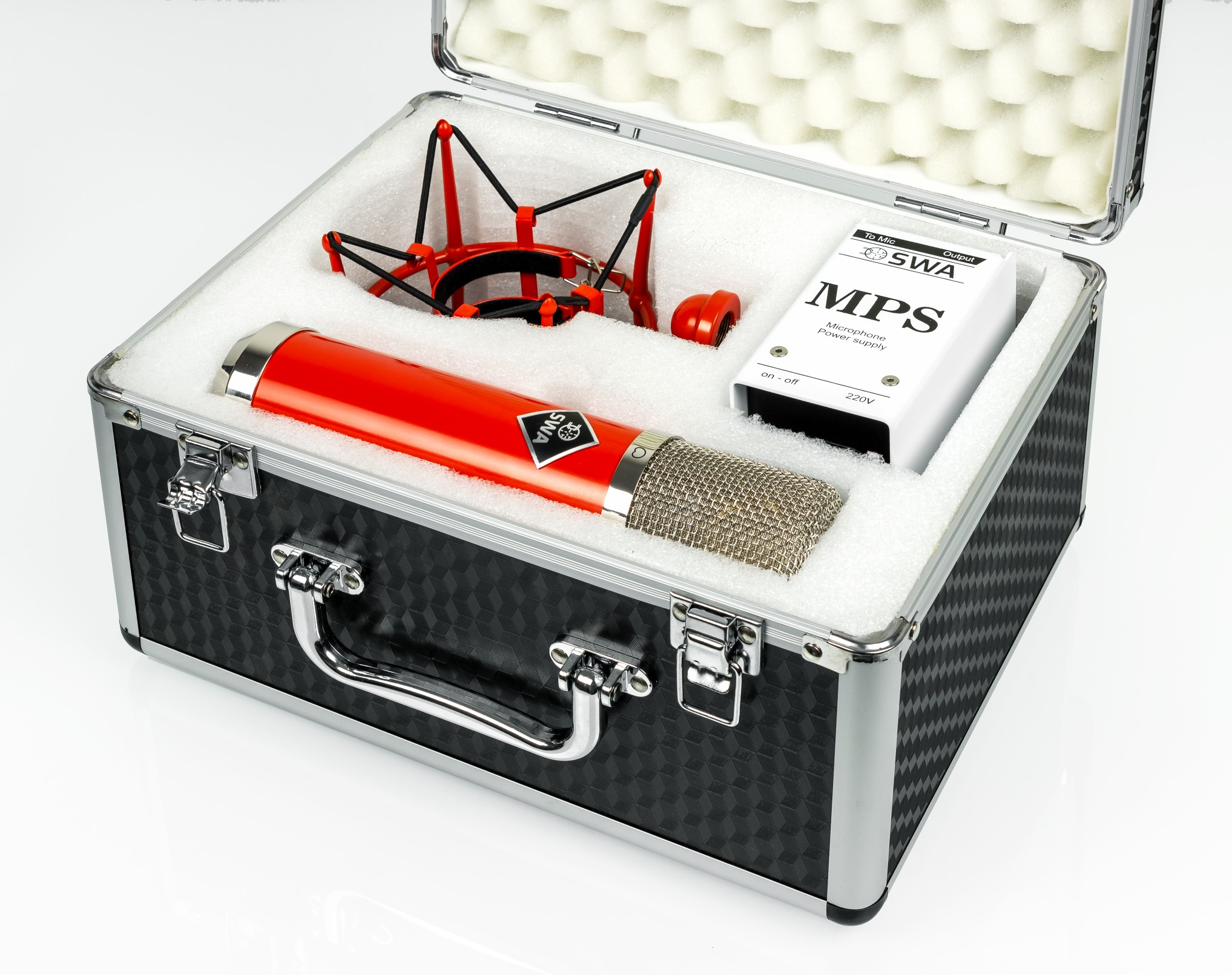
The carrying case contains everything needed to start working: the microphone, a shock mount, and the MPS linear power supply.
SWA The Red One specifications
- Type:Solid-state condenser
- Polar pattern: Fixed cardioid
- Frequency range: 20 Hz–22 kHz
- Power supply:Linear transformer-based power supply
- Capsule: CK12, 34 mm diameter
- Sensitivity: 21 mV/Pa — without gain
132 mV/Pa — with +16 dB internal gain - Distortion (1 kHz, 1 Pa): 0.01%
- Output impedance: < 33 ohms
- Maximum SPL: > 130 dB
- Switches: None
- Output: XLR
- Weight: 1000 g
One notable specification is the capsule, which follows the style of the classic AKG C12 microphone. The capsules are made to SWA's order. According to the company's engineers, the factory selects the best units with the required capacitance. The consistency is high enough to use these capsules as a stereo pair.
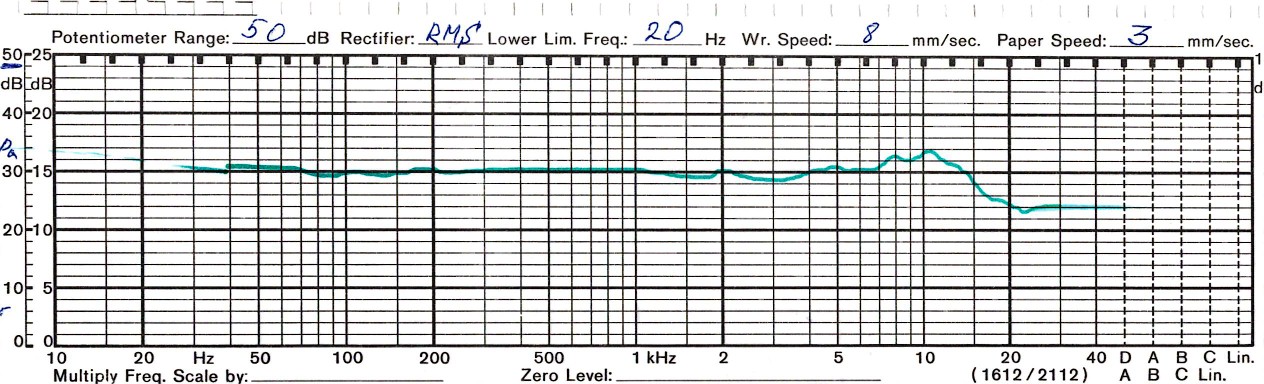
The manufacturer also provides microphone measurements made by the NIKFI laboratory, the Scientific Research Institute of Film and Photography. The graph shows even coverage across the frequency range, with an approximately 4 dB high-frequency boost. This response is typical of classic large-diaphragm vocal microphones. High frequencies fall off quickly and are strongly affected by direction. The boost will therefore disappear if the microphone is at a slight angle or the source is not aimed directly at the center of the diaphragm.
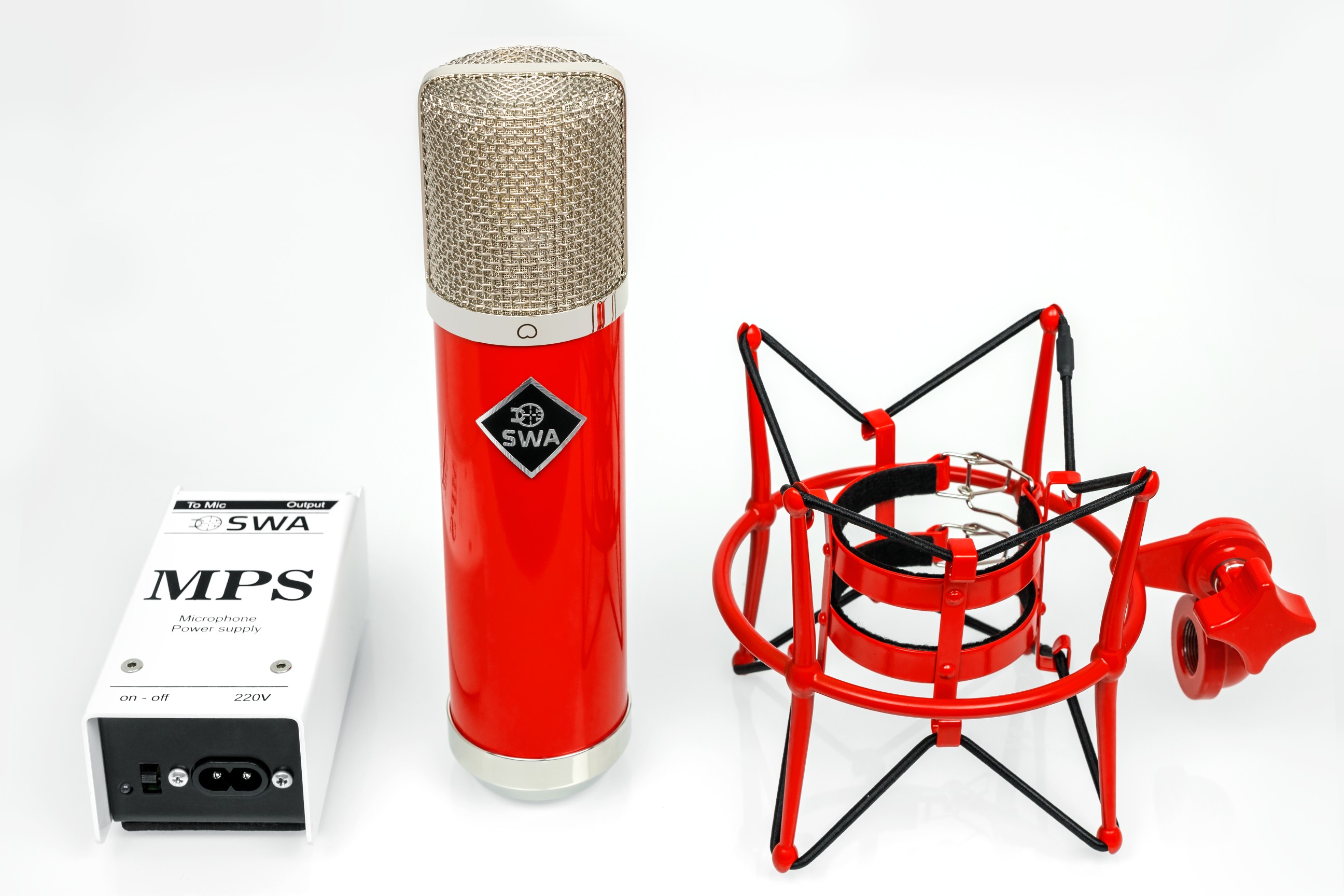
The red microphone housing is no surprise: red is the traditional color of Simple Way Audio equipment, a brand well established in commercial studios and live sound. The shock mount matches the microphone. Its two-latch fastening system seemed unusual to us, but we found no reliability problems in use. According to the designers, the discrete circuit gets the most from the capsule and needs a better power supply than a typical +48 V microphone input can provide. The microphone therefore comes with its own linear transformer-based power supply, connected to 220 V mains. The manufacturer made a practical choice by using XLR connectors between the microphone and the Microphone Power Supply (MPS).
Any standard microphone cable can connect the microphone to the MPS, which makes use much easier. With tube microphones, manufacturers' non-standard 8-wire cables are often either too short or so long that they get underfoot. With The Red One, the user can choose a cable of the right length for each job.
The Red One may suit a wider range of setups because its MPS output is 16 dB louder, as if a booster were used. In most cases, the microphone will not need very high preamp gain. The preamp can work in a more linear range with lower distortion. The higher output also helps with long cables. We did not need these features in our tests: our preamps were highly linear at any gain, and standard 5-meter cables were more than long enough. The features therefore did not affect our results, but we found SWA's approach very interesting.
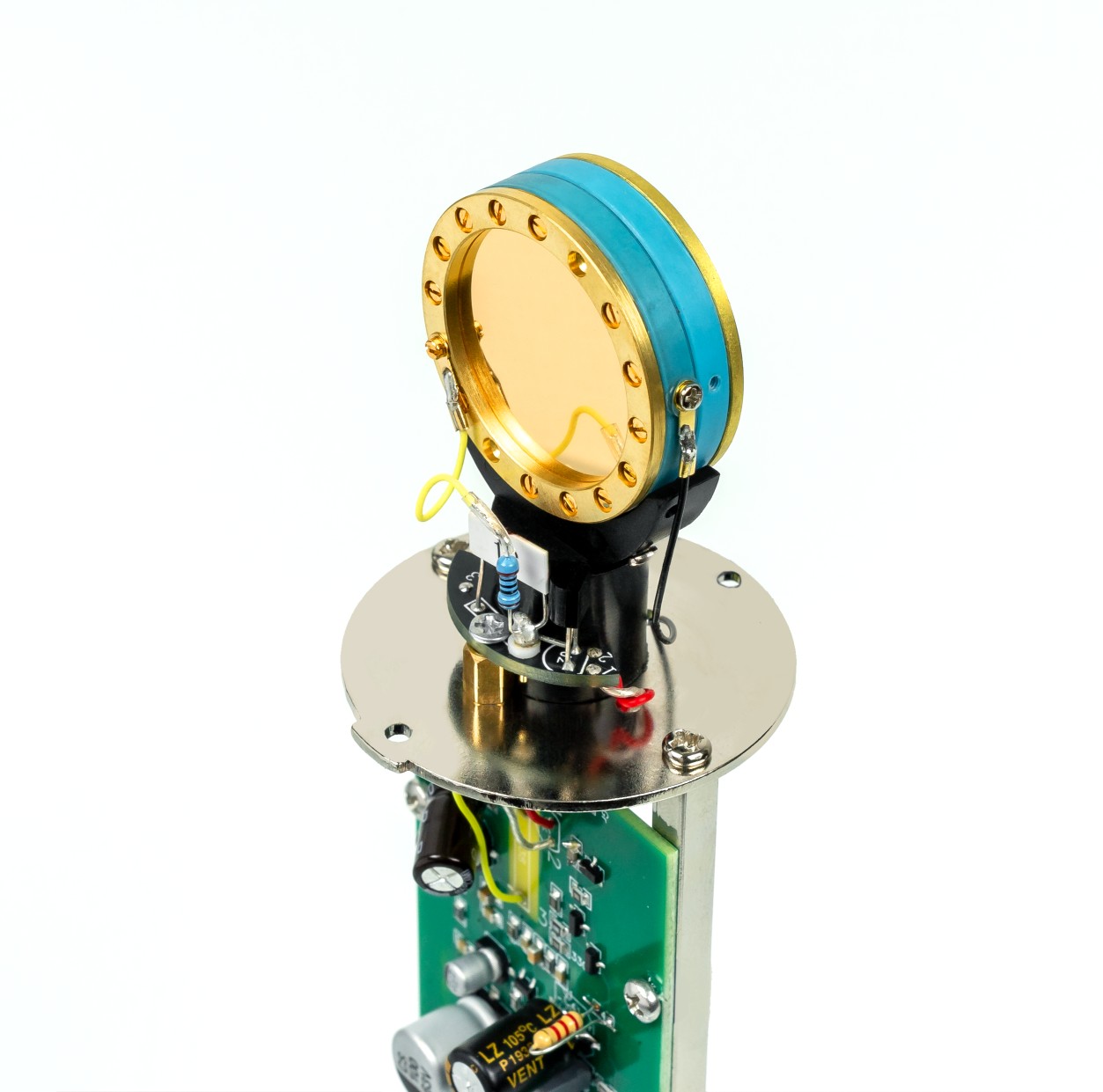
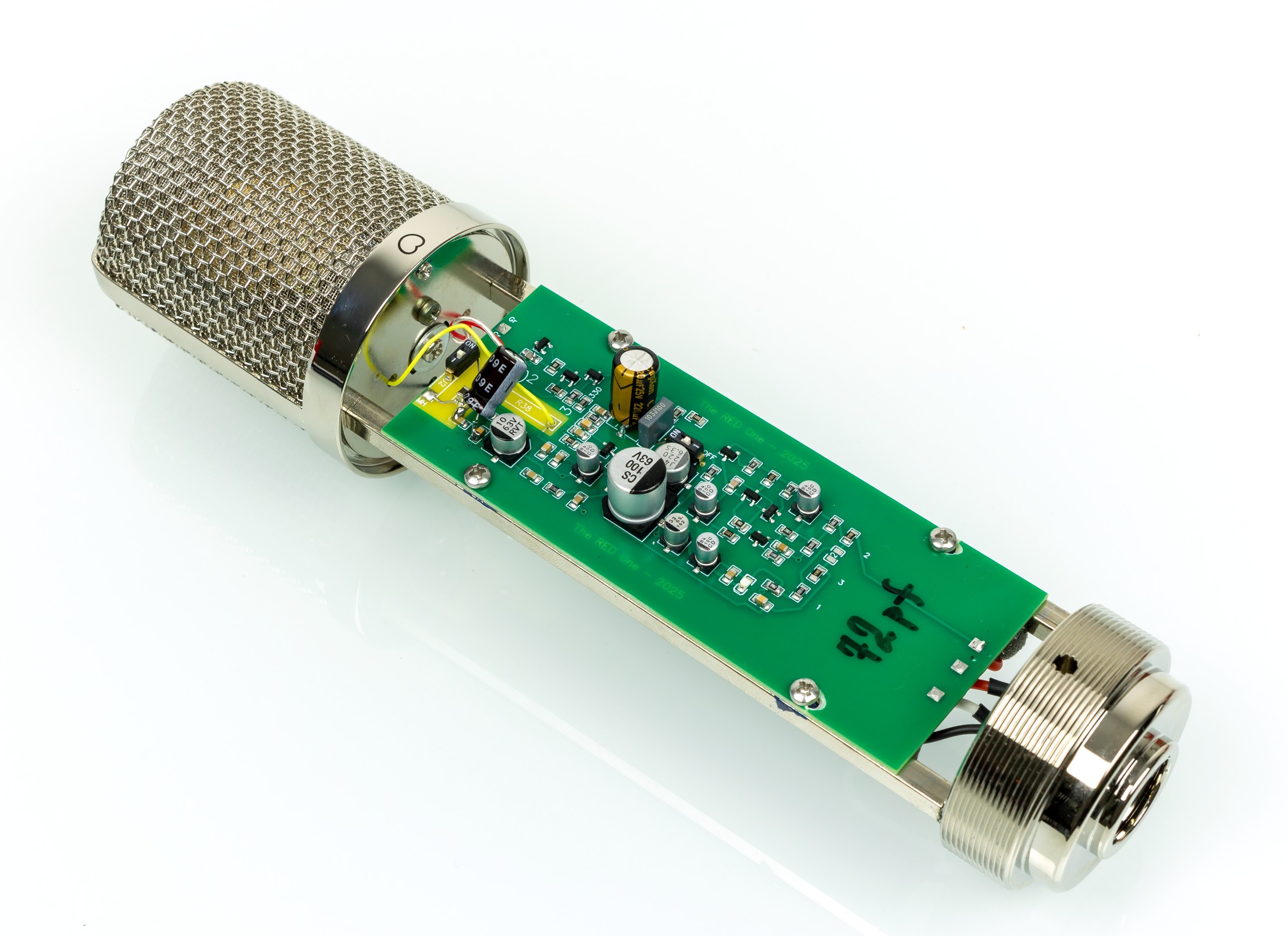
According to the manufacturer, its own linearized circuit without negative feedback avoids softened transients and phase distortion. An output impedance below 33 ohms allows long microphone cables without loss of signal quality. The circuit board photo shows modern, high-quality electronic components. There are no integrated circuits, transformers, or coupling capacitors in the signal path from capsule to output. The stated circuit bandwidth is a wide 150 kHz, with very low distortion. The aim is an uncolored recording that leaves the choice of processing to post-production.
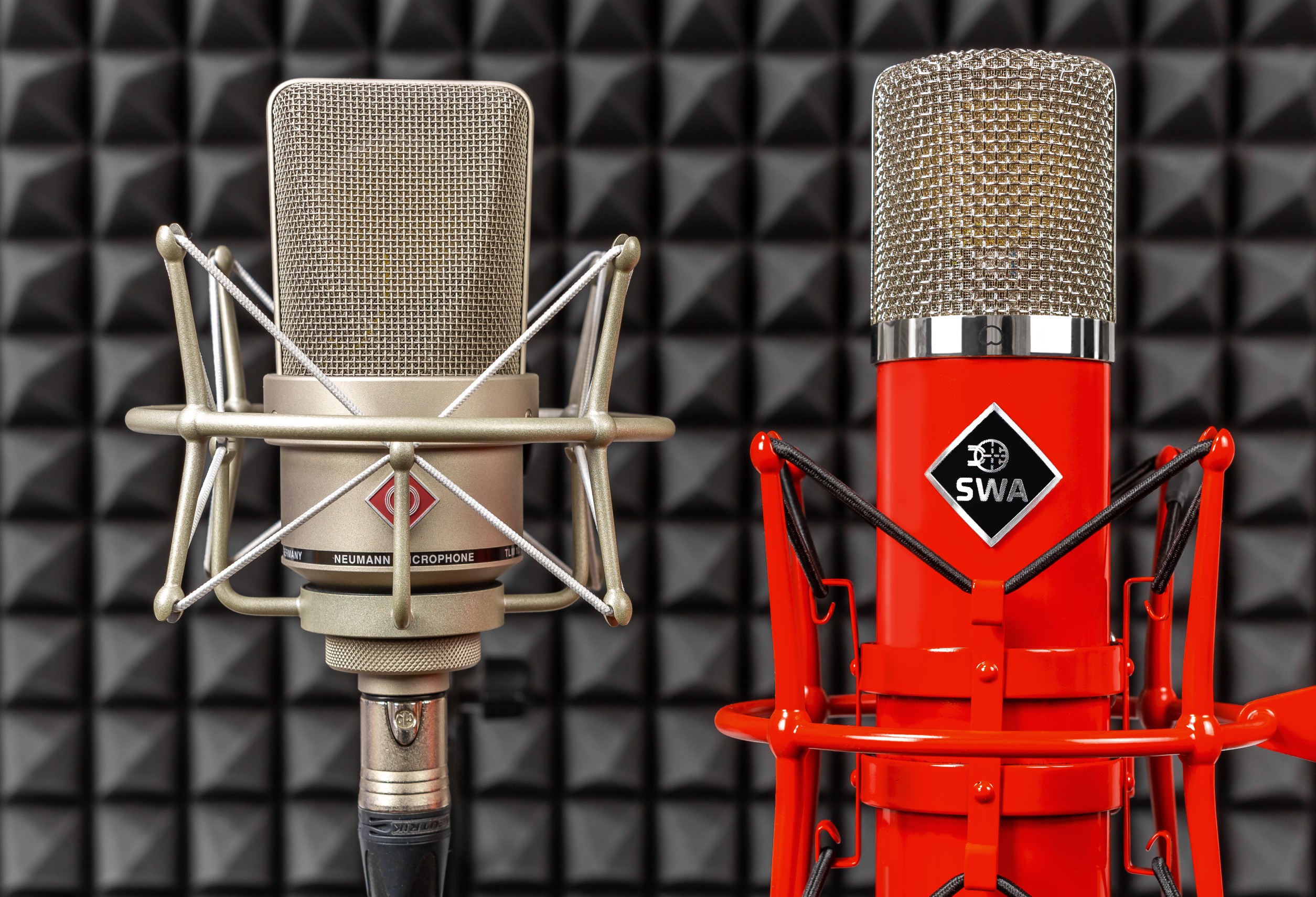
We directly compared The Red One with the well-known transformerless solid-state microphone Neumann TLM103. Recording took place at the well-known CineLab studio in Moscow, which also uses SWA equipment. Both microphones were connected to an SWA Vacuum 8V9 eight-channel hybrid rackmount preamp. We previously reviewed its single-channel version, the Vacuum V9. The recordings were digitized with a Prism Sound ADA8XR studio ADC.
We offer readers excerpts of raw voice recordings, without cleanup or processing. In our assessment, these recordings place the SWA microphone among top-class studio equipment. The choice depends more on brand preference and personal taste than on technical recording quality. The Red One is a modern alternative for users who want something other than German and Austrian microphone designs. For users seeking a Russian-made studio microphone that can match leading Western products, SWA The Red One is an obvious option.
We also recorded voice and an instrument through a high-quality Lisk Audio discrete solid-state preamp. A MUX2 USB interface handled conversion. Its balanced input has a dynamic range of 127 dB and distortion of 0.00003%. We carefully matched the recording levels. The readings in iZotope Insight 2 were identical.
Our results show that both microphones offer excellent value. In skilled hands, with suitable high-quality equipment, both deliver professional results. Both microphones handled sharp attacks and high sound pressure well.
The main difference is their sound character, so the choice is a matter of taste. In terms of tonal balance, the Neumann TLM 103 has slightly more bass, while The Red One is a little brighter and provides more high-frequency detail. The SWA sound needs almost no further processing apart from light compression. The Neumann needs more careful low-cut filtering to control boominess and some equalization in the presence range.
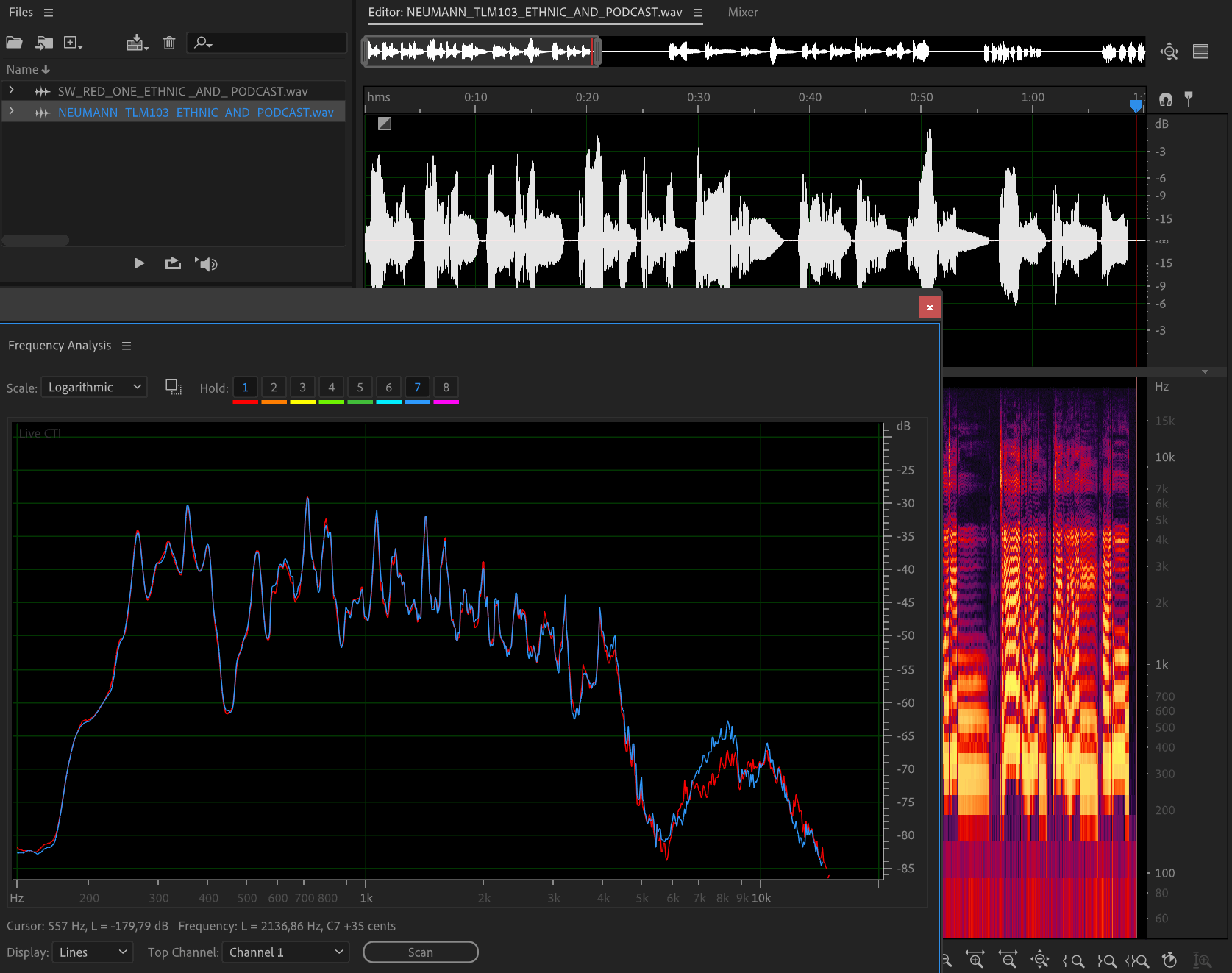
The spectrum shows the difference between the two microphones, averaged over the same passage. Blue is Neumann and red is SWA. The red curve has a small boost in the 1.5–3 kHz presence range. Engineers often boost this range with EQ to improve speech clarity. In contrast, SWA's sibilance range around 8 kHz is reduced by a significant 6 dB. This makes the vocal recording comfortable to listen to even without a de-esser.
The video for Ain’t No Mountain High Enough by Leonid & Friends shows the microphone in professional commercial recording use. The Red One's bright design fits naturally into the video.
Many respected sound engineers already use The Red One and speak positively about the results. Alexander Perfilyev's opinion and a voice recording example are available through this link on the official website.
Recording examples from Studio Gala, using a Manley preamp:
-
Neumann M149 — Voc 1 - 0:08
-
SWA Red One — Voc 1 - 0:08
-
Neumann M149 — Voc 2 - 0:51
-
SWA Red One — Voc 2 - 0:51
-
Neumann M149 — Shack 1 - 0:33
-
SWA Red One — Shack 1 - 0:33
-
Neumann M149 — Shack 2 - 0:13
-
SWA Red One — Shack 2 - 0:13
-
Neumann M149 — Guit 1 - 0:31
-
SWA Red One — Guit 1 - 0:31
-
Neumann M149 — Guit 2 - 0:38
-
SWA Red One — Guit 2 - 0:38
-
Neumann M149 — Guit 3 - 0:26
-
SWA Red One — Guit 3 - 0:26
Conclusions
SWA The Red One surprised us with its high build quality, unusual electronics, and matching top-class studio sound. The package is complete and the microphone is convenient in a wide range of uses. We are especially pleased that the product was designed and made by our fellow countrymen. A direct manufacturer's warranty is also available, which matters to commercial studios and public institutions. The microphone is not cheap, but its price more than matches the quality offered. We look forward to more innovative products from SWA's engineers.
Note. This is an adapted machine translation into English. It follows the “In simple terms” approach. Read the original article at https://prosound.ixbt.com/microphones/swa-red-one.shtml.