
Axelvox DX800FK — a wireless microphone system from the new DX series
Grigory Liadov
In 2025, Axelvox added the new DX800 wireless system series to its product range. Along with a new design, the systems offer several improvements that make operation easier. The frequency range is wider and there are more presets. These changes allow more flexible setup in different working conditions. The handheld microphones also have a new look. One model adds an alternative power input and a feedback suppression function «Anti feedback».
Today we will look at the DX800FK wireless system, which includes all these new features.
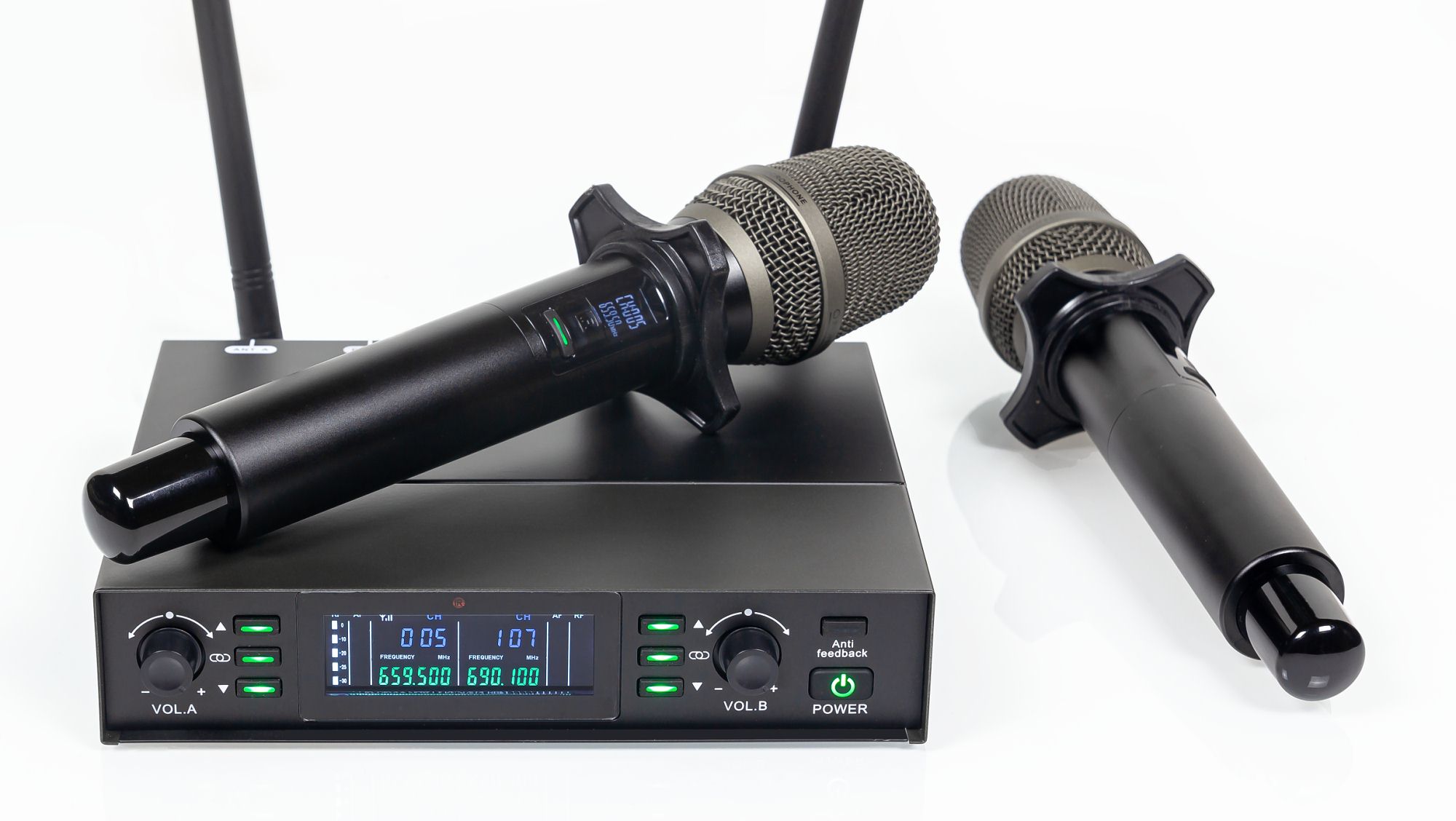
At the time of this review, the «DX» series consists of three models. Each system includes a receiver and handheld transmitters. The DX800FC has a large four-channel rackmount receiver and four microphones. The other two sets, the DX800HT and DX800FK, have a more compact two-channel receiver and two handheld microphones.
Specifications
| Number of channels | Two | Operating frequency range | 650–758 MHz | Number of presets | 100 presets per channel | Signal modulation | PI/4-DQPSK | Transmitter pairing | IR port | Display | LCD display | Power supply | Supplied 12 V adapter |
Housing | Metal | Connections | 1/4-inch TRS mixed output, separate balanced XLR outputs | Dimensions | 200 × 44 × 160 mm |
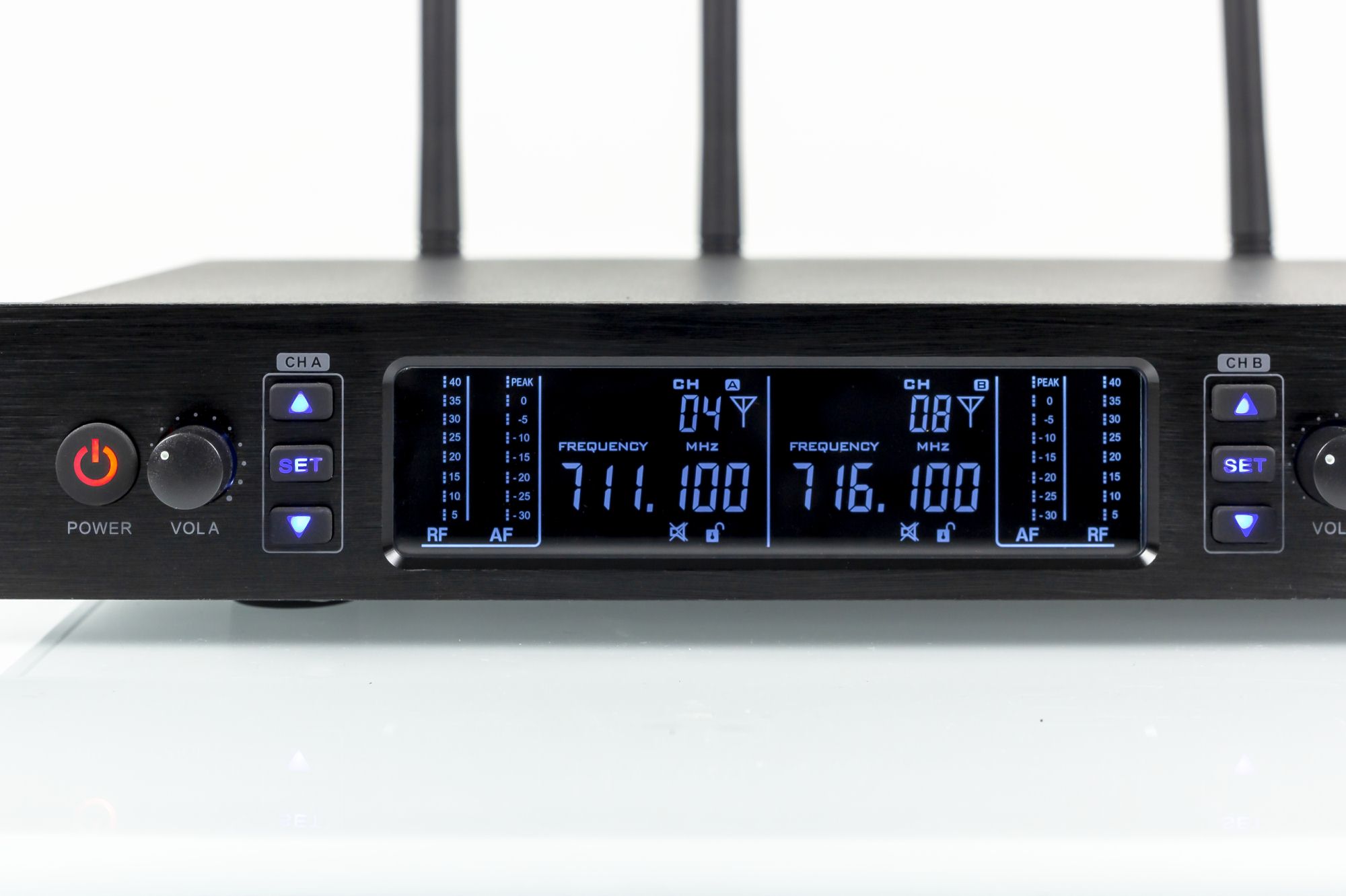
Axelvox wireless systems still operate in the UHF band and use advanced PI/4-DQPSK modulation. The new systems have a wider frequency range of 650–758 MHz. Operation remains very simple: select a suitable frequency and pair the transmitter with the receiver. There are no advanced settings. After scanning the radio environment, the receiver automatically assigns frequencies within the range. The user can switch between 100 fixed-frequency presets for each microphone.
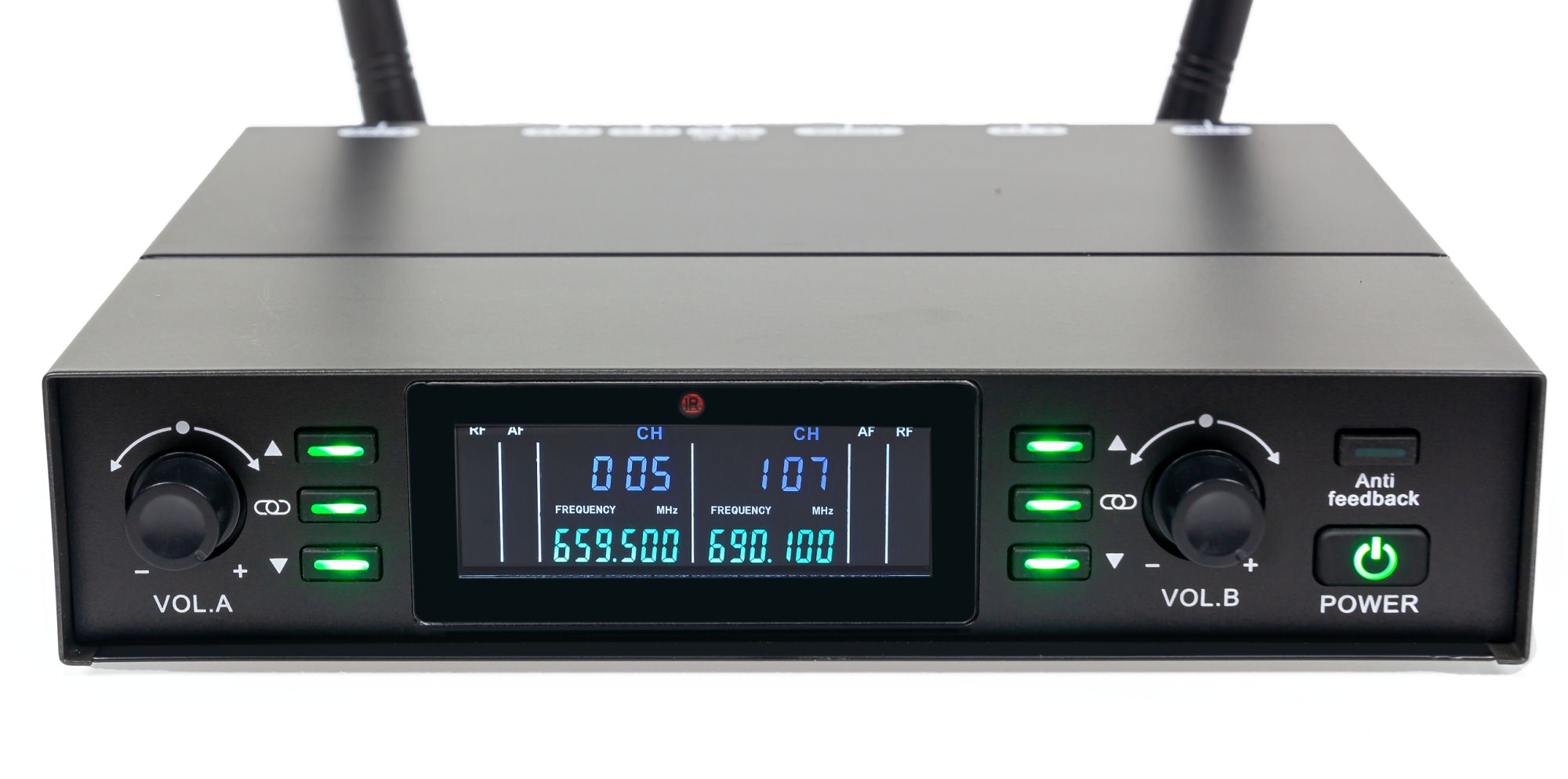
The receiver has a strong metal housing designed for long service life and resistance to physical damage. Rubber feet on the bottom absorb vibration and keep the receiver stable on different surfaces. All controls are on the front panel. The controls are slightly recessed to protect them during transport.
An important feature of this model is its color display. Wireless systems usually have a single-color display, most often white. On the DX800FK, channels are blue, frequencies are green, and other information is white. Color is not essential for operation, but it improves the appearance and makes the display easier to read. The different colors help users find the information they need more quickly.
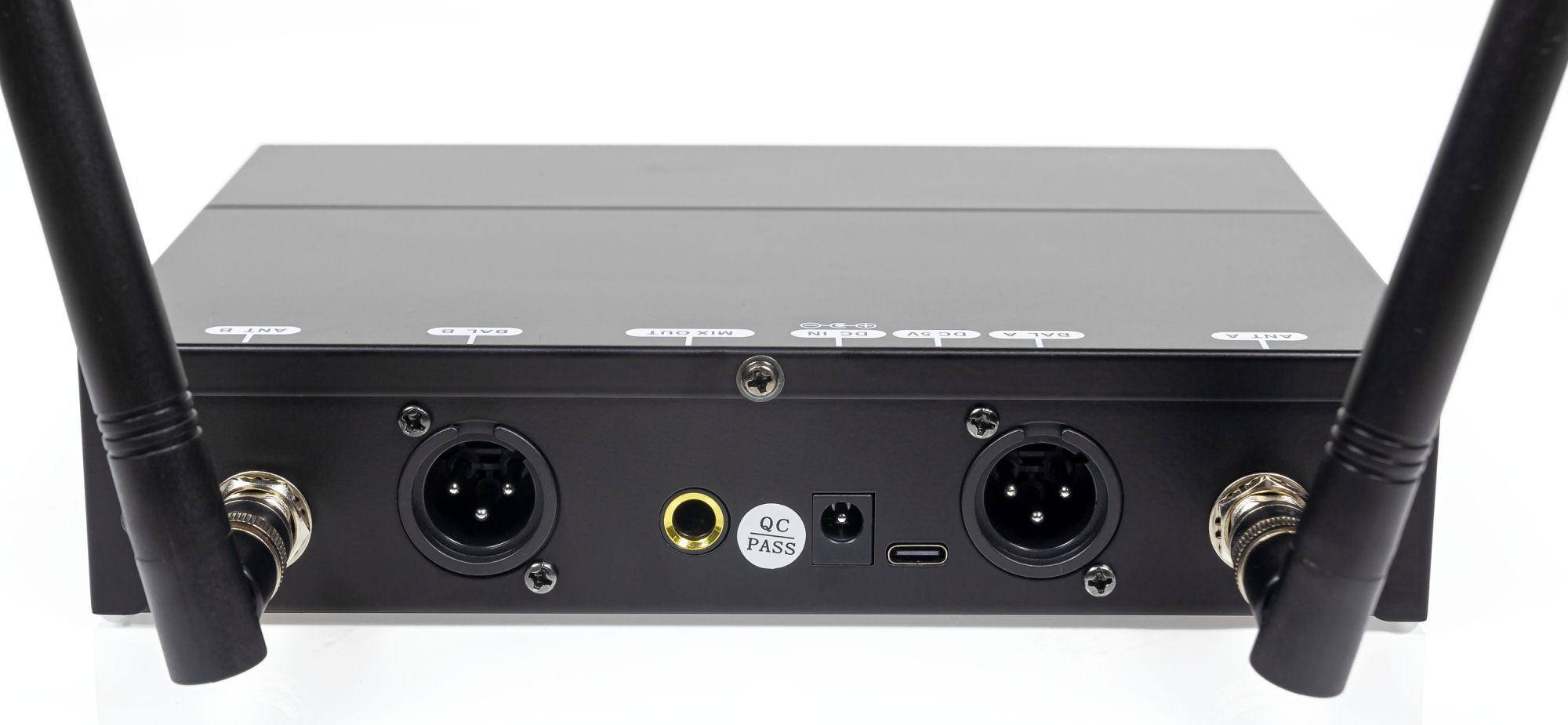
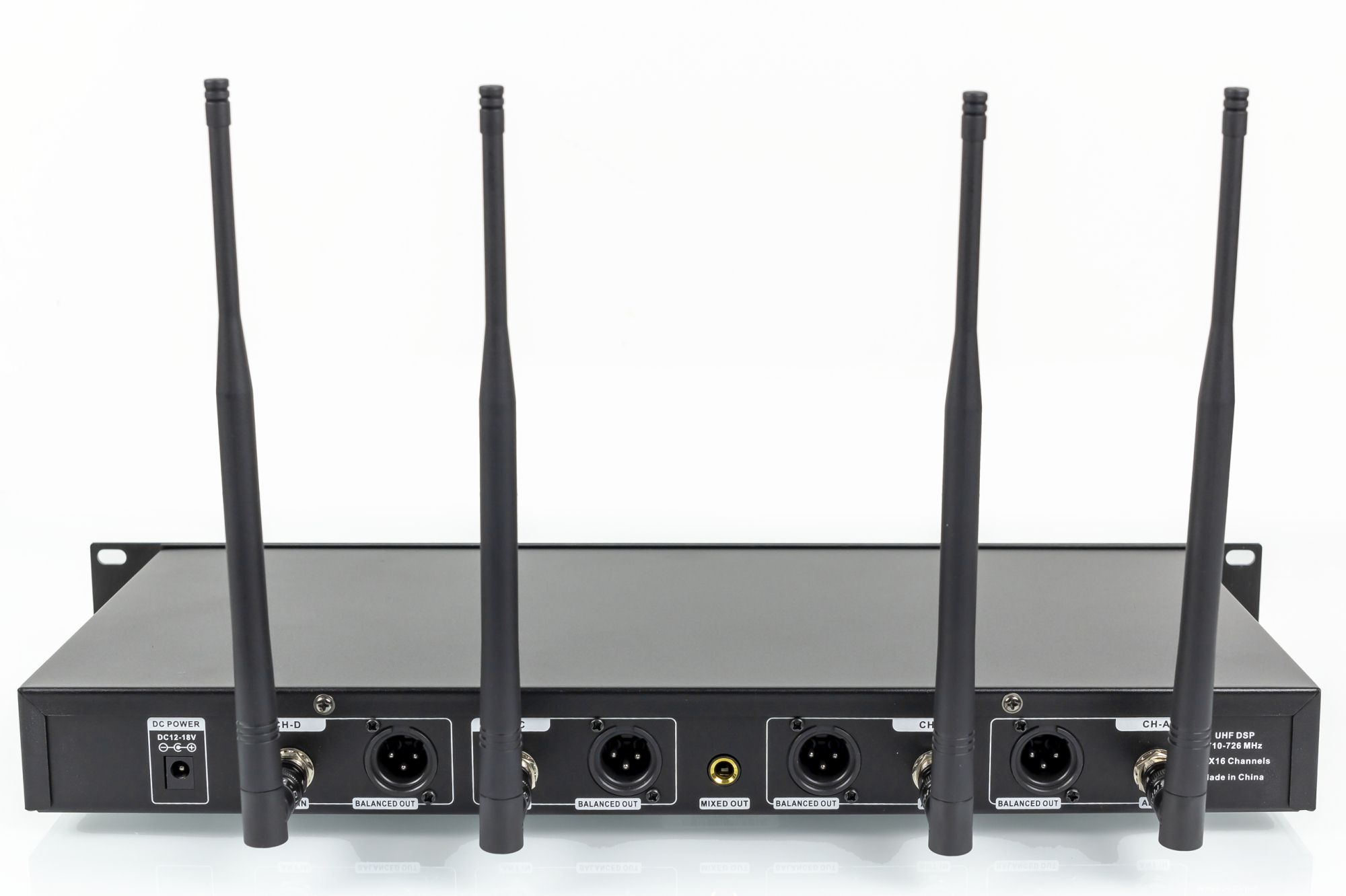
The receiver connects to a mixer through separate balanced XLR outputs. There is also an unbalanced 1/4-inch TRS output that combines the microphone signals. The receiver normally runs from an external 12 V adapter. Alternatively, the system can use a 5 V source such as a power bank. This is very useful for events away from a permanent venue or outdoors, where a mains socket may be unavailable or cannot be used.
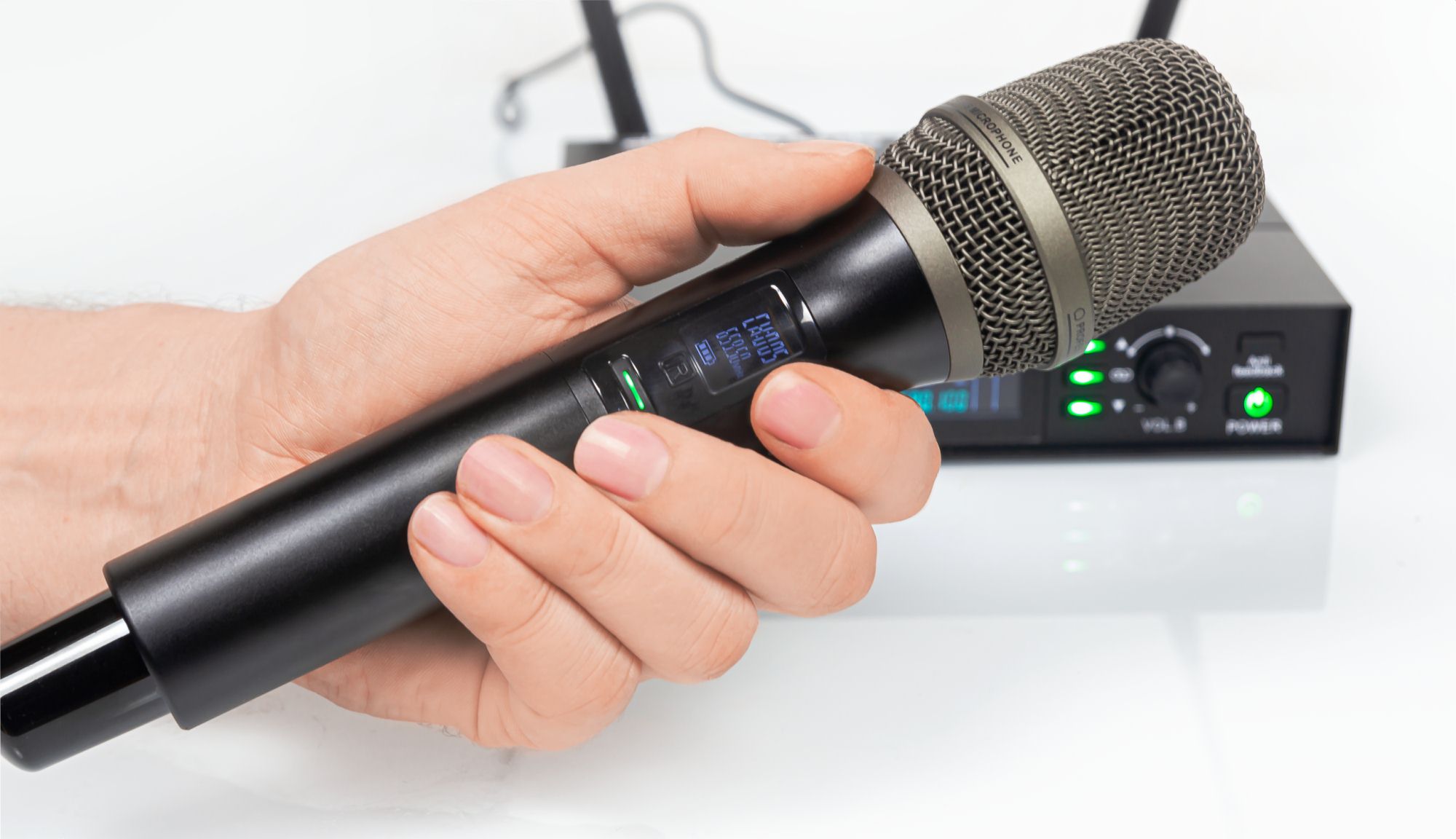
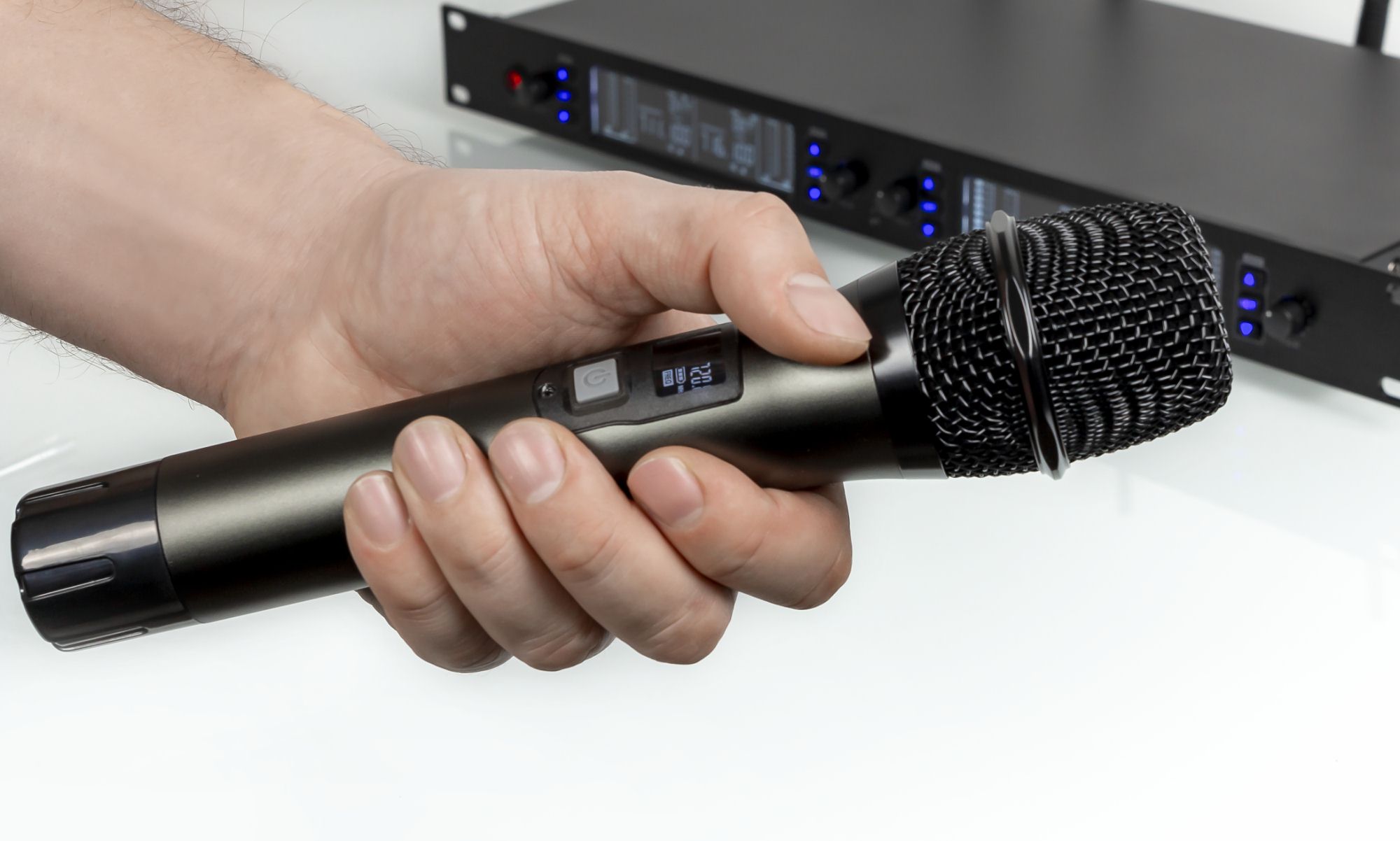
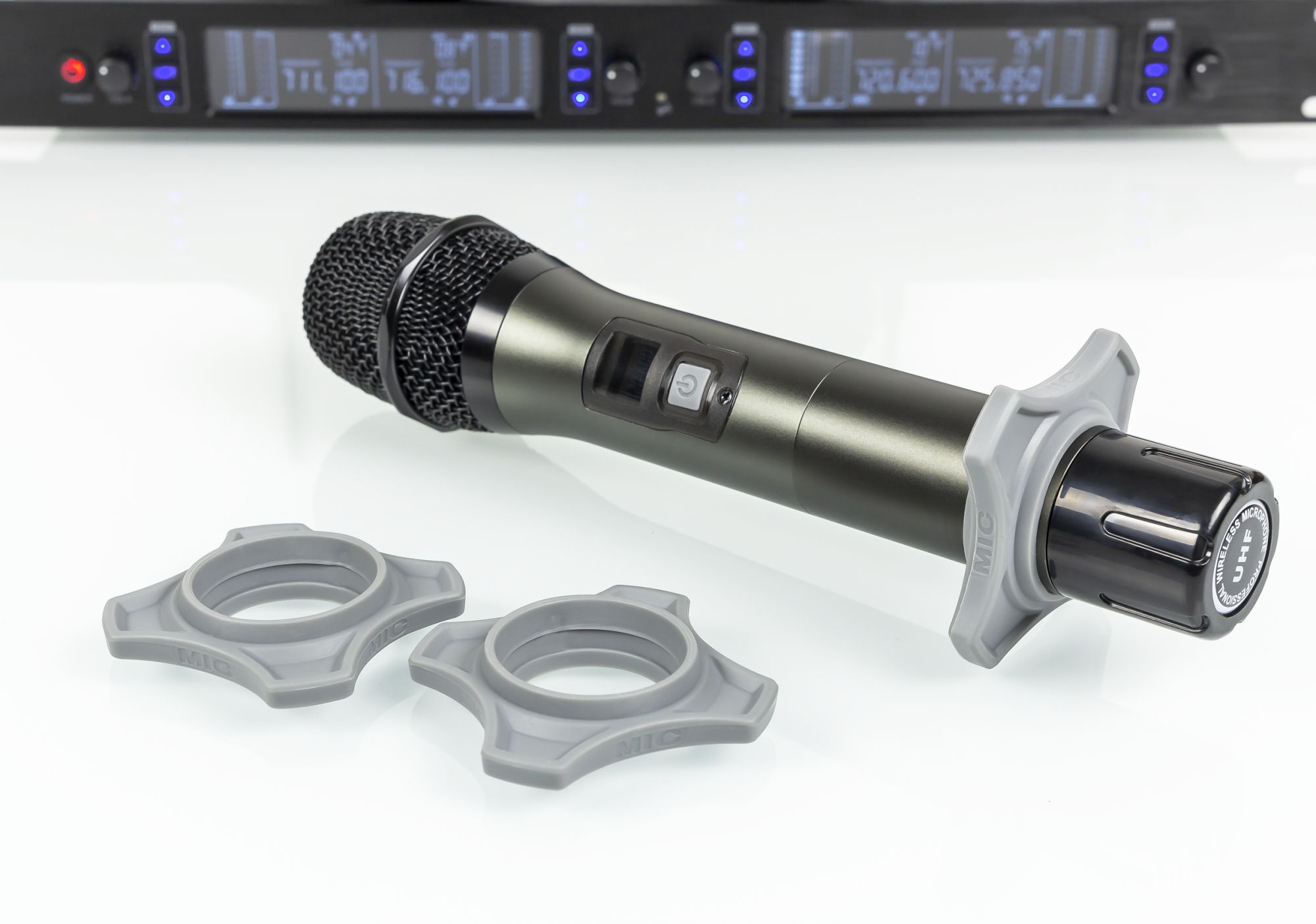
Axelvox wireless systems have always offered comfortable handheld transmitters. Unlike many other affordable models, the microphones have an all-metal housing. The microphone is fairly heavy, but its weight is evenly distributed, so it is comfortable to hold. The supplied silicone rings stop the microphone from rolling on a surface. The rings also reduce accidental impact noise when a presenter or performer puts a live microphone on a table or another surface.
Handheld transmitter specifications
| Capsule | Dynamic | Polar pattern | Cardioid | Housing | Aluminum | Power supply | Two AA batteries | Operating frequency range | 650–758 MHz | Display | LCD display | Signal modulation | PI/4-DQPSK | Receiver pairing | IR port |
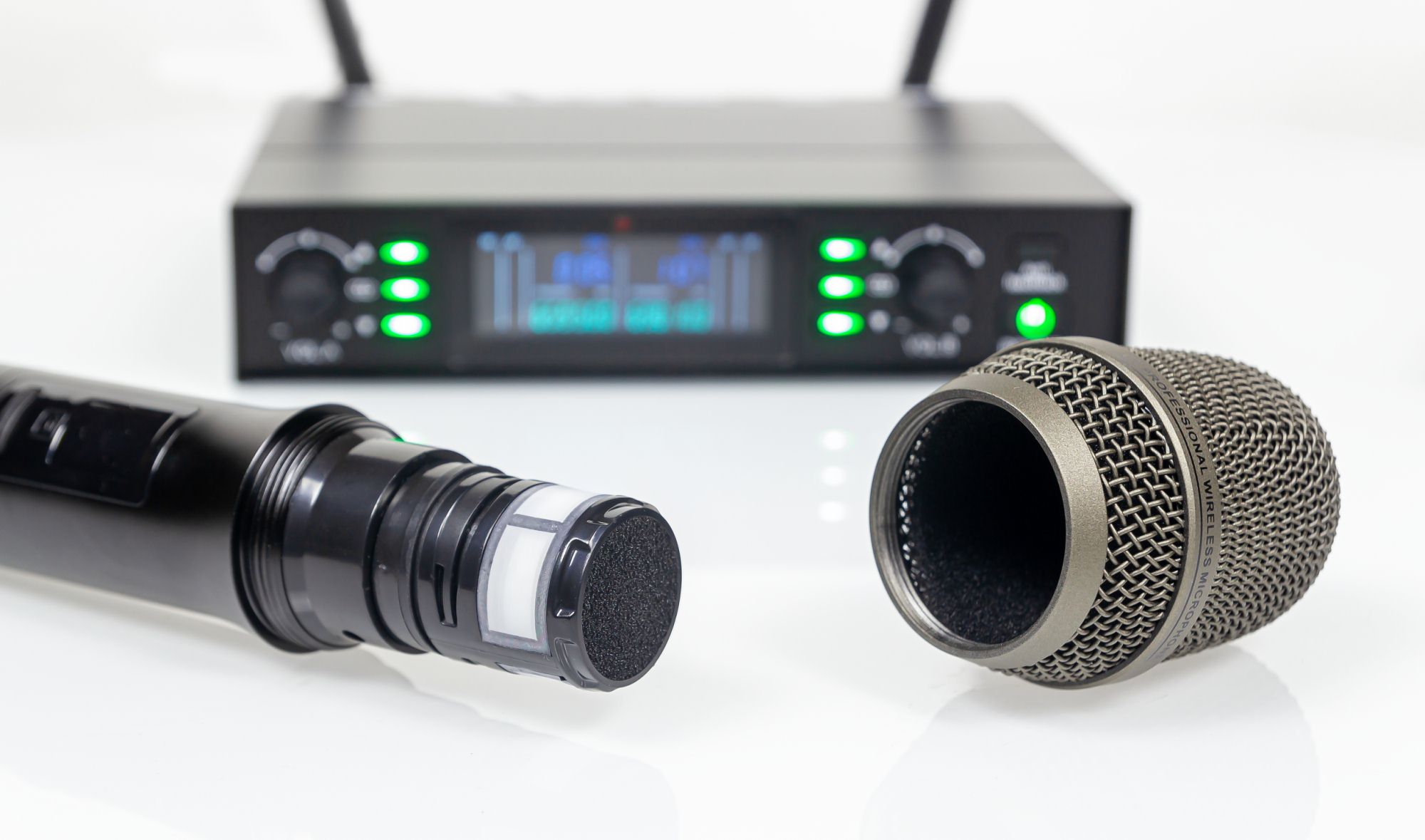
The microphone uses a conventional dynamic capsule with a cardioid polar pattern. An additional layer of thin foam inside the grille protects against wind and breath noise. As the photo shows, the new models have small changes to the capsule design. In particular, the damping and vibration isolation system has changed.
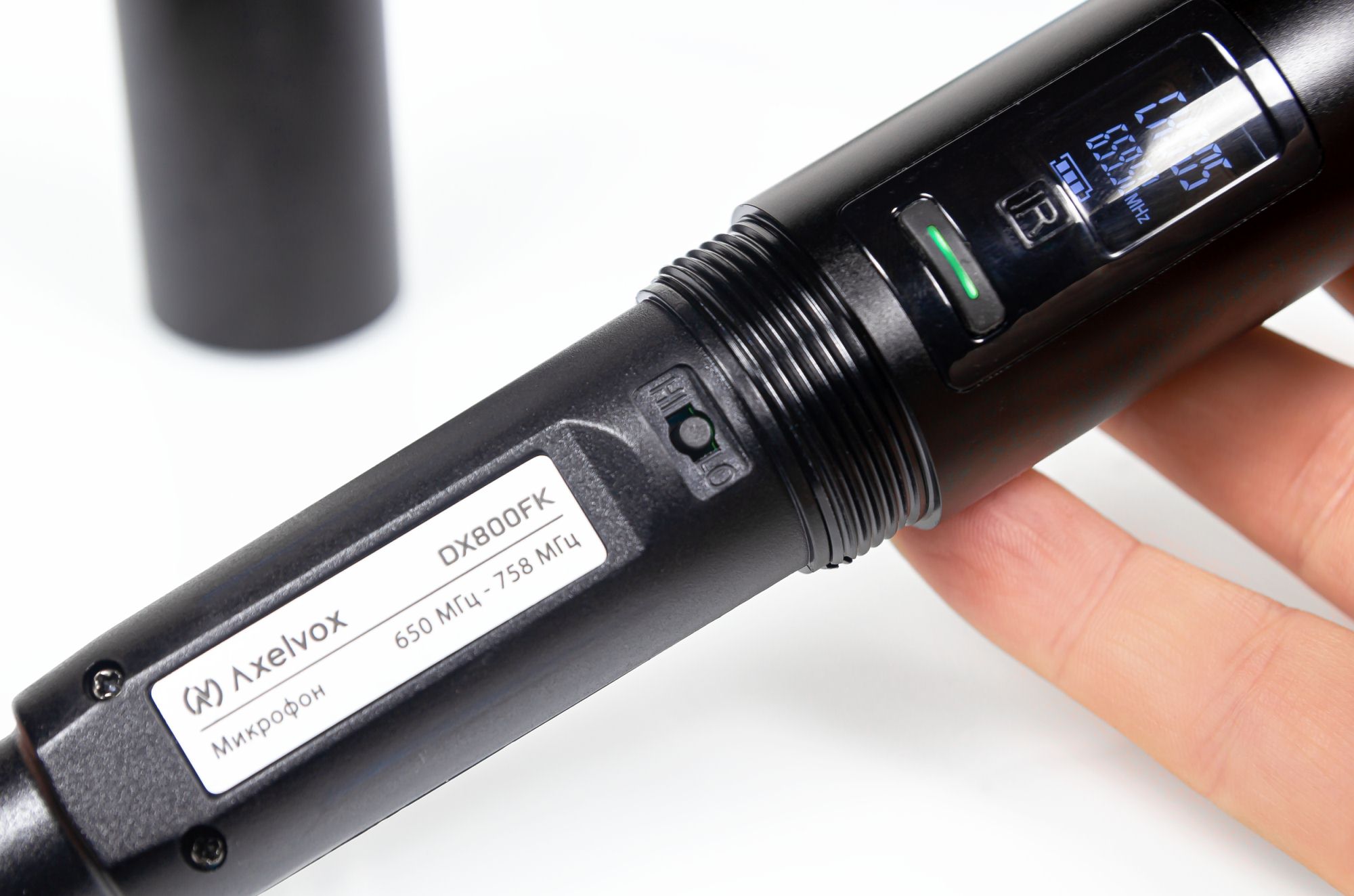
The handheld transmitter uses two AA batteries. As usual, the battery compartment is in the lower part of the microphone, under a screw-on cover. There is also an interesting button here that enables a “Delay” effect. Repeated presses cycle through three presets, each with a different delay between the original signal and its repeat. This effect is unlikely to be useful for professional work. It is intended mainly for home karaoke.
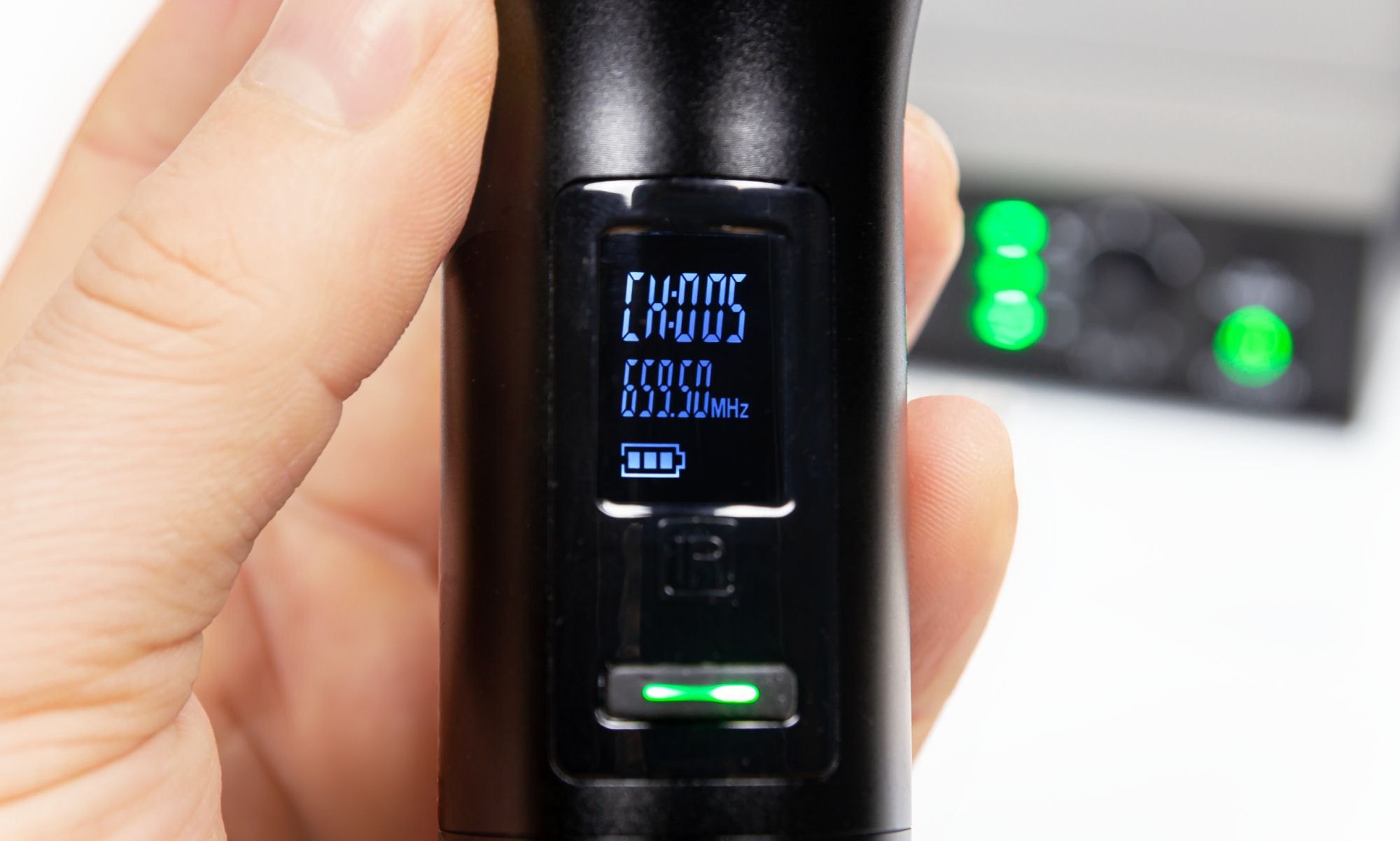
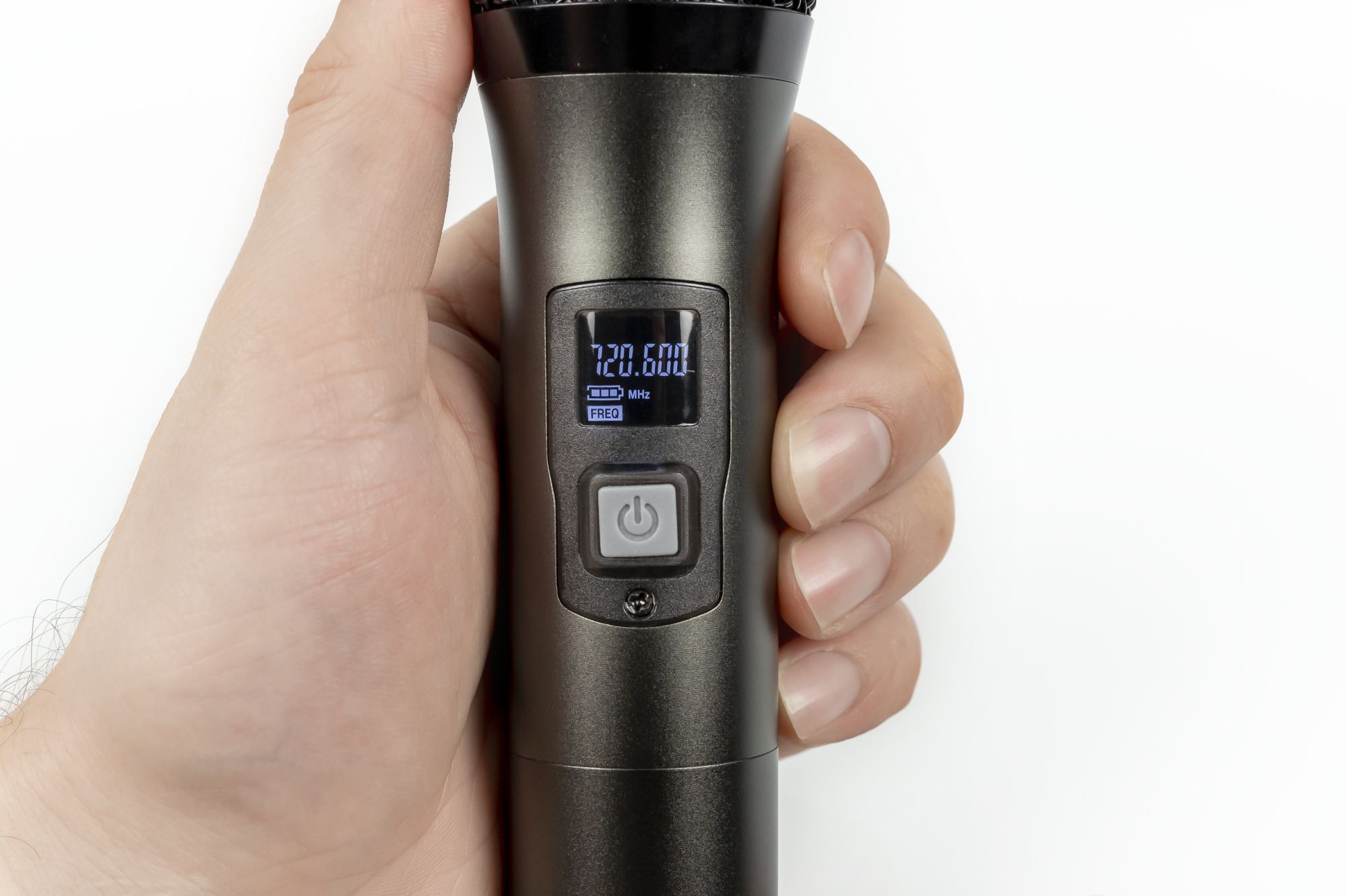
The microphone has a small display and a power button. The display shows the selected channel, its frequency, and battery charge. The display is bright and automatically dims to save power. An infrared port next to the display synchronizes the microphone with the receiver. Hold the power button for two seconds to turn the microphone off completely. When the transmitter is switched off, the receiver automatically mutes the unused channel to prevent possible interference.
We tested this wireless system in real use and found no problems or failures. Reception was stable, as with earlier models. We noticed no delays or dropouts. The receiver has a low noise level for an affordable system. The handheld transmitters have no sensitivity adjustment, but the available level is sufficient for comfortable use.
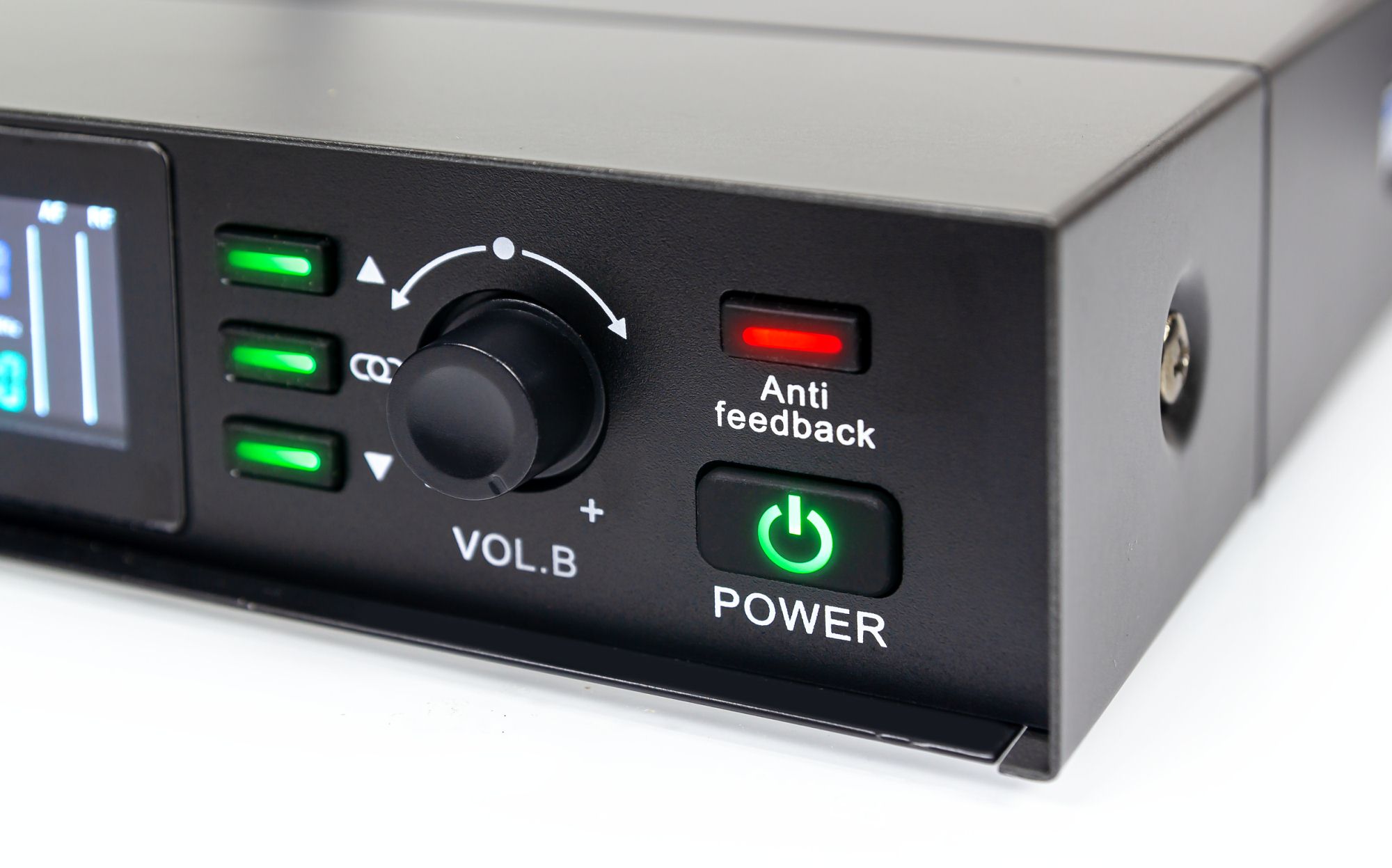





Feedback suppression is one of the most interesting features of the Axelvox DX800, especially in terms of how it works. However, our tests showed that the function has limited use for singing. With sustained sounds, the feedback suppression artifacts become too clear and harm the sound. Speech from a speaker or presenter is a more suitable use. Speech normally has no long sustained sounds, so the Anti feedback processing is less noticeable.


As with earlier models, the microphone sound quality deserves a high rating. Despite the affordable system price, the capsules are of a very good standard. The microphones have their own tonal character, but this does not present a serious problem for professional use. The excellent isolation from handling noise is also worth highlighting. Even when the microphone housing is handled firmly, low-frequency thumps and rustling do not reach the capsule. These noises are common in cheap handheld models.
Conclusions
Like earlier models, the new Axelvox DX800FK wireless system offers good quality and stable operation at a very attractive price. The system is well suited to sound reinforcement for events, presentations, and performances. The handheld transmitters retain professional sound quality. In our view, the new DX series mainly expands the available features rather than making a major change to the system. The wider frequency range allows more flexible setup in difficult radio conditions. The color display is another useful addition that makes information easier to read. The extra power input allows the system to work in situations where the usual power source is unavailable.
Note. This is an adapted machine translation into English. It follows the “In simple terms” approach. Read the original article at https://prosound.ixbt.com/microphones/axelvox-dx800fk.shtml.