
PreSonus MicroStation BT – monitor controller with Bluetooth 5
Maxim Liadov
The PreSonus MicroStation BT is an active stereo monitor controller with a subwoofer output and Bluetooth source support. Wireless connection is increasingly popular, but built-in Bluetooth usually appears only in new monitor models. MicroStation BT adds it to existing speakers. It uses the latest Bluetooth 5.1 standard, which is more economical with mobile-device batteries.
The official video introduces the main functions. The all-metal case is strong, useful for daily operation. It measures 100 × 56 × 125 mm and weighs 0.45 kg. Rubber feet help it sit firmly on a desk.

A large metal volume knob sits on top. Volume adjustment is the controller's main function. The knob turns very smoothly without touching the case. Spring-loaded buttons respond confidently with a light click. A conveniently placed Mute button quickly silences the monitors.
MicroStation BT is an affordable, fairly simple home-studio controller. It has one monitor output pair, so two monitor pairs cannot be connected. However, TRS and RCA subwoofer outputs include a convenient bypass button.

There is no audio interface inside. USB supplies 5 V power only. This is an accessory for an existing audio source, interface or sound card. Internal PC sound cards and smartphones, wired or over Bluetooth, are particularly logical partners.
TRS inputs and outputs serve professional equipment; mini-jack input and output are also provided. AUX Out accepts common headphones, with an amplifier providing 32 mW per channel. This simple-looking device offers many functions.
The USB-C power socket accepts any suitable 5 V adapter. No adapter is included because phone chargers are common. A USB-C to standard USB 2.0 cable is supplied and can draw power from a desktop or laptop.

The PCB contains output buffers and switching through mechanical buttons and an analogue potentiometer. Glue secures internal connectors and screws for reliability. Common JRC4580 op-amps serve the outputs. A separate board carries an advanced Qualcomm QCC3008 Bluetooth 5 SoC with aptX and an integrated stereo codec.
PreSonus MicroStation BT specifications
| TRS input | |
|---|---|
| Type | TRS, balanced, active |
| Frequency range | 20 Hz–20 kHz |
| Dynamic range | 108 dB |
| THD+N | 0.001% |
| Stereo mini-jack | |
| Type | Unbalanced |
| Frequency range | 20 Hz–20 kHz |
| Dynamic range | 108 dB |
| THD+N | 0.01% |
| TRS output | |
| Type | TRS, balanced, active |
| Frequency range | 20 Hz–20 kHz |
| Signal-to-noise ratio | >98 dB |
| THD+N | 0.02% |
| Stereo mini-jack | |
| Type | TRS, balanced, active |
| Frequency range | 20 Hz–20 kHz |
| THD+N | 0.01% |
| Subwoofer output | |
| Frequency range | 20 Hz–20 kHz |
| Signal-to-noise ratio | >102 dB |
| THD+N | 0.002% |
| Dimensions and weight | |
| Height | 56 mm |
| Width | 125 mm |
| Depth | 100 mm |
| Weight | 0.45 kg |
Our RMAA measurements confirmed the manufacturer's specifications.
RMAA testing
| Device under test | PreSonus MicroStation BT |
| Operating mode | 24-bit, 48 kHz |
| RMAA version | 6.4.5 PRO |
| 20 Hz–20 kHz filter | YES |
| Signal normalization | YES |
| Level change | -0.1 dB / -0.2 dB |
| MONO mode | NO |
| Calibration signal frequency, Hz | 1000 |
| Polarity | Correct/correct |
| Frequency response variation (40 Hz–15 kHz), dB | +0.01, -0.05 |
Excellent |
| Noise level, dB(A) | -111.0 |
Excellent |
| Dynamic range, dB(A) | 111.0 |
Excellent |
| Harmonic distortion, % | 0.00113 |
Excellent |
| Harmonic distortion + noise, dB(A) | -95.9 |
Excellent |
| Intermodulation distortion + noise, % | 0.00141 |
Excellent |
| Stereo crosstalk, dB | -103.4 |
Excellent |
| Intermodulation at 10 kHz, % | 0.00134 |
Excellent |
| Overall rating | Excellent |
See the RMAA report for details


We powered it from an external battery. Measurements show an ideal frequency response and low self-noise. At 2 V RMS input and maximum volume, harmonics match the specification, but distortion rises as the knob attenuates the signal.
Bluetooth worked with every smartphone we tried. Connecting different sources to TRS-input monitors was very convenient. The volume knob stays within reach and turns pleasantly.
For sound quality, the MicroStation BT is entry level. Every frequency range is present and there is no obvious distortion, but detail is reduced. Bluetooth sounds much like an ordinary smartphone's analogue connection: decent, though we would prefer better. A separate high-quality DAC after the capable Qualcomm Bluetooth 5/aptX chip, instead of its internal codec, could improve quality but would increase cost.


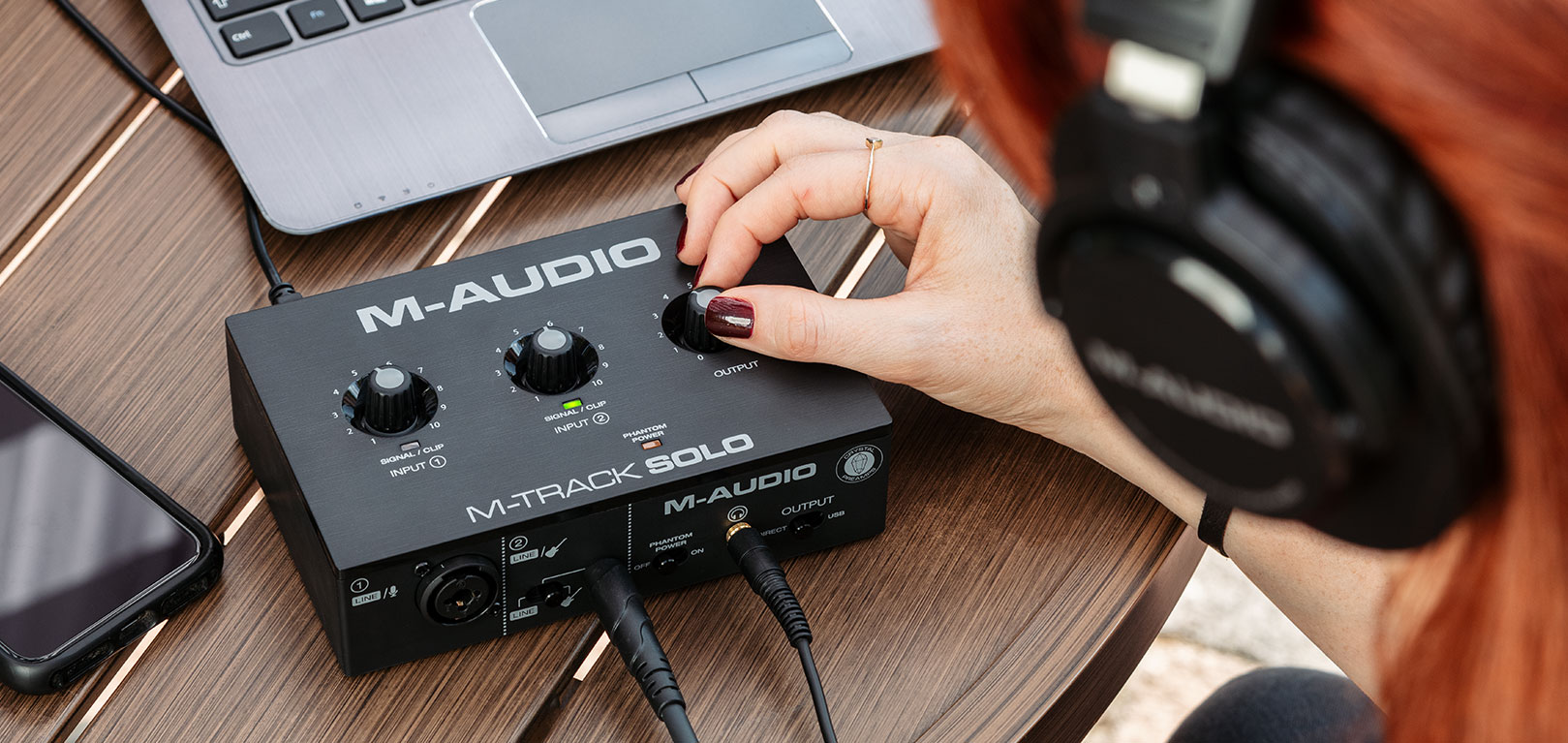
Over Bluetooth, the headphone amplifier suits common 32-ohm models. With an analogue source, its output is much stronger and can even drive 250-ohm headphones. The Qualcomm chip's low output level may explain the difference.
Conclusions
We liked the idea behind the MicroStation BT and its ergonomics. It works well as a volume knob and Bluetooth accessory for affordable active monitors. For a professional studio, we would prefer a more advanced version, even at a higher price.
We hope this interesting new range develops further, with specifications and sound quality comparable to PreSonus audio interfaces. We value those products for the engineers' effort to get the most from the available electronics.
Note. This is an adapted machine translation into English. It follows the “In simple terms” approach. Read the original article at https://prosound.ixbt.com/interfaces/presonus-microstation-bt.shtml.