
iCON Harrison 32Ci review and test – audio interface with preamps from the Harrison 32C mixing console
Maxim Liadov
iCON ProAudio has appealed to musicians' and engineers' fondness for classic equipment. Its unusual 2024 USB interface uses preamps and filters from the legendary Harrison 32C analogue console. Musician and engineer Dave Harrison designed that console, used to record Michael Jackson's Thriller and Bad, Paul Simon, Genesis, AC/DC, Janet Jackson, ELO and Led Zeppelin. iCON promises the same rich, deep, warm recording sound. BUMP bass enhancement and two analogue console-derived filters, low-pass and high-pass, can be added to the preamp signal path.
Alongside its unusual analogue circuitry, the Harrison 32Ci uses top-class converters. ADC chip dynamic range is 125 dBA and DAC dynamic range is 129 dB. The markings have been removed, but comparison with earlier iCON products, package dimensions, pin counts and datasheet circuits indicates modern ESS converters. Another major feature is iCON iO Pro, a VST host that applies user plug-ins to input channels in real time. Bundled Harrison 32C and AVA Live plug-ins are included. The interface can therefore replace a hardware mixer.
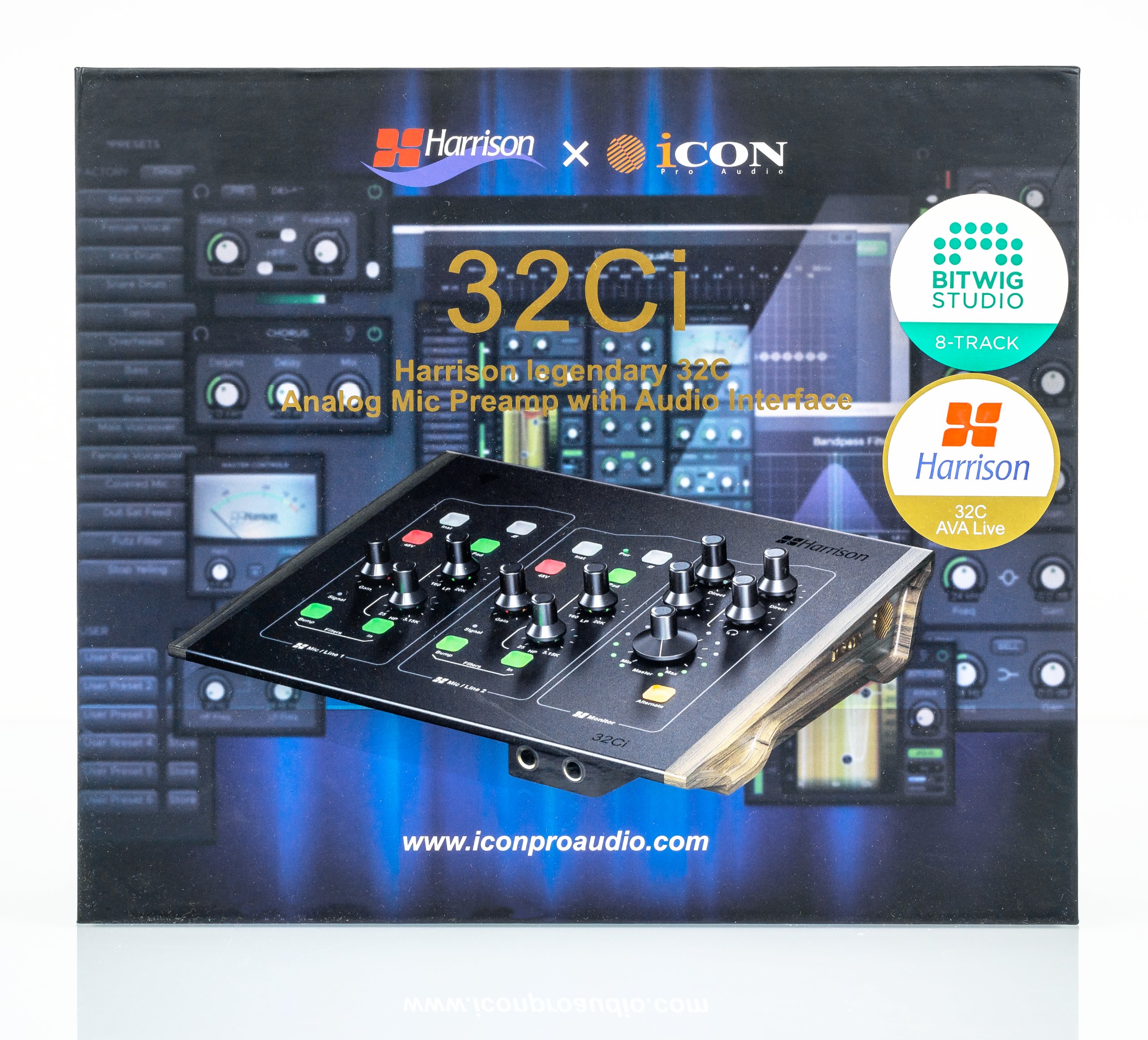
A large attractive box contains the interface, power supply, cable and printed manual.
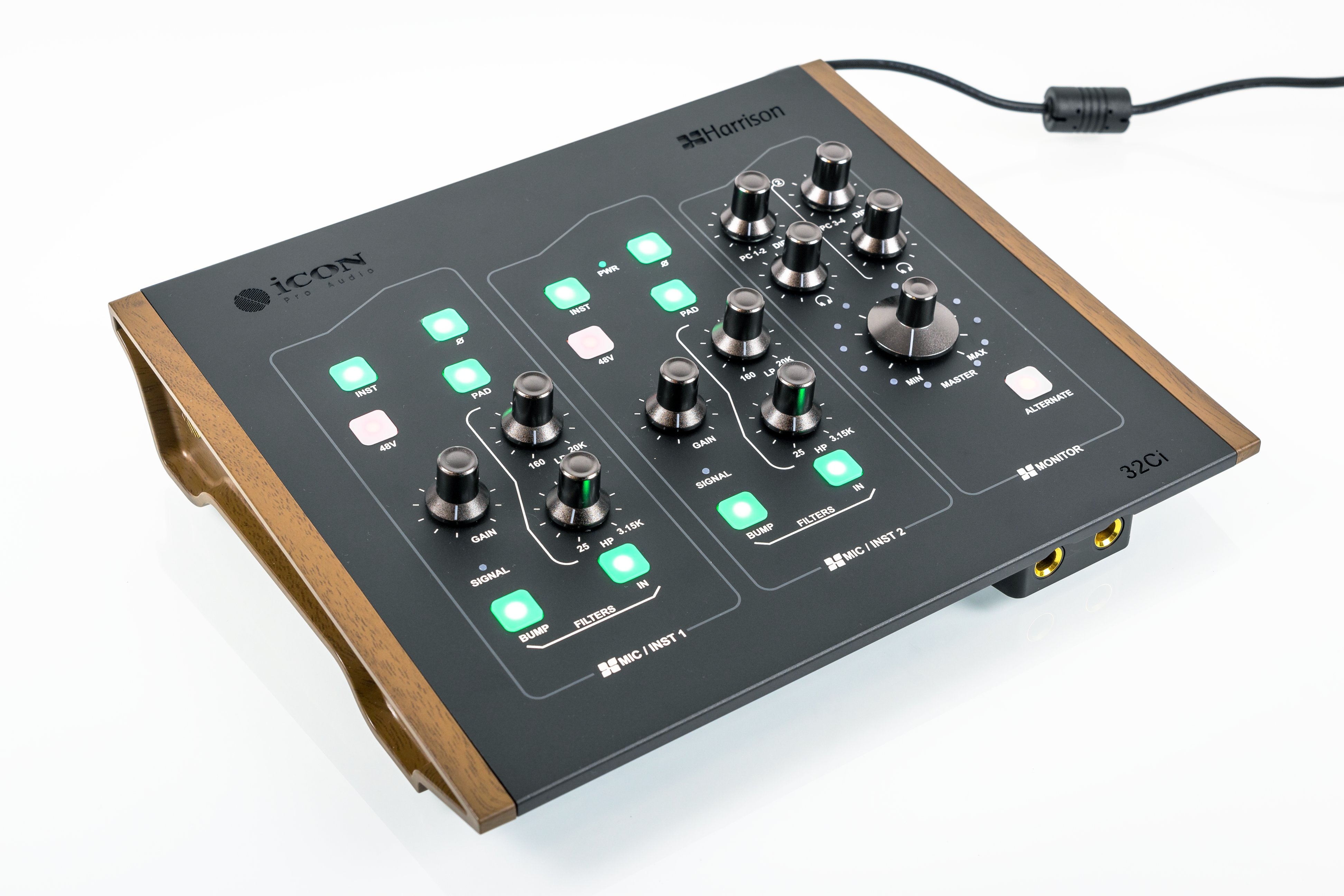
The retro design targets fans of the 1970s. The case and lacquered knobs are metal; the decorative side panels are plastic. The knobs imitate aged bronze.
The two channels follow analogue-console channel strips. Each has buttons for +48 V, polarity inversion, microphone/instrument mode and PAD input attenuation. An analogue high-pass filter is also provided.
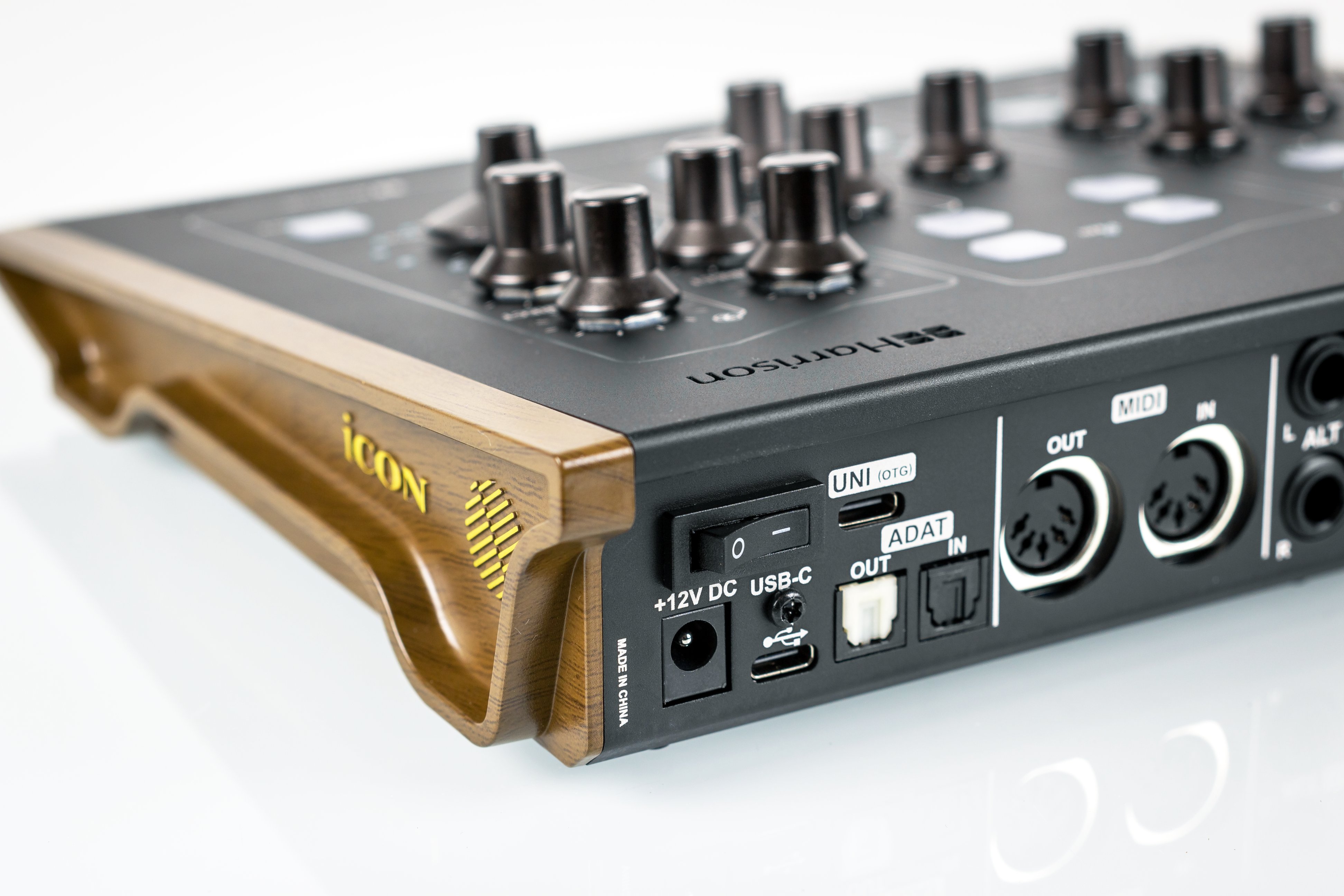
The sides imitate lacquered wood with a gold manufacturer logo. A Harrison logo sits in the corner. The whole design resembles an analogue console.
We welcomed the standard 30 W, 12 V supply. It gives the circuitry a high supply voltage and can be replaced, including by a linear supply or lithium battery. A hardware power switch is convenient too. The analogue circuitry generates heat, leaving the case warm at about 40°C.
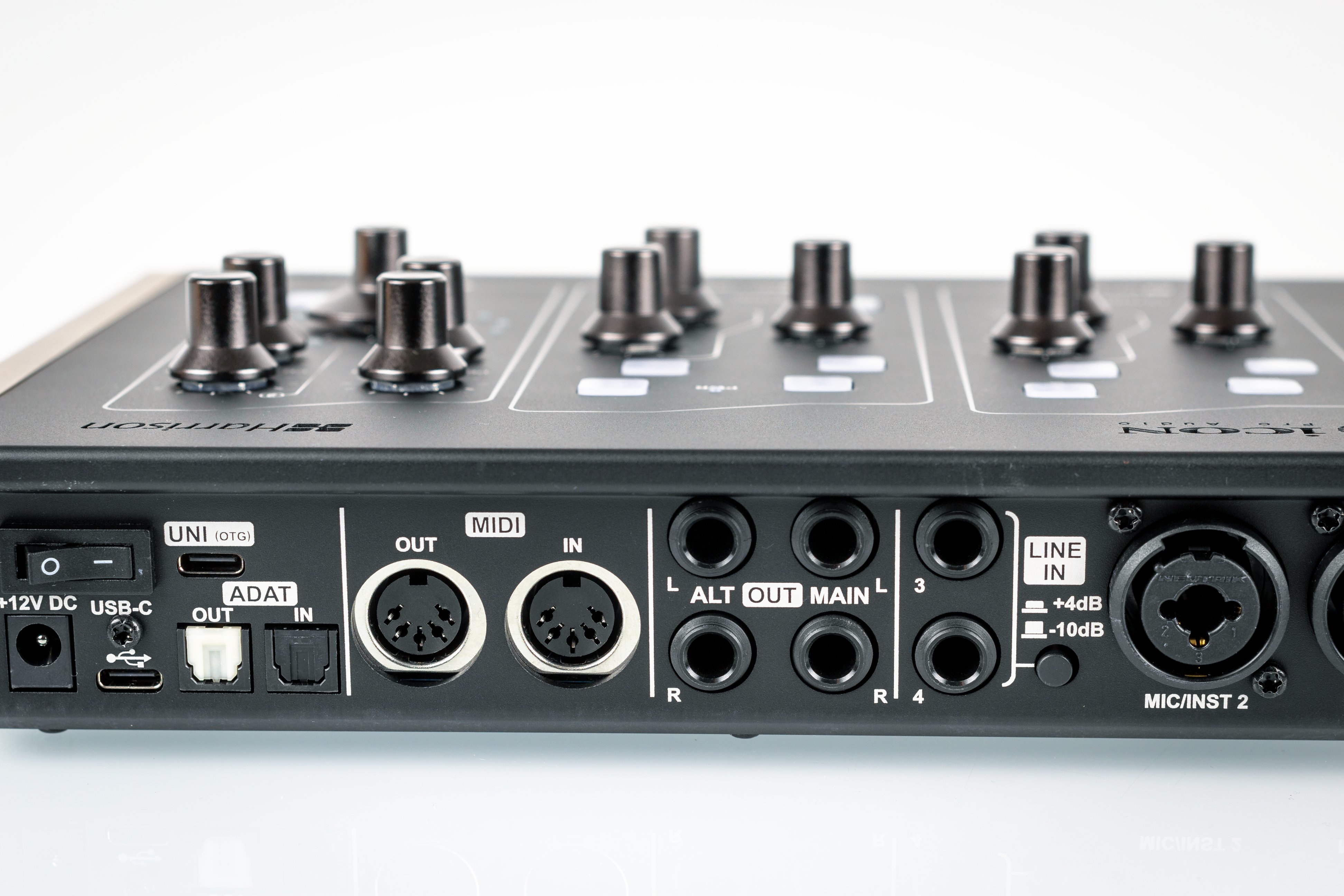
Two balanced output connections support active monitor pairs, switched with ALTERNATE. The dedicated line input offers +4/-10 dB nominal sensitivity. Actual maximum signal level is 20 dB above that nominal value.
Connections also include MIDI I/O, multichannel ADAT and UNI OTG for digital smartphone connection. OTG is a traditional iCON feature, though less central to this model's purpose.
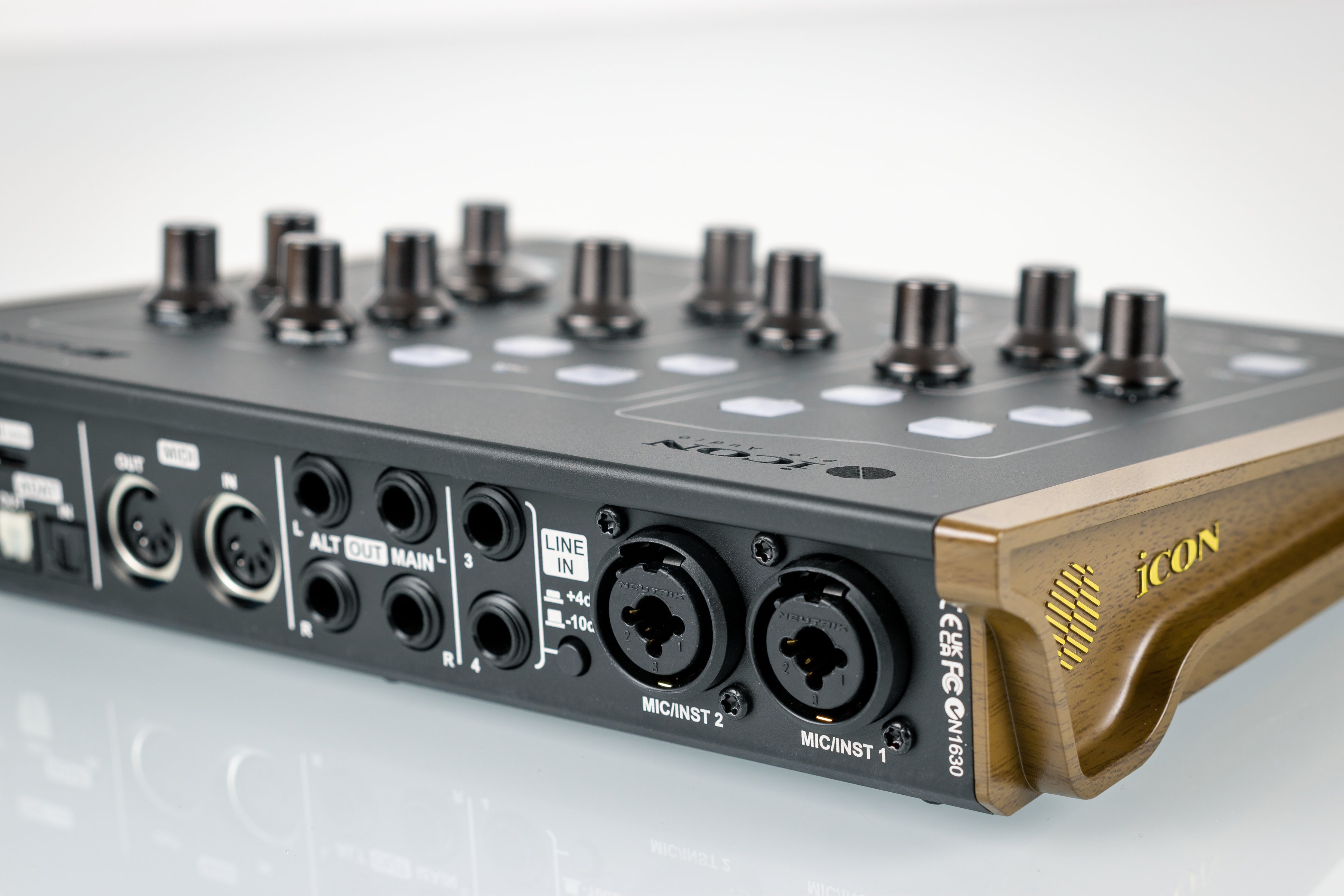
Combo XLR/TRS inputs connect two microphones or guitars. PAD reduces sensitivity by 20 dB for loud sources such as guitars and drums.
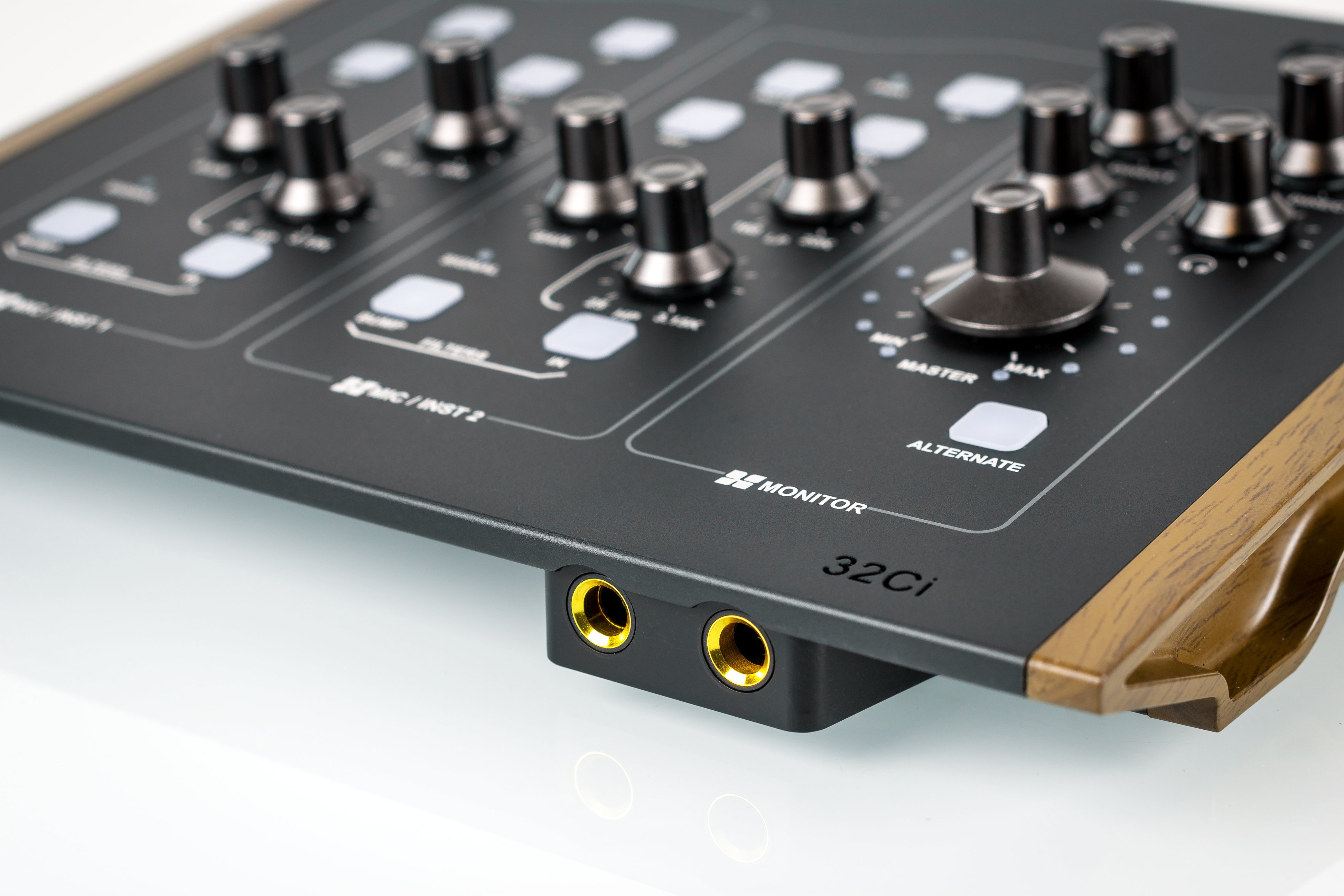
Two front headphone outputs have separate volume controls. Knobs above set the balance between playback and recording signals. The large MASTER knob adjusts monitor volume.
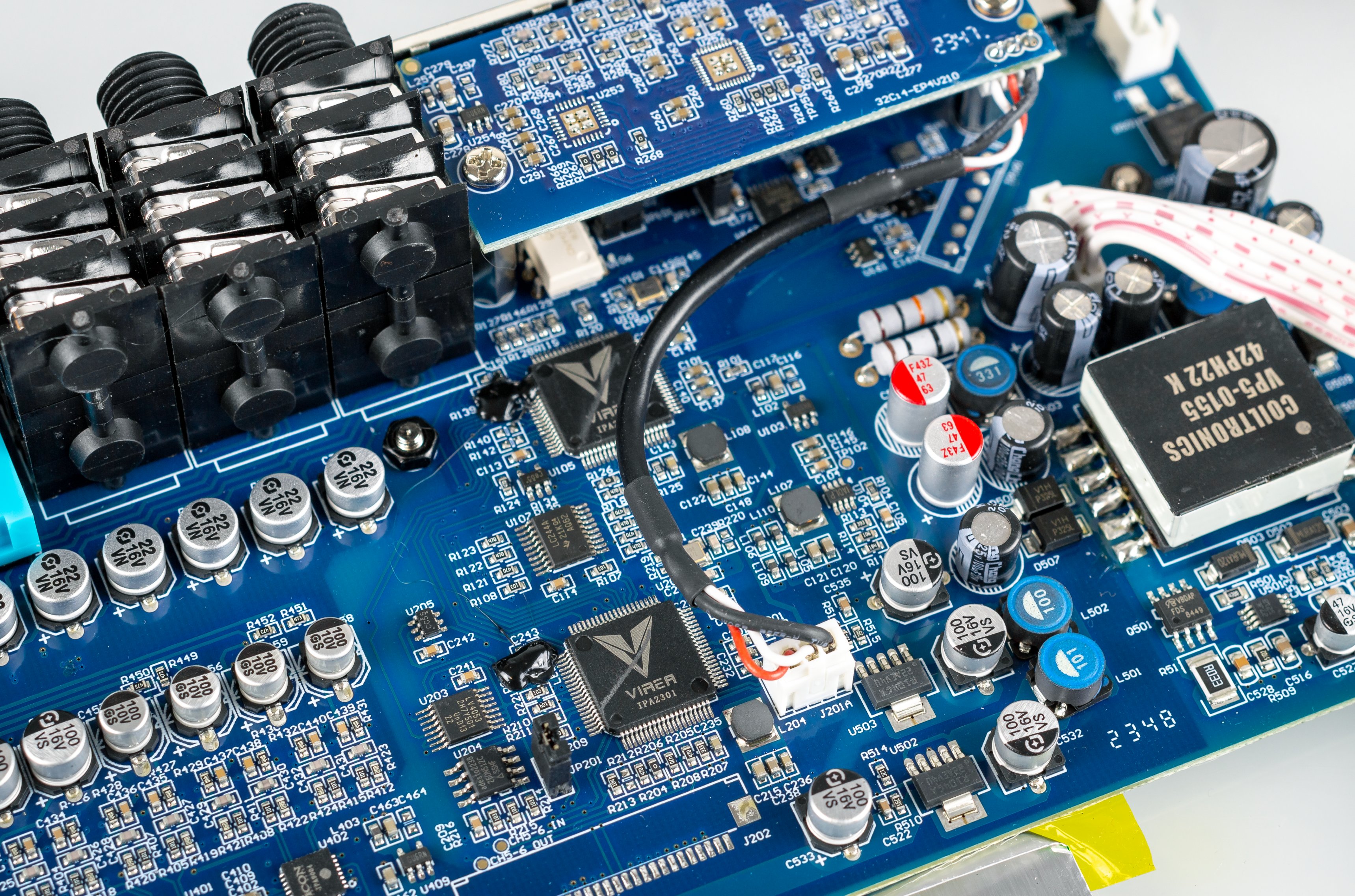
The electronics use modern, high-quality parts. The analogue circuit follows the console design, using MC33078 dual low-noise operational amplifiers, among the best of their time. A thermal pad transfers heat to the metal case lid.
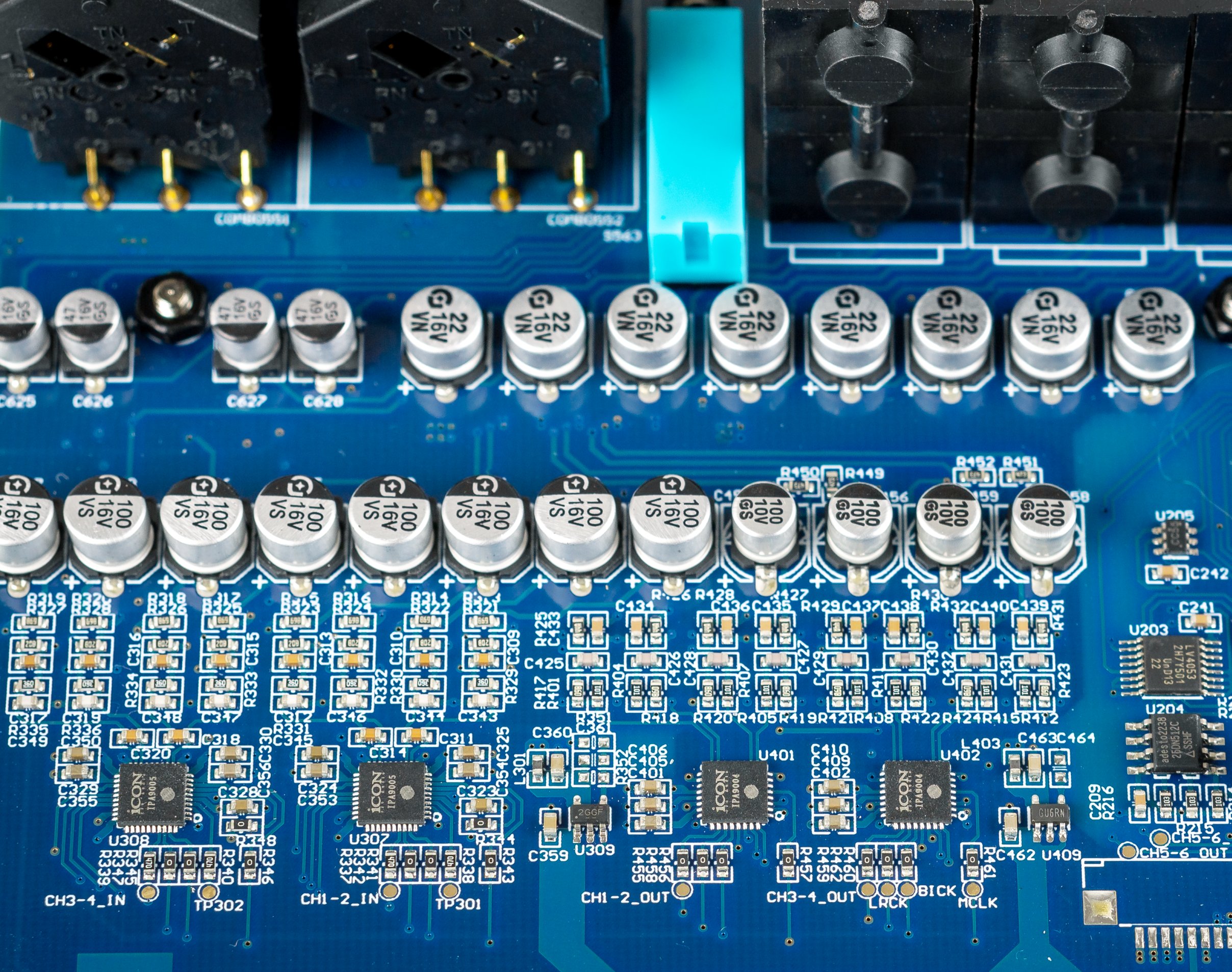
ADC and DAC chips carry iCON branding. Manufacturers often relabel chips to prevent competitors copying circuits. Comparing iCON's figures and connections with datasheets points to ESS ES9028Q2M DACs with 129 dBA dynamic range and ES9822PRO ADCs with 125 dBA. We welcome these top-class converters.
ASIO diagnostics
Features:
Input channels: 26
Output channels: 26
Input latency: 268
Output latency: 977
Min buffer size: 128
Max buffer size: 128
Preferred buffer size: 128
Granularity: 0
ASIOOutputReady - not supported
Sample rate:
8000 Hz - not supported
11025 Hz - not supported
16000 Hz - not supported
22050 Hz - not supported
32000 Hz - not supported
44100 Hz - supported
48000 Hz - supported
88200 Hz - supported
96000 Hz - supported
176400 Hz - supported
192000 Hz - supported
352800 Hz - not supported
384000 Hz - not supported
Input channels:
channel: 0 (HW In 1) - Int32LSB
channel: 1 (HW In 2) - Int32LSB
channel: 2 (HW In 3) - Int32LSB
channel: 3 (HW In 4) - Int32LSB
channel: 4 (HW In 5) - Int32LSB
channel: 5 (HW In 6) - Int32LSB
channel: 6 (ADAT In 1) - Int32LSB
channel: 7 (ADAT In 2) - Int32LSB
channel: 8 (ADAT In 3) - Int32LSB
channel: 9 (ADAT In 4) - Int32LSB
channel: 10 (ADAT In 5) - Int32LSB
channel: 11 (ADAT In 6) - Int32LSB
channel: 12 (ADAT In 7) - Int32LSB
channel: 13 (ADAT In 8) - Int32LSB
channel: 14 (VC In 1) - Int32LSB
channel: 15 (VC In 2) - Int32LSB
channel: 16 (VC In 3) - Int32LSB
channel: 17 (VC In 4) - Int32LSB
channel: 18 (VC Music In 5) - Int32LSB
channel: 19 (VC Music In 6) - Int32LSB
channel: 20 (Loopback 1) - Int32LSB
channel: 21 (Loopback 2) - Int32LSB
channel: 22 (Loopback 3) - Int32LSB
channel: 23 (Loopback 4) - Int32LSB
channel: 24 (Loopback 5) - Int32LSB
channel: 25 (Loopback 6) - Int32LSB
Output channels:
channel: 0 (HW Out 1) - Int32LSB
channel: 1 (HW Out 2) - Int32LSB
channel: 2 (HW Out 3) - Int32LSB
channel: 3 (HW Out 4) - Int32LSB
channel: 4 (HW Out 5) - Int32LSB
channel: 5 (HW Out 6) - Int32LSB
channel: 6 (ADAT Out 1) - Int32LSB
channel: 7 (ADAT Out 2) - Int32LSB
channel: 8 (ADAT Out 3) - Int32LSB
channel: 9 (ADAT Out 4) - Int32LSB
channel: 10 (ADAT Out 5) - Int32LSB
channel: 11 (ADAT Out 6) - Int32LSB
channel: 12 (ADAT Out 7) - Int32LSB
channel: 13 (ADAT Out 8) - Int32LSB
channel: 14 (VC Out 1) - Int32LSB
channel: 15 (VC Out 2) - Int32LSB
channel: 16 (VC Out 3) - Int32LSB
channel: 17 (VC Out 4) - Int32LSB
channel: 18 (VC Music Out 5) - Int32LSB
channel: 19 (VC Music Out 6) - Int32LSB
channel: 20 (Loopback 1) - Int32LSB
channel: 21 (Loopback 2) - Int32LSB
channel: 22 (Loopback 3) - Int32LSB
channel: 23 (Loopback 4) - Int32LSB
channel: 24 (Loopback 5) - Int32LSB
channel: 25 (Loopback 6) - Int32LSB
ASIO supports rates up to 192 kHz, with virtual inputs and outputs.
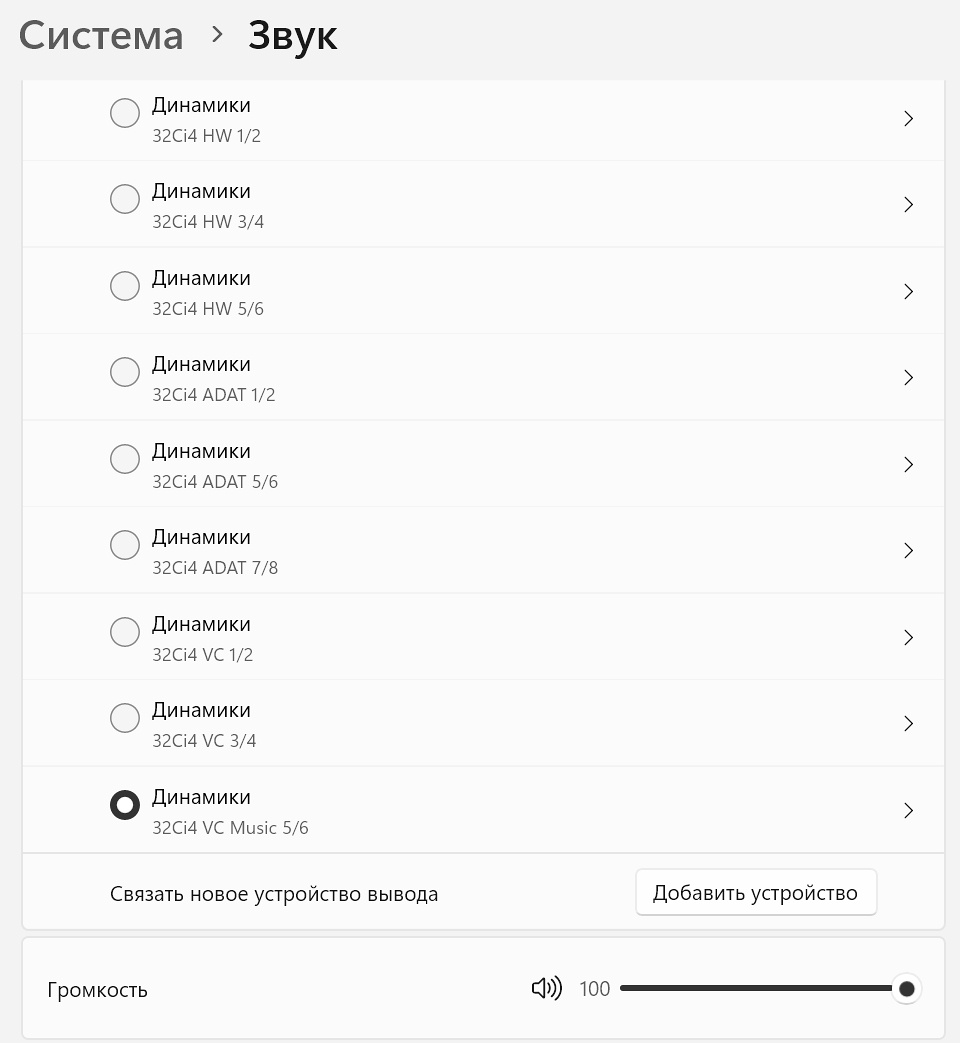
Installing iCON Pro Driver 4 creates 9 Windows audio devices. This lets several applications run with separately mixed levels, useful for streaming. If unnecessary, HW1/2 sends audio directly to analogue outputs 1/2.
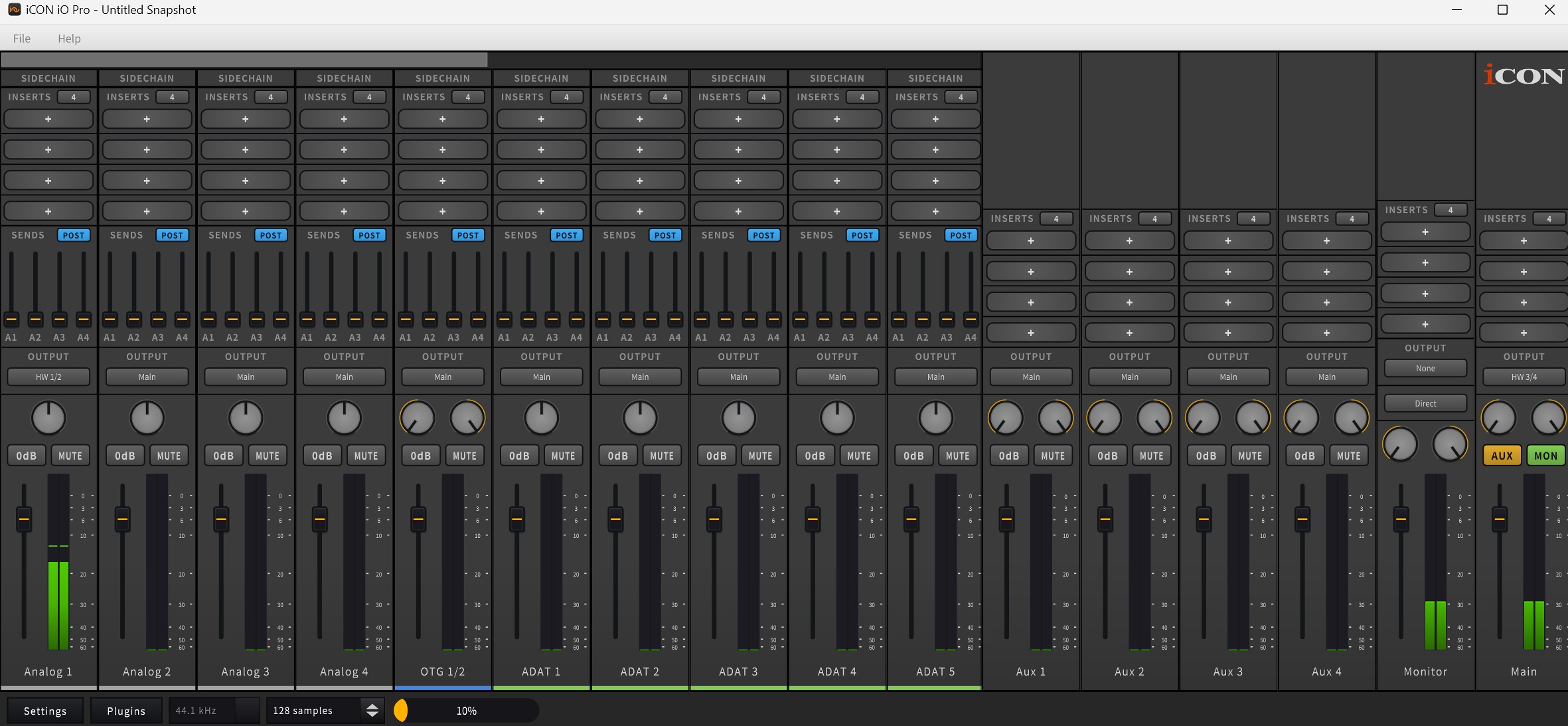
The iCON iO Pro mixer differs greatly from smaller iCON models' panels. It has inserts and 4 sends to separate buses, which can feed any analogue or digital output or loopback for mix recording and streaming. Presets recall saved configurations. Mute all loopback channels immediately: with all channels open by default, feedback can create a flanging effect that may alarm beginners.
The built-in VST host is a special iO Pro feature. Effects can process physical inputs and virtual channels without opening a DAW, or alongside any audio application.
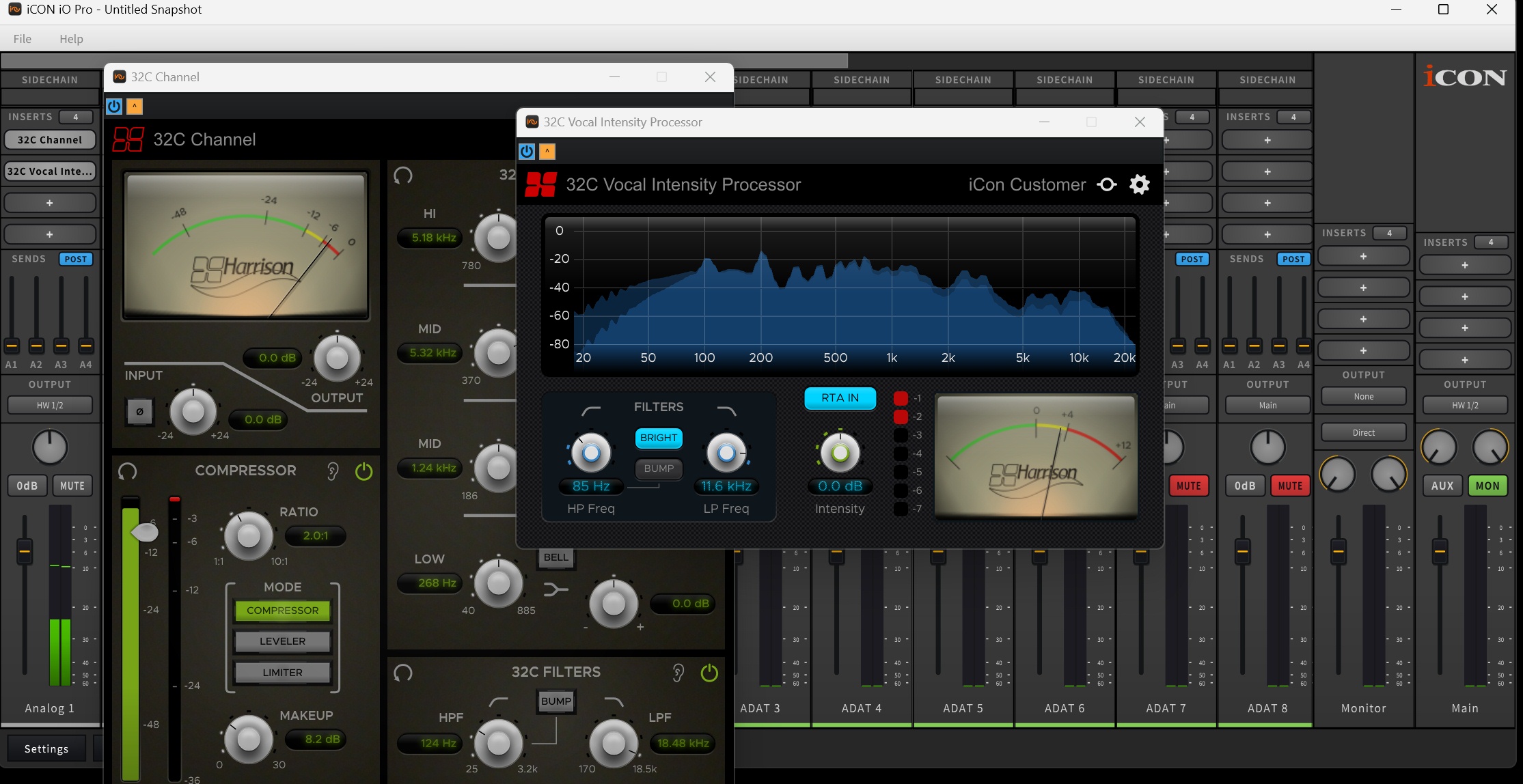
The first option loads up to 4 effects per channel, showing each name in its slot. One limitation is the lack of quick channel effect switching. Each plug-in must be opened and bypassed internally. This is inconvenient but not a major problem.
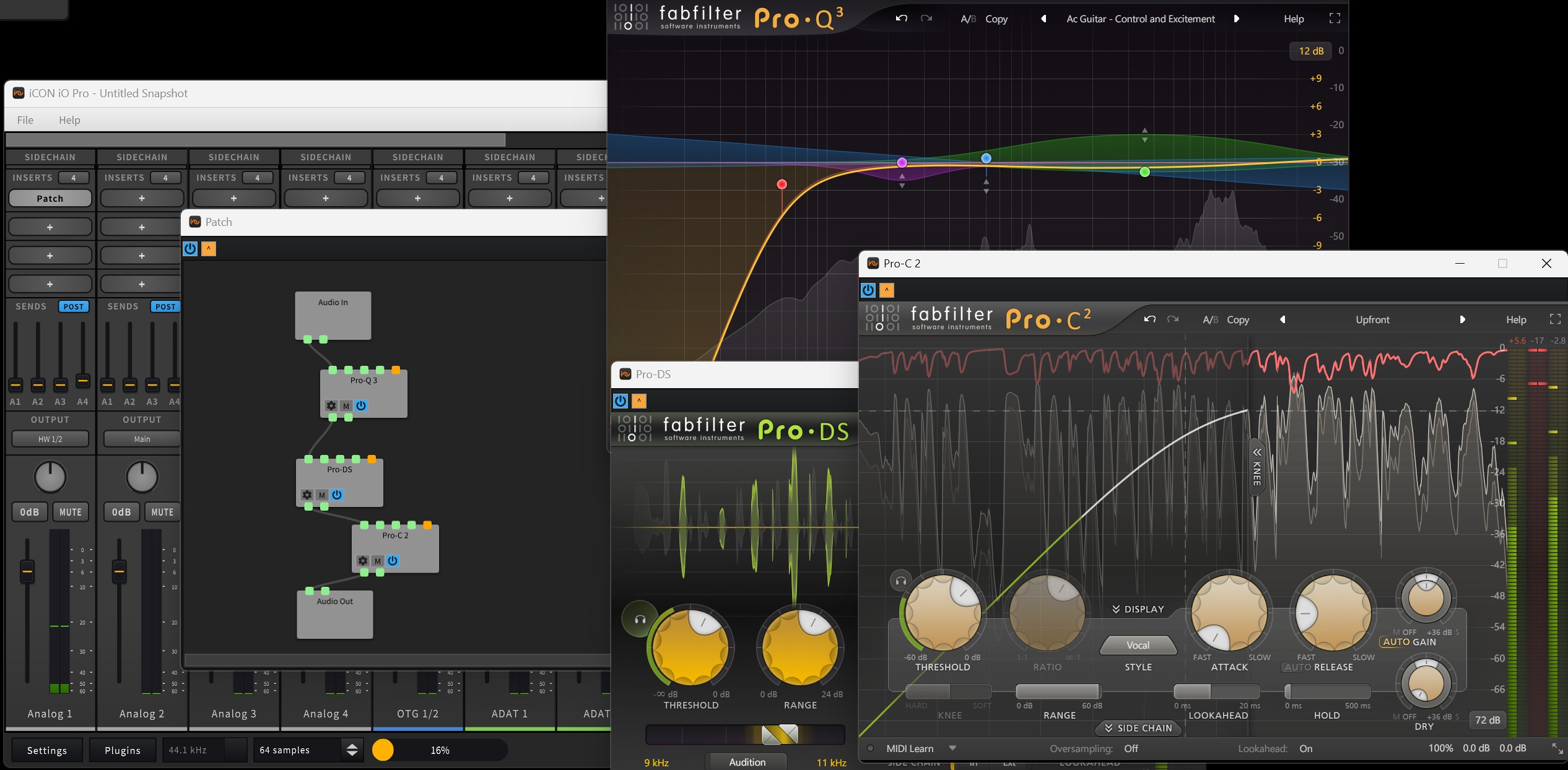
The second option uses Patch, which opens a plug-in chain limited only by computer CPU performance.
We loaded 3 FabFilter effects: Pro-Q 3 EQ, Pro-DS de-esser and Pro-C 2 compressor. The performance indicator reached only 16%.
Next, ASIO round-trip latency measurements.
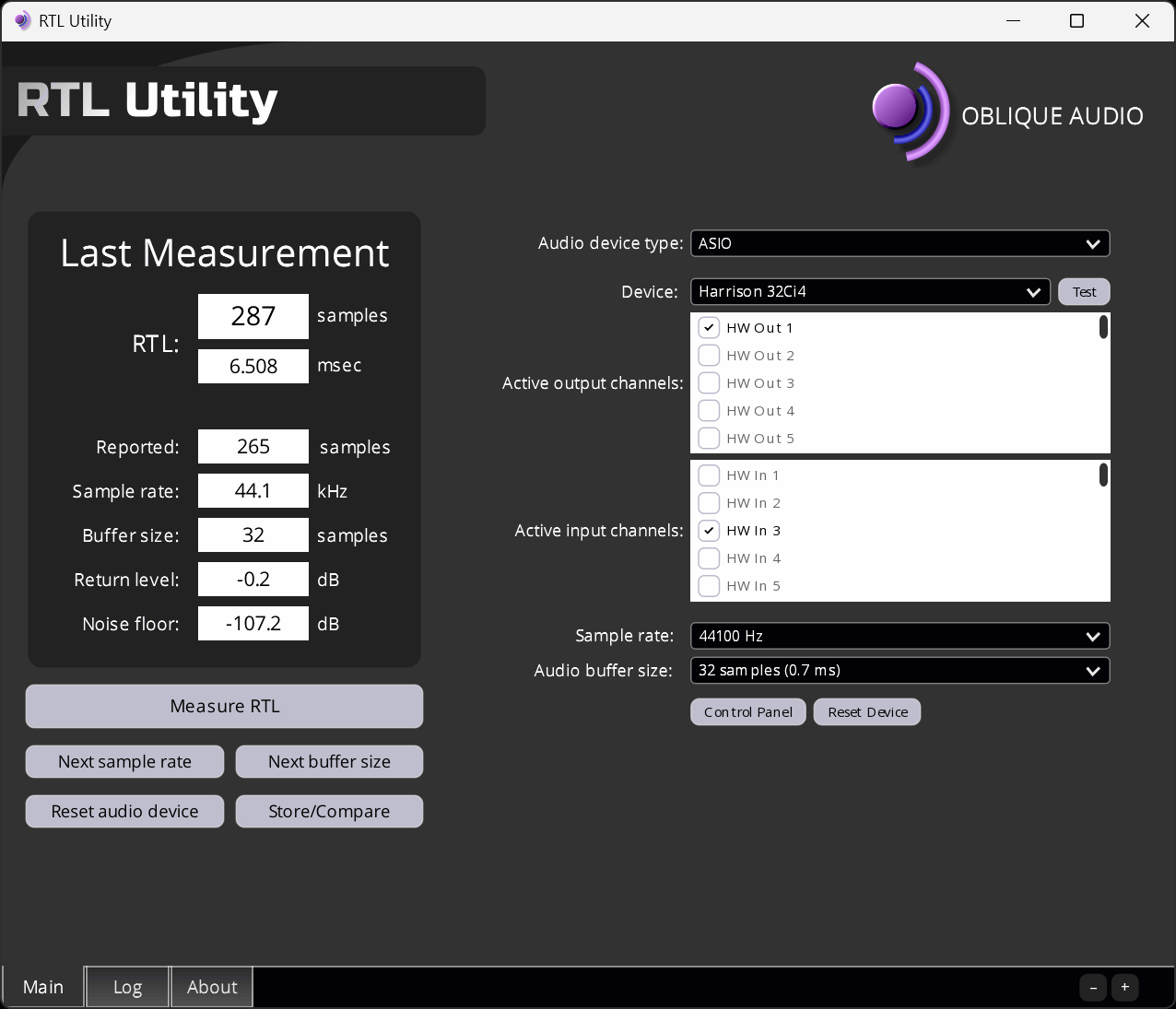
At the minimum 32-sample buffer, RTL was 6.5 ms.
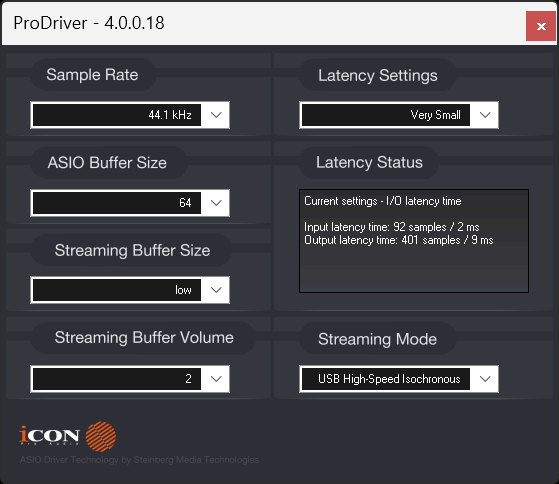
With a 64-sample buffer, it rose to 11 ms because the output buffer alone was 9 ms. This may be intended to guarantee click-free sound.
RMAA PRO measurements
We made 2 measurements, starting with line inputs 3/4 connected to outputs 1/2.
| Device under test | [ASIO] Harrison 32Ci4 |
| Operating mode | 24-bit, 44 kHz |
| Audio interface | ASIO |
| Signal path | Line output to line input |
| RMAA version | 6.4.5 PRO |
| 20 Hz–20 kHz filter | YES |
| Signal normalization | YES |
| Level change | -0.1 dB / 0.0 dB |
| MONO mode | NO |
| Calibration signal frequency, Hz | 1000 |
| Polarity | Correct/correct |
| Frequency response variation (40 Hz–15 kHz), dB | +0.13, -0.05 |
Very good |
| Noise level, dB(A) | -111.9 |
Excellent |
| Dynamic range, dB(A) | 112.0 |
Excellent |
| Harmonic distortion, % | 0.00632 |
Very good |
| Harmonic distortion + noise, dB(A) | -81.7 |
Good |
| Intermodulation distortion + noise, % | 0.00808 |
Very good |
| Stereo crosstalk, dB | -108.5 |
Excellent |
| Intermodulation at 10 kHz, % | 0.063 |
Good |
| Overall rating | Very good |
24-bit/44 kHz measurements are on a separate page.
Measuring only the outputs improves the figures. Frequency response roll-off disappears and dynamic range increases.
| Device under test | [ASIO] Harrison 32Ci4 |
| Operating mode | 24-bit, 44 kHz |
| Audio interface | ASIO |
| Signal path | Line output |
| RMAA version | 6.4.5 PRO |
| 20 Hz–20 kHz filter | YES |
| Signal normalization | YES |
| Level change | -0.1 dB / -0.1 dB |
| MONO mode | NO |
| Calibration signal frequency, Hz | 1000 |
| Polarity | Correct/correct |
| Frequency response variation (40 Hz–15 kHz), dB | +0.01, -0.05 |
Excellent |
| Noise level, dB(A) | -119.0 |
Excellent |
| Dynamic range, dB(A) | 119.1 |
Excellent |
| Harmonic distortion, % | 0.00390 |
Very good |
| Harmonic distortion + noise, dB(A) | -86.1 |
Good |
| Intermodulation distortion + noise, % | 0.00486 |
Very good |
| Stereo crosstalk, dB | -94.7 |
Excellent |
| Intermodulation at 10 kHz, % | 0.037 |
Very good |
| Overall rating | Excellent |
24-bit/44 kHz measurements are on a separate page.
The result is reasonable, but we would like figures closer to the published converter performance. Our dedicated measurement device has a balanced input rated at 127 dBA dynamic range and 0.00003% distortion. These results therefore reflect the Harrison 32Ci itself.
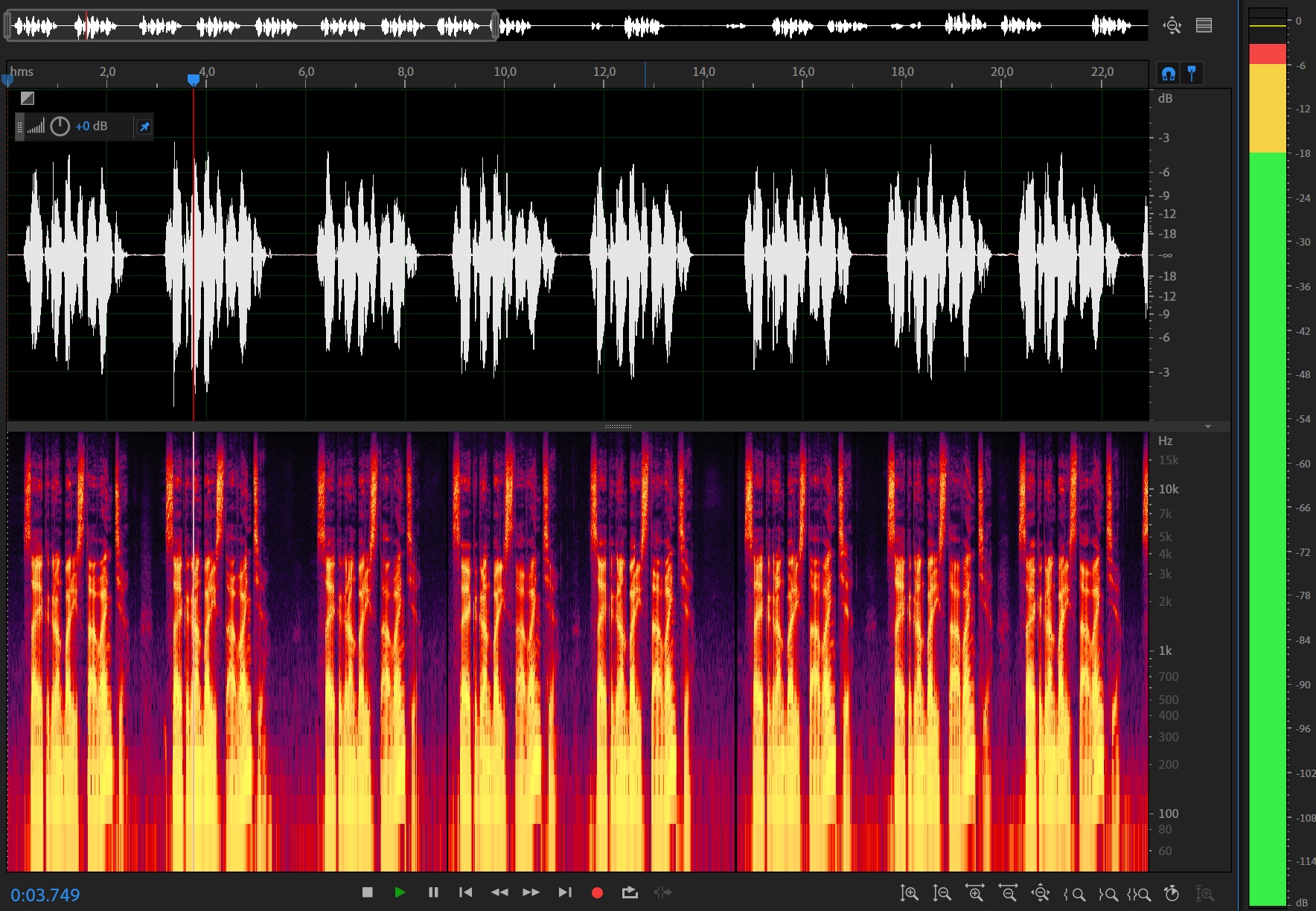


We compared the built-in preamps with a MOTU M2, recording voice through a professional Neumann TLM 102 condenser. The iCON preamp delivers high professional quality with its own character. Vocal timbre is full and pleasant. If these preamps match the classic consoles, it is good to see them return in a professional interface. BUMP adds pleasing bass. The low-cut knob is also useful for removing boom and sending a prepared voice straight to a stream.
The Harrison 32Ci can process audio not only after recording but also in real time through VST plug-ins in its mixer.
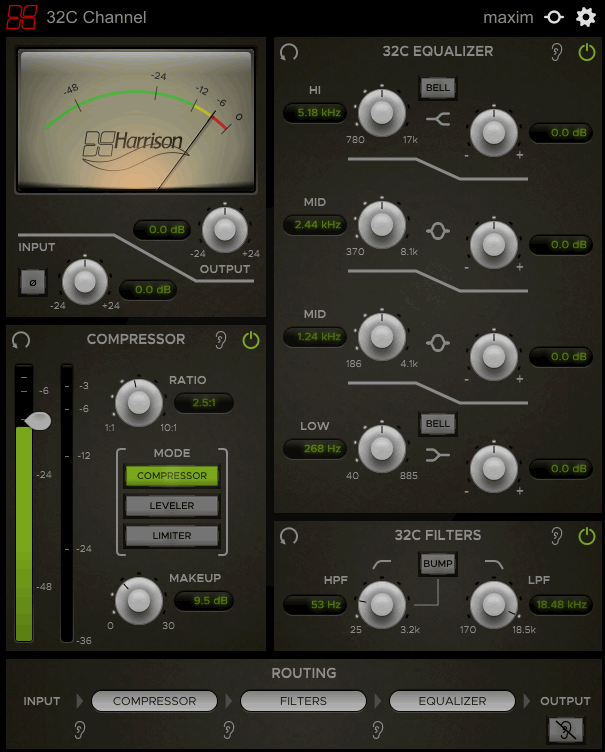
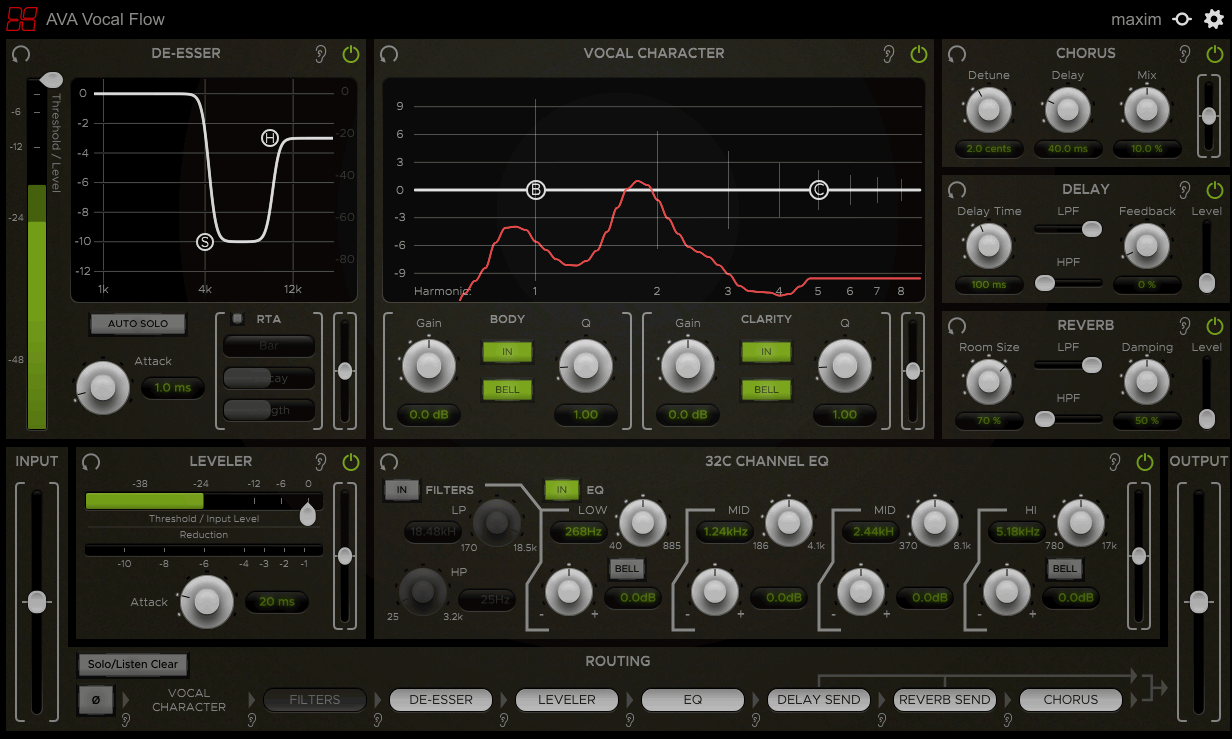
The included Harrison emulation plug-ins are useful in practice. They should provide enough features for beginners. Professionals can still use their own favourites.
Conclusions
The iCON Harrison 32Ci is a distinctive design. We liked its original hardware and unusual mixer with real-time VST processing, without buying hardware plug-ins or risking sanctions-related licence deactivation. Its accessible price is especially welcome. For something simpler and cheaper, consider the affordable DUO 44 Dyna and DUO 22 Dyna, also reviewed on our site.
Note. This is an adapted machine translation into English. It follows the “In simple terms” approach. Read the original article at https://prosound.ixbt.com/interfaces/icon-harrison.shtml.