
Aurasonics MIXION – USB audio interface with DSP for streamers
Maxim Liadov
AuraSonics, owned by major Russian distributor Audioproject, continues releasing products with an attractive balance of price and quality. The affordable MIXION USB audio interface is one example. It has an XLR microphone input with +48 V power for condenser microphones, a striking appearance, RGB lighting and hardware processing for live streaming. According to the manufacturer, MIXION is currently unique in making so many professional functions and effects accessible to a broad range of streamers and esports players.
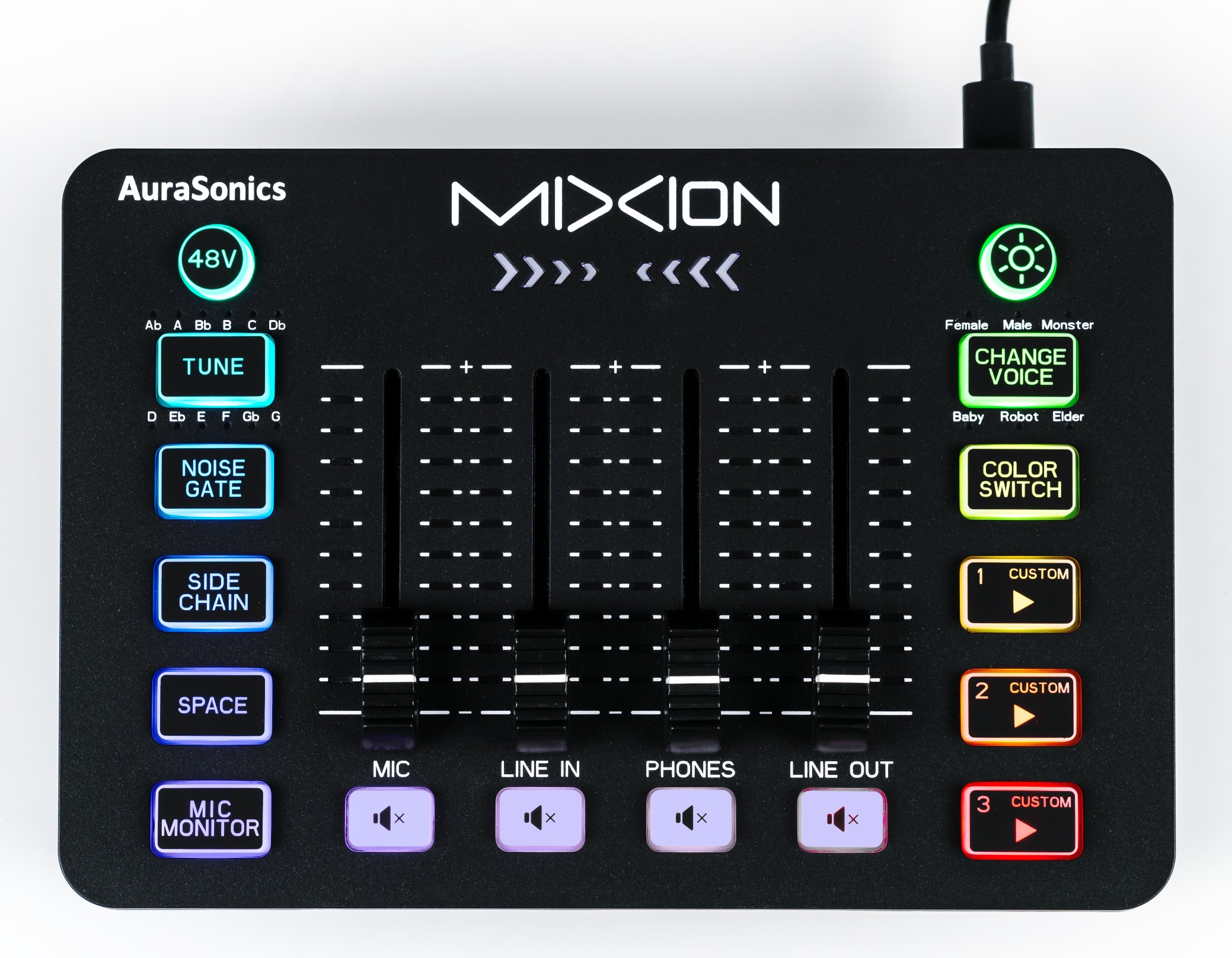
The mixer has large volume controls and shortcut buttons for muting, effects and jingles. Multisegment LEDs beside each fader show input and output levels. Many features resemble professional broadcast equipment, but operation is much simpler and clearer.
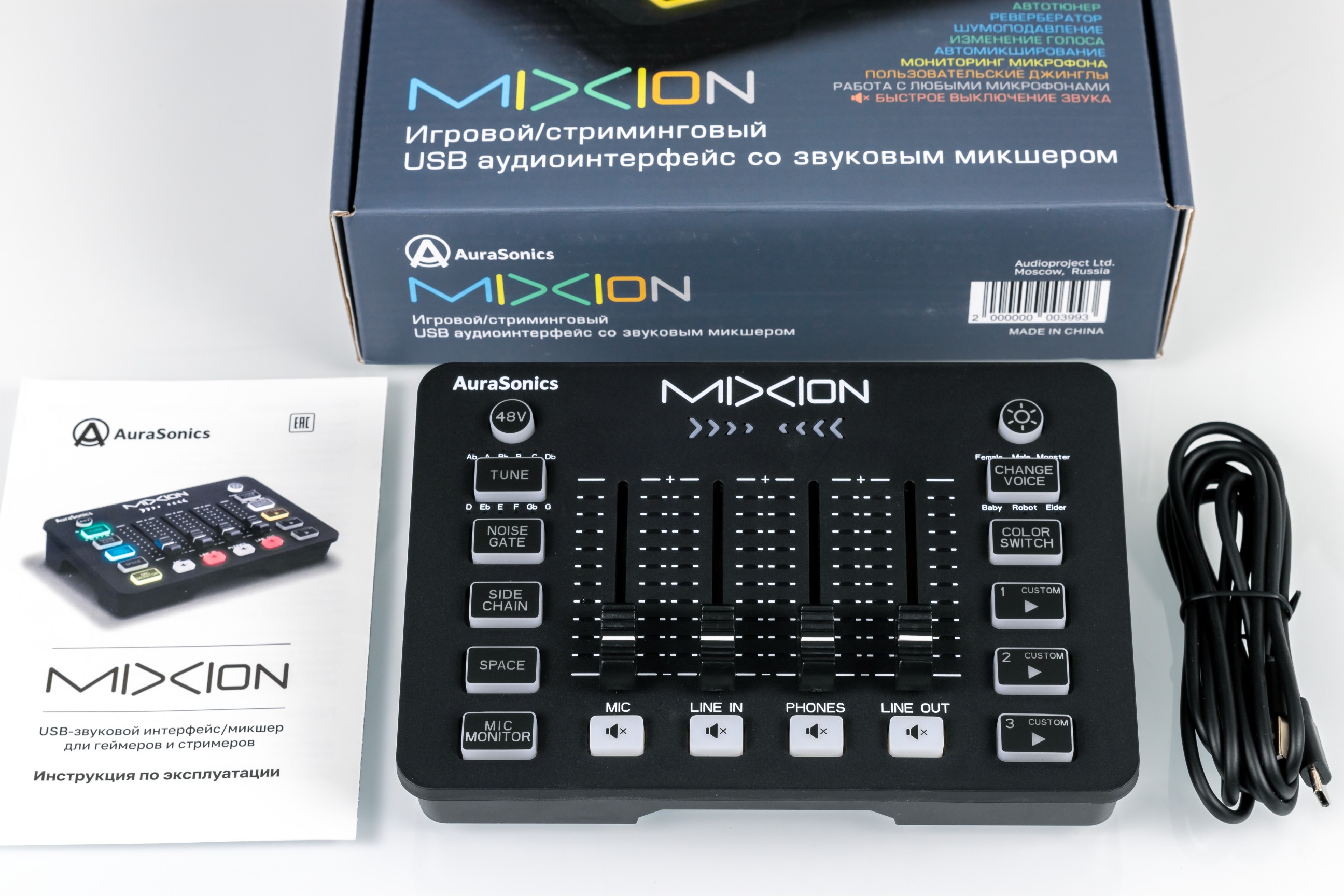
The package includes the mixer, cable and a detailed Russian manual with full specifications.
- Mic/line input frequency range: 20 Hz–20 kHz
- Mic/line input dynamic range: 75 dB
- Mic/line input signal-to-noise ratio: >75 dB
- Mic/line input THD+N: 0.1%
- Microphone gain range: +20 dB to +46.5 dB
- Frequency range: 20 Hz–20 kHz
- Headphone output dynamic range: 90 dB
- Headphone output signal-to-noise ratio: >85 dB
- Headphone output THD+N: <0.1%
- Headphone output power: 15 mW into 32 ohms
- Line output frequency range: 20 Hz–20 kHz
- Line output dynamic range: 85 dB
- Line output signal-to-noise ratio: >85 dB
- Line output THD+N: <0.1%
- Maximum line output level: +2 dBu (1 V)
- Connection: USB 2.0
- Sample rate: 44.1 kHz
- Power: USB, 5 V/500 mA
- Dimensions: 180 × 122 × 50 mm
- Weight: 0.34 kg
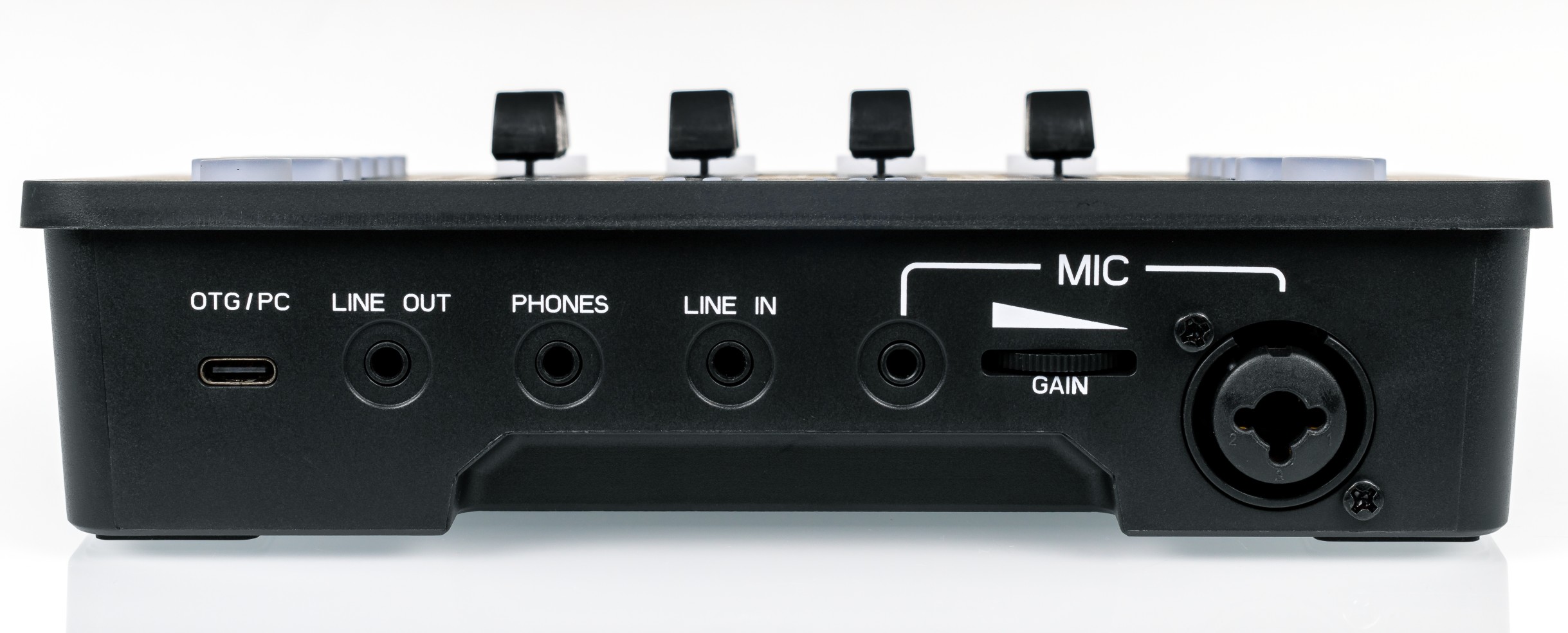
USB-C supplies power and connects either a computer or mobile device. Most audio sockets are 3.5 mm stereo mini-jacks. The exception is the combo XLR/TRS input for professional microphones, including condensers needing +48 V phantom power. A hardware gain knob sets preamp input sensitivity. Set it once for the microphone so the signal is strong but peaks do not overload. The MIC fader then handles quick volume changes.
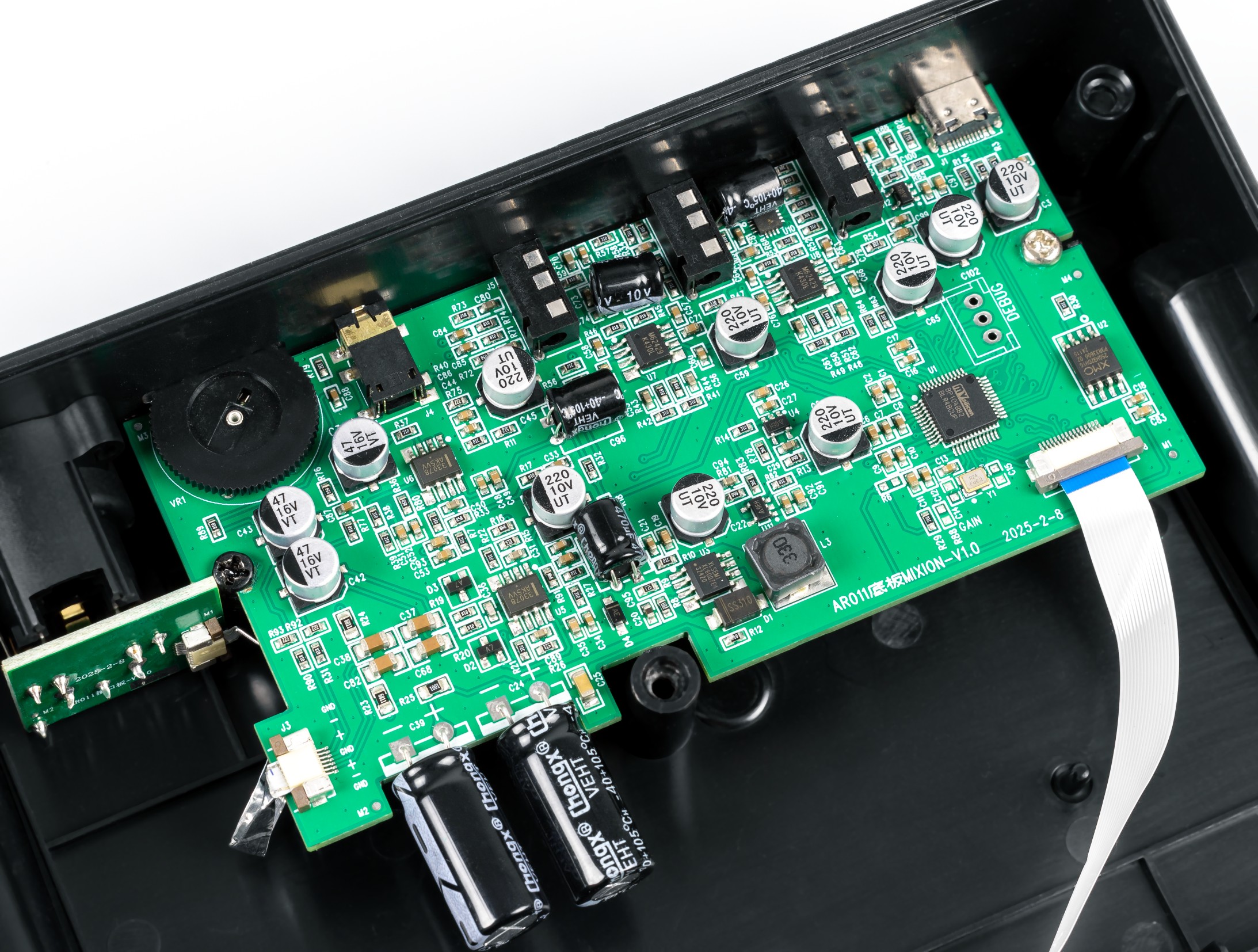
Inside is a Chinese-designed and manufactured MVSilicon BP1048B2 processor. It integrates audio DSP, a preamp, 16-bit ADC and 24-bit DAC. Line input specifications are 96 dB signal-to-noise and -86 dB THD+N; line output figures are 105 dB and -86 dB respectively. A headphone output is also integrated. The features and integration level are impressive, while performance suits mainstream entry-level equipment.
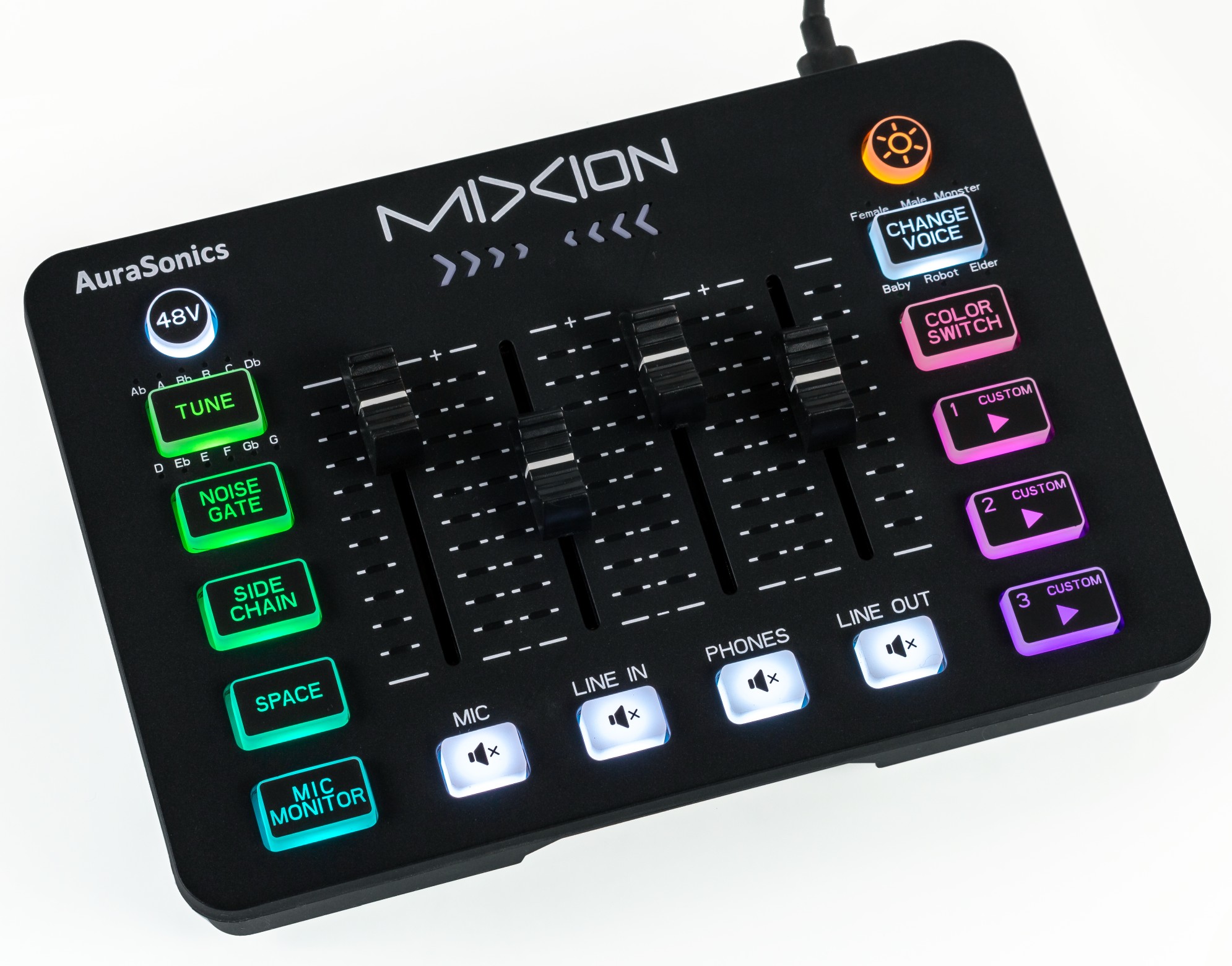
Coloured buttons look attractive on camera. COLOR SWITCH selects lighting modes, and the round lamp button sets brightness. In person, the lighting is bright and attractive; photographs do not fully show its effect. About half the modes pulse or gradually change colour.
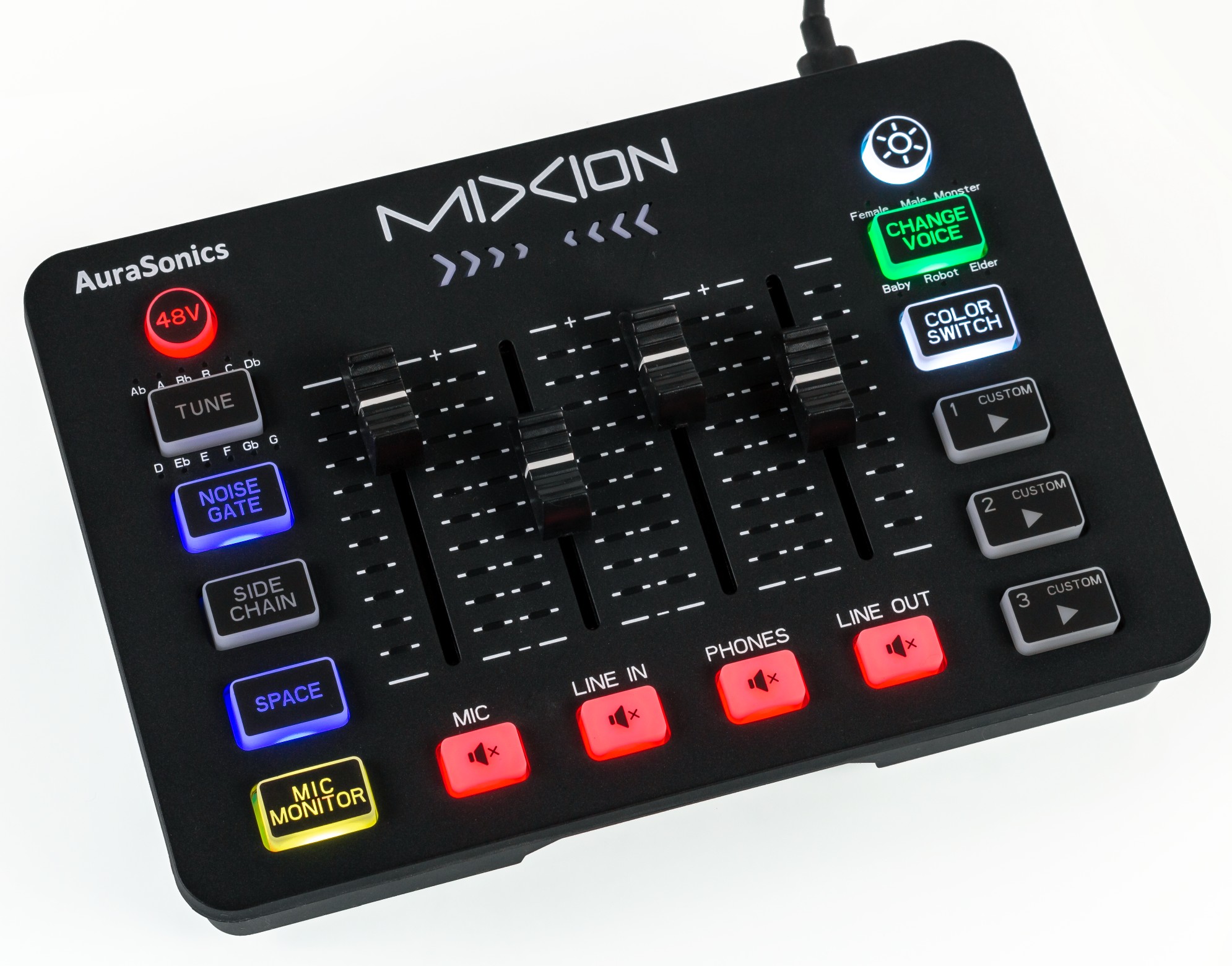
In the simplest standard mode, buttons stay dark until pressed, then light in a colour matching their function.
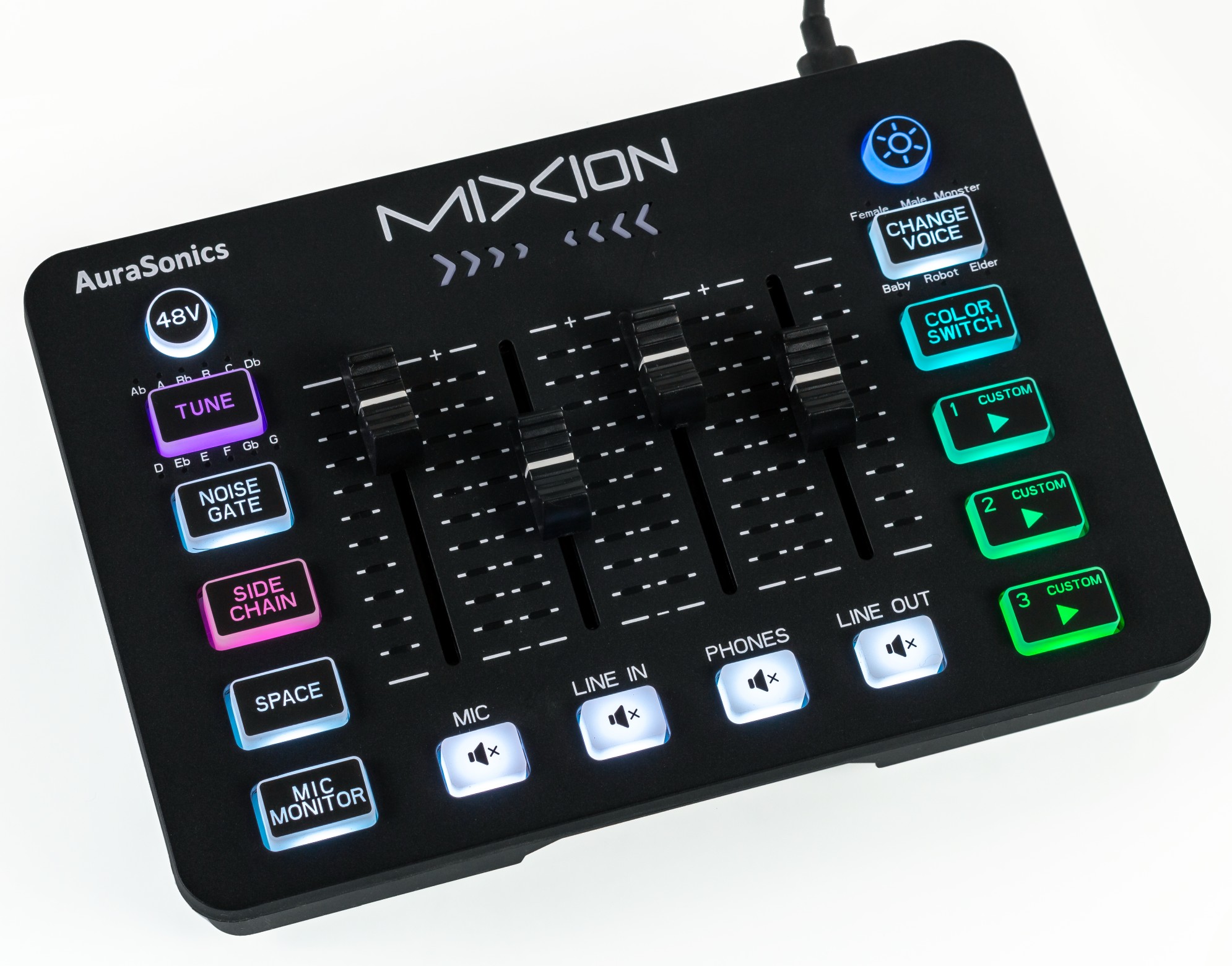
Other modes gently pulse even on inactive buttons. Pressing a button changes it to white.
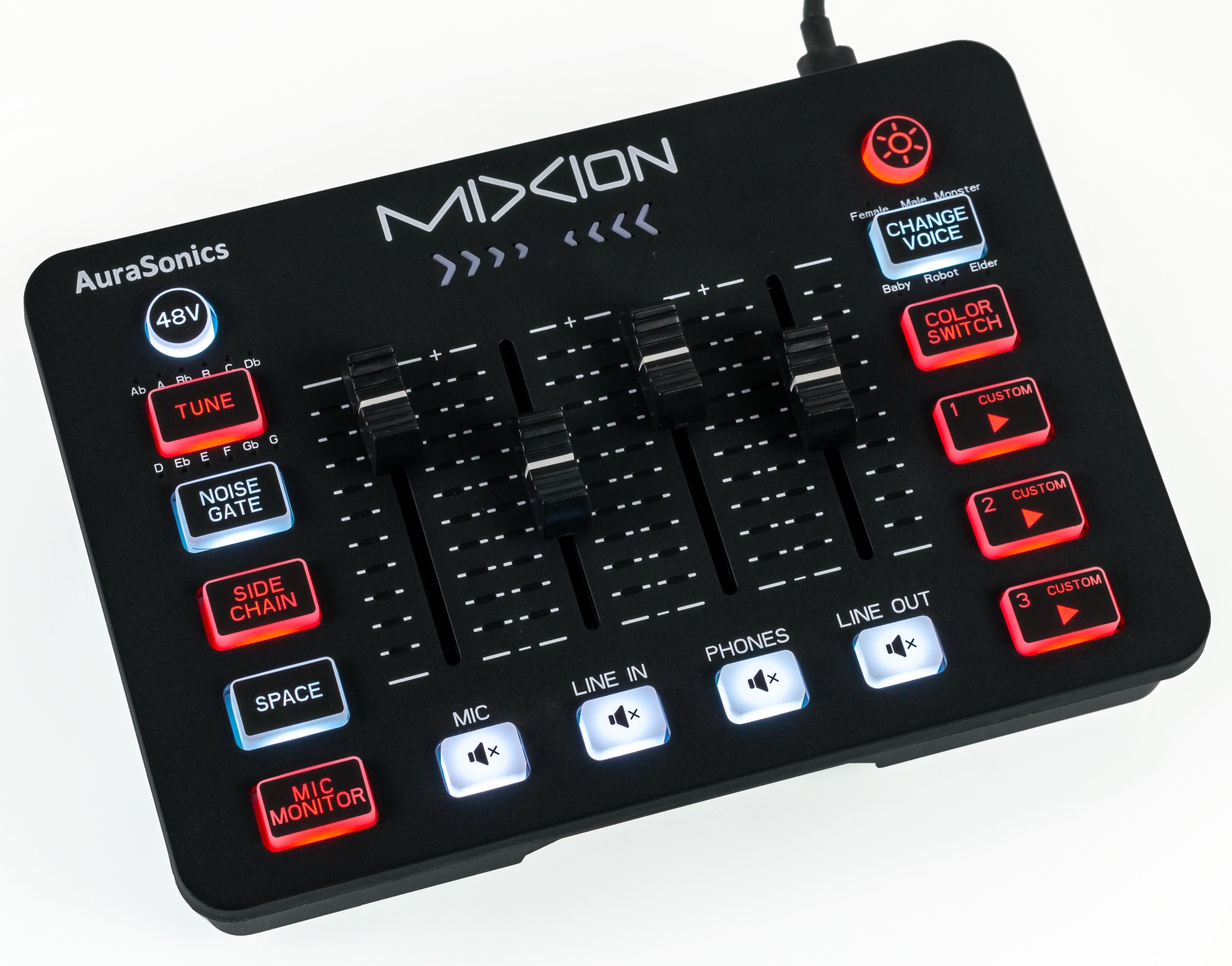
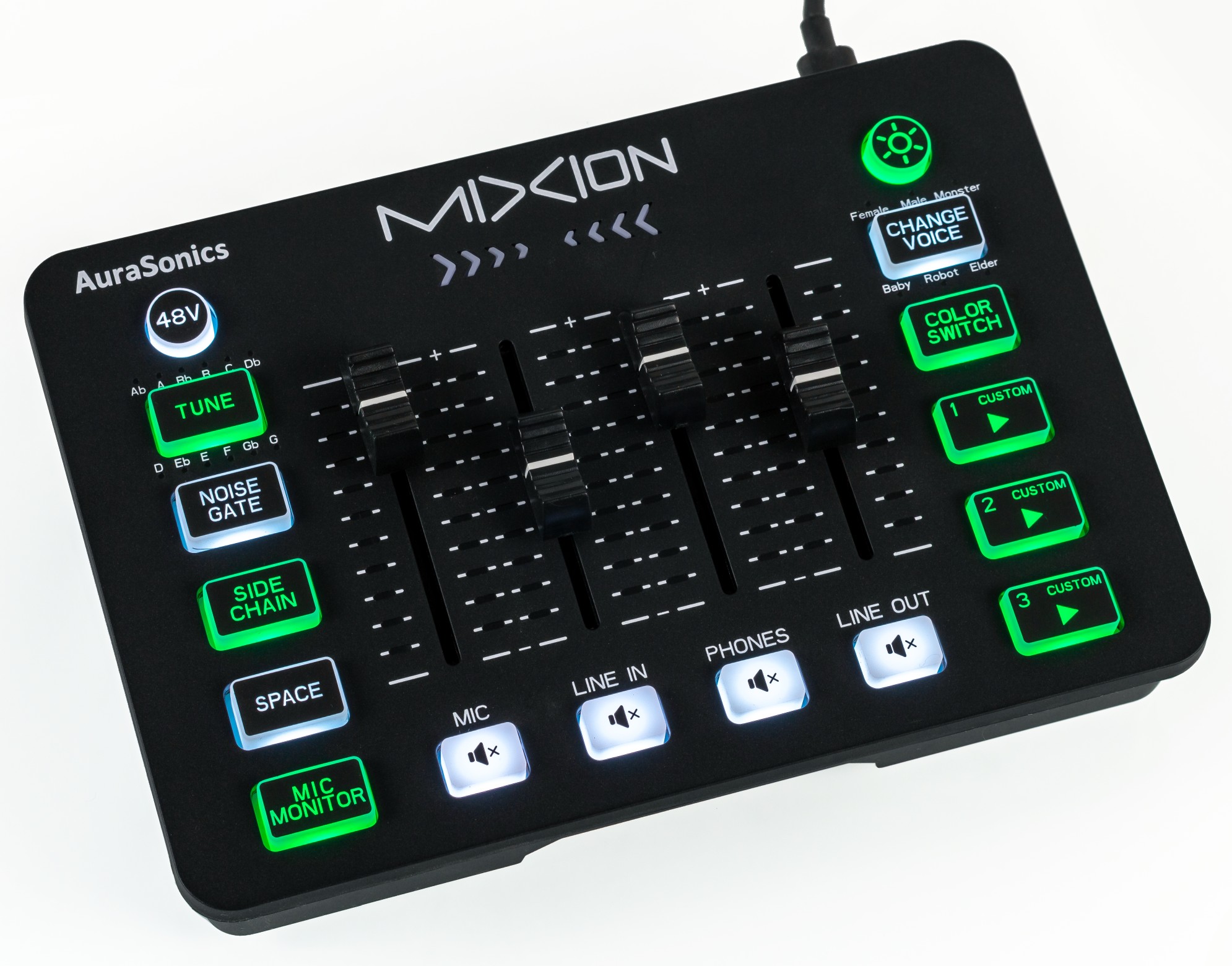
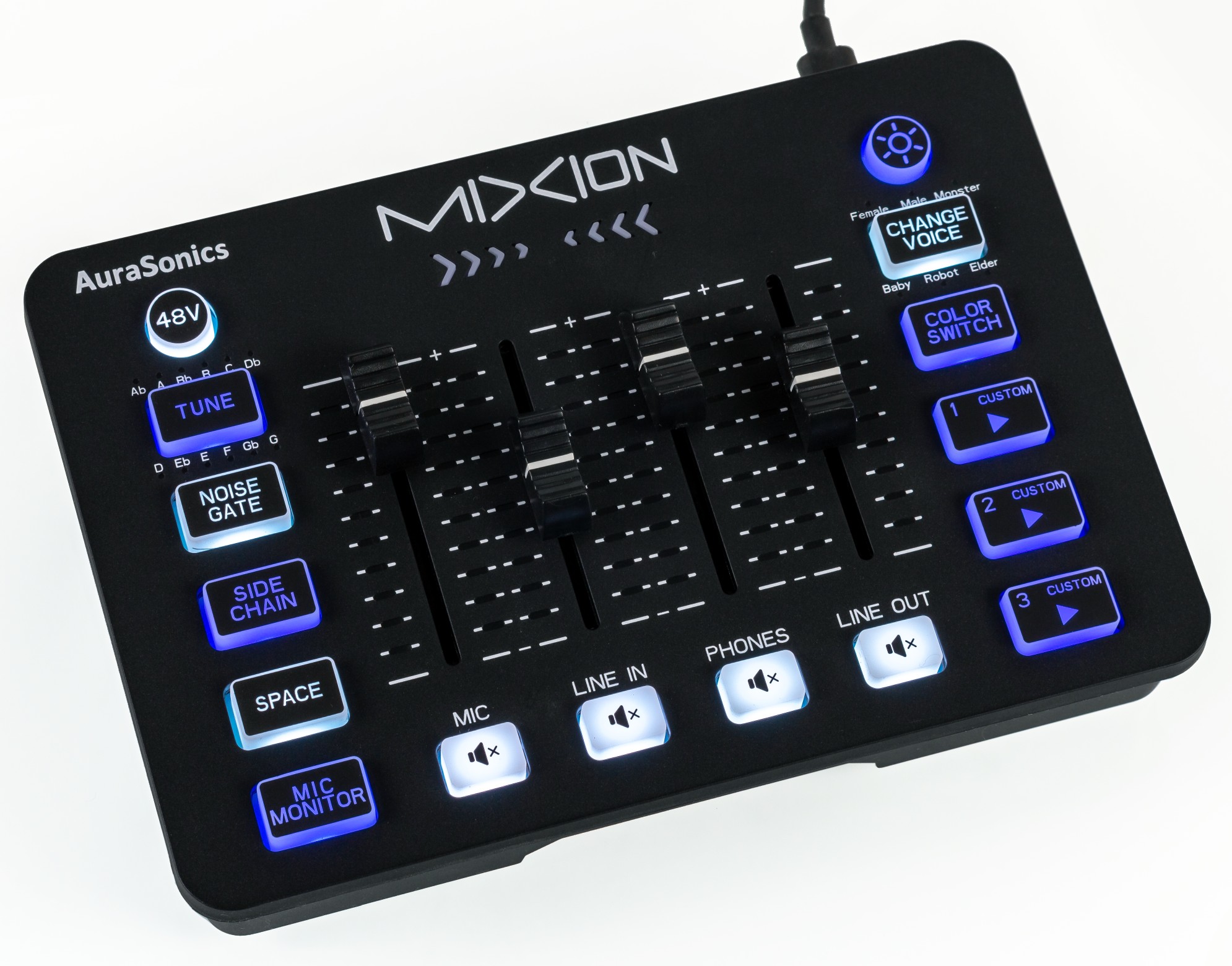
There are 9 modes, so a suitable one should be easy to find. You might use standard lighting while working and switch to pulsing colours on a broadcast. One drawback is the weak brightness of the level indicators beside the faders.
No driver is needed. The mixer appears as USB AUDIO DEVICE with a fixed 16-bit/44 kHz format. There is no native ASIO driver; use ASIO4ALL if ASIO is required.
We measured the line output separately to show playback performance:
| Device under test | USB AUDIO DEVICE |
| Operating mode | 24-bit, 44 kHz |
| Audio interface | MME |
| Signal path | Output only |
| Frequency response variation (40 Hz–15 kHz), dB | +0.16, -1.47 |
Average |
| Noise level, dB(A) | -87.9 |
Good |
| Dynamic range, dB(A) | 87.3 |
Good |
| Harmonic distortion, % | 0.017 |
Good |
| Harmonic distortion + noise, dB(A) | -72.9 |
Average |
| Intermodulation distortion + noise, % | 0.083 |
Good |
| Stereo crosstalk, dB | -79.7 |
Very good |
| Intermodulation at 10 kHz, % | 0.026 |
Good |
| Overall rating | Good |
Detailed 16-bit/44 kHz output measurements in the RMAA report
As expected, measurements resemble an integrated motherboard codec. Interestingly, our figures are better than the manufacturer's. Specified THD+N is <0.1%, while we measured <0.03%. We obtained 87 dB dynamic range against the specified 85 dB. This is normal. Manufacturers often use nearby round figures for clear marketing or to ensure specifications are met in different systems.
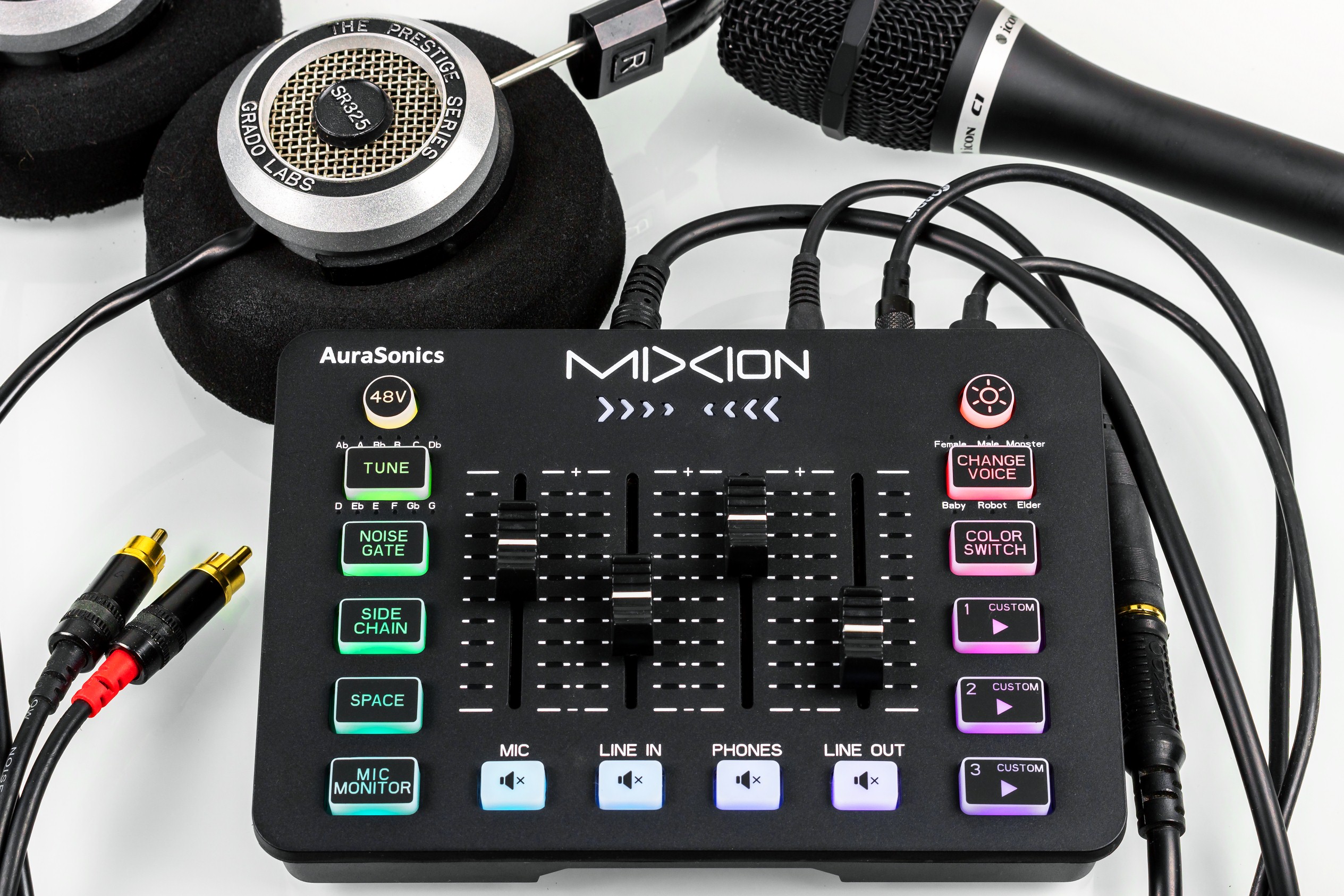
We tested the preamps with an ICON C1 microphone using +5 V power and a professional Neumann TLM 102 condenser. Gain was sufficient even for quiet speech. We especially liked NOISE GATE, which effectively removes noise during pauses. SIDE CHAIN is also excellent: it lowers other sources when speech enters the microphone and restores them afterwards, reducing the need for repeated fader moves. MIC MONITOR hardware monitoring worked well. TUNE sounds like the strongly processed vocal effect in Cher's song; it is too obvious to be useful for most singing. CHANGE VOICE alters vocal timbre, but we struggled to find a realistic use beyond cartoon voices. Jingle buttons are useful for any streamer, as are quick microphone and line-source MUTE buttons. Operation is simple enough for a beginner to learn in 5 minutes. The headphone output is not particularly loud, though louder than integrated audio. We recommend ordinary 32-ohm headphones.
Conclusions
For its low price, the AuraSonics MIXION offers extensive connections and controls. It best suits streamers currently using a phone or webcam who want an affordable equipment upgrade. Attractive lighting is a major advantage on camera. Importantly, MIXION supports both ordinary +5 V electret microphones on mini-jack and professional +48 V microphones. Simple operation without driver or software complications is another strength.
Note. This is an adapted machine translation into English. It follows the “In simple terms” approach. Read the original article at https://prosound.ixbt.com/interfaces/aurasonics-mixion.shtml.