
AuraSonics K4 and K8: compact analogue mixers with Bluetooth and USB
Grigory Liadov
The Russian distribution company Audioproject continues expanding AuraSonics and, following the wireless system AuraSonics STAGE 200 , has introduced compact AuraSonics mixers. These affordable analogue devices suit many uses. Flexi EQ is their main attraction, allowing four-band microphone input adjustment. They also have effects processing, Bluetooth and USB connections, including computer support. Prices remain accessible to a wide audience.
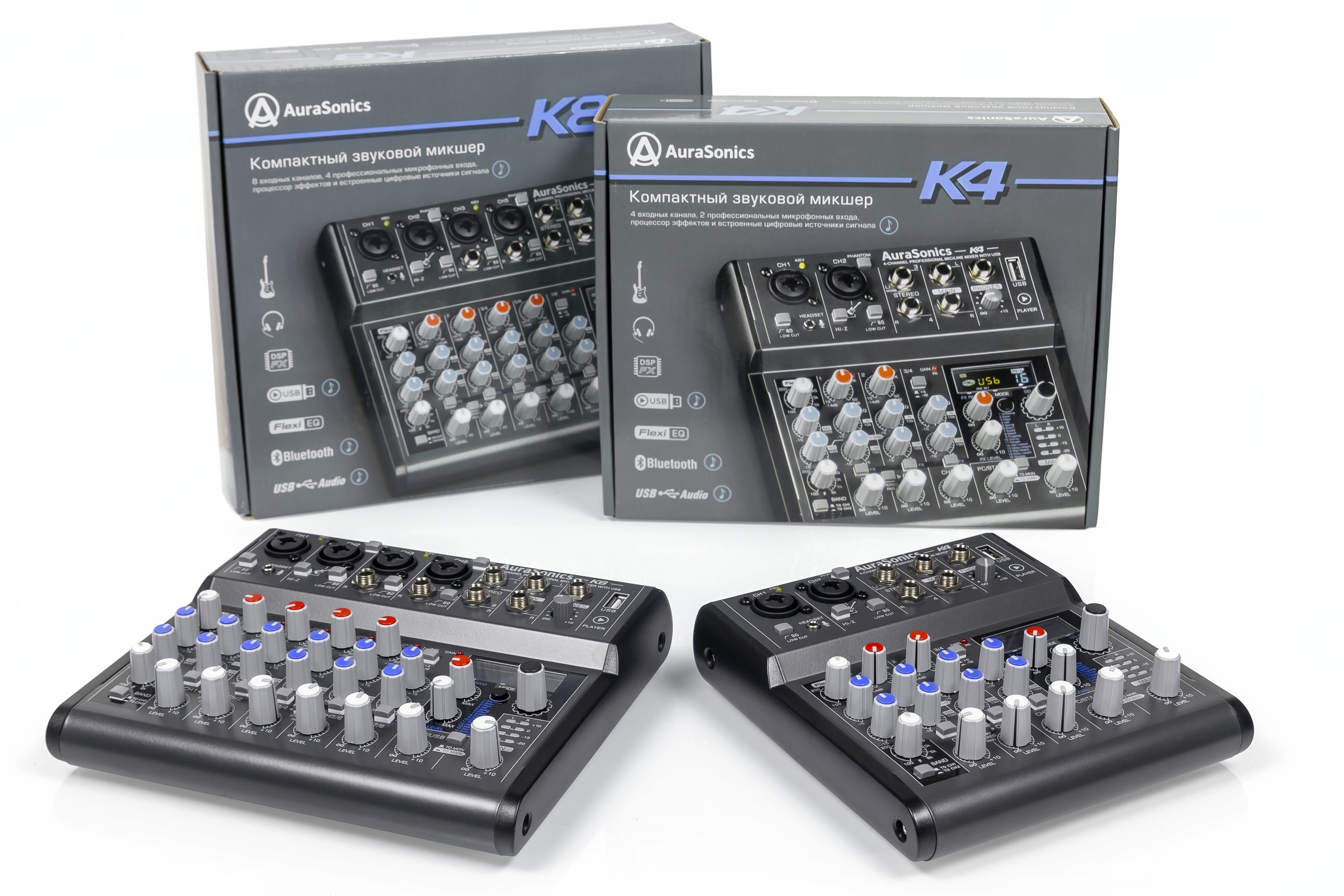
There are two models, K4 and K8, differing in size and channel count. The K4 has 2 microphone channels and one stereo channel. The K8 has 2 microphone channels, another two microphone channels shared with stereo line inputs and one stereo channel. We examine the larger eight-channel K8.
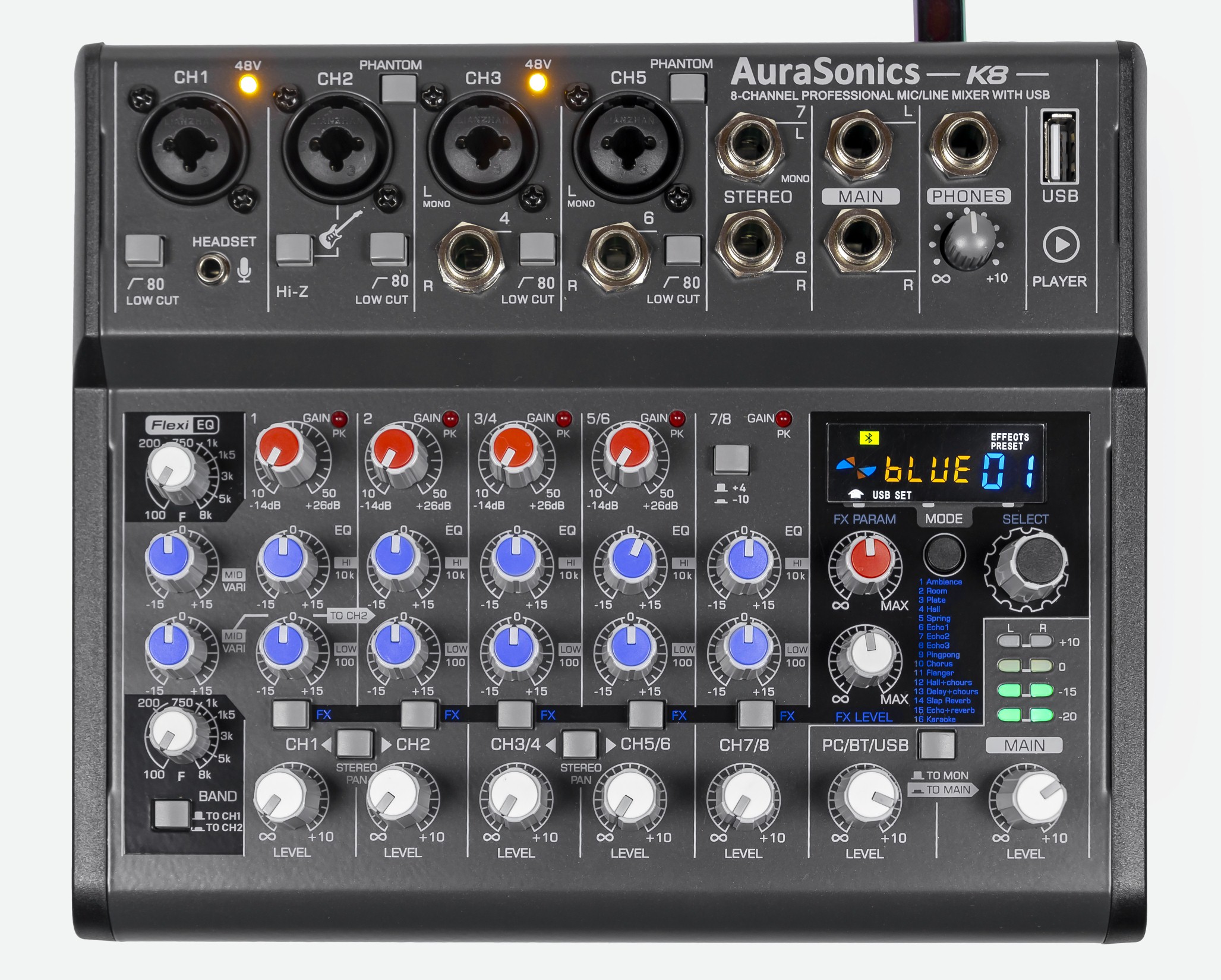
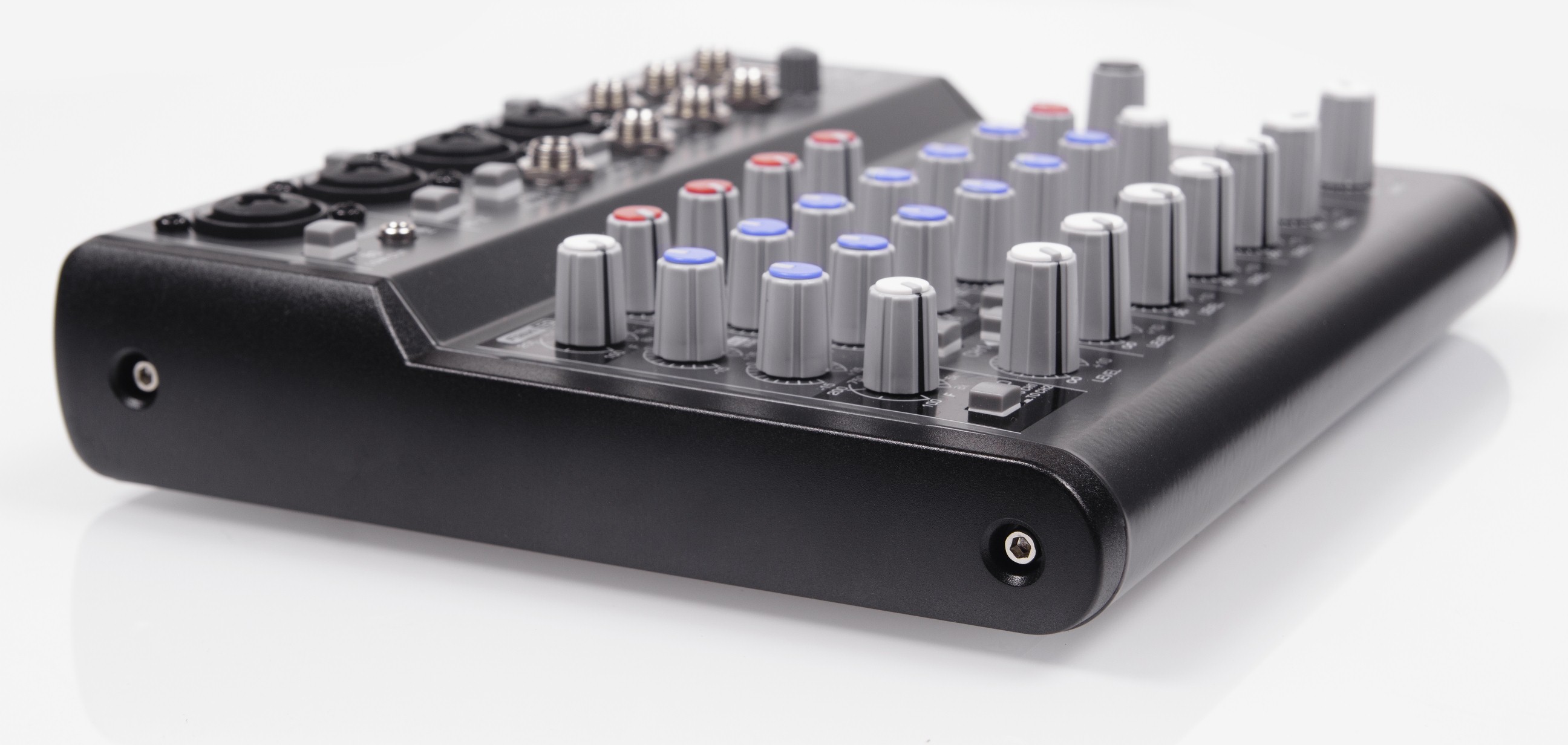
The compact design uses no faders, only buttons and rotary controls. Buttons also replace pan controls and per-channel effect sends. This saves space and makes the mixers highly portable.
Connections and controls follow a familiar layout with several interesting ideas, especially Flexi EQ.
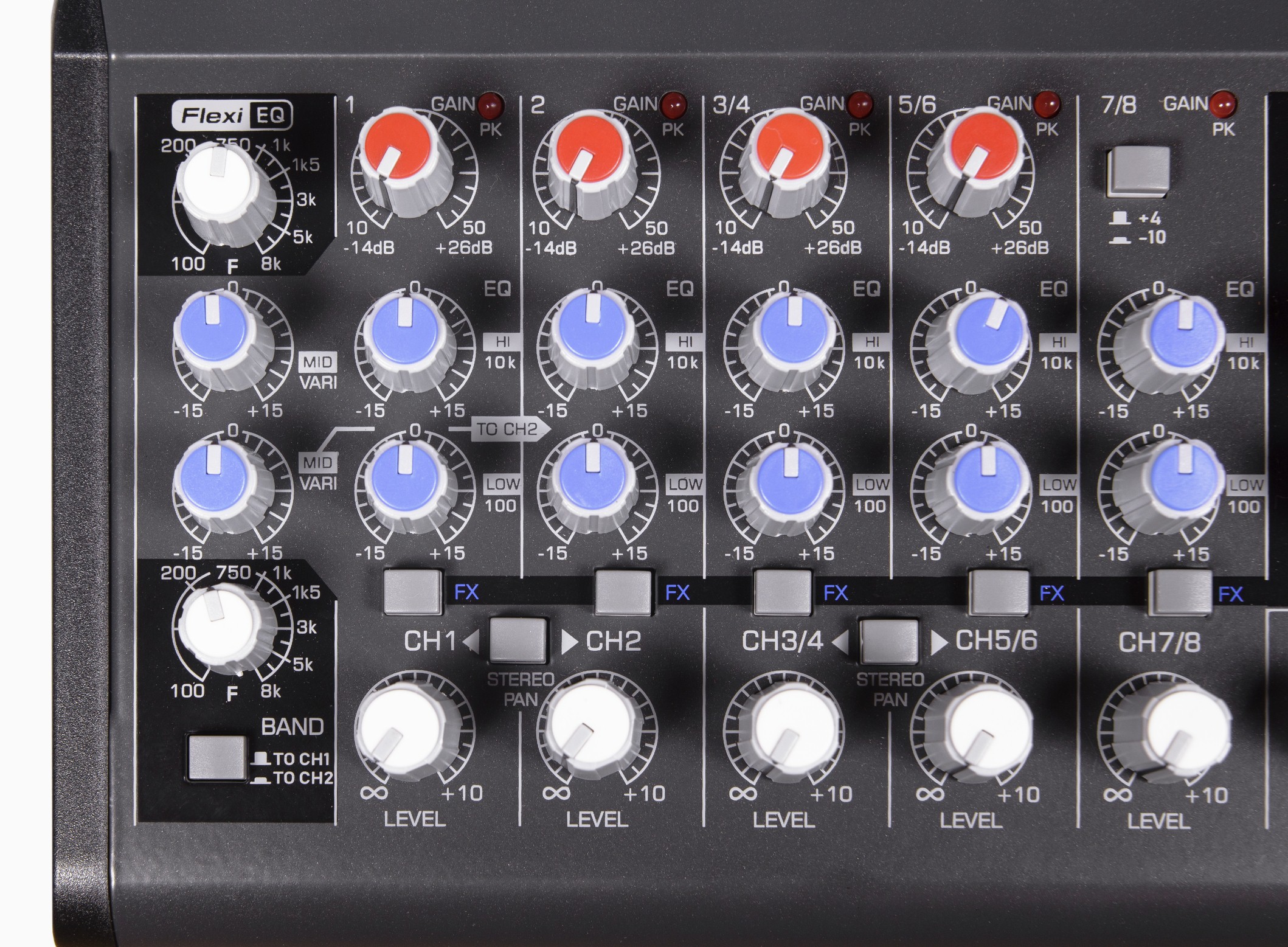
Each channel has bass and treble EQ. Channels one and two also have midrange adjustment with sweepable frequencies from 100 Hz to 8 kHz. Flexi EQ assigns these bands in two ways: three-band EQ on both channels, or four-band EQ on channel one with two sweepable mid bands. This allows more precise, gentle microphone EQ for fuller vocal or solo-instrument timbre. Even much more expensive mixers lack this option. AuraSonics includes Flexi EQ even in the smaller four-channel K4.
The input arrangement is also interesting. Mono channels 3 and 5 can switch to stereo line modes 3–4 and 5–6. Channel one also accepts a headset electret microphone needing +5 V power.
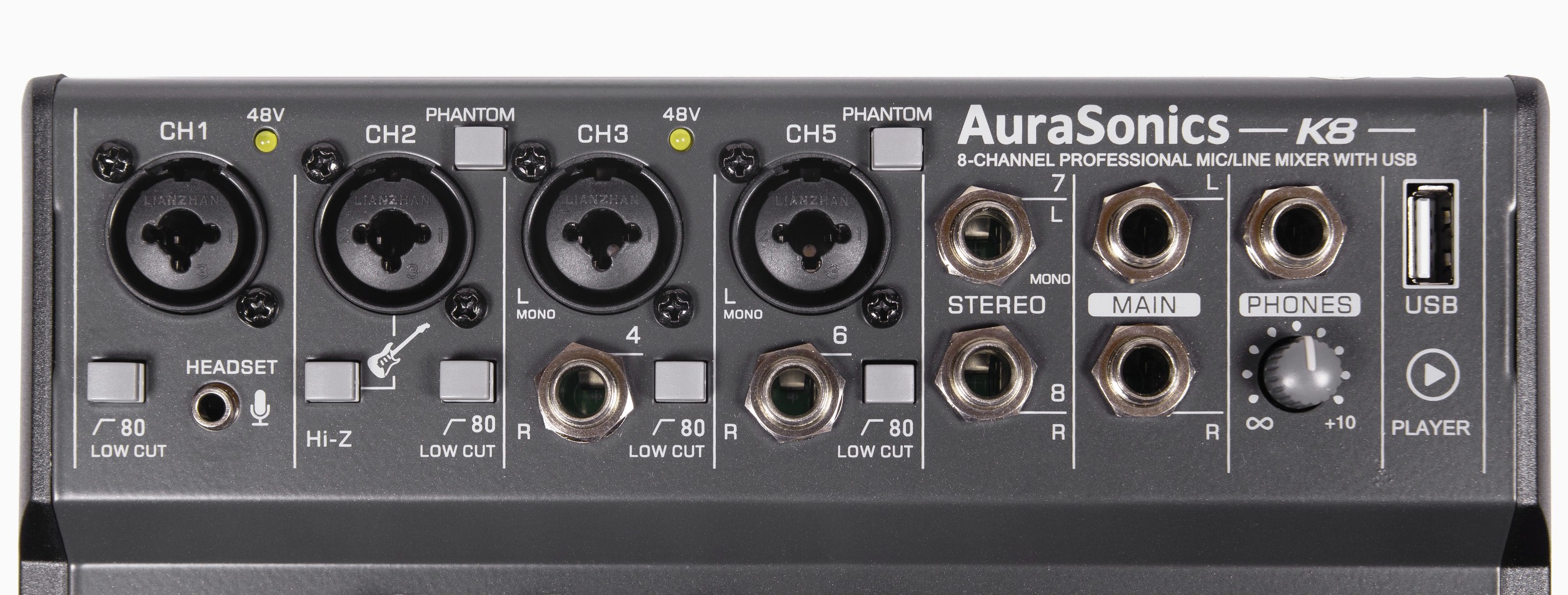
Every microphone input has a low-cut filter and +48 V phantom power. Channel two has a high-impedance guitar mode. Each channel has a clip indicator. Channels 7–8 include an input sensitivity switch for level matching.
The mixers have balanced TRS line outputs and a four-segment output meter. Headphones duplicate the master bus with independent volume control.
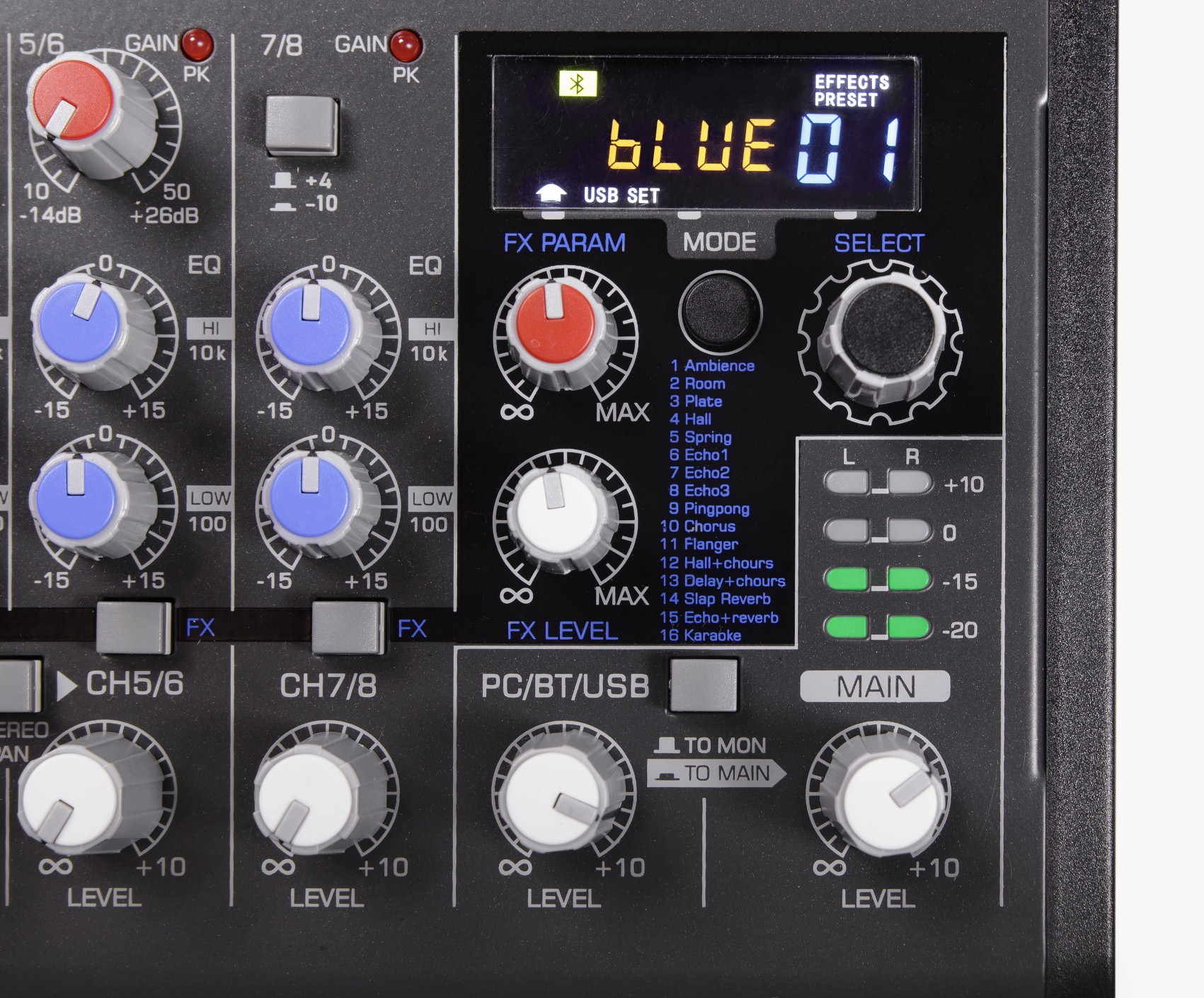
The digital-source channel has level control but no EQ. Its sources are USB storage, Bluetooth and computer audio. They cannot play simultaneously; select one in the menu.
A small display shows active modes in large text. MODE cycles through three settings: digital-source selection, USB player control and effect preset selection. SELECT adjusts the chosen mode. Operation is simple and convenient.
The processor has 16 presets, mainly spatial effects. Internal parameters are fixed, but effect intensity and return level are adjustable. Reverb, delay and combined presets are available. Processing quality is good and most algorithms are useful.
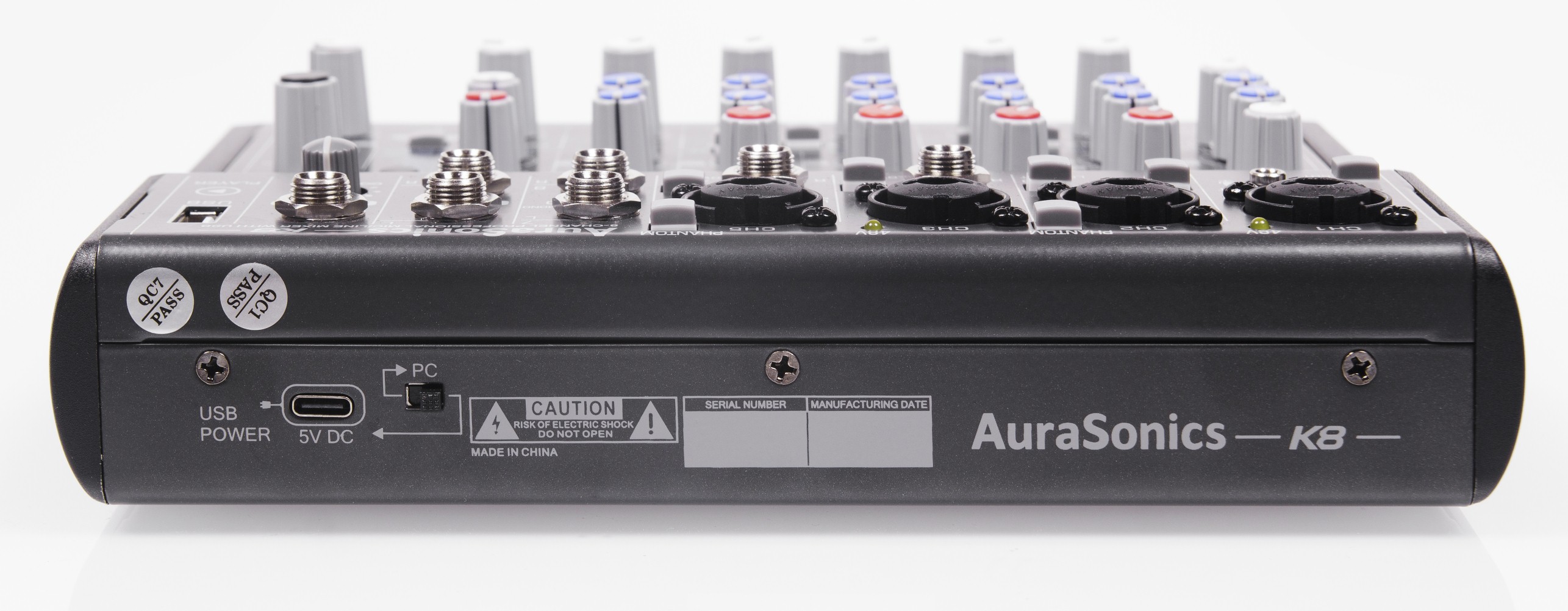

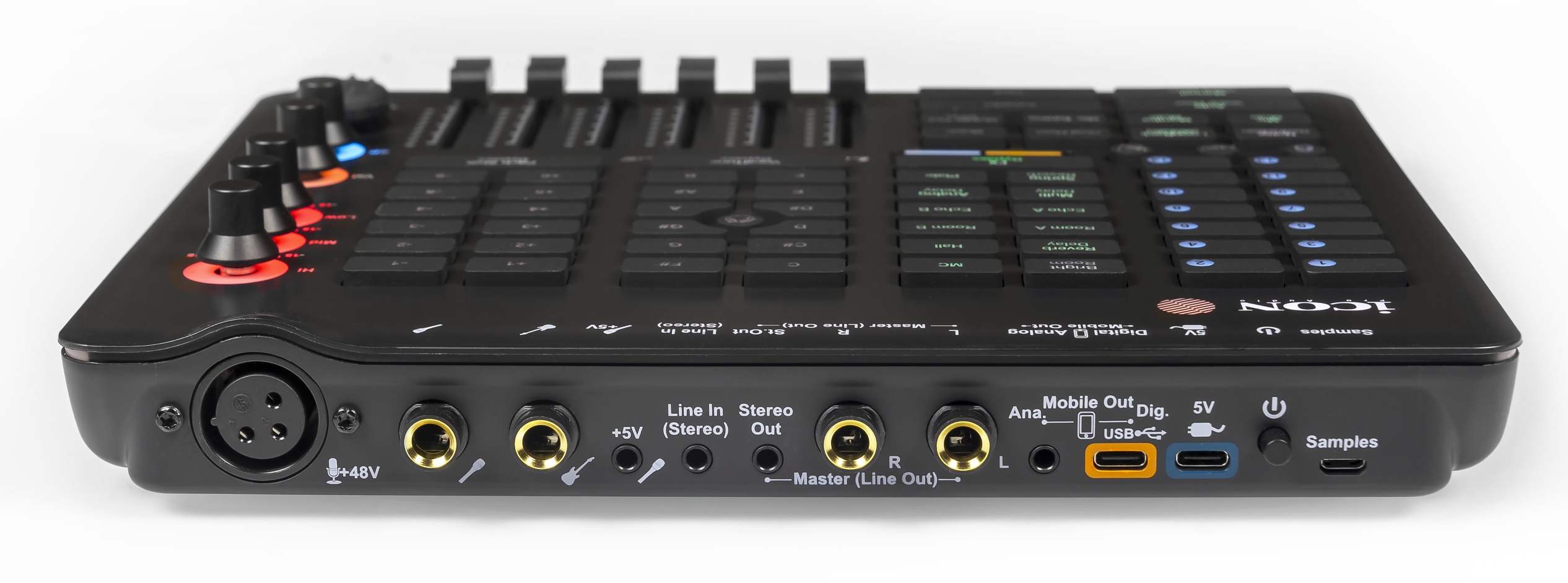
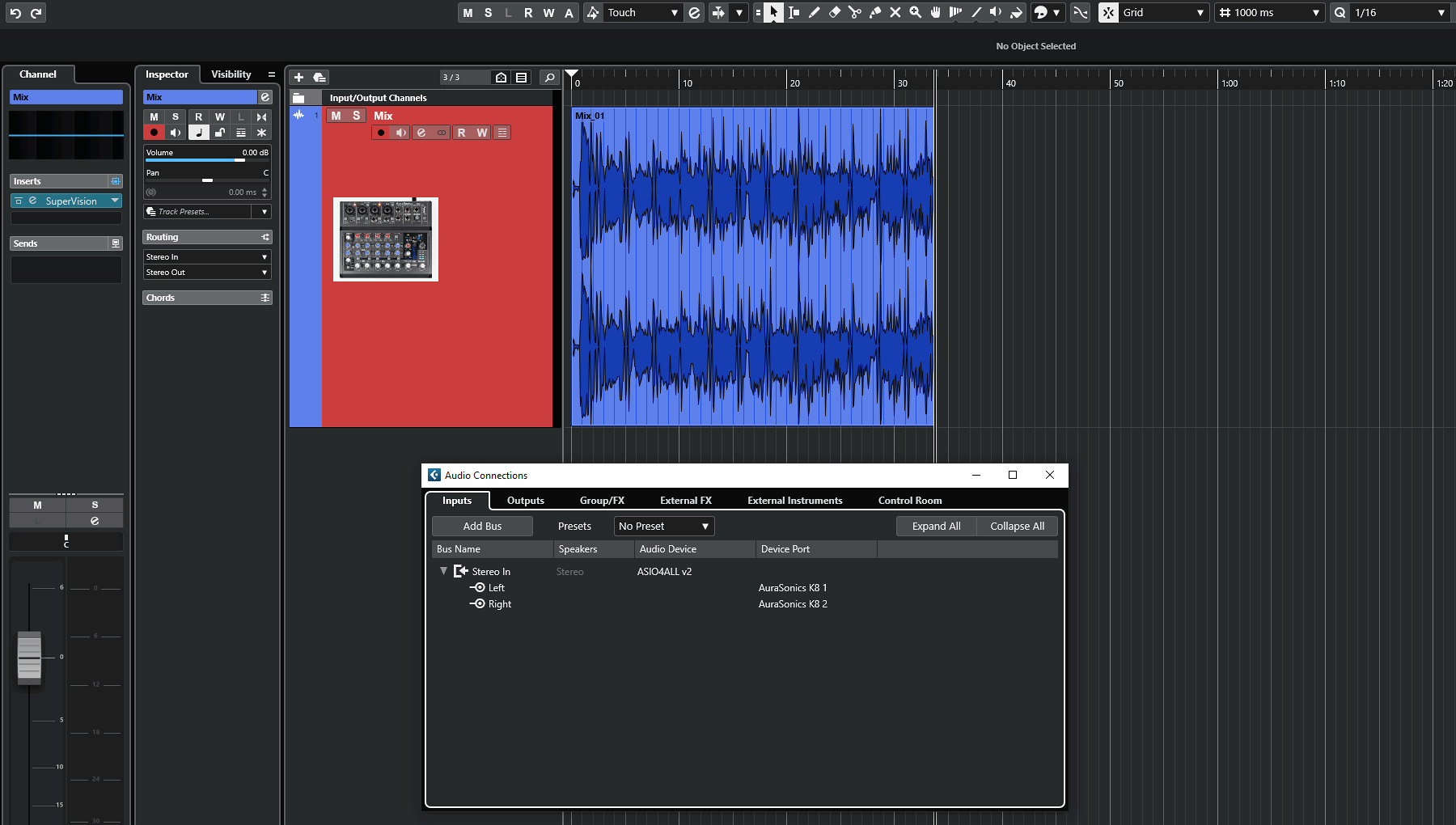
Connected to a computer, the K8 appears as a standard audio device supporting 16-bit/44 kHz and 16-bit/48 kHz. Two inputs and two outputs work with different audio applications. No ASIO driver is included, so we recommend ASIO4ALL for Windows DAW use.
The DAW receives the master bus signal before the hardware MAIN control. Stereo recording to USB storage is also available, using MP3 at 192 kbit/s.
We tested preamps and EQ with dynamic and condenser microphones and found no difficulties. The mixer worked well from both an external supply and computer USB power. Gain was sufficient for dynamic microphones, and preamp quality was good. We compared it with Onyx preamps in affordable Mackie VLZ mixers. AuraSonics performed well for its price. Its extended EQ is therefore useful. One sweepable band is already valuable; two on one channel are better still.
RMAA testing
| Device under test | UH-7000 - AuraSonics K8 |
| Operating mode | 24-bit, 44 kHz |
| Audio interface | |
| Signal path | External loopback (line-out - line-in) |
| RMAA version | 6.4.5 |
| 20 Hz–20 kHz filter | YES |
| Signal normalization | YES |
| Level change | -2.7 dB / -2.7 dB |
| MONO mode | YES |
| Calibration signal frequency, Hz | 1000 |
| Polarity | Inverted/inverted |
| Frequency response variation (40 Hz–15 kHz), dB | +0.18, -0.36 |
Good |
| Noise level, dB(A) | -100.0 |
Excellent |
| Dynamic range, dB(A) | 100.0 |
Excellent |
| Harmonic distortion, % | 0.00332 |
Very good |
| Harmonic distortion + noise, dB(A) | -86.2 |
Good |
| Intermodulation distortion + noise, % | 0.00537 |
Excellent |
| Intermodulation at 10 kHz, % | 0.00922 |
Very good |
| Overall rating | Very good |
Detailed 24-bit/44 kHz input measurements in the RMAA report
We measured the AuraSonics K8 with a Tascam UH-7000 interface. Its output fed the mixer line input, and the master output returned to the UH-7000 line input. Results were good overall, with strong dynamic range and noise figures and little distortion. This is good performance for an entry-priced mixer.
Conclusions
The AuraSonics mixers feel like carefully developed tools meeting current needs. Despite small size and low price, they are well equipped. Flexi EQ and useful effects set them apart from competitors. They also look good, with strong metal cases and professional connectors.
Note. This is an adapted machine translation into English. It follows the “In simple terms” approach. Read the original article at https://prosound.ixbt.com/interfaces/aurasonics-mixers.shtml.