
Antelope Zen Quadro Synergy Core – audio interface with two USB ports and four microphone inputs
Maxim Liadov
The Antelope Zen Quadro Synergy Core USB interface was announced in mid-2024, replacing the affordable Zen Q and Zen Go. Quadro has two USB sockets. The second can supply extra power when using iOS or Android devices. It also helps bloggers who need two devices connected for streaming. Compared with Zen Q, Quadro is more attractive because it has four microphone inputs rather than two. The more expensive professional Discrete 4 Pro offers Thunderbolt, ADAT and Word Clock connections. Zen Quadro therefore targets a broader audience that does not need all those functions.

Antelope interfaces have carried the important Synergy Core suffix for some time. It refers to Antelope's own hardware platform combining ARM processors and FPGAs to model classic analogue processors. Instead of building large, expensive racks, users can load hardware plug-ins into the interface to approach the same sound. Antelope promises a close match to the originals. The FPGA provides zero-latency parallel processing across several channels, but its processing resources are limited. ARM processors have hardware floating-point units and suit complex effects such as reverb and delay. The plug-ins also reproduce the appearance of the original equipment. Familiar knobs, switches, colourful meters and needles help experienced users find their way around.
Let us examine the Antelope Zen Quadro Synergy Core's main features.

The Zen Quadro has an all-metal case. Unlike the Q series, the front is not sloped. This deliberate choice makes room for combo XLR/TRS microphone inputs alongside guitar inputs and headphone outputs.

The rear carries digital and analogue I/O. The interface is bus-powered. If a laptop port cannot supply enough current, the second port accepts power from another USB port, adapter or power bank. The ADAT socket is on the right side and adds 8 recording channels.
Antelope Zen Quadro specifications
- 4 microphone/line inputs, 75 dB gain
- 2 Hi-Z guitar inputs
- 4 TRS line outputs
- Independent +48 V power for each input
- Stereo TRS monitor output, +20 dBu
- Stereo TRS line output, +20 dBu
- 2 stereo headphone outputs
- Microphone preamp: 122 dBA dynamic range, -116 dB THD
- Monitor and line outputs: 130 dBA dynamic range, -115 dB THD+N
- Headphone output: 118 dB dynamic range, -100 dB THD+N
- ADC: 122 dB, -112 dB THD+N
- 64-bit AFC clocking and jitter management
- Microphone inputs: -128 dBA EIN, 121 dBA dynamic range, -106 dB THD
- SPDIF I/O, 192 kHz
- ADAT input, up to 8 channels
- Formats up to 24-bit/192 kHz
- Fourth-generation jitter management
- 64-bit direct digital clock synthesis
- USB bus power
- Two USB-C sockets for audio sources/power
- Weight: 0.9 kg
- Dimensions: 210 × 58 × 136 mm
The specifications are high and match more expensive Antelope products. Published converter figures again describe the ADC/DAC chips rather than the finished device.

The colour IPS screen makes level monitoring and input gain adjustment convenient. As with other models, it is not very bright even at 100%. Turning the knob shows the current setting in large digits. Levels adjust in 1 dB steps. Clicks are clearly defined and digital control is straightforward.
Let us look at the Antelope Zen Quadro electronics.

The digital board is typical of Synergy Core, with FPGA and ARM chips providing hardware processing.

The line and headphone outputs use two-channel CS43198 DACs rated at 130 dB dynamic range and 115 dB THD+N, with OPA1692 operational amplifiers.

Recording uses a four-channel ESS ES9842QPRO ADC rated at 122 dBA dynamic range and -116 dB THD+N.

A four-channel TI PCM4104 DAC handles headphone outputs.. Dynamic range: 118 dB; THD+N: 100 dB.

The manufacturer is proud of the discrete preamp, with 6 transistors per channel. Dual-channel THAT 5263 digitally controlled analogue gain chips adjust levels in 1 dB steps from 0 to 75 dB. This supports condenser, dynamic and ribbon microphones without boosters.

The headphone amplifier uses JRC4565 operational amplifiers.
Drivers and control software have developed through many versions. Windows stability is now much better.

Three mixers provide three separate submixes, useful in professional work.


The AFX tab selects the 37 included effects. More can be bought from Antelope, including discounted bundles. The included set covers EQ, compression, reverb and guitar models: VMEQ-5 (3-Band Tube Mid-Range EQ), VEQ-1A (2-Band Tube EQ), VEQ-HLF (Tube 2-Band HPF/LPF), Clear Q (Parametric EQ), VCA160 (VCA Compressor/Limiter), X903 (VCA Compressor/Limiter), Stay-Levin (Vari-Mu Tube Compressor), FET-A76 (FET Compressor/Limiting Amplifier), PowerEX (Expander), PowerGate (Noise Gate), PowerFFC (Feed-Forward Compressor), BA-31 (Germanium Mic Preamp), Gyraf Gyratec IX (Dual Tube Mic Preamp with HPF), Auraverb (Reverb), A-Tuner (Guitar Tuner), 11 Shred Guitar Amps and 11 Shred Guitar Cabinets. We were pleased to find no user-region restrictions.
To use hardware effects in a DAW, install the dedicated plug-in afx2daw. This removes 100% of that processing load from the CPU, allowing creative work even on an older computer. It also makes a quiet compact NUC or a laptop with a modern low-noise processor a practical choice.

RTL is very low: just 4.6 ms at 44 kHz with a 64-sample buffer. Output-only latency is lower still.
RMAA testing
We measured the monitor output separately to show playback performance:
| Device under test | Antelope Quadro |
| Operating mode | 24-bit, 44 kHz |
| Audio interface | ASIO |
| Signal path | Output only |
| Frequency response variation (40 Hz–15 kHz), dB | +0.01, -0.01 |
Excellent |
| Noise level, dB(A) | -120.4 |
Excellent |
| Dynamic range, dB(A) | 120.4 |
Excellent |
| Harmonic distortion, % | 0.00021 |
Excellent |
| Harmonic distortion + noise, dB(A) | -104.5 |
Excellent |
| Intermodulation distortion + noise, % | 0.00089 |
Excellent |
| Stereo crosstalk, dB | -107.2 |
Excellent |
| Intermodulation at 10 kHz, % | 0.00104 |
Excellent |
| Overall rating | Excellent |
Detailed 24-bit/44 kHz input measurements in the RMAA report
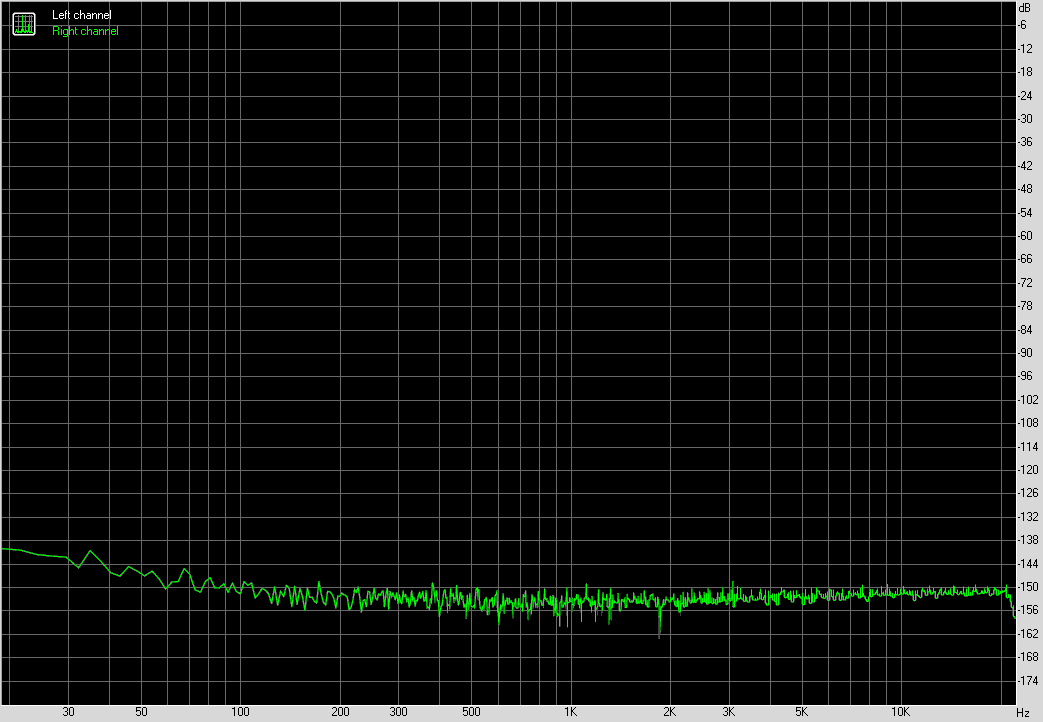
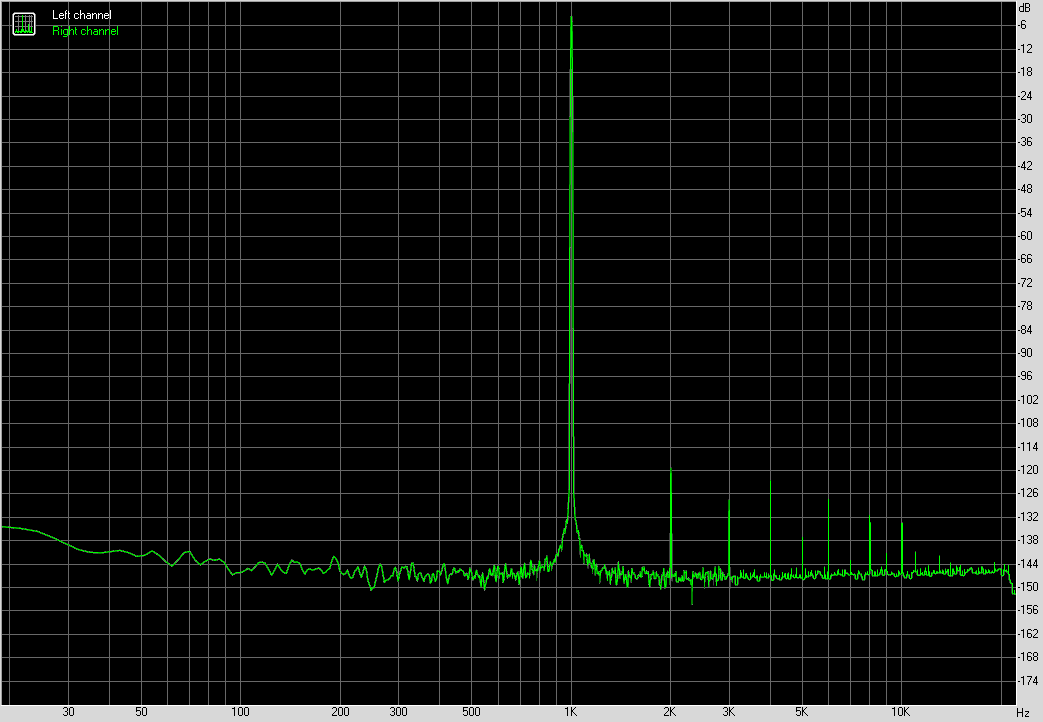
We tested the microphone preamps with a Neumann TLM 102 condenser. We compared recording directly with a MOTU M2, also using a THAT 6263 preamp, and a more expensive separate studio preamp.

We liked the recordings. The Antelope Zen Quadro delivered high quality, almost matching the more expensive Discrete 4 Pro. Sound was natural and detailed, meeting high studio standards without coloration or emphasized frequency bands. Neutral timbre is important for later processing. Line output quality on our ADAM Audio active monitors was also high. The Beyerdynamic DT 770 PRO received enough headphone level for artist backing playback.
Conclusions
The Zen Quadro is currently Antelope's most affordable USB interface and successfully replaces earlier entry models. Recording and playback quality match the more expensive Discrete Pro series, a strong reason to consider it. We liked its sound and advanced hardware processing through dozens of interesting plug-ins without CPU load. The 70000-ruble price is significant, but comparable with direct competitors such as RME Babyface Pro FS, Apogee Duet 3 and Focusrite Clarett+ 4pre. Against these, Antelope is competitive. Its two USB connections should also appeal to bloggers and streamers.
Note. This is an adapted machine translation into English. It follows the “In simple terms” approach. Read the original article at https://prosound.ixbt.com/interfaces/antelope-zen-quadro.shtml.