
Arturia PolyBrute 12: flagship polyphonic analogue synthesizer with advanced FullTouch keyboard
Manufacturing technology keeps improving, and Arturia regularly brings new ideas into its instruments. The recently introduced PolyBrute 12 shows the French company's effort to meet modern musicians' needs.
At first, PolyBrute 12 may look like the earlier model with more voices. Its main change, however, can interest experienced keyboard players and producers as well as enthusiasts. Arturia calls its patented new key action FullTouch. Besides velocity and aftertouch, it continuously tracks every key's position. Keys therefore control not only note level but also one or more modulation parameters. This greatly expands expression and changes the approach to playing. According to the review, no other analogue synthesizer offers the same function. FullTouch does not simply replace aftertouch at the bottom of travel: both functions can work together.
PolyBrute 12 has three FullTouch modes. FullTouch AT maps key travel across the entire aftertouch range, with conventional bottom aftertouch disabled. FullTouch AT>Z also maps travel to aftertouch, while bottom pressure becomes another modulation source. The third mode, FullTouch Env>AT, uses key movement to control the envelope gate, while aftertouch acts only at the bottom, as on conventional keys. Normal operation without FullTouch is also available. In that mode, PolyBrute 12 works like the earlier PolyBrute, with traditional bottom-of-travel aftertouch.
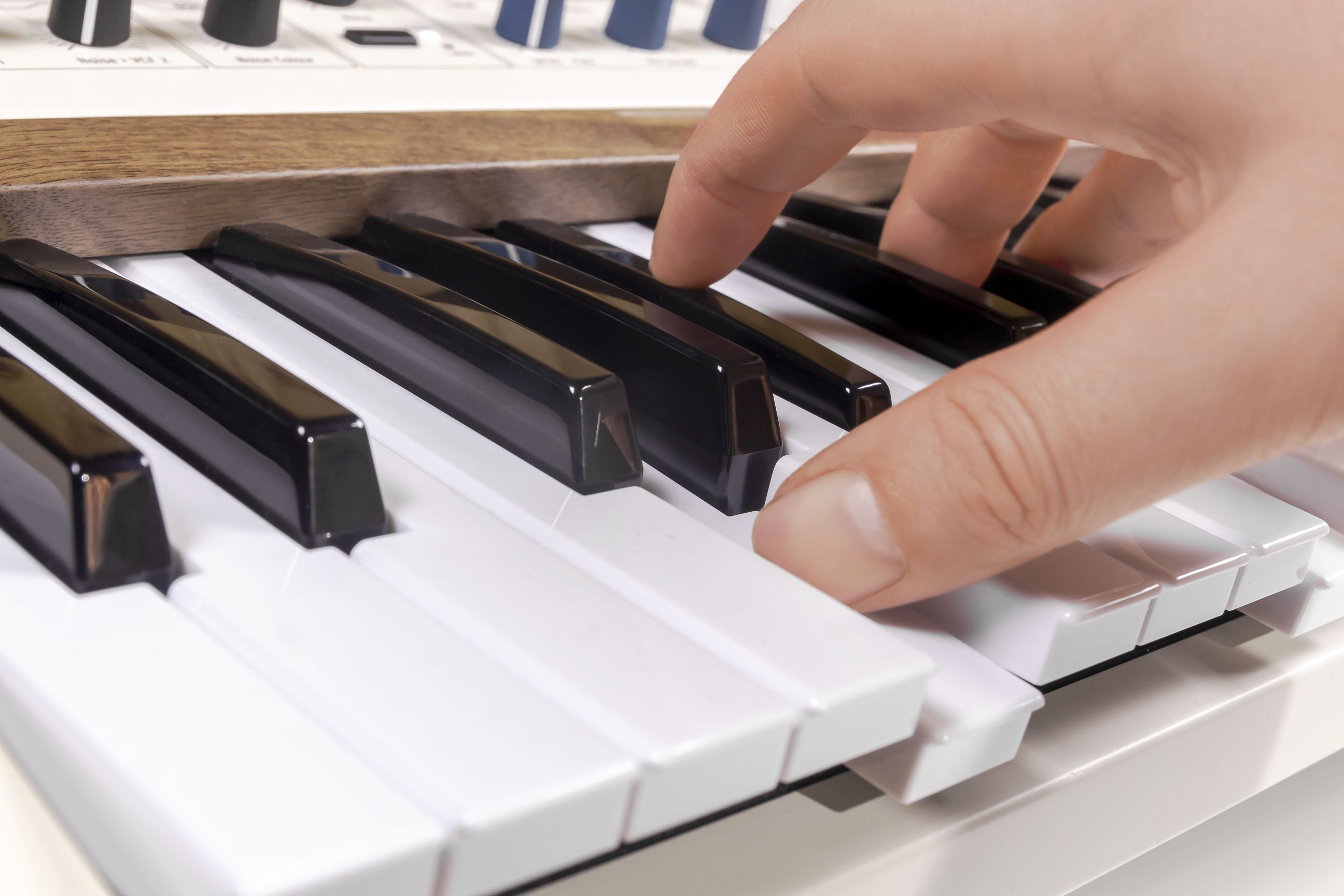
Using key position as another controller is a good idea, implemented very well in PolyBrute 12. Familiar playing techniques gain new possibilities. Changing attack and dynamics with key depth makes even simple sounds more expressive. Rich modulation and deep morphing offer more still. It all follows keyboard playing without complex automation programming. Some practice is needed, but experienced players should adapt easily. The manufacturer's website has examples of FullTouch on PolyBrute 12.
For synthesis, PolyBrute 12 remains a powerful, fully analogue polyphonic instrument like PolyBrute. It offers many presets, a convenient modulation matrix, distinctive controllers, digital stereo effects and two-way PolyBrute Connect integration. Let us examine these features.
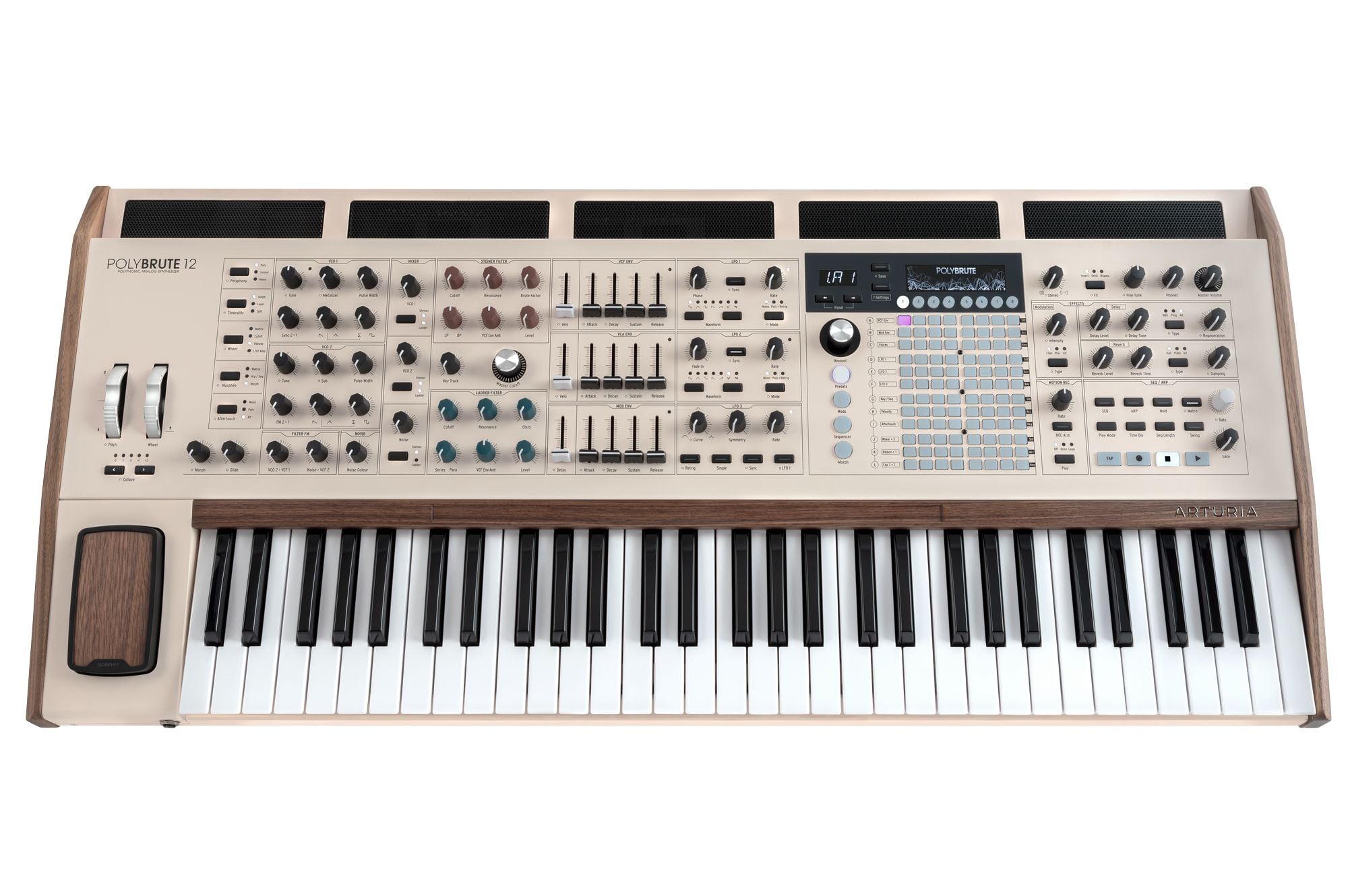
Unlike the earlier PolyBrute, the new model plays up to 12 voices at once, enough for full chord sequences with genuine analogue tone. It uses subtractive synthesis. Two oscillators continuously generate sawtooth, triangle and square waveforms, with a separate noise generator. Wave shapes change smoothly rather than switching between fixed forms. Oscillator one offers pitch, waveform, Metalizer harmonic shaping and Pulse Width. Oscillator two replaces Metalizer with a sine sub-oscillator one octave down. Oscillator sync is continuously adjustable, and oscillator two can frequency-modulate oscillator one. Noise colour is adjustable, and noise can also modulate the filter.
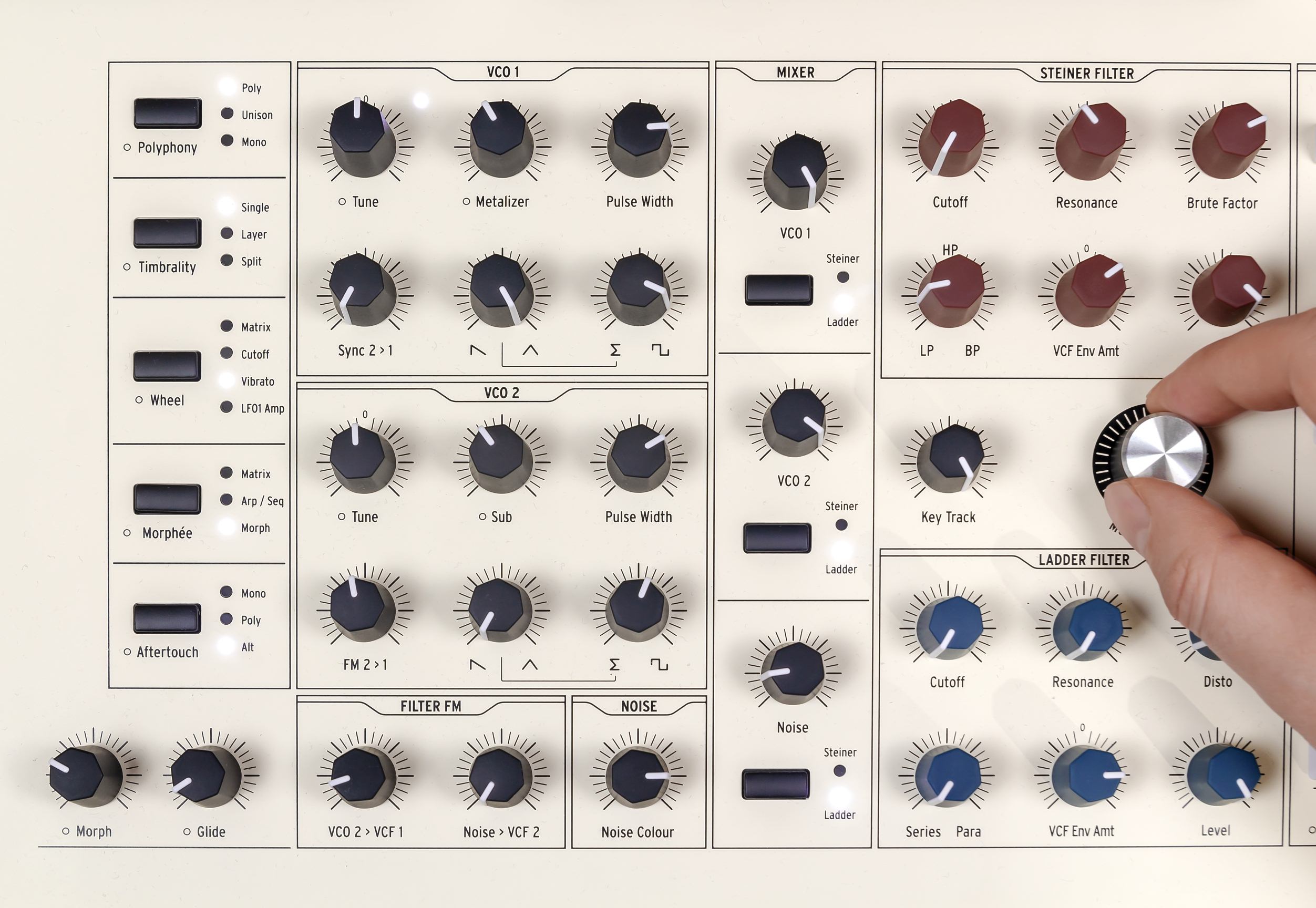
There are two filters. The two-pole Steiner-Parker is familiar from monophonic Brute synths, with its characteristic sound and Brute Factor saturation. Unlike earlier versions with one selected filter mode, PolyBrute smoothly moves between modes. The other is a conventional 24 dB/octave ladder filter.
Filters work in series, one after the other, or in parallel for separate left/right processing. Assigning oscillators to particular filters adds flexibility. Master Cutoff conveniently changes both filter cutoffs together.
Three LFOs are available. LFO1 and LFO2 have seven fixed waveforms with phase, rate and restart settings. LFO3 continuously changes its sine-based waveform and rise/fall balance. It also has one-shot operation and can additionally modulate LFO1. All three modulation generators can operate unipolarly or bipolarly.
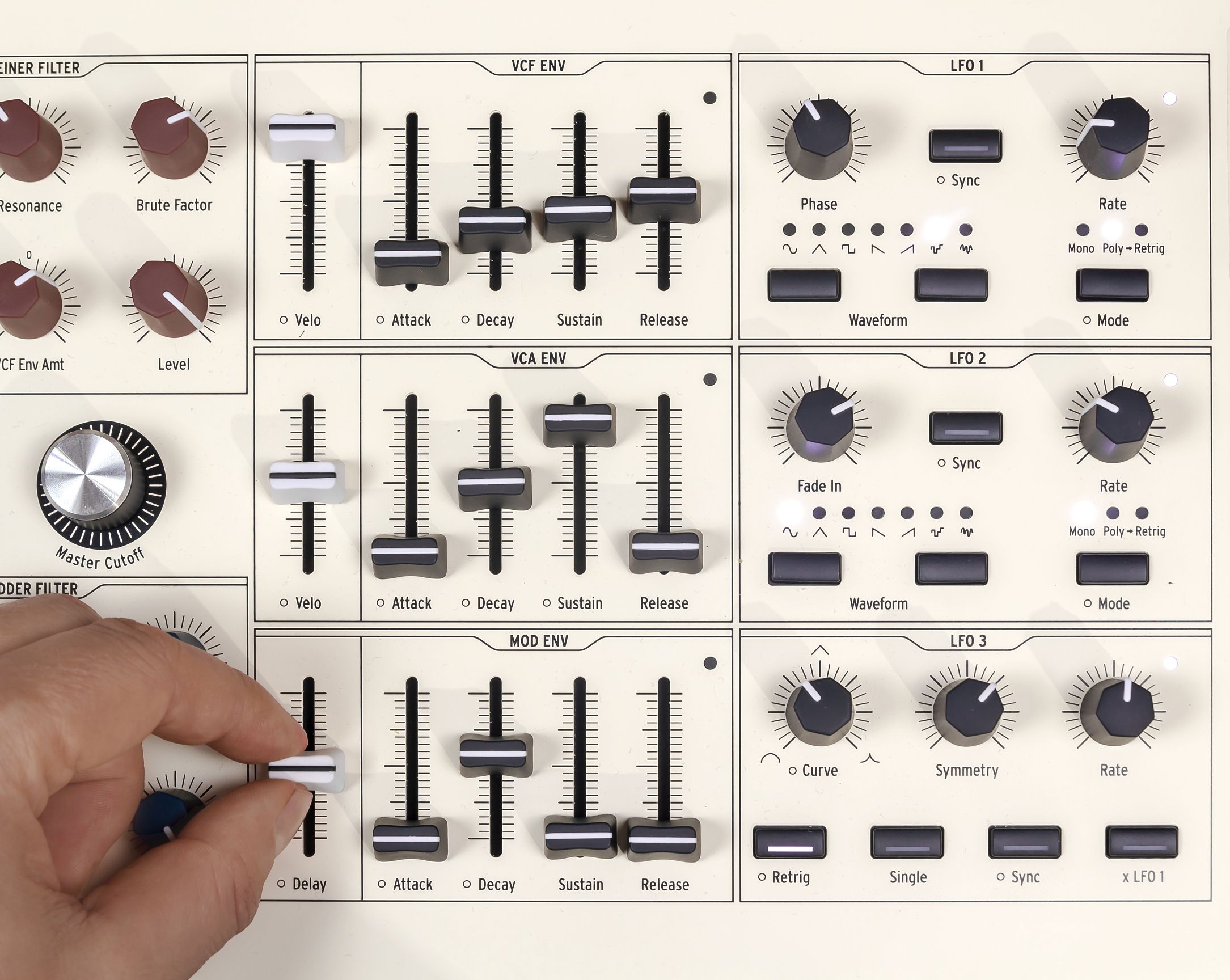
Three ADSR envelopes can be assigned to various parameters through the modulation matrix.
The PolyBrute matrix follows MatrixBrute. It is a flexible, effective way to create complex modulation while seeing the overall routing. There are 12 sources labelled A–L on the left, corresponding to horizontal rows. Destinations appear on the display and correspond to vertical columns. Press an intersection and set modulation amount to create a connection.
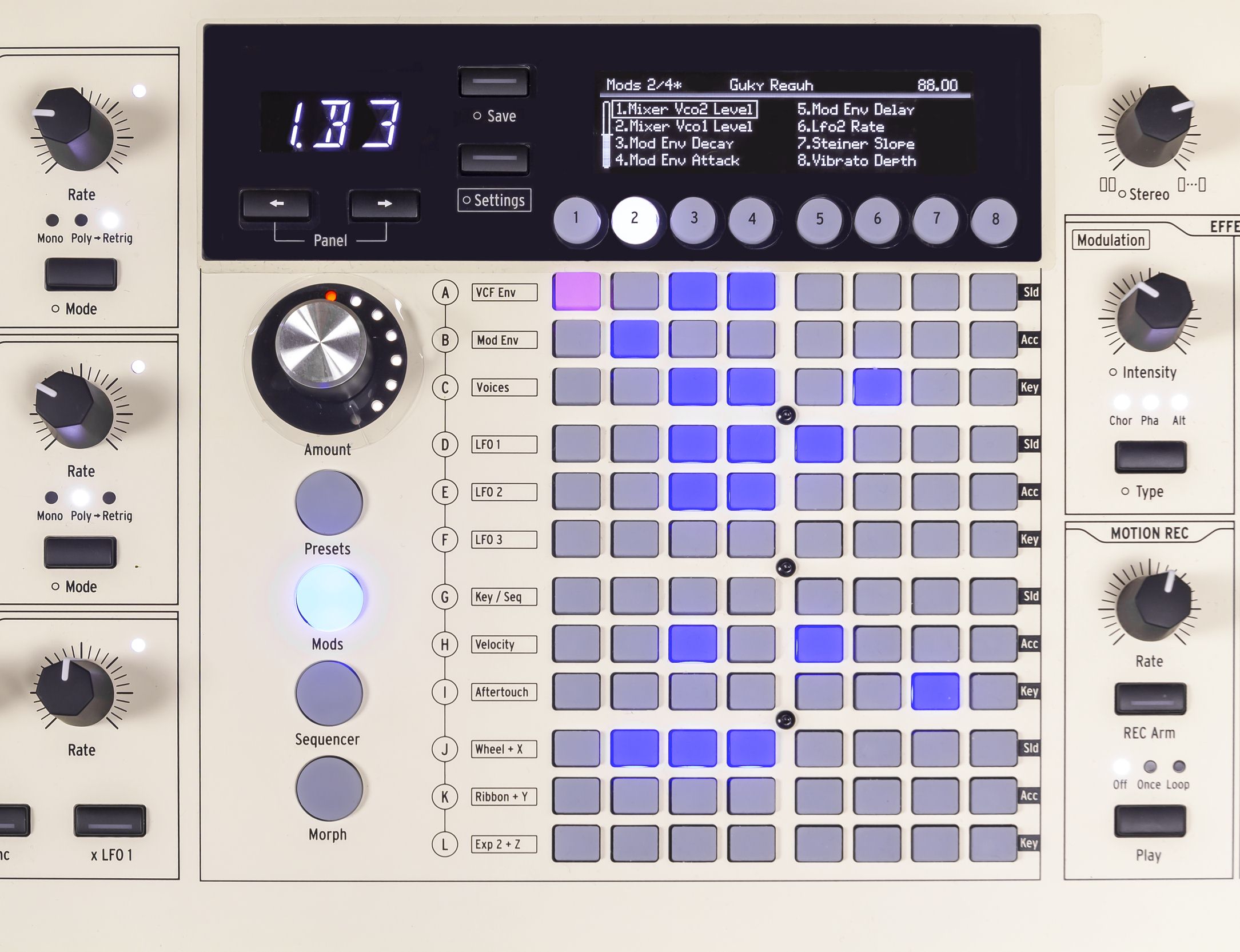
Almost every onboard control can be a destination. The display shows 8 parameters at once, with four more pages of 8. Users can assign a chosen parameter directly rather than search the full list: press its column button and turn the desired knob. Modulation amounts can themselves be modulated by another source, creating complex, evolving chains.
Unlike Arturia's early monophonic analogue synths, PolyBrute 12 has fully digital control. Many presets switch instantly, making it useful live as well as in the studio. Three knob-response modes manage preset changes. Hook waits until the knob reaches the stored value. Jump immediately sets the parameter to the knob position. Scaled responds immediately but scales the remaining range, avoiding a jump; normal alignment returns at the endpoint.
Memory holds 768 presets: 480 factory sounds and 288 empty user slots. The main knob and matrix buttons browse and load sounds. The top row of round buttons selects banks, and matrix buttons select slots. Category filtering lights matching presets throughout the bank; press a lit button to load one.
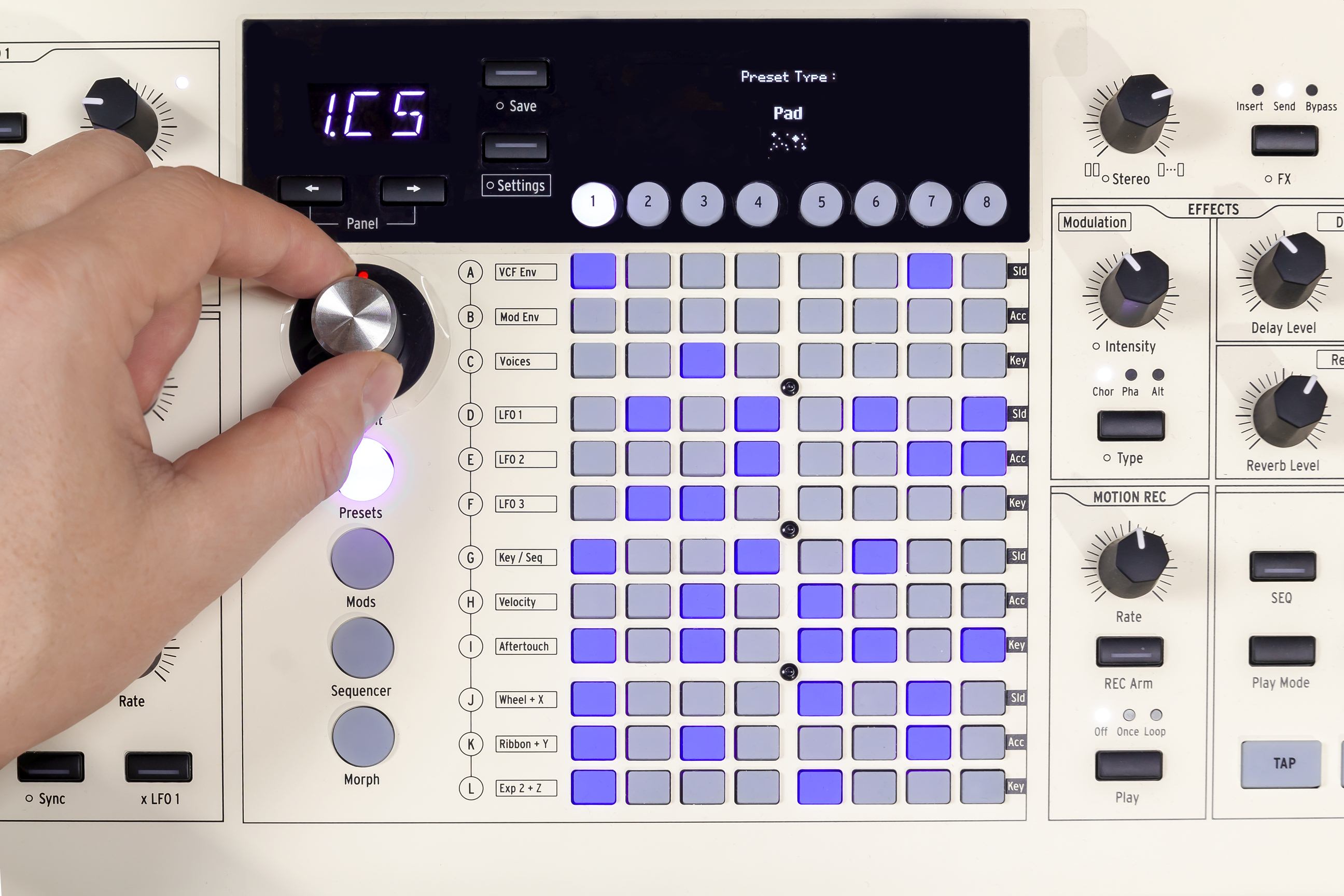
Every preset combines two timbres, usable together as layers or separately. Digital control enables smooth morphing from one to the other. This is not a volume crossfade: it transforms the sound as though all synth parameters were changing together. The result is very effective.
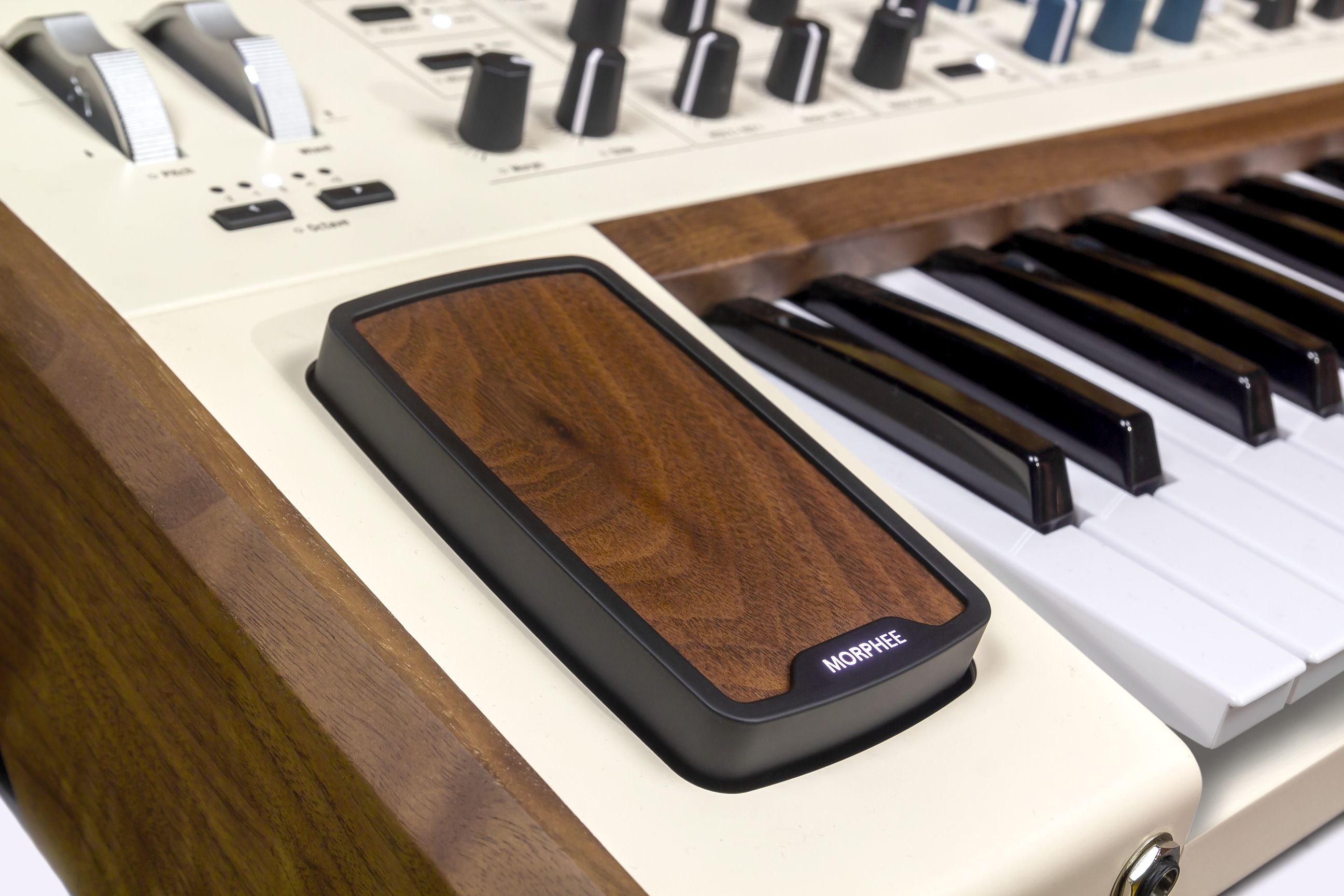
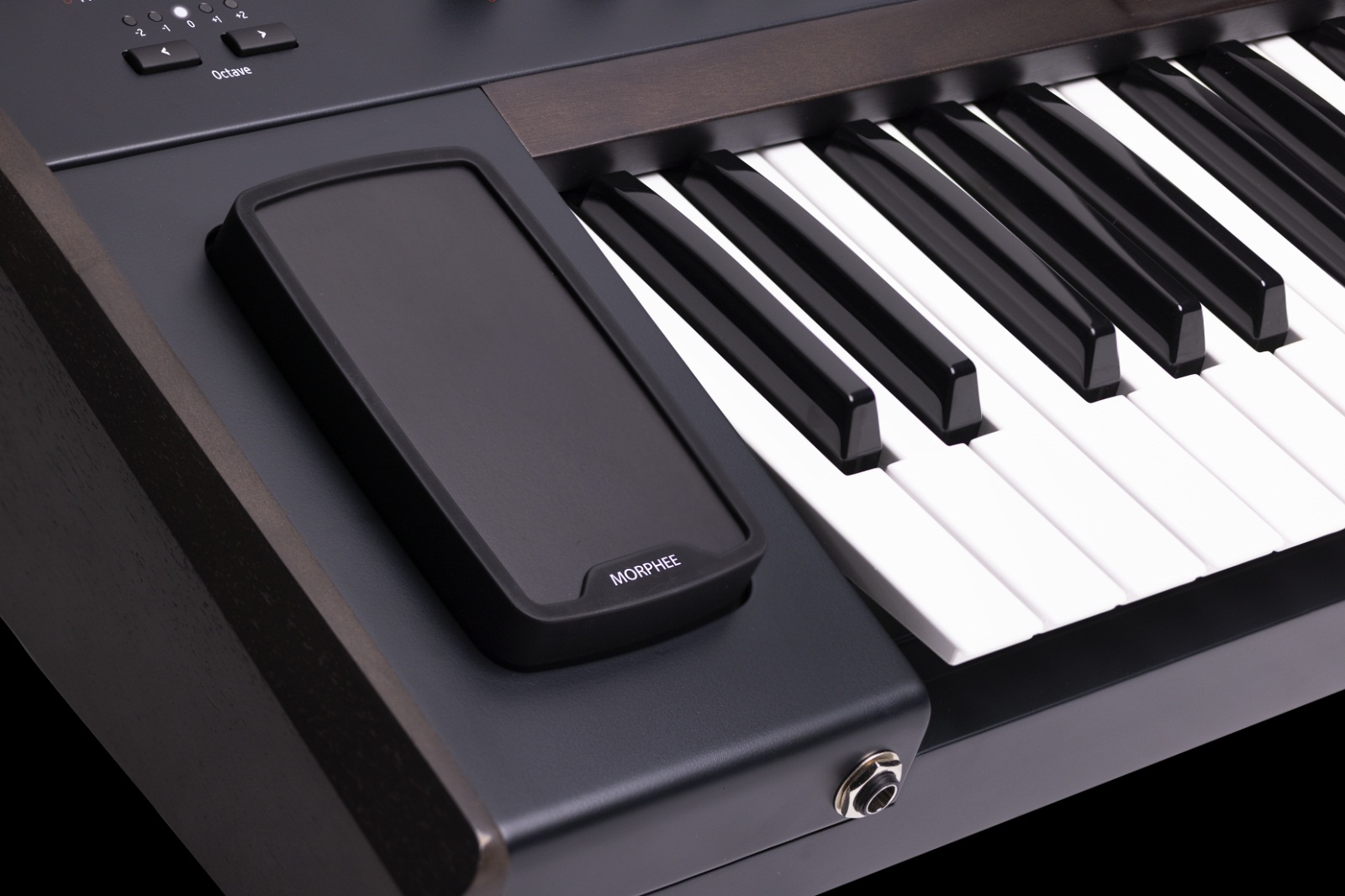
Morphing uses the Morph knob or the distinctive three-axis Morphée controller. The knob follows a single linear path; Morphée offers more selective control. Its touch surface tracks X and Y, and pressing it into the case adds Z. All three axes can modulate different parameters. Morphée also changes sequences and arpeggios, adding controlled random changes to their elements.
PolyBrute 12 also has a ribbon controller: a long touch strip above the keyboard.
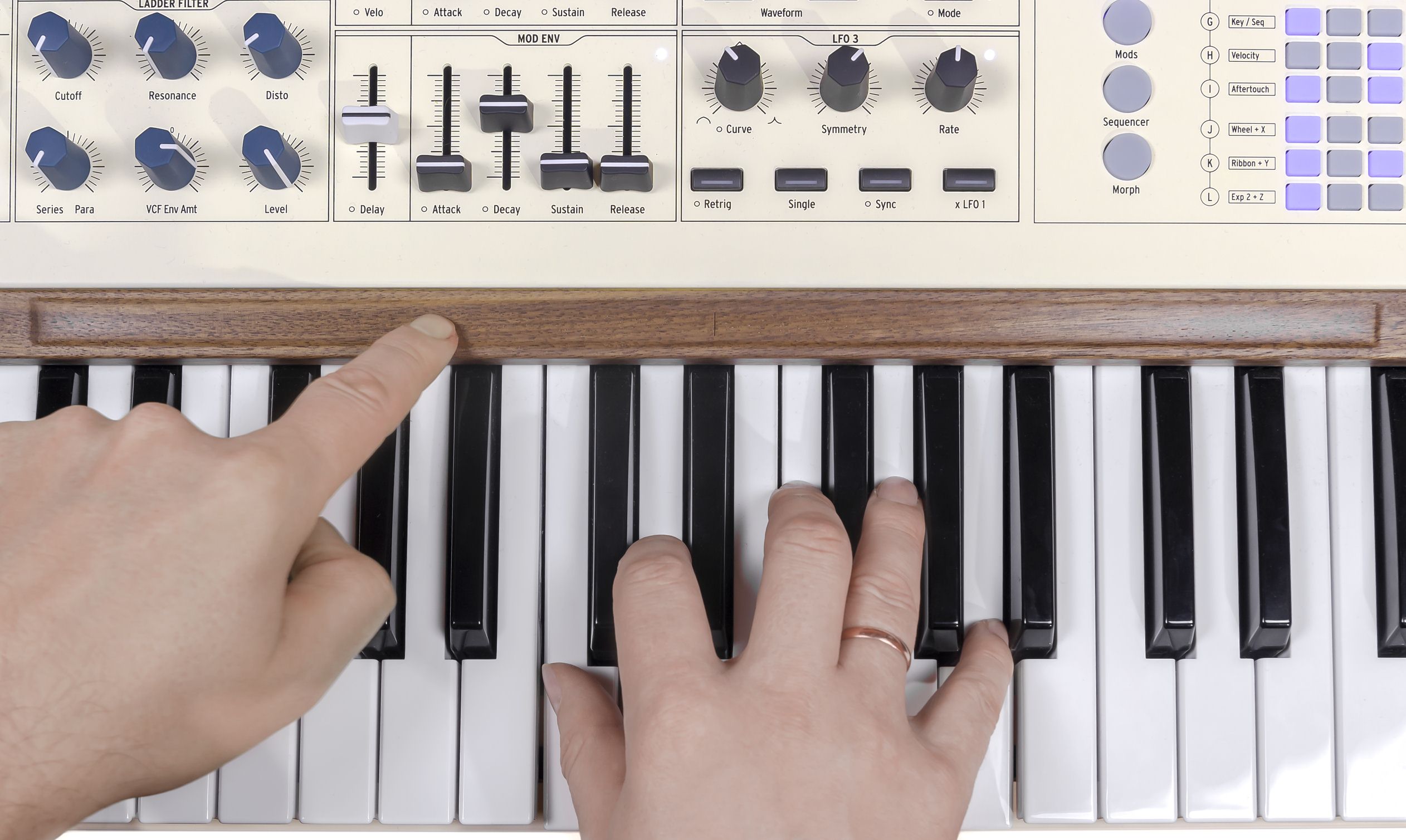
The ribbon controls extra synth parameters during playing. Factory presets already assign settings with strong musical effects. It is especially useful live, where visible gestures add to the performance.
The PolyBrute 12 sequencer and arpeggiator also follow MatrixBrute, but are polyphonic and add distinctive functions. The sequencer creates polyphonic sequences up to 64 beats long. Matrix buttons display notes and allow convenient editing of sequences and arpeggios. The matrix arpeggiator combines arpeggiator and sequencer functions for more complex rhythms. Its polyphonic operation and clear note display make it easy to use.
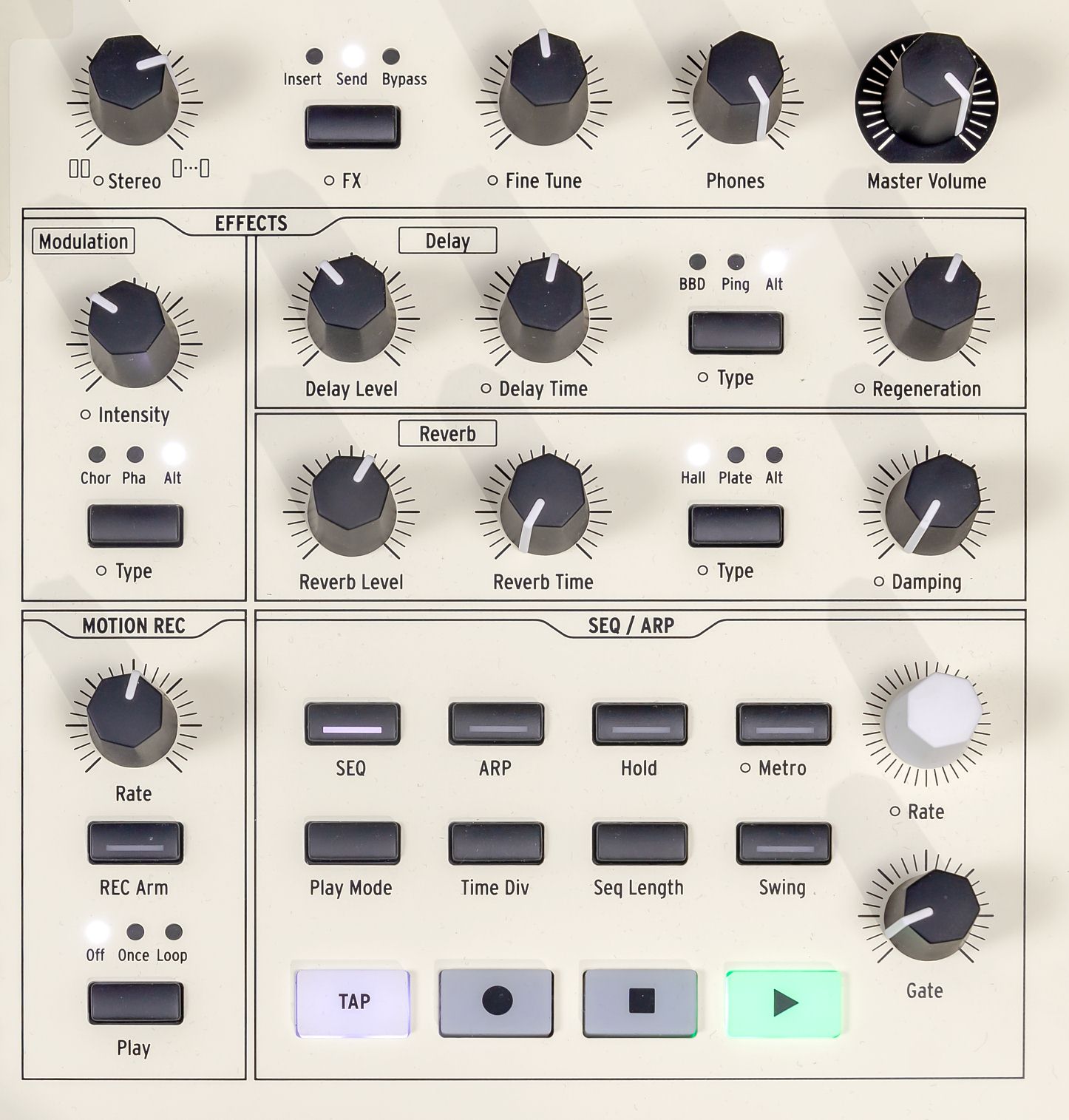
Three digital stereo effects buses—modulation, delay and reverb—can operate together. Type buttons show three positions, but many algorithms are available. To keep the panel simple, two positions are fixed and Alt selects another algorithm. Modulation options are Flanger, Phaser 12p, RingMod, BitCrusher, Soft Flanger, Phase Flanger, DownSampler and Ensemble. Delay options include Stereo Delay, Long Delay, BBD, PingPong, Karplus, Stereo Spread, Parallel and BBD Spread. Reverbs include Bright Plate, Room, Dreamy, Springy and Delayed Plate. A global EQ is available in the menu. Users can also bypass effects and send the dry analogue signal directly to line outputs.
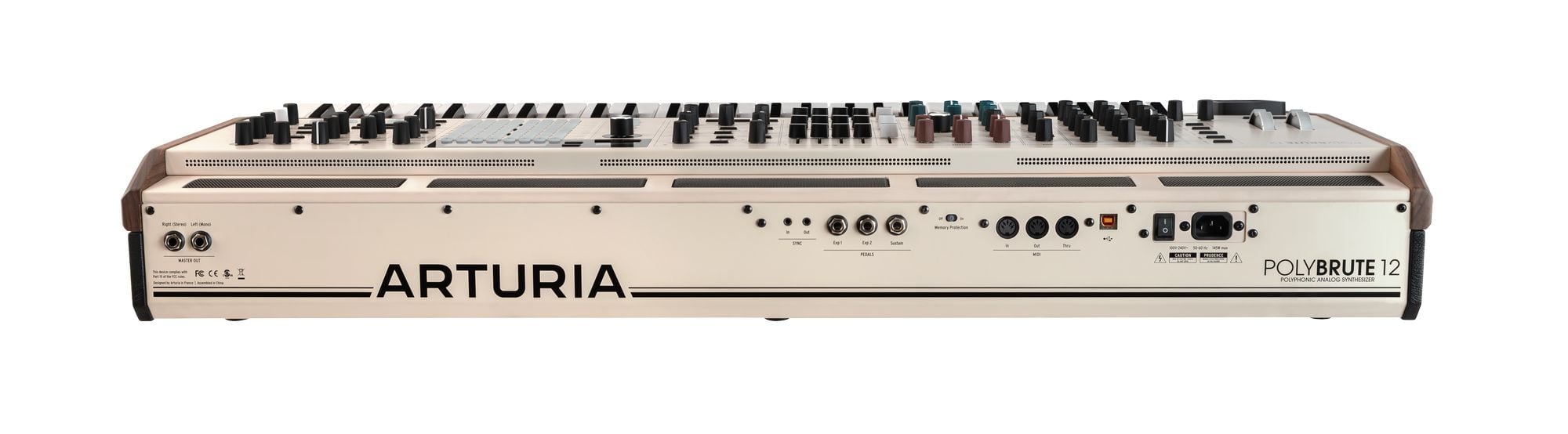


PolyBrute 12 line outputs use TRS. The front 1/8-inch TRS headphone output has independent volume. Two expression pedals and one sustain pedal can connect. Full-size MIDI DIN serves external equipment, with separate clock synchronization connections. USB updates firmware and links to a DAW through PolyBrute Connect.

PolyBrute Connect runs standalone or as a VST/AU/AAX plug-in. Two-way communication synchronizes synth settings and controls in real time. It is an editor, not a software emulation: the hardware still produces sound. Plug-in operation brings DAW editing and automation benefits, but audio must be recorded through an interface line input. A project can contain several instances with different settings, though only one can control the hardware at a time.
Conclusion
Arturia continues to surprise us. This flagship update was unexpected and very attractive. PolyBrute 12 is a more advanced instrument, and we hope FullTouch will appear in future products too. We liked its new playing experience. Different key control naturally suggests fresh creative ideas, which matters most. We would also like to try FullTouch in an action with greater travel, where control might feel more convincing.
Note. This is an adapted machine translation into English. It follows the “In simple terms” approach. Read the original article at https://prosound.ixbt.com/keyboards/arturia-polybrute-12.shtml.