
Arturia MiniFreak 49 — the new flagship synthesizer in the Freak series
Grigory Liadov
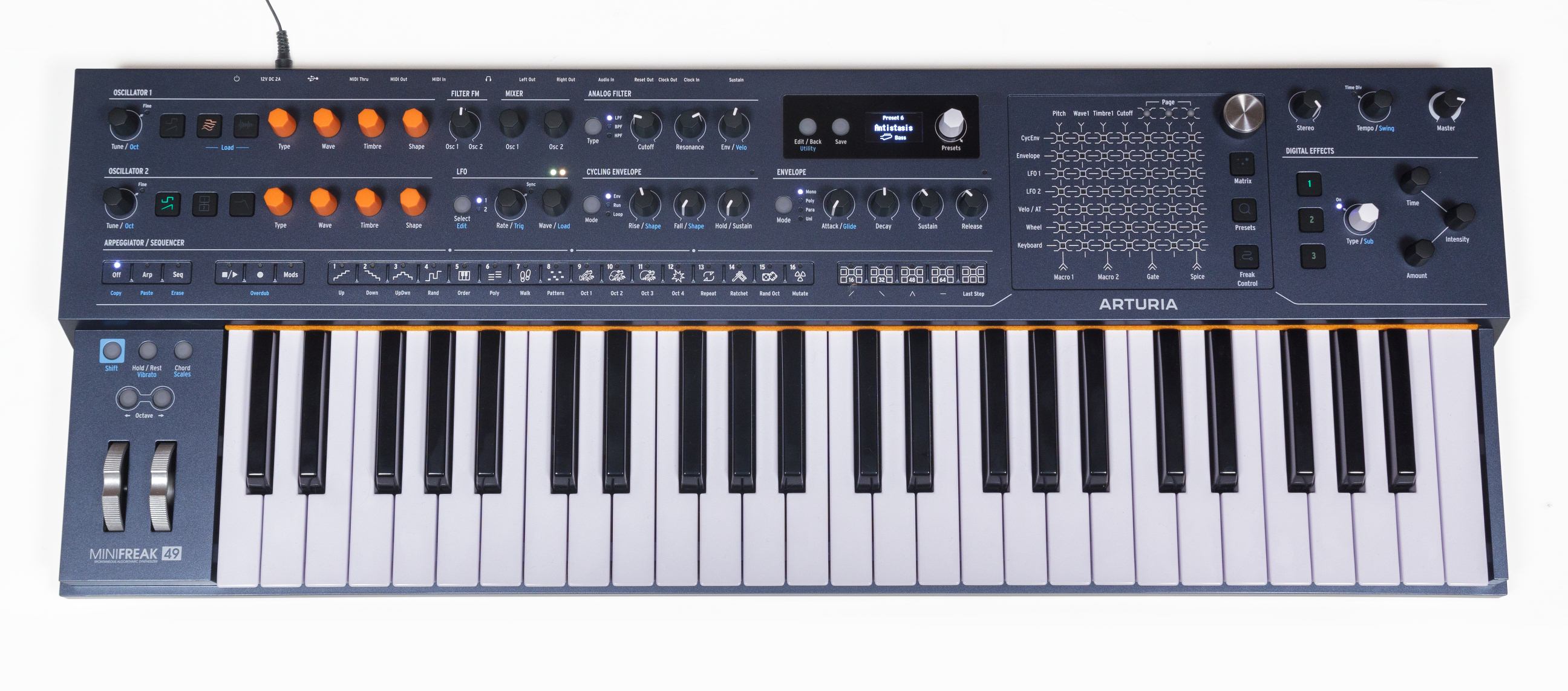
MiniFreak 49 is a new synthesizer in the Freak series, introduced by Arturia in autumn 2026. It is the most advanced model in the series and is a six-voice polyphonic hybrid synthesizer. In Arturia synthesizers, hybrid architecture means using digital oscillators rather than analogue oscillators. The generated signal then passes through analogue filters. Freak synthesizers therefore combine convenient control of a digital engine with analogue processing that gives the sound its character.
We have come to expect interesting new features in Arturia products. Two key features stand out in the MiniFreak 49: the keyboard and the modulation matrix. The modulation matrix is a touch surface with several control functions, from browsing presets to assigning modulation destinations. It also provides visual feedback on some of the synthesizer's activity. As for the keys, this is the first synthesizer in the Freak series with a full-size keyboard. The keyboard also has a semi-weighted action. We will look at these features in more detail in this review.
Oscillators
As before, the synthesizer uses two digital oscillators. This time, however, each oscillator has its own controls, additional group selection buttons and a separate volume control. These changes make the oscillators much easier to use and allow their settings to be adjusted at the same time.
Each oscillator offers 14 main signal types. These include traditional waveforms and more complex forms of synthesis. The choices include harmonic, chord, granular and resonator oscillators. Arturia borrowed some oscillator types from Mutable Instruments and Noise Engineering modular synthesizers. There is plenty to choose from. The first oscillator can also use the signal from the synthesizer's analogue input as a source. The second oscillator has six additional configurations for processing or modulating the first. These mainly include different filters, frequency and ring modulation, and the destructive Destroy mode.
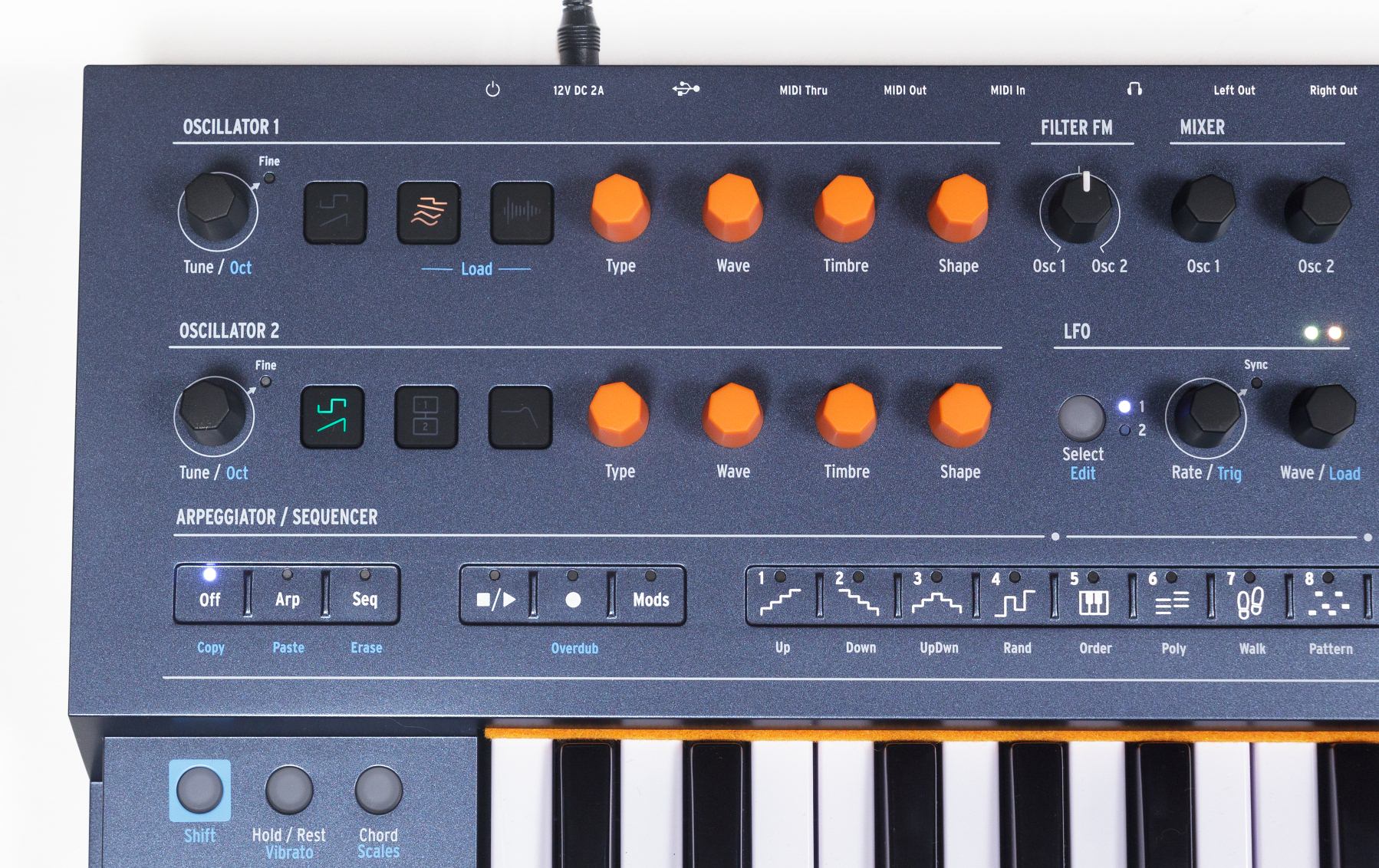
As before, the Wave, Timbre and Shape controls provide a creative way to adjust the oscillators. These controls change oscillator parameters to transform the sound smoothly. Their functions depend on the selected oscillator. For example, with the subtractive oscillator, Wave smoothly changes the waveform, Timbre adjusts pulse width and Shape adds a sub-oscillator. With the harmonic oscillators, Wave controls the harmonic level, Timbre changes the waveform and Shape adds chorus. In Multi Filter mode, Wave changes the filter cutoff frequency, Timbre adds resonance and Shape selects the filter type. The display represents these three controls as differently shaped vessels filling with liquid. The display also shows the numerical parameter value, but the vessel animation is a distinctive visual feature.
Filter
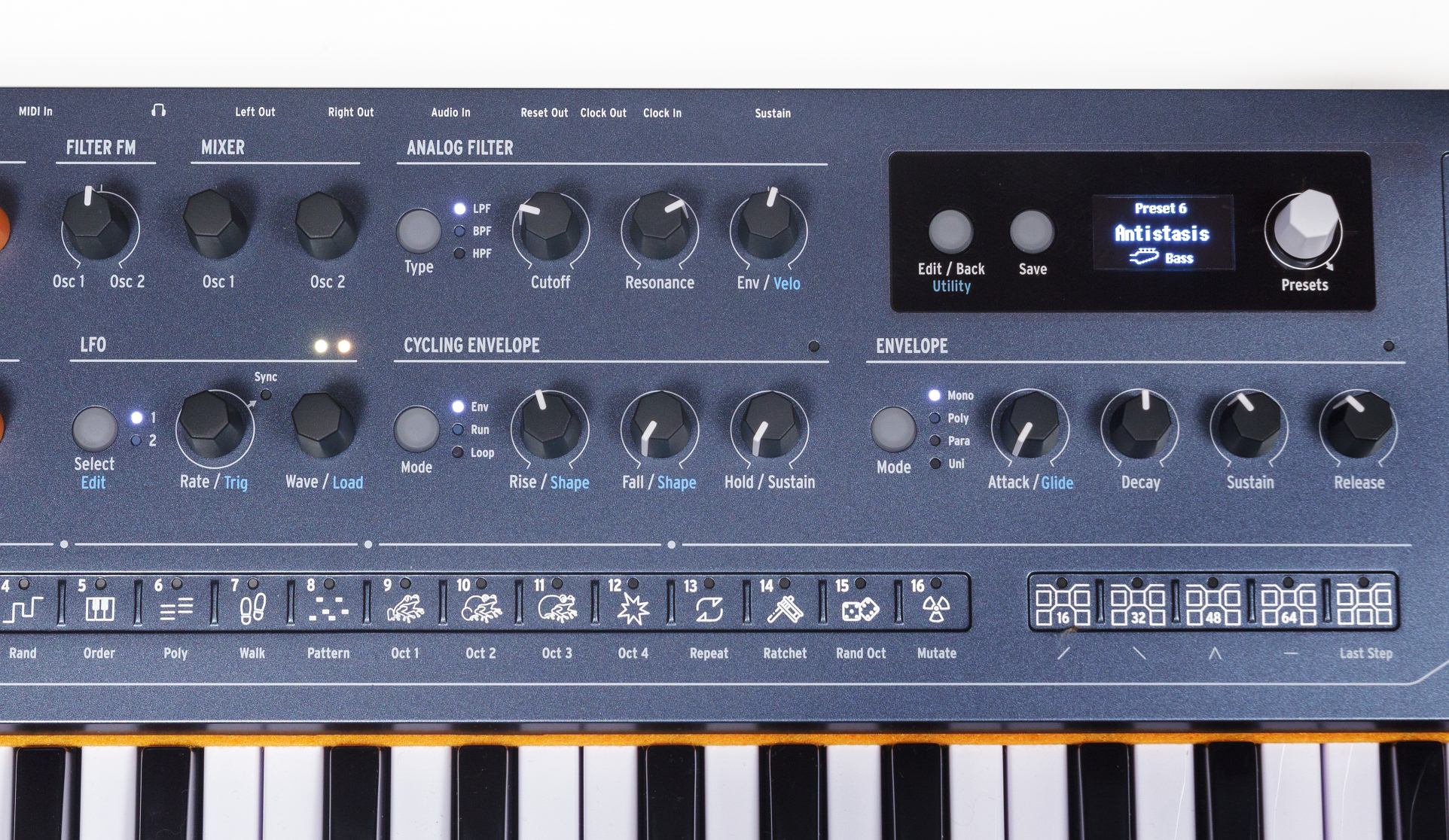
MiniFreak 49 adds oscillator modulation of the filter cutoff frequency. This function has its own control, called Filter FM. At the center position, no filter modulation is applied. Turning the control modulates the filter cutoff using the waveform of the first or second oscillator. Previous Freak synthesizers did not offer this function, so this is a completely new feature.
The filter itself has not changed. As in the MiniFreak, it is a multimode analogue filter based on the filter in the legendary Oberheim SEM synthesizer. The filter has a 12 dB/octave slope and three modes: Low Pass, Band Pass and High Pass. Controls are provided for cutoff frequency and resonance. A third control, Env, adjusts the depth of filter envelope modulation.
Envelope
As before, MiniFreak 49 has an ADSR envelope and a cycling envelope, as well as two conventional LFOs. The LFOs offer standard waveforms. Users can also create custom waveforms with the modulation matrix.
Modulation matrix
The modulation matrix has been completely redesigned. Instead of the familiar button-and-display grid found on many Arturia synthesizers, MiniFreak 49 uses a capacitive XYZ touch matrix with LED lighting. It combines sound design, live performance control and navigation in one module.
In Matrix mode, the surface is used to assign modulation routes. The horizontal rows represent modulation sources, while the columns contain modulation destinations. LEDs at the intersections show active connections. This makes it easy to see which assignments a preset uses. To create or remove a modulation route, simply touch the required intersection. Modulation depth (Amount) is adjusted with the large encoder to the right of the matrix. The display shows the numerical value, while the LED in the matrix changes color and brightness according to the selected amount. This makes modulation quick and easy to control, encouraging different connections and experiments with sound.
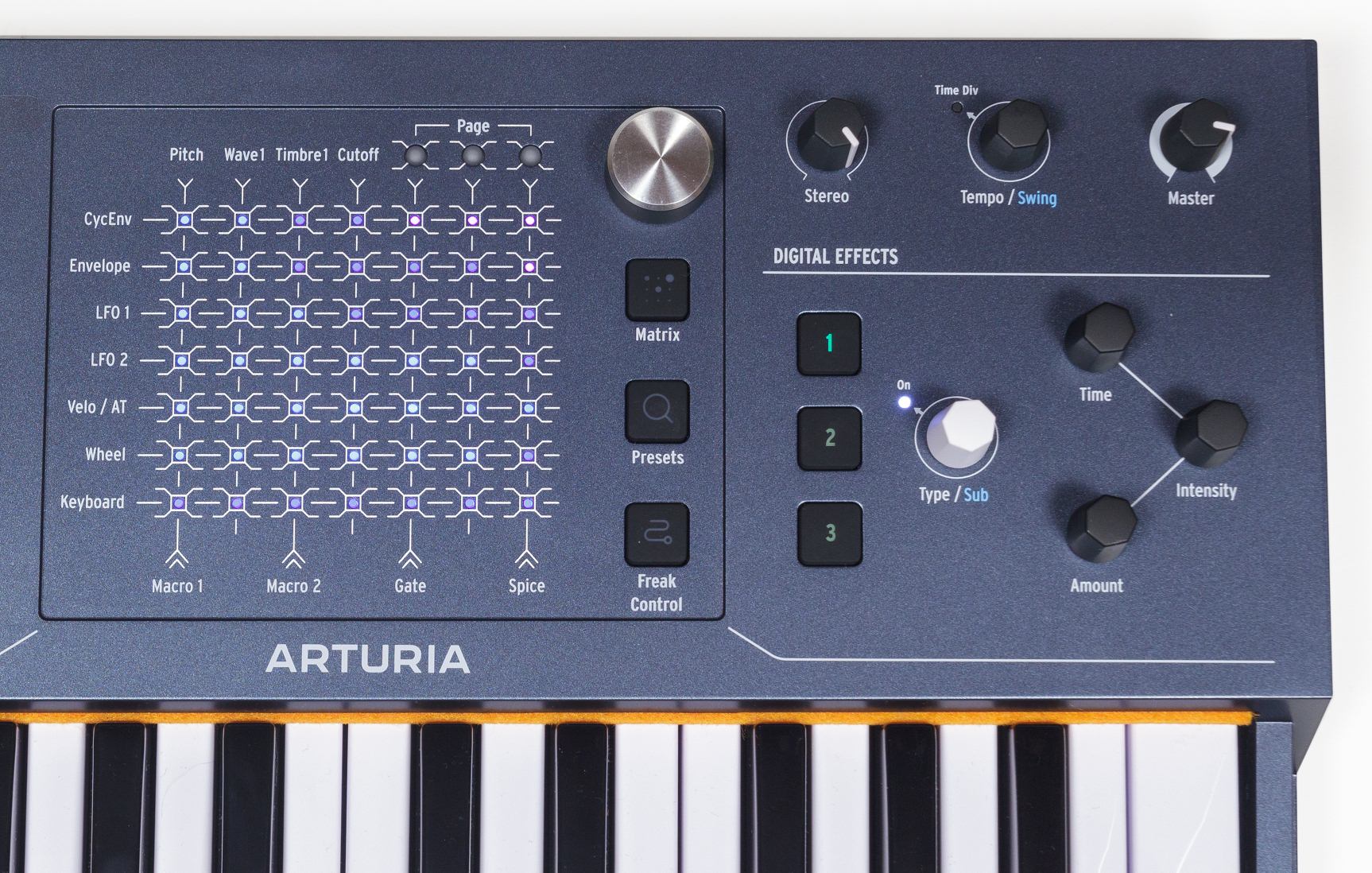
The matrix's second mode, Preset, makes preset browsing easier. The main encoder next to the OLED display can still be used to browse the library. However, the touch surface is more convenient, mainly because presets can be sorted by type and previewed before loading.
In Freak Control mode, the matrix surface can work as touch faders for the macros and the Gate and Spice parameters while the sequencer or arpeggiator is running. The matrix is also useful as an XYZ controller for changing several modulation parameters at once. Four control modes are available for envelope, filter, oscillator and effects parameters.
Effects
As in the previous model, the effects section has three separate slots. Each slot offers 13 digital stereo processing algorithms: Chorus, Phaser, Flanger, Super Unison, Reverb, Delay, Distortion, Bit Crusher, 3 Bands EQ, Peak EQ, Multi Comp, Ext In Vocoder and Self Vocoder. The effects run in series. Reverb and Delay can also work in an alternative mode as sends to a bus. Effects control goes beyond adjusting the amount of processing. Two additional parameters allow more detailed adjustments. Each effect also has several ready-made presets for convenience.
Another feature missing from the previous model is hardware voice panning for stereo widening, implemented in a similar way to the flagship PolyBrute synthesizer. Each of the six voices can be positioned in the stereo field before all the effects. This creates a naturally spacious sound without chorus or reverb. Two panning algorithms are available in the settings. In Centered mode, two voices stay in the center while the others spread out symmetrically. In Gradual mode, all six voices are spread progressively, creating a sense of movement. The result sounds very interesting. A dedicated control called Stereo adjusts this parameter.
Keyboard
Unlike previous instruments in the series, MiniFreak 49 has a full-size, semi-weighted keyboard with aftertouch. As mentioned earlier, this is one of the new synthesizer's key features. A full-size four-octave keyboard is a key feature of a complete instrument for studio and stage use. We are already familiar with this action from the flagship KeyLab mk3 controllers. It feels very comfortable and fairly firm, with a predictable return.
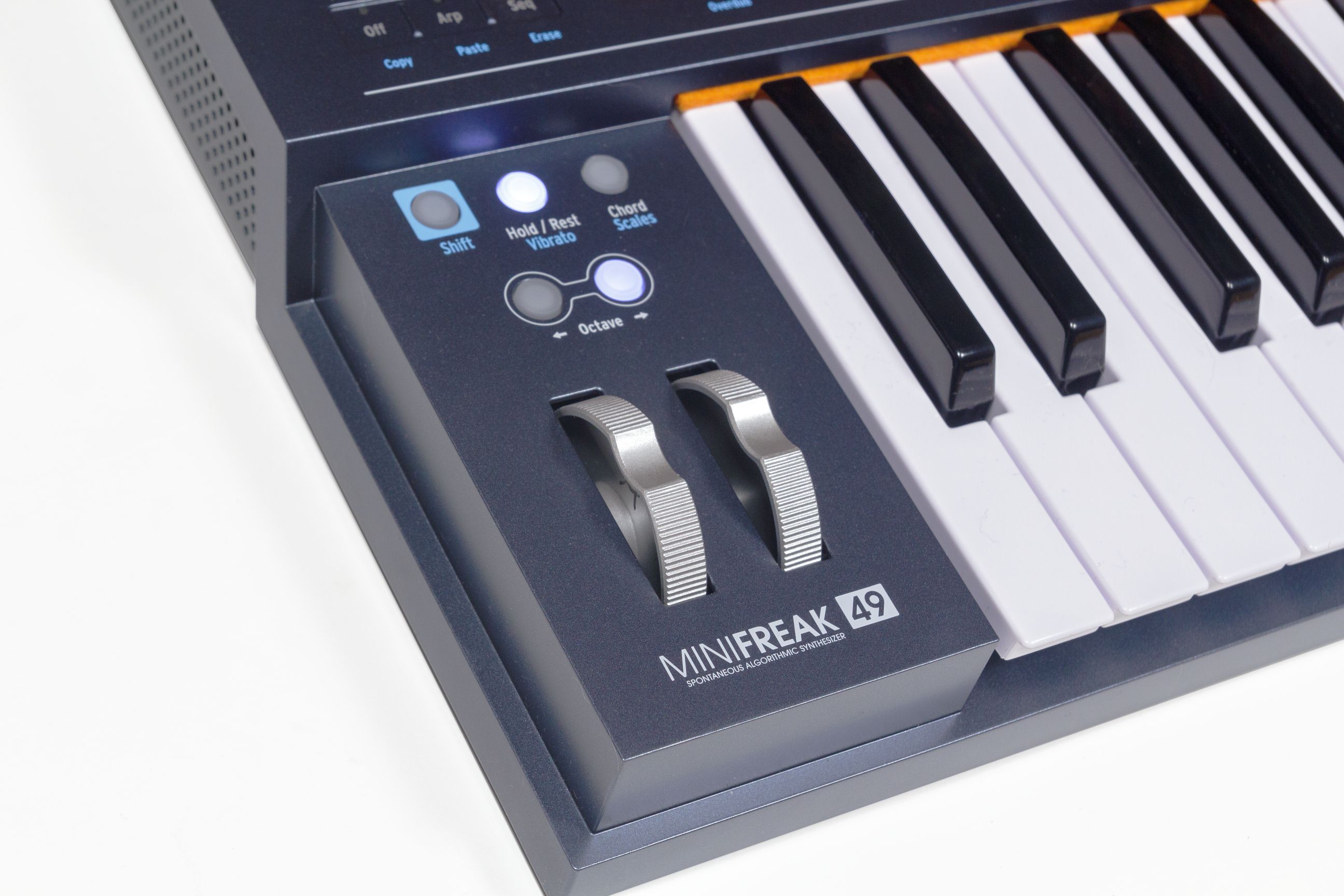
The new synthesizer also uses conventional pitch and modulation wheels instead of touch strips.
Sequencer / Arpeggiator
The sequencer and arpeggiator in MiniFreak 49 are the same as those in the MiniFreak. They also have multicolor indicators and diagrams of the operating modes, which make sequences much easier to create and edit.
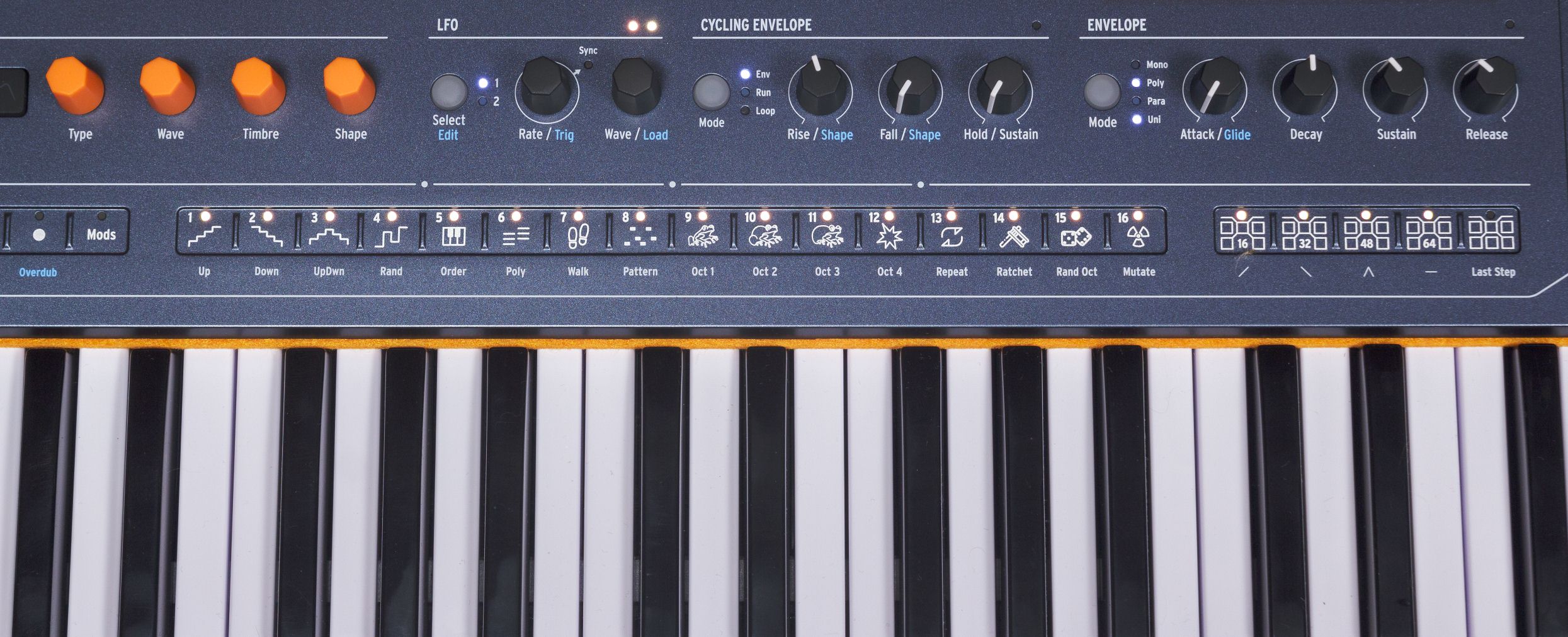
A sequence can contain up to 64 steps. In addition to pitch, note length and velocity, a sequence can record four additional parameters. These greatly expand the built-in sequencer's capabilities. Playback can be synchronized to either the internal clock or an external clock. One sequence can be saved with each preset.
The arpeggiator has 12 main playback patterns and four advanced modes for adding variety to a repetitive arpeggio. Mutate is particularly interesting: it gradually changes the notes in the pattern until the pattern becomes unrecognizable.
Presets
As we have noted before, one advantage of digital synthesizers is the ability to save presets and switch between them quickly.
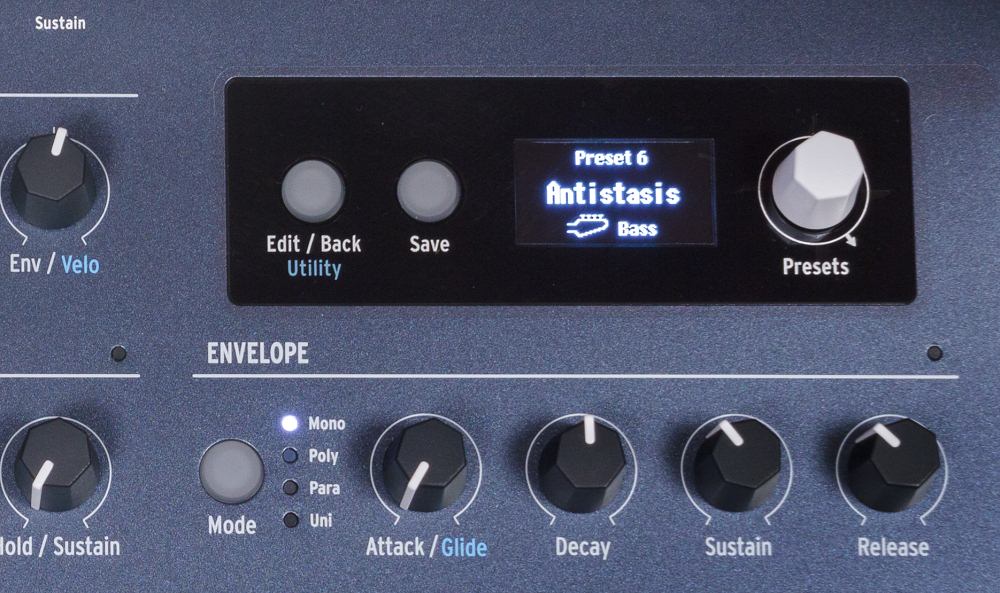
MiniFreak 49 has memory for 512 presets. Half of these slots contain 256 ready-to-use factory sounds. The other half is left for user presets.
Connections
The synthesizer offers a wide range of connections, which are largely unchanged. The one expected change is the replacement of the less convenient USB Type-B port with a modern USB Type-C connector. This connects the synthesizer to a computer and synchronizes it with the MiniFreak V software version. Everything else remains the same.
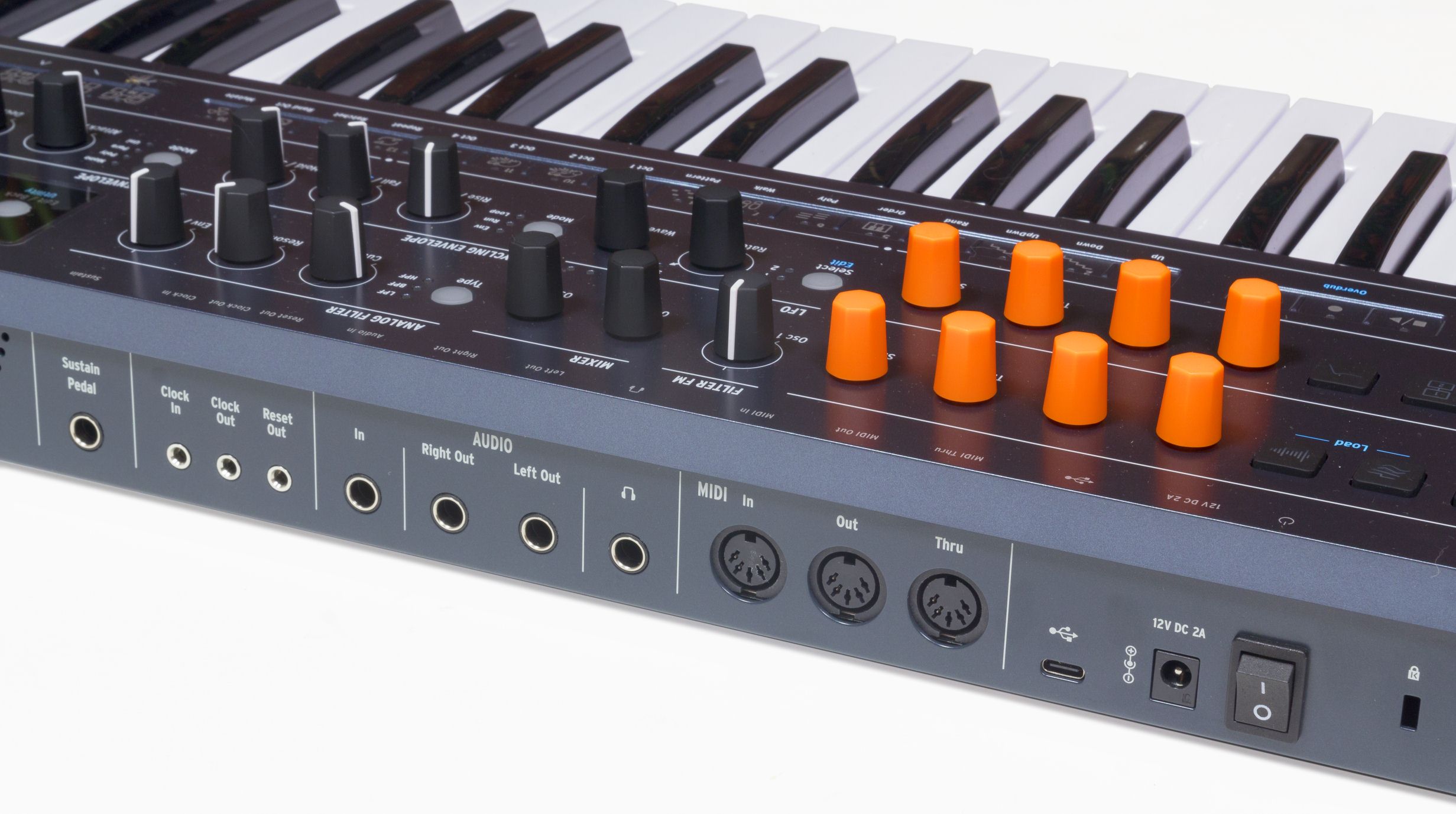
Full-size five-pin MIDI DIN connectors are provided for communication with external MIDI devices. The line outputs and headphone output use TRS connectors. There is also a line input and a TRS connector for a sustain pedal. Mini-jack connectors provide synchronization with external hardware modules and synthesizers.
MiniFreak V
The MiniFreak V software synthesizer reproduces the architecture of the hardware instrument, including modeling of its analogue signal path. This makes the instrument's features available in DAW projects. MiniFreak 49 features are available in the mode of the same name after registering and activating the license included with the instrument. Synchronization of all controls also makes many tasks easier to perform on a computer.
The MiniFreak V graphical interface makes all changes easy to see. It is particularly convenient for managing presets and working with the arpeggiator and sequencer.
Conclusions

Arturia MiniFreak 49 is a very good development of the Freak synthesizer series. The manufacturer has kept the main features of the previous MiniFreak while revising the interface and adding new functions. These changes expand both the performance options and the sound design possibilities.
The main difference is the full-size four-octave keyboard with a semi-weighted action and aftertouch. This change makes MiniFreak 49 a more versatile instrument for both studio work and live performance.
The XYZ touch modulation matrix is another interesting addition. It combines modulation control, preset browsing and performance control. Clear LED feedback makes complex modulation routing easier to understand. Controlling several parameters at the same time also opens up more opportunities to experiment.
Other important additions include Filter FM, which lets the oscillators directly modulate the analogue filter cutoff, and hardware voice panning. Voice panning can create a wide stereo image at the sound generation stage, without relying only on additional spatial effects.
Arturia MiniFreak 49 is therefore a significant development of the familiar MiniFreak architecture rather than a completely new platform. The manufacturer has focused on ease of use, expressive playing and more ways to work with sound. The result is a more versatile option for keyboard players and sound designers who need a compact, feature-rich instrument with a hybrid sound engine and extensive modulation options.
Note. This is an adapted machine translation into English. It follows the “In simple terms” approach. Read the original article at https://prosound.ixbt.com/keyboards/arturia-minifreak-49.shtml.