
Arturia KeyLab 88 MK3: flagship MIDI keyboard in the updated KeyLab MK3 series
Arturia introduced its third-generation KeyLab MK3 MIDI keyboards in 2024. The update changes both appearance and ergonomics significantly. Main controls are redesigned, and a proper high-resolution display is added. Larger pads are easier to play. Arpeggiator and chord operation are simpler, and the key action is improved.
We previously tested the smaller models, KeyLab 49 MK3 and KeyLab 61 MK3 and could fully assess this generation's strengths. Now we examine the updated flagship KeyLab 88 MK3.
The KeyLab 88 MK3 differs from smaller models in action as well as key count. It uses an advanced Fatar TP/110 hammer action with aftertouch.
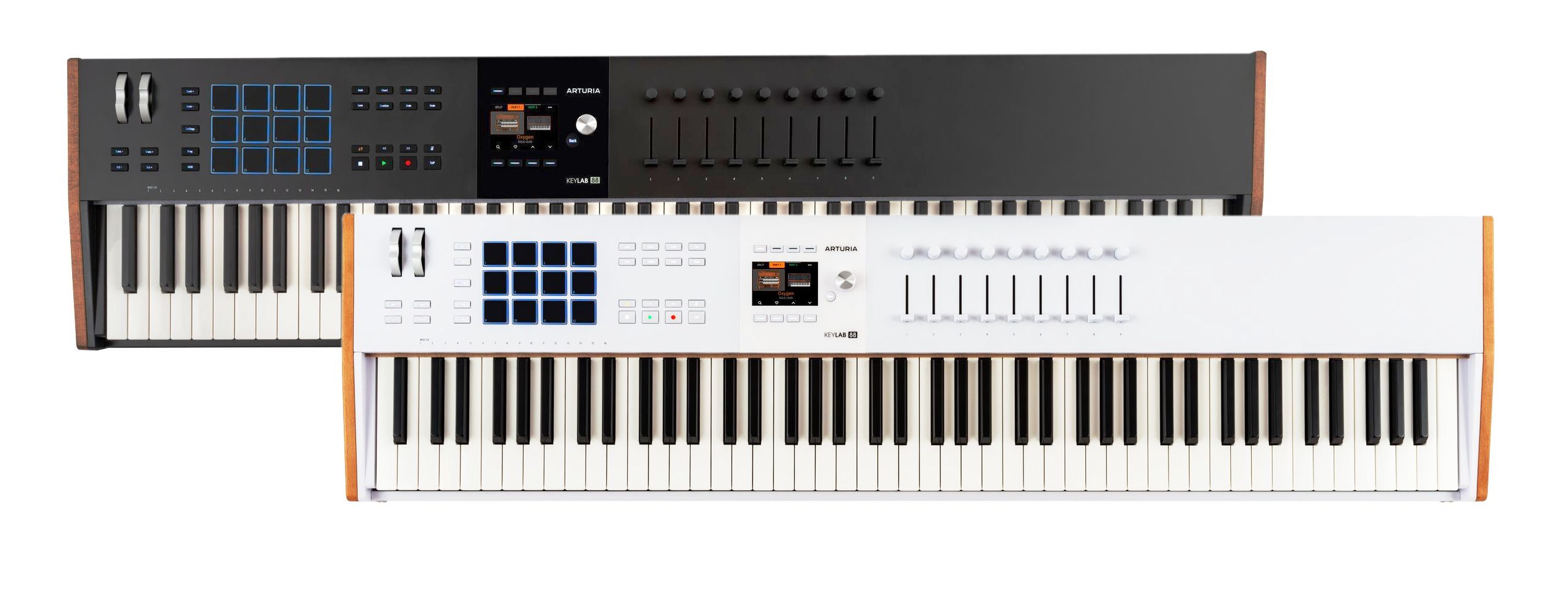
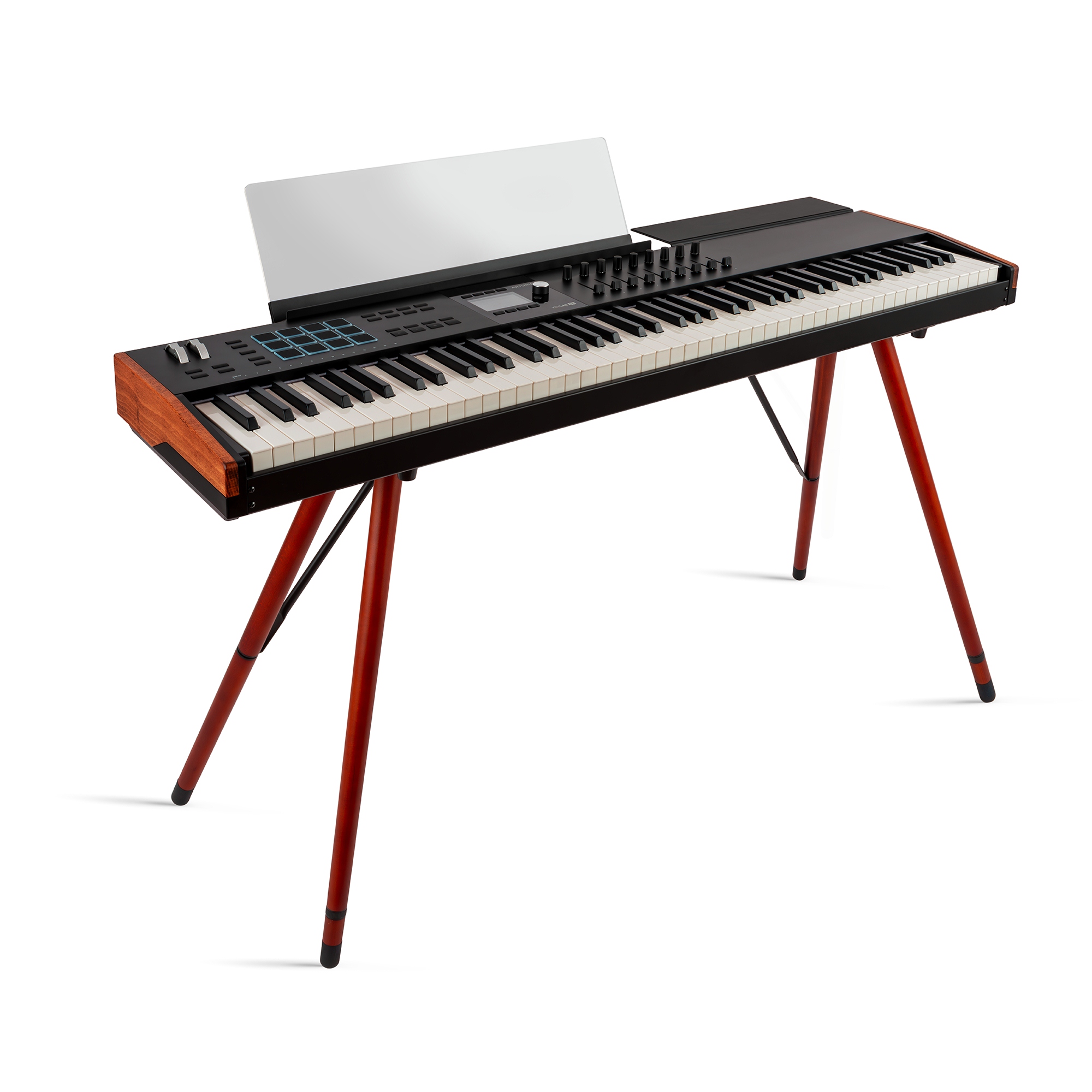
Two colours are available from launch: light and all-black. Another new option is mounting on Arturia Wooden Legs, as with PolyBrute and AstroLab. The legs are sold separately. Conventional keyboard stands remain suitable, and rubber feet allow desk placement.
KeyLab is Arturia's most advanced controller range, offering the closest integration with its virtual instruments and popular music applications. Computer control uses Mackie Control and HUI. Ready-made scripts support Ableton Live, FL Studio, Logic Pro, Cubase and Bitwig Studio. Other DAWs can use Standard MCU and Standard HUI presets with manual assignments. Scripts and detailed installation instructions are on Arturia's website.
The included software lets users start playing immediately: full Analog Lab Pro, Ableton Live Lite, Mini V, Piano V, Augmented Strings, NI The Gentleman and Rev PLATE-140 reverb. Two months of Loopcloud and 40 Melodics lessons are also included.
The basic software-control approach is unchanged. Three modes switch quickly between DAW, Analog Lab and external synthesizer control. Parameters are reassigned immediately when modes change, making settings and functions easy to reach.
Arturia mode assigns the controls to Analog Lab only. DAW mode assigns knobs and faders to the sequencer. USER offers up to 7 extra configurations with individual assignments for all controls.
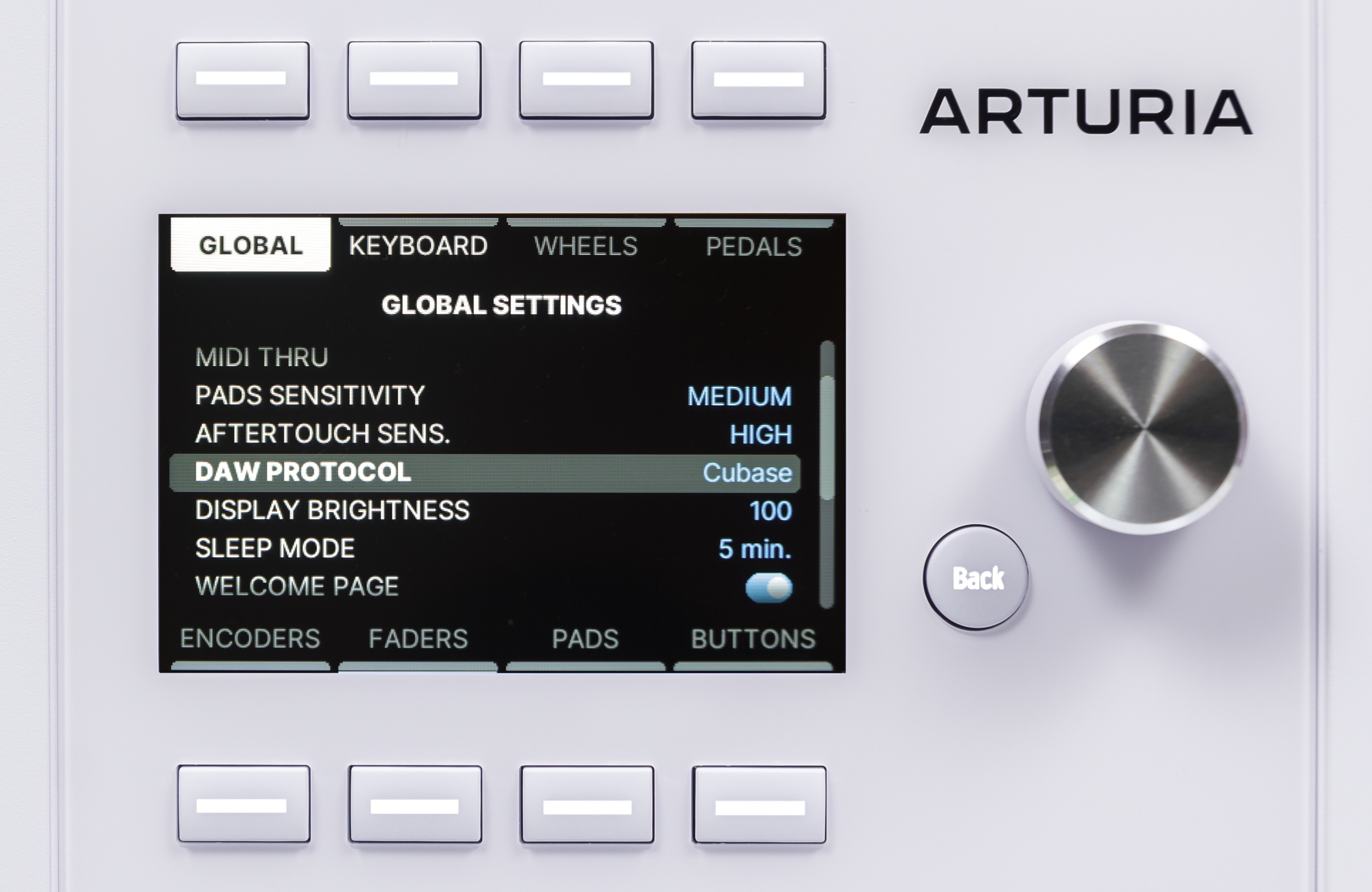
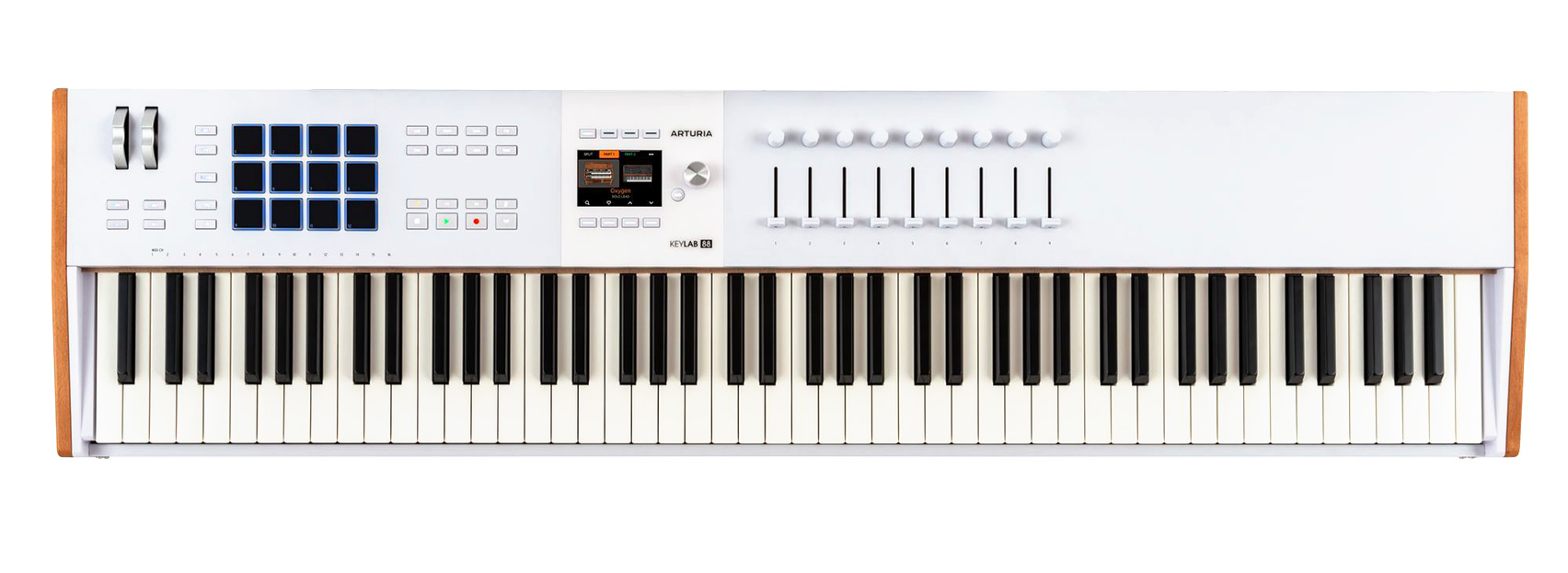
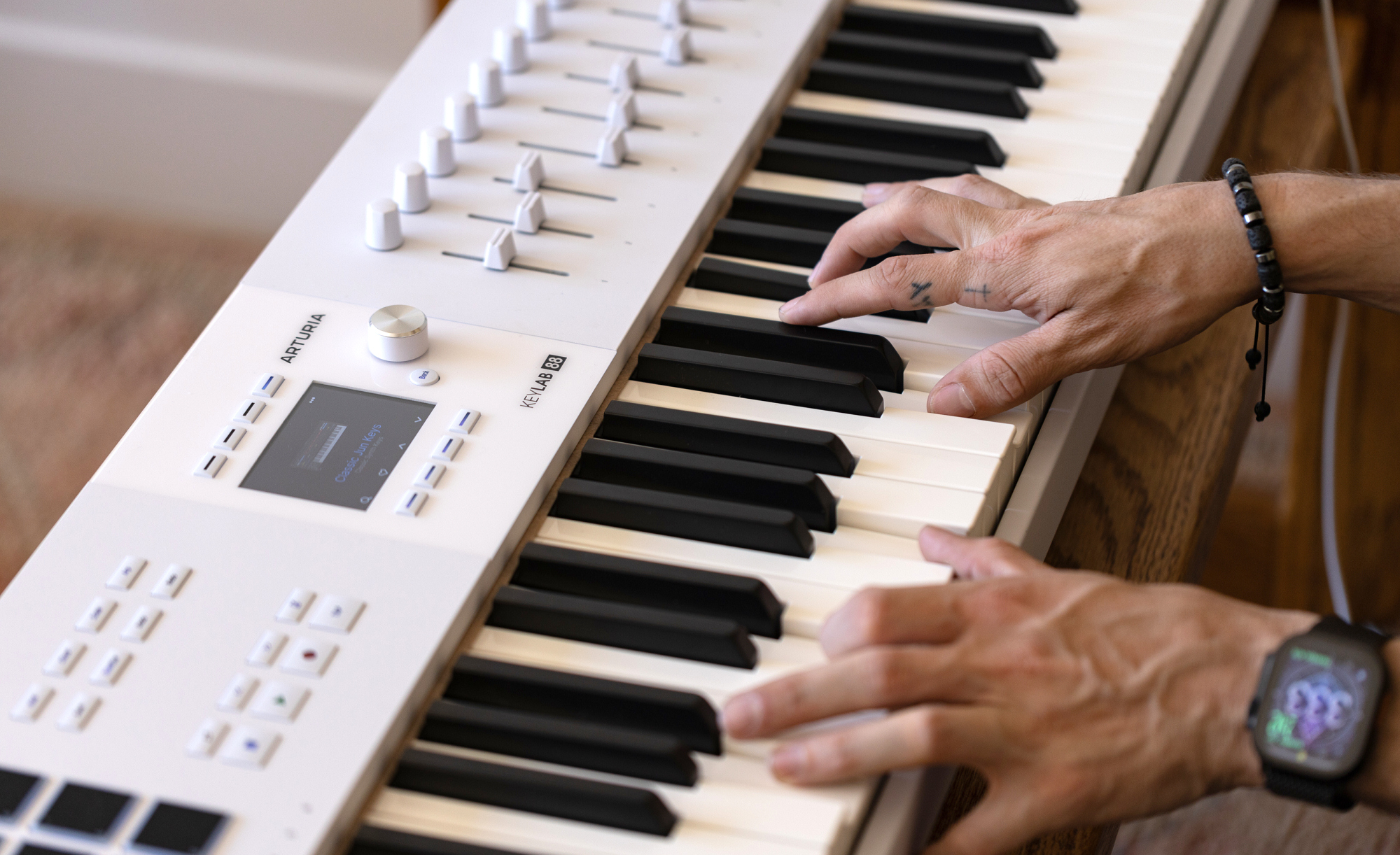
The large display is a key change: 3.5 inches, 480 × 320 pixels. It shows instrument graphics, parameters and settings. A digital knob and nearby context buttons provide navigation.
The display makes the large Analog Lab preset library easier to use directly from the keyboard, whether the software runs standalone or on a DAW track.
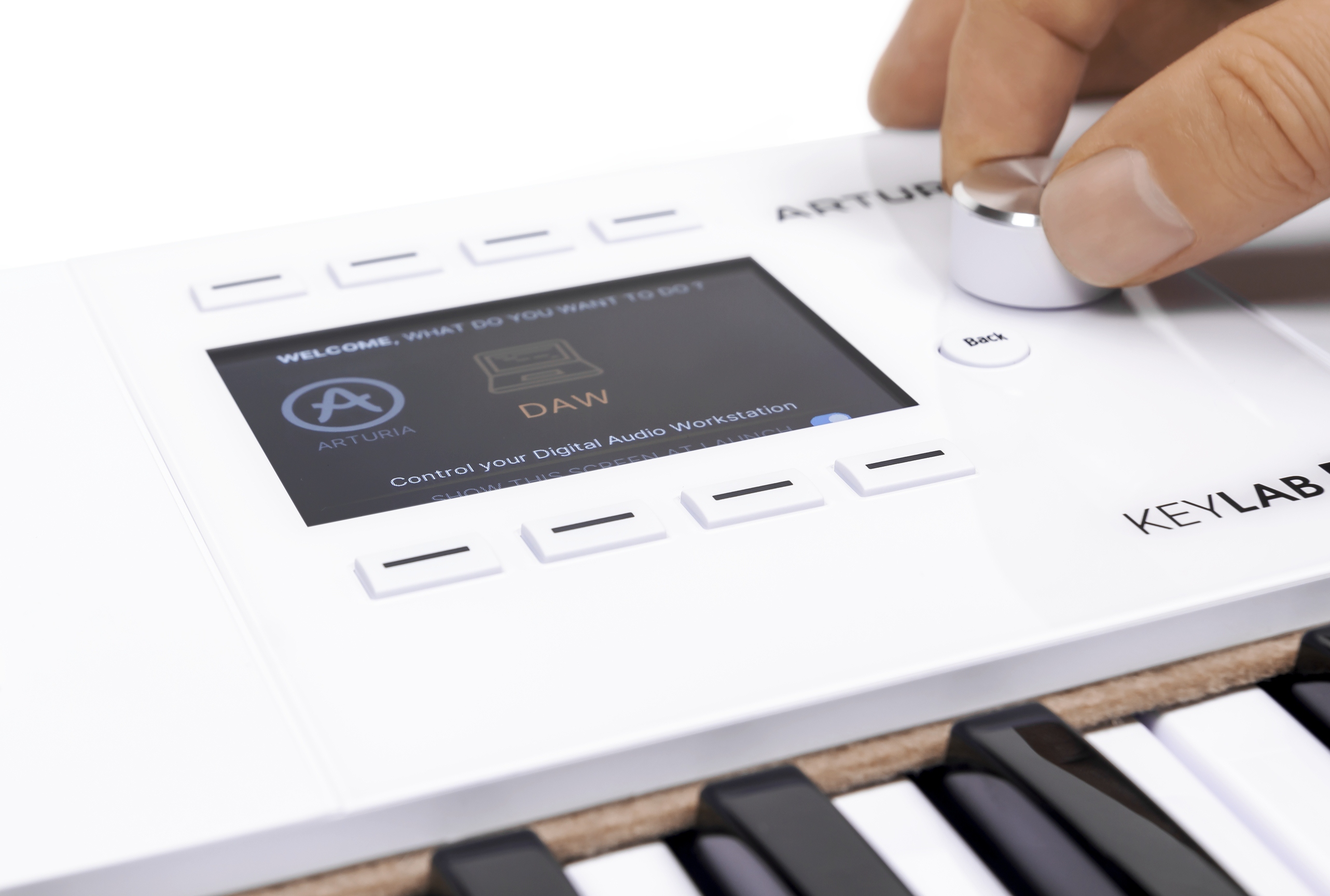
A loaded Analog Lab Pro preset appears as a graphic of its instrument. Turn the knob to browse and press to load. Button browsing can load sounds automatically, so moving to the next sound takes one press.
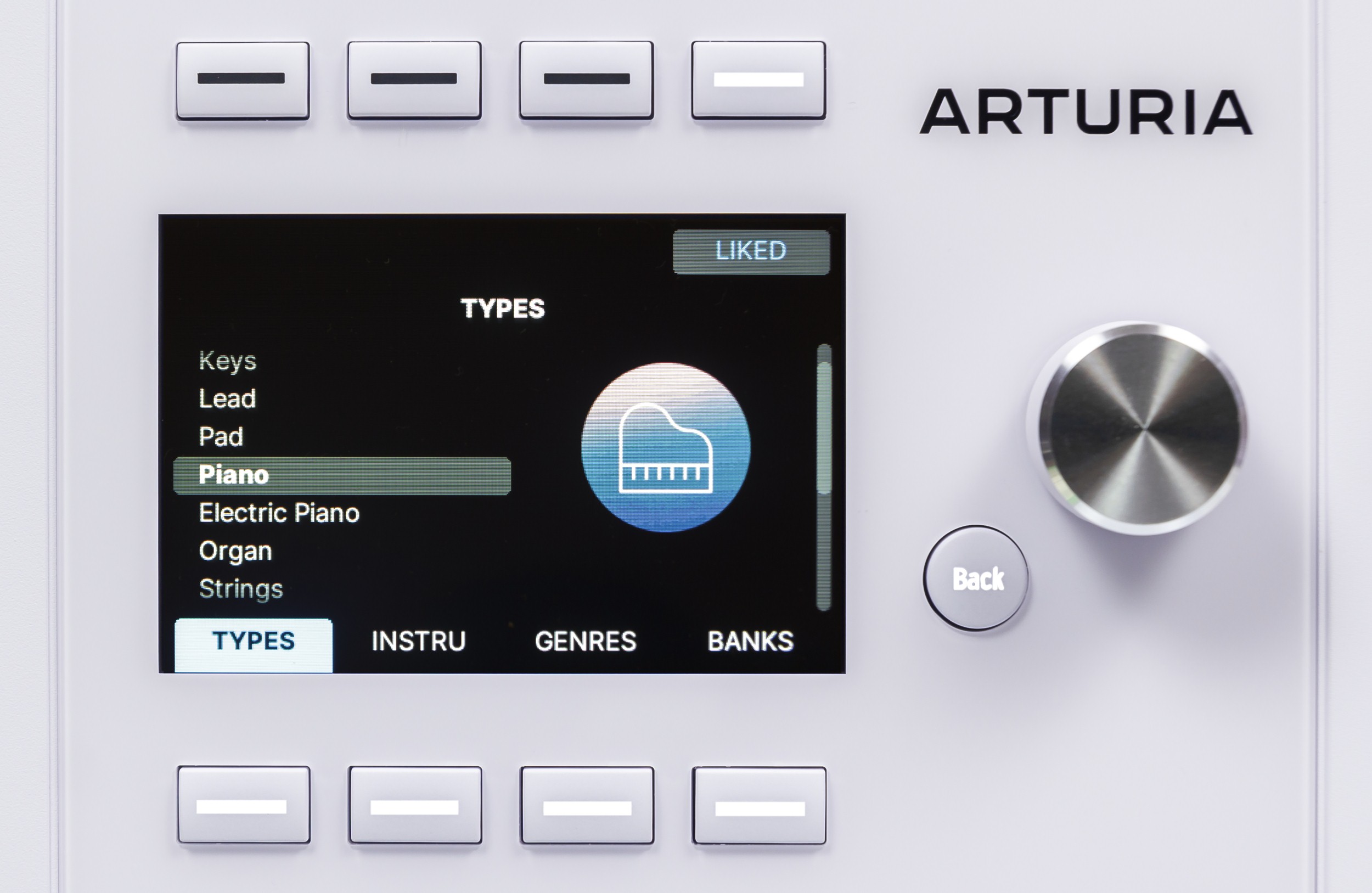
Tag filters narrow searches within categories. Many subcategories reduce the list further. LIKED quickly marks favourite sounds for later access.
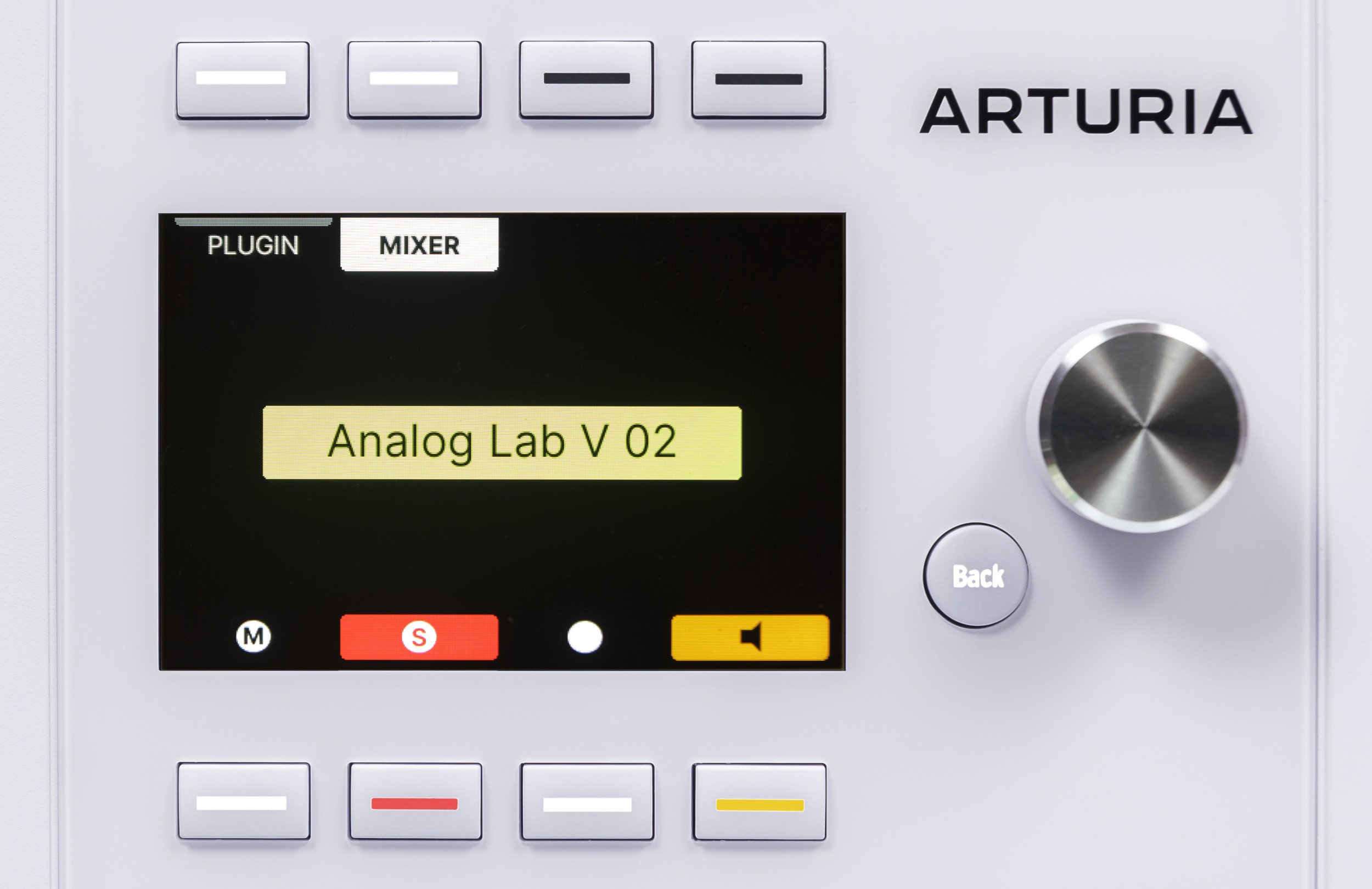
In DAW mode, the display shows the selected track or plug-in. Buttons below activate MUTE, SOLO, REC or MON. Adjusting a parameter temporarily overlays a graphic of its control and current value.
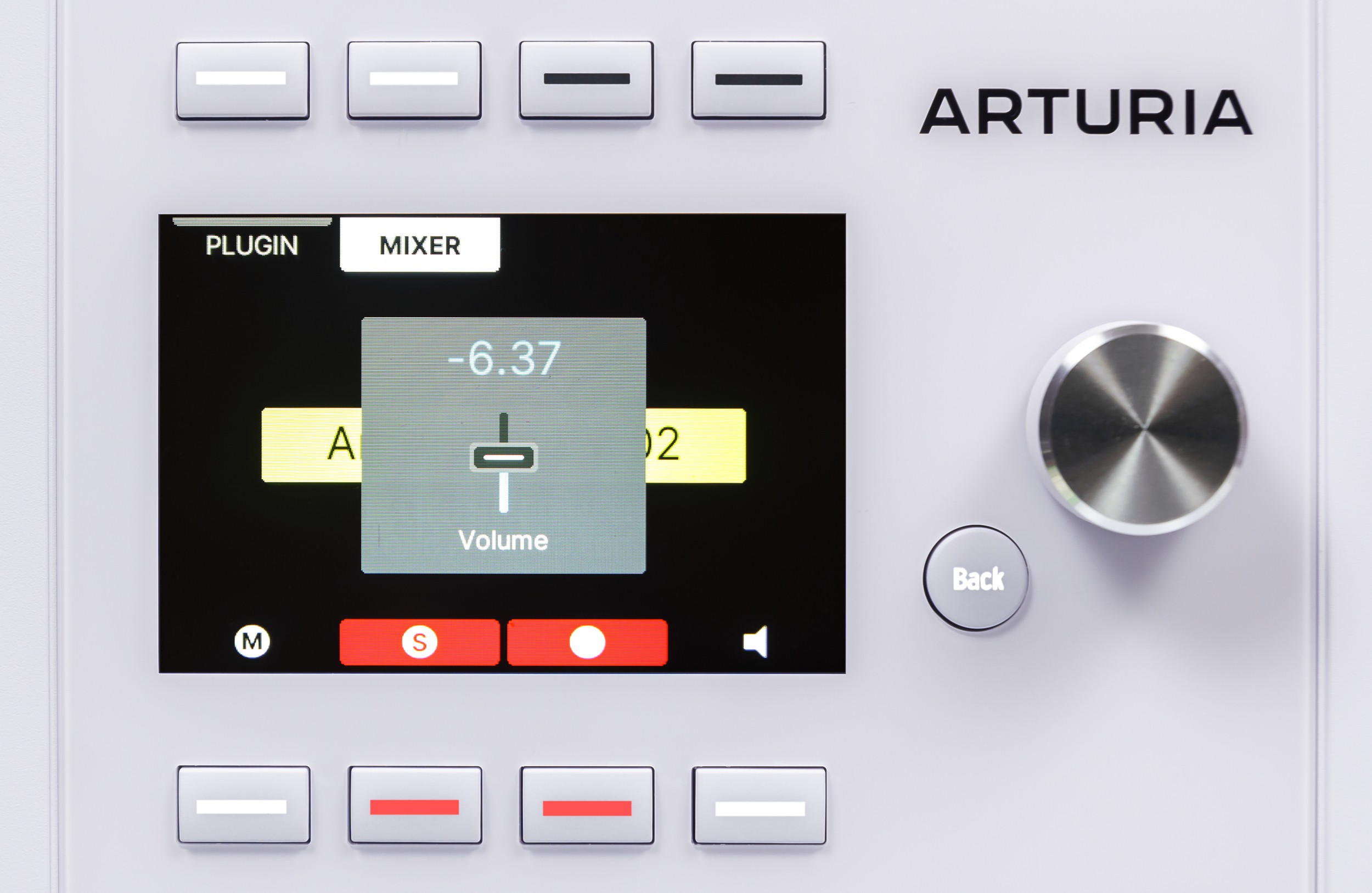
DAW mode can control the mixer or a third-party plug-in. In mixer mode, eight faders adjust the first eight channels and the ninth controls master; knobs adjust pan. In plug-in mode, faders control assigned plug-in parameters or Quick Controls, as in Cubase, while knobs correspond to the first effects-send bus.
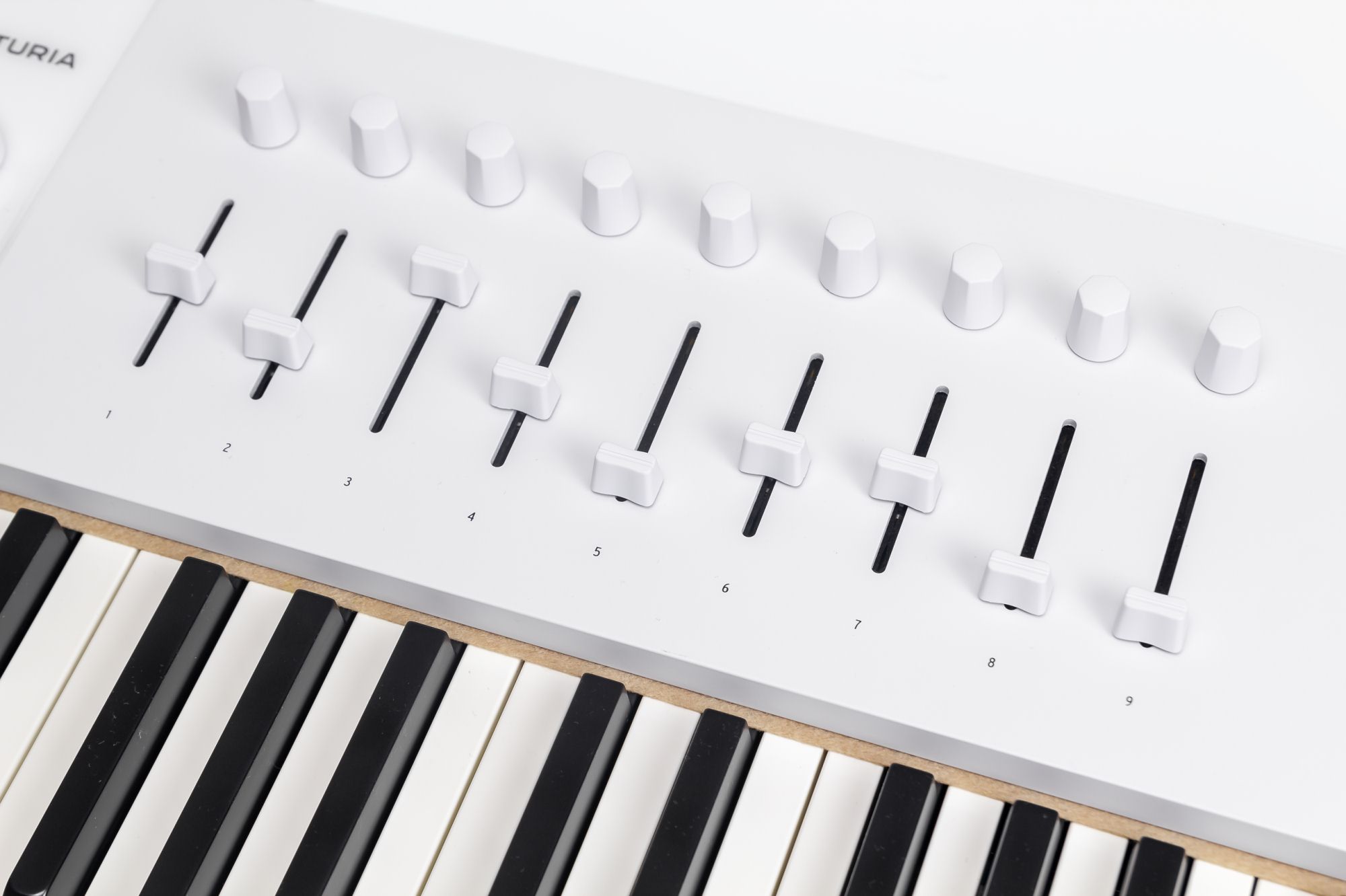
Buttons are gone from the fader section, but knobs and faders are now touch-sensitive. Touch a control to see its assignment or current value without changing it.
In Arturia mode, controls match the Analog Lab macro panel. Presets already contain assignments, so setup is unnecessary. They vary by sound but usually change major aspects of its character. Many hardware controls provide access to many parameters. With the full V Collection instrument installed, almost any parameter can be assigned to a macro.
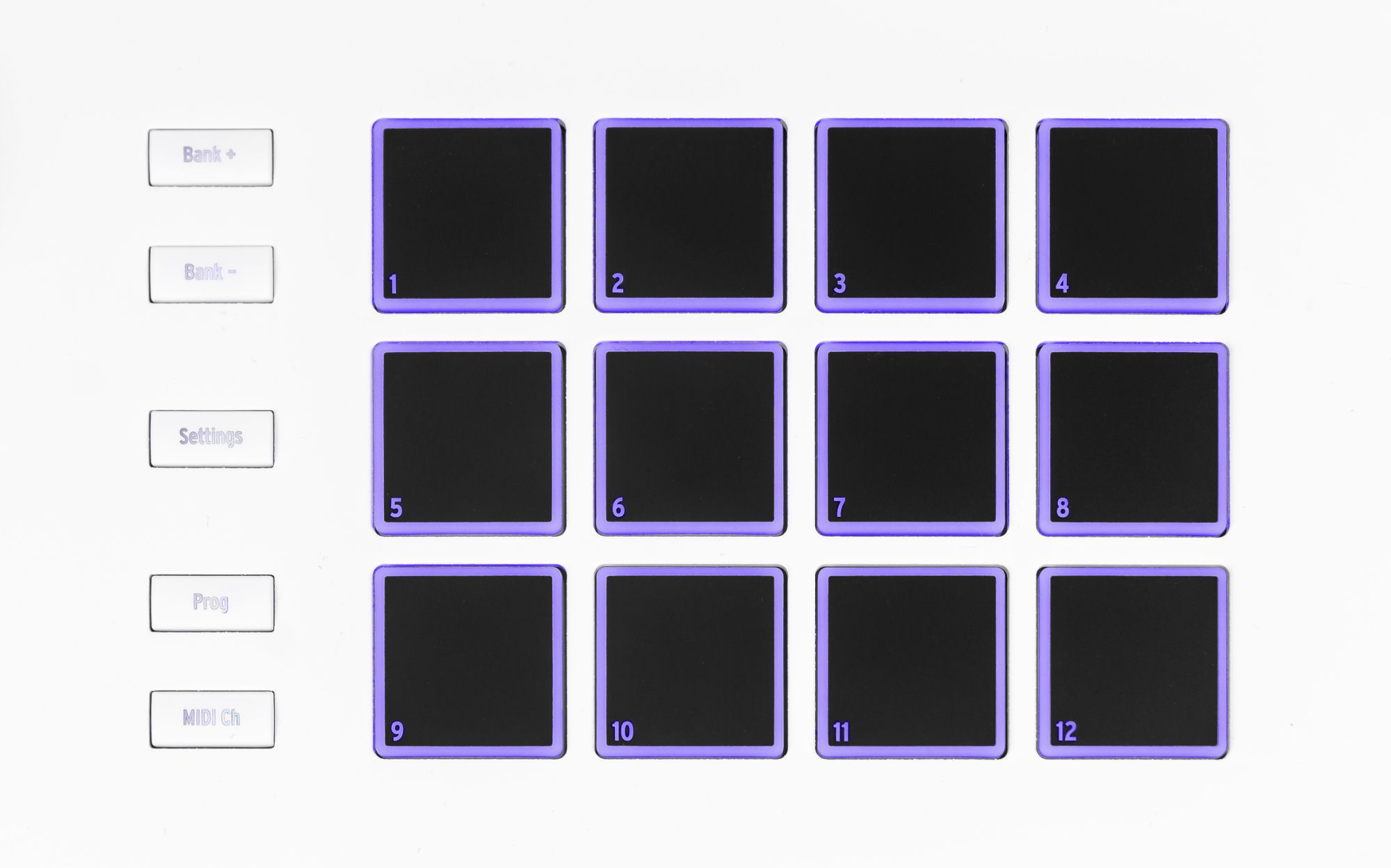
There are now 12 pads instead of 16, but four modes cover different note ranges and control tasks. RGB pads respond to velocity and pressure. They play notes and chords or trigger samples in DAWs such as Ableton Live and Bitwig. USER mode permits other assignments.
DAW mode adds PAD DAW for sequencer commands. In Cubase, pads switch views, add an instrument, open the selected track's instrument and control channel effects. This makes DAW operation more convenient.
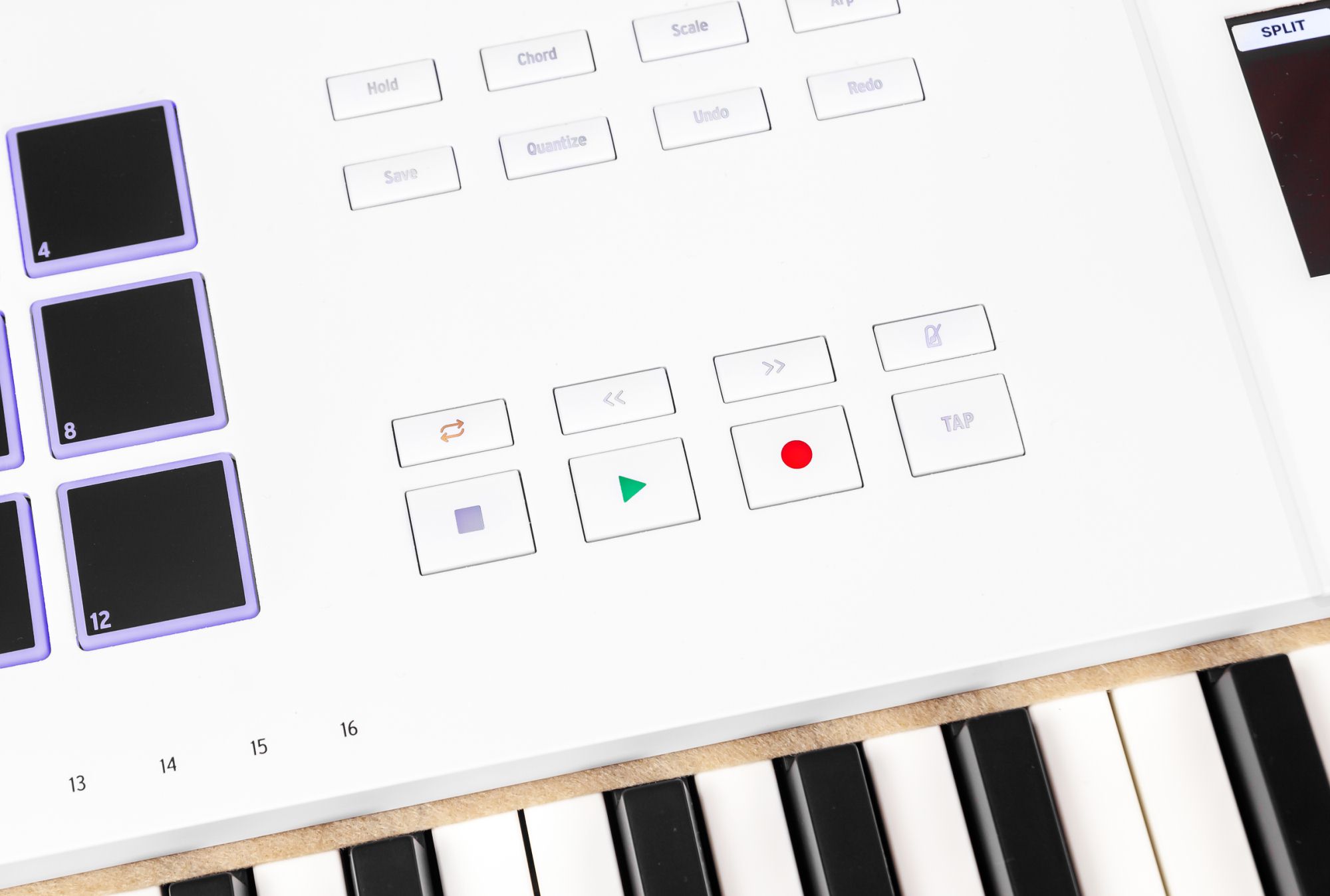
Transport buttons now form two rows. Play, record and stop are larger, and metronome and rhythm functions are added. Similar layouts work well on recent KeyLab Essential controllers, providing quick access to common DAW commands.
Arpeggiator, chord and scale functions remain with changes. Chord mode is simpler and stores only one chord, but adds guitar-like strumming. The display makes arpeggiator and scale operation clearer and easier.
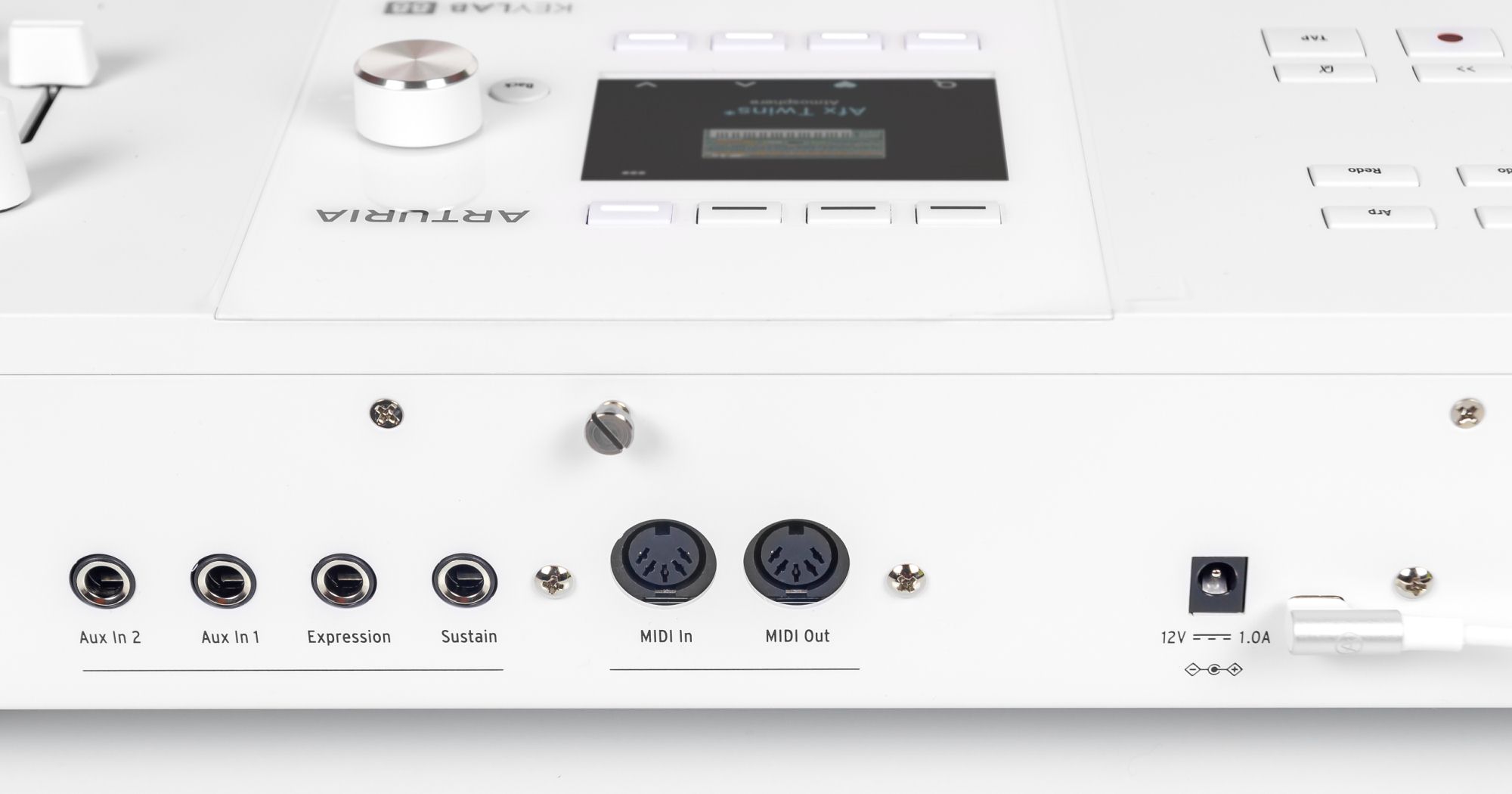
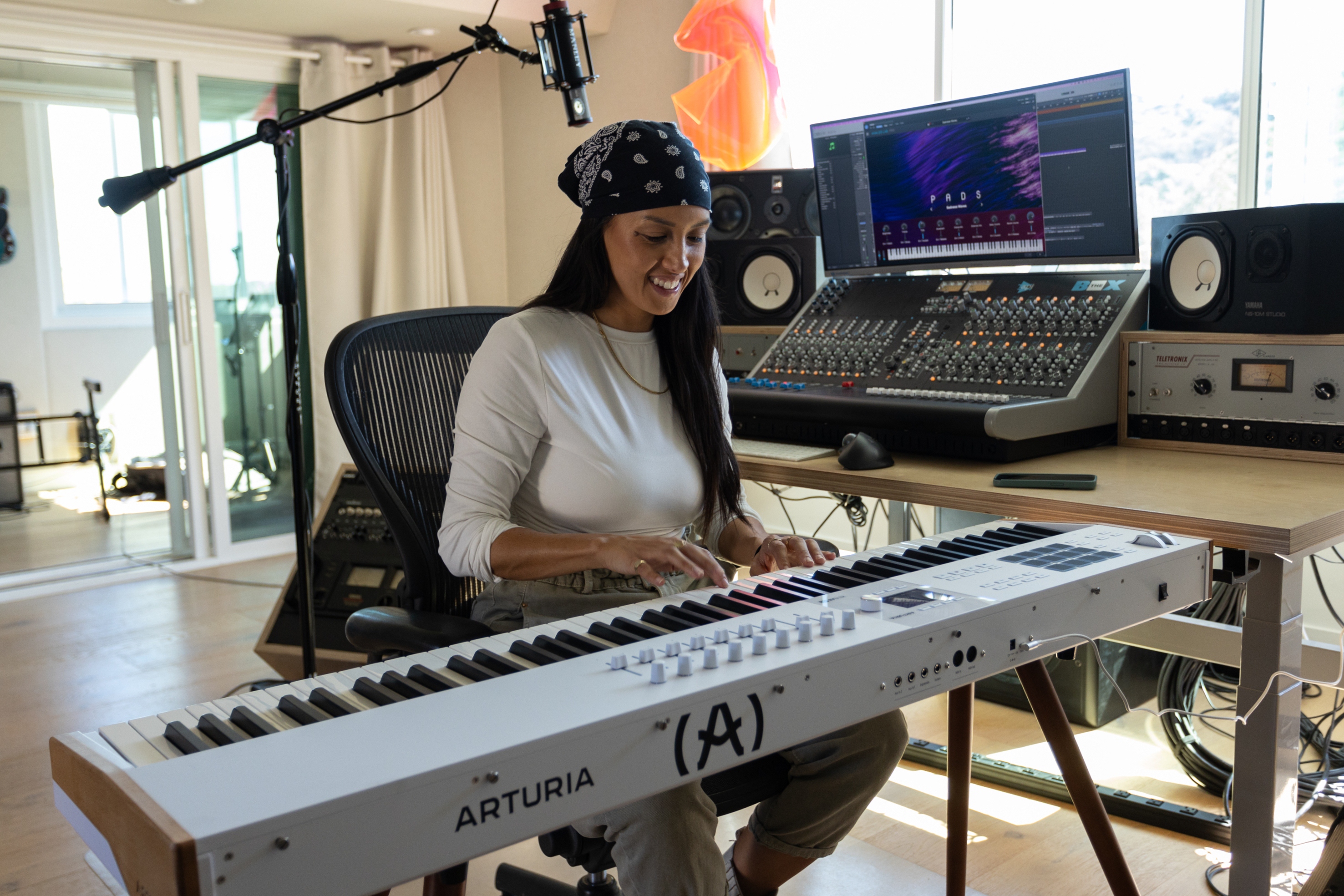
CV outputs are removed, so external synthesizers use conventional MIDI. Three pedal sockets accept sustain, expression and another control pedal. USB Type-C connects a computer through the included right-angle cable and supplies bus power. Standalone use with external synths needs a separately purchased power supply.
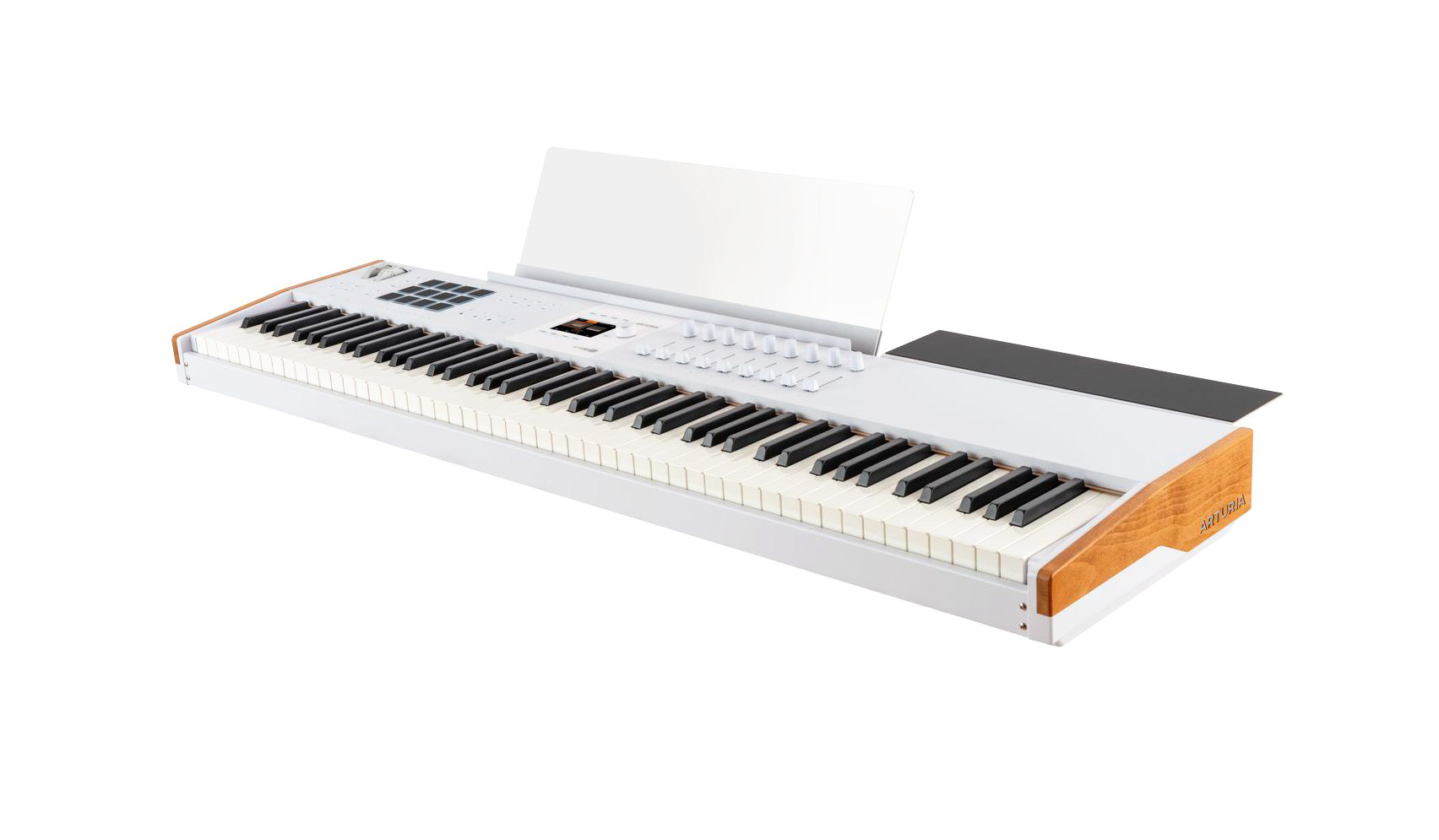
Rear attachment points hold the music rest and laptop shelf, as on the previous generation. The transparent acrylic rest has a lower recess to keep sheet music open and support a heavy tablet. The laptop shelf has a rubber surface to prevent slipping during energetic playing.
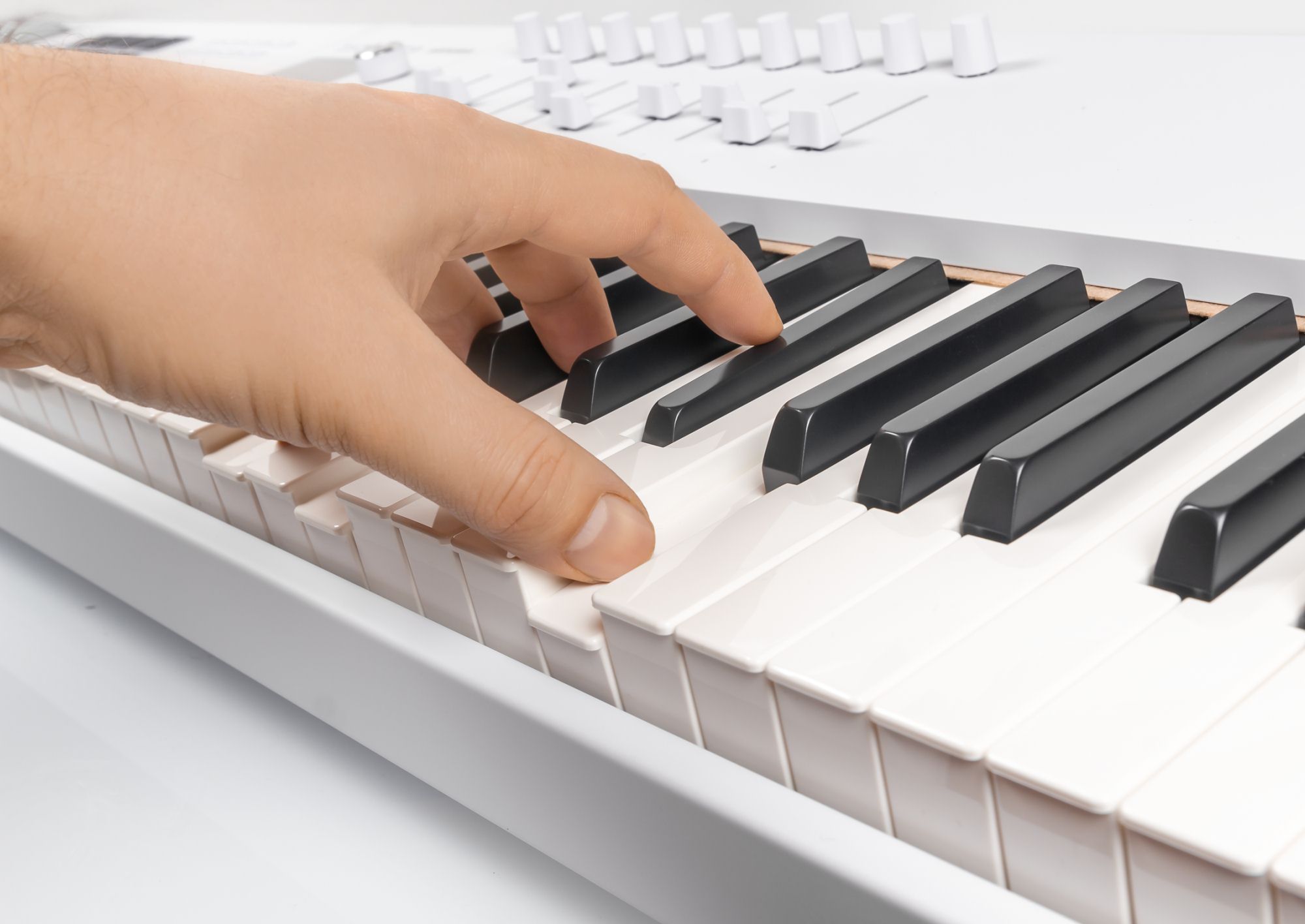
The KeyLab 88 MK3 action is updated to the more modern, expensive Fatar TP/110. It has improved construction and materials. Keys feel slightly faster but retain some resistance associated with inexpensive hammer actions. Even so, Fatar gives us little to criticize: keys are reliable, attractive, comfortable and pleasant to play. Aftertouch is another benefit. Piano sounds rarely need it, but electronic sounds gain an extra expressive control.
Conclusions
The new KeyLab generation shows Arturia's effort to make musicians more productive. A full display and redesigned controls simplify computer work. Touch-sensitive knobs, larger pads, practical transport buttons and display context controls help musicians and producers concentrate on creating music.
The flagship KeyLab 88 MK3 shares the smaller models' functions and adds hammer action for demanding keyboard players. We especially like the black finish, which looks excellent and stands out from familiar designs
Note. This is an adapted machine translation into English. It follows the “In simple terms” approach. Read the original article at https://prosound.ixbt.com/keyboards/arturia-keylab-88mk3.shtml.