
Arturia KeyLab Essential 88 MK3: flagship of the updated KeyLab Essential MIDI keyboard range
The popular KeyLab Essential MIDI keyboard range is now fully updated. Following the KeyLab Essential 49 MK3 and KeyLab Essential 61 MK3 , Arturia has released the flagship Essential 88 MK3. It has an 88-key keyboard. The new generation adds a fresh design, more modern and ergonomic controls, and another colour option.
Like the flagship KeyLab range, Essential controllers primarily target Arturia Analog Lab. They cost less and have fewer controls, but remain useful and interesting. Close Arturia integration is only one strength: they are also good general-purpose MIDI keyboards, whether or not users choose Arturia virtual instruments.
KeyLab Essential MK3 includes Analog Lab Pro, Ableton Live Lite, UVI Model D, Native Instruments The Gentleman, two months of Loopcloud and 40 interactive Melodics lessons.

The full display is the most important change. It is larger, higher resolution and more informative than before, showing graphical context menus and parameter values clearly. The case has revised rounded edges, and buttons are easier to use and read. USB Type-C replaces the older computer connector. Black and white versions are available.
Controls change slightly, but the principle remains. Three modes handle Analog Lab, selected DAW parameters and external synths through MIDI Out. Switching is instant, making these tasks available almost simultaneously.
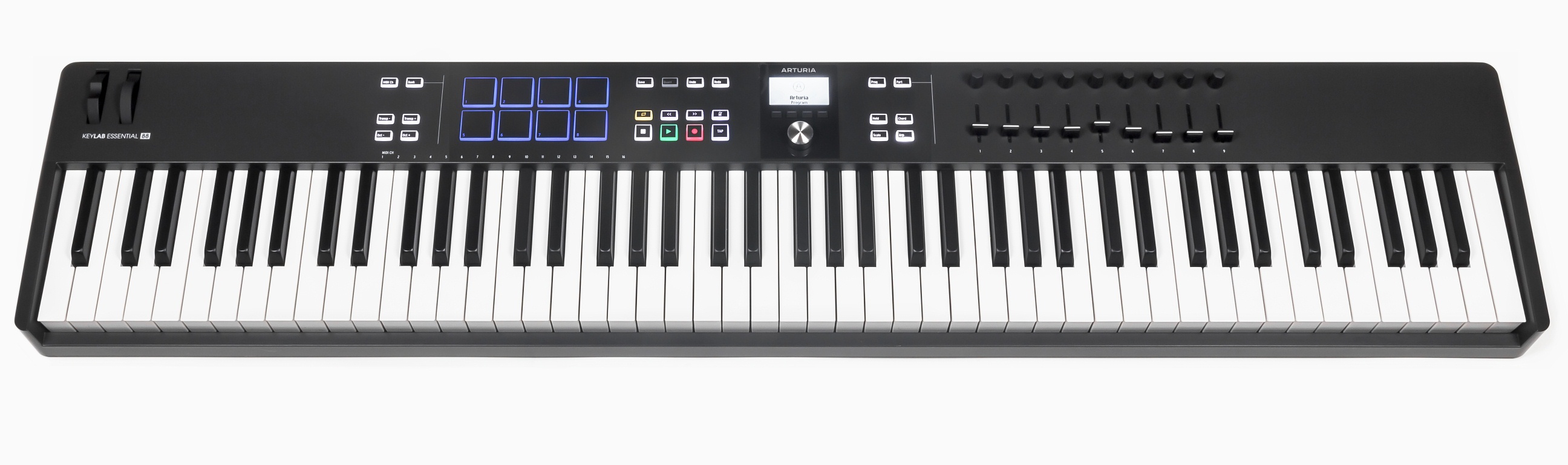
Full DAW integration requires the relevant drivers and script. Arturia provides detailed installation instructions. Once configured, the keyboard recognizes the supported sequencer when DAW mode is selected. Supported apps include Ableton Live, Logic Pro, Bitwig Studio, FL Studio and Cubase. Other DAWs can use custom MCU/HUI configurations.

The new display simplifies Analog Lab browsing. It shows preset name, category and instrument-type icon. Turn the main knob to browse and press to load. Tag filters narrow searches within categories. Buttons can also step through and automatically load sounds with one press. Users can find sounds directly from the keyboard and focus on playing instead of the computer.

Revised buttons have brighter lighting and clearer contrasting labels. Transport adds TAP for tapping a rhythm. Other functions now include Save, Quant, Undo and Redo.
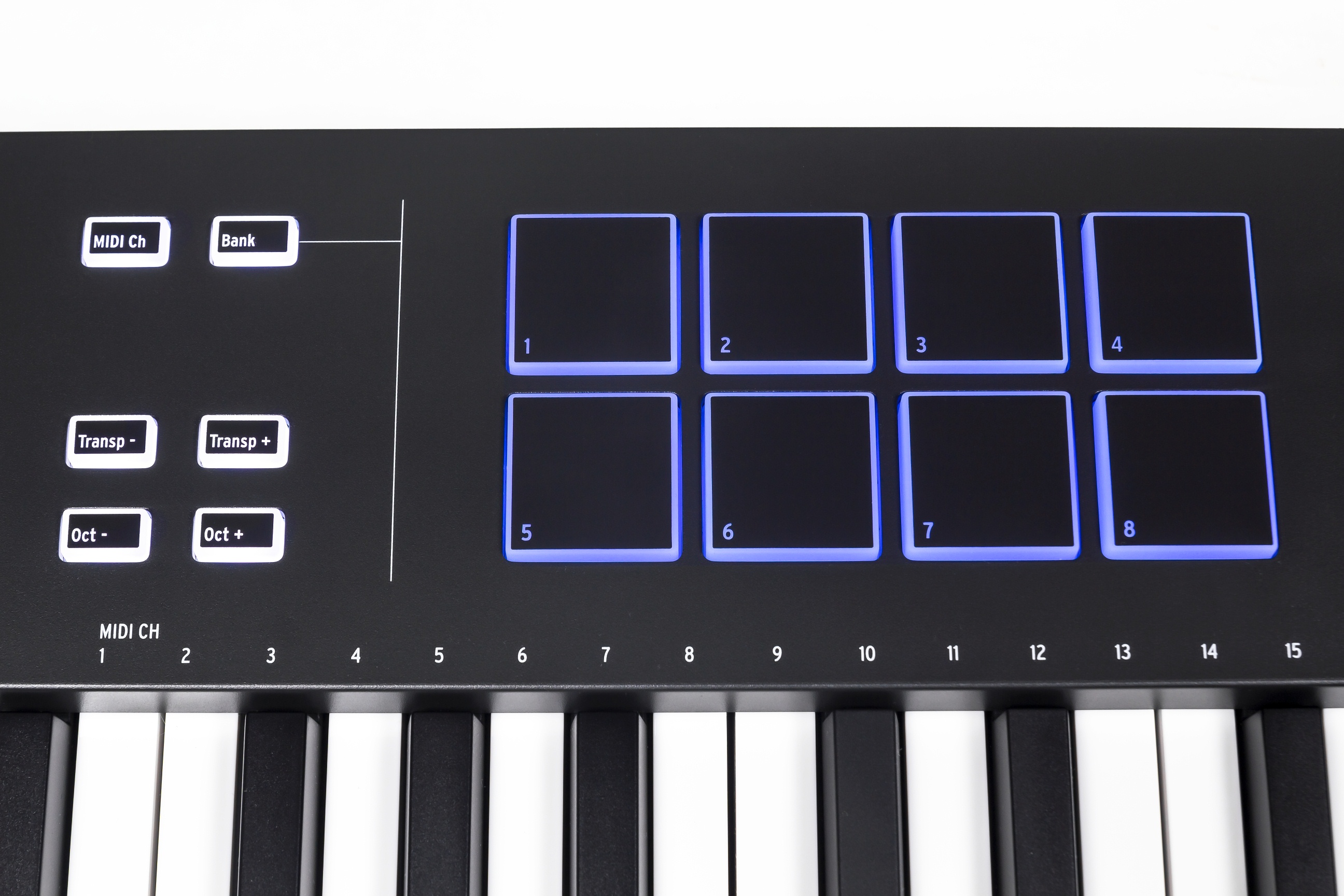
Larger pads are easier to play. They have bright RGB lighting and respond to velocity and pressure. Normal mode plays eight chromatic notes from E below middle C; an alternative bank plays eight from middle C. In DAW mode, pads trigger samples or functions. Cubase assignments include new track, duplicate selection, render selection and freeze. Ableton and Bitwig support scene-based sample triggering and their drum instruments.
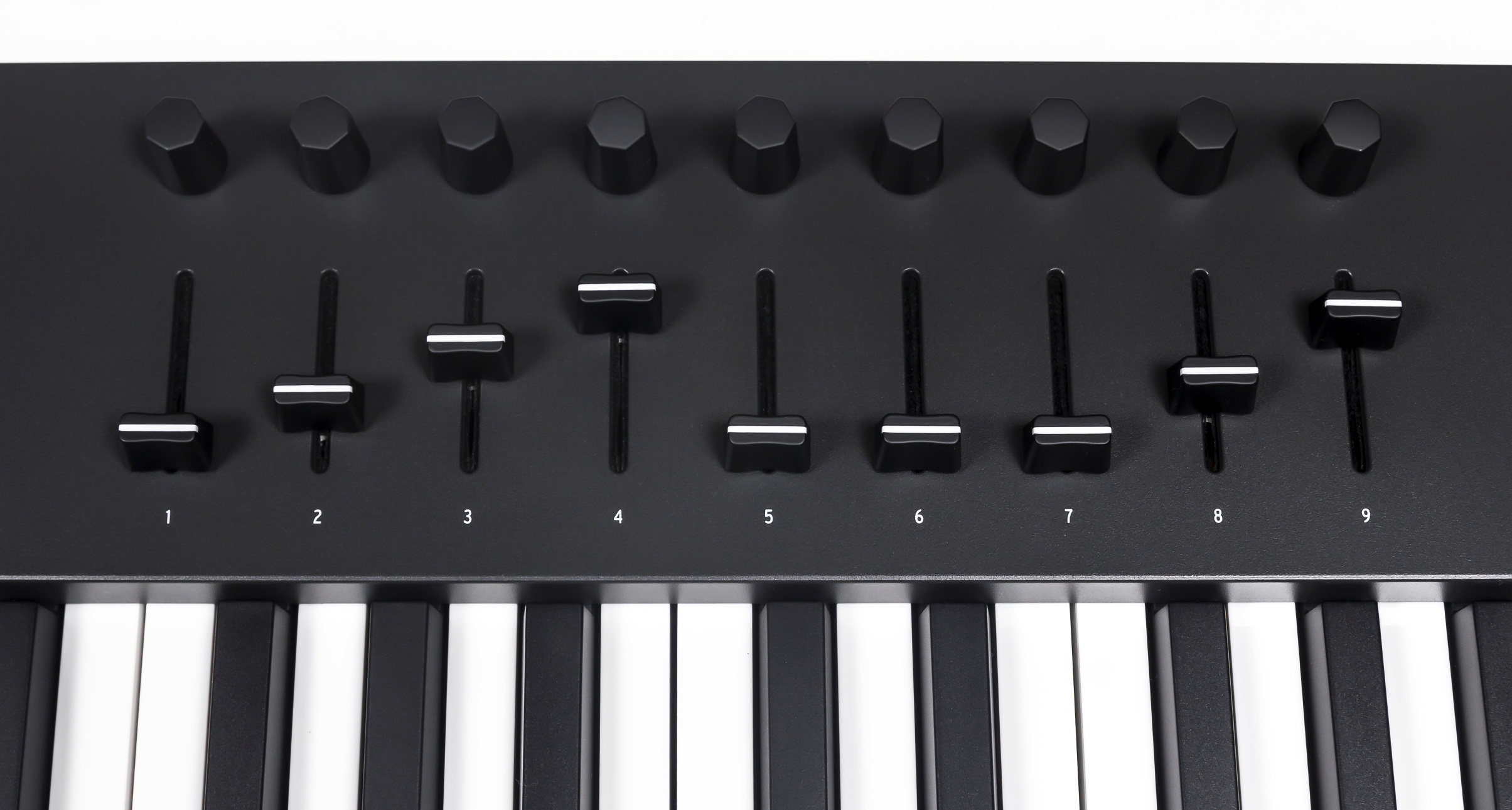
Nine knobs and nine short faders remain. Continuous encoders make changing modes convenient, avoiding sudden jumps in values. In Analog Lab, they control macros.

The Analog Lab macro panel matches the hardware. Presets already contain assignments, usually controlling major sound characteristics. Many knobs and faders allow varied control. With the full corresponding V Collection instrument installed, any parameter can be assigned to a macro.
DAW mode controls mixer or track settings. Assignments vary by application, usually covering volume and pan for the first eight mixer channels. An alternative mode controls plug-in parameters on the selected channel. In Cubase, linking to Quick Controls is a convenient way to operate third-party plug-ins.

Scale and chord modes are included despite the keyboard's appeal to experienced players. The display shows notes in the selected scale. 16 presets range from major and minor to less common Arabic scales, with a custom option too. Chord mode plays a stored chord from one key. Common chords in different inversions are supplied, and users can create their own. Unlike earlier models, custom chords and scales survive power-off.


USB bus power needs no extra adapter. USB Type-C connects the computer through the supplied cable. A pedal can be connected, and MIDI Out controls hardware synthesizers.
Smaller Essential models use synth action. The Essential 88 has a better semi-weighted action. White keys are glossy; black keys are matte, with wide, flat piano-style tops. Arturia consistently makes good keyboards, and this is another example. Feel is personal, especially for musical instruments, but the Essential 88 MK3 is among the most attractive MIDI keyboard actions available.
Conclusions
The Arturia KeyLab Essential 88 MK3 confirms its flagship position. Compared with the smaller KeyLab Essential 49 MK3 and KeyLab Essential 61 MK3 , it adds more keys and better semi-weighted action. Software integration and control functions are identical, so keyboard requirements decide the choice. Few affordable full-range controllers exist, especially with this many controls and such extensive integration. An equivalent alternative to Essential 88 MK3 will be hard to find.
Note. This is an adapted machine translation into English. It follows the “In simple terms” approach. Read the original article at https://prosound.ixbt.com/keyboards/arturia-keylab-88-mk3.shtml.