
FiiO S15 – audiophile streamer with a high-quality DAC
Maxim Liadov
China's FiiO designs and manufactures its own distinctive products. With many years of experience, it is well known to fans of audiophile DACs and portable players. Its streamer range now has an important addition: the flagship S15, a full-sized model with an extensive feature set.
First, some terminology. What is a streamer, and do we need a separate name for it? A streamer is a device dedicated to playing data from internet services. The broader term network player applies to any player connected to a local network. Every streamer is a network player, but not every network player is a streamer. Support for internet streaming services is essential. Early streamers were small network boxes with a pair of outputs and phone control. Many audiophiles did not take them seriously because their makers understood network protocols but knew little about sound.
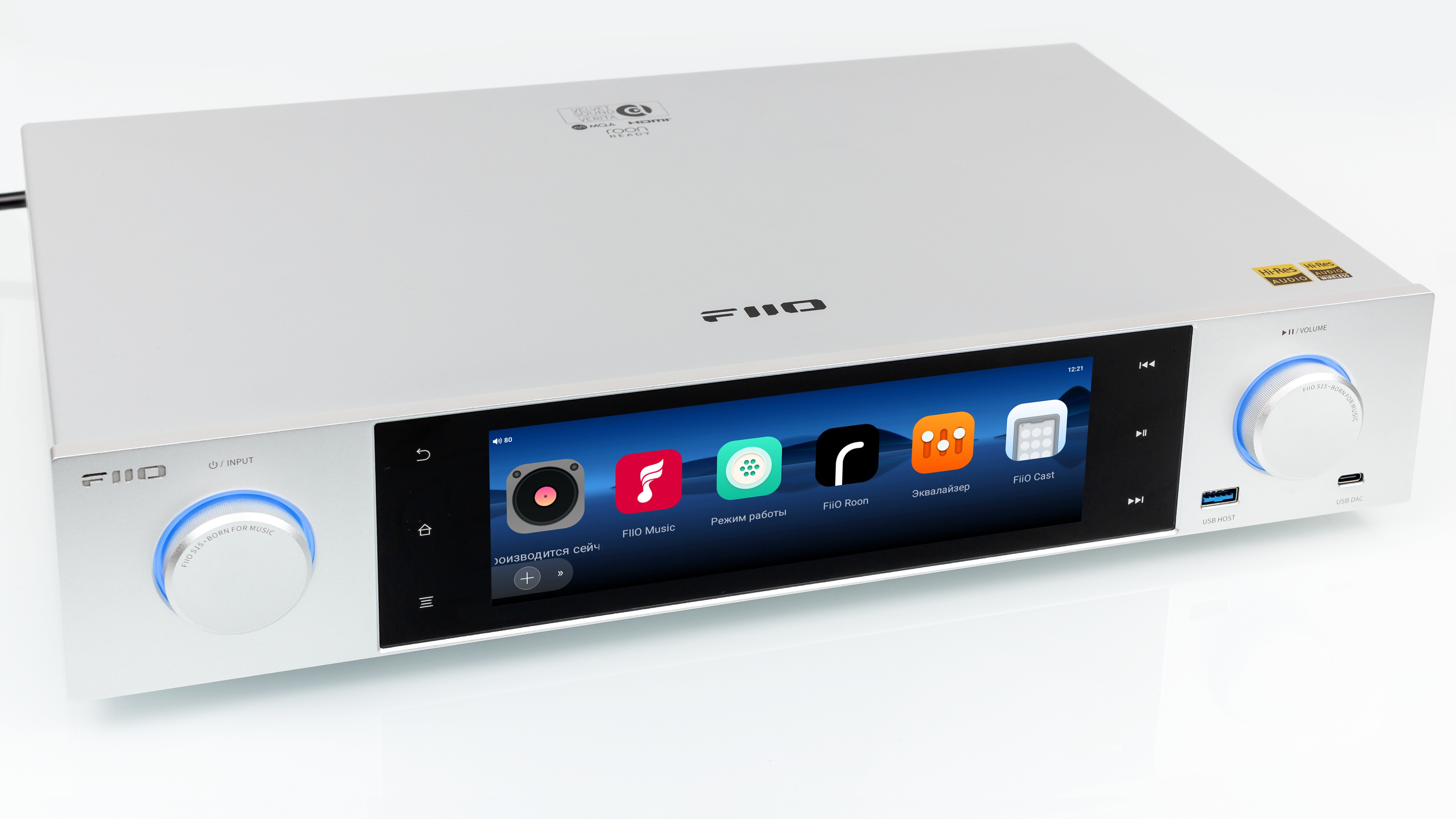
The FiiO S15 changes that picture and takes a major step forward. It is a complete audiophile hub. In addition to streaming, it supports 2 TB of music on local NVMe storage and includes a transformer power supply and an advanced flagship AKM DAC chipset. Its flexible Android platform supports existing services and future additions. An 8-inch colour touchscreen provides a friendly interface.
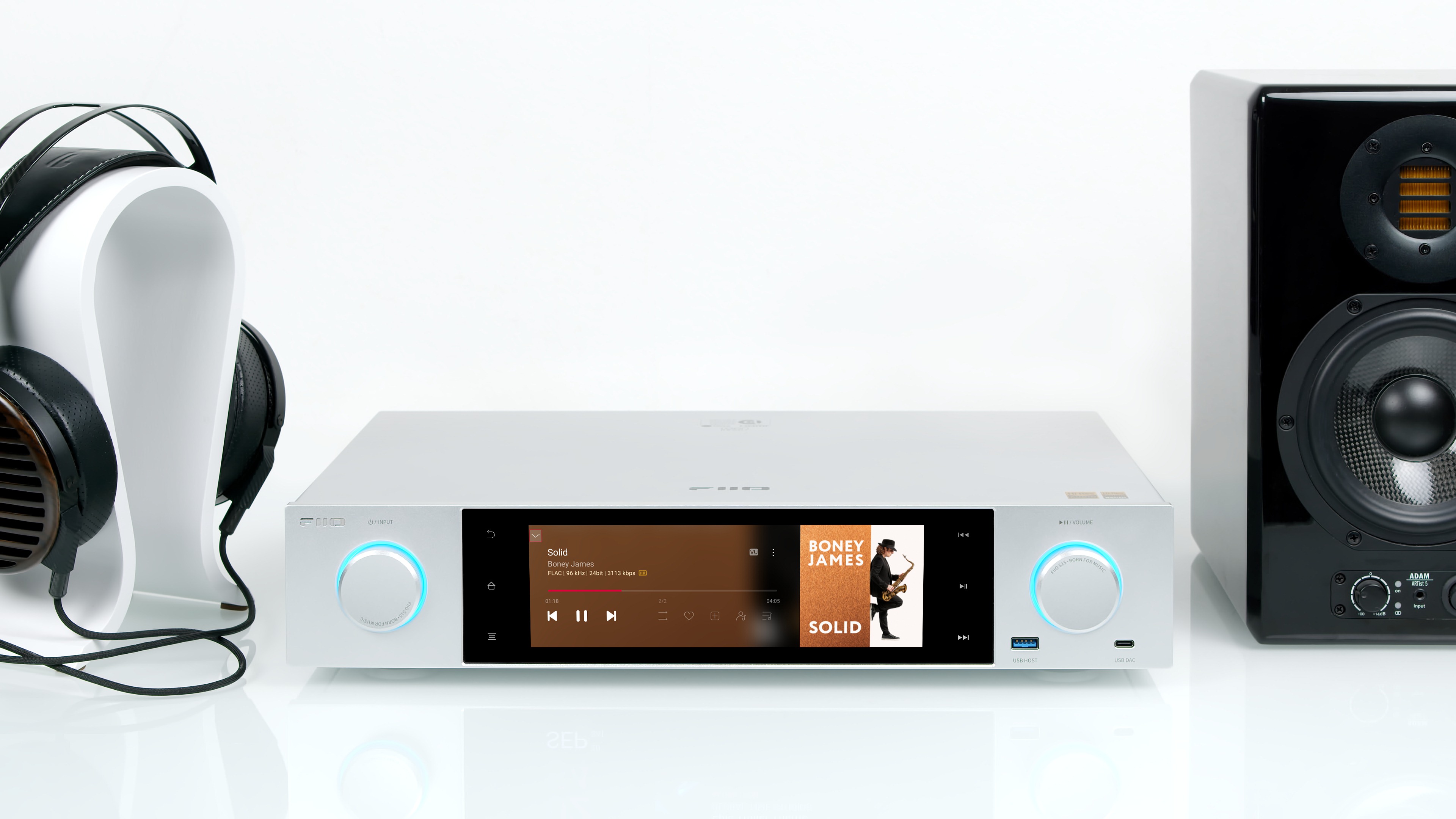
FiiO emphasizes that the S15 is a full-sized streamer with a standard 430 mm width for a rack of hi-fi components. Two large illuminated knobs help it look familiar to users who prefer traditional equipment.
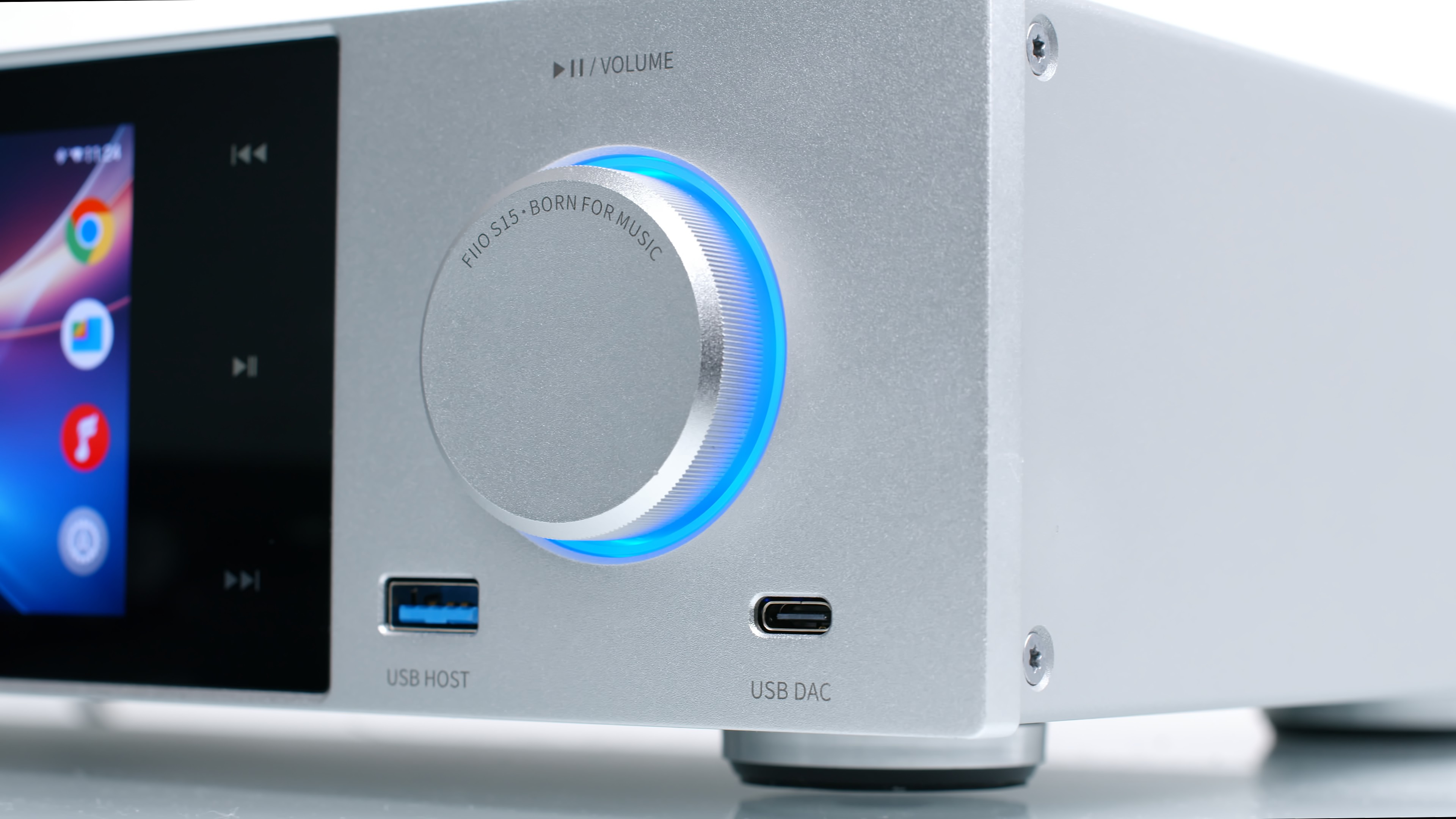
The right knob adjusts volume. Pressing it toggles play/pause.
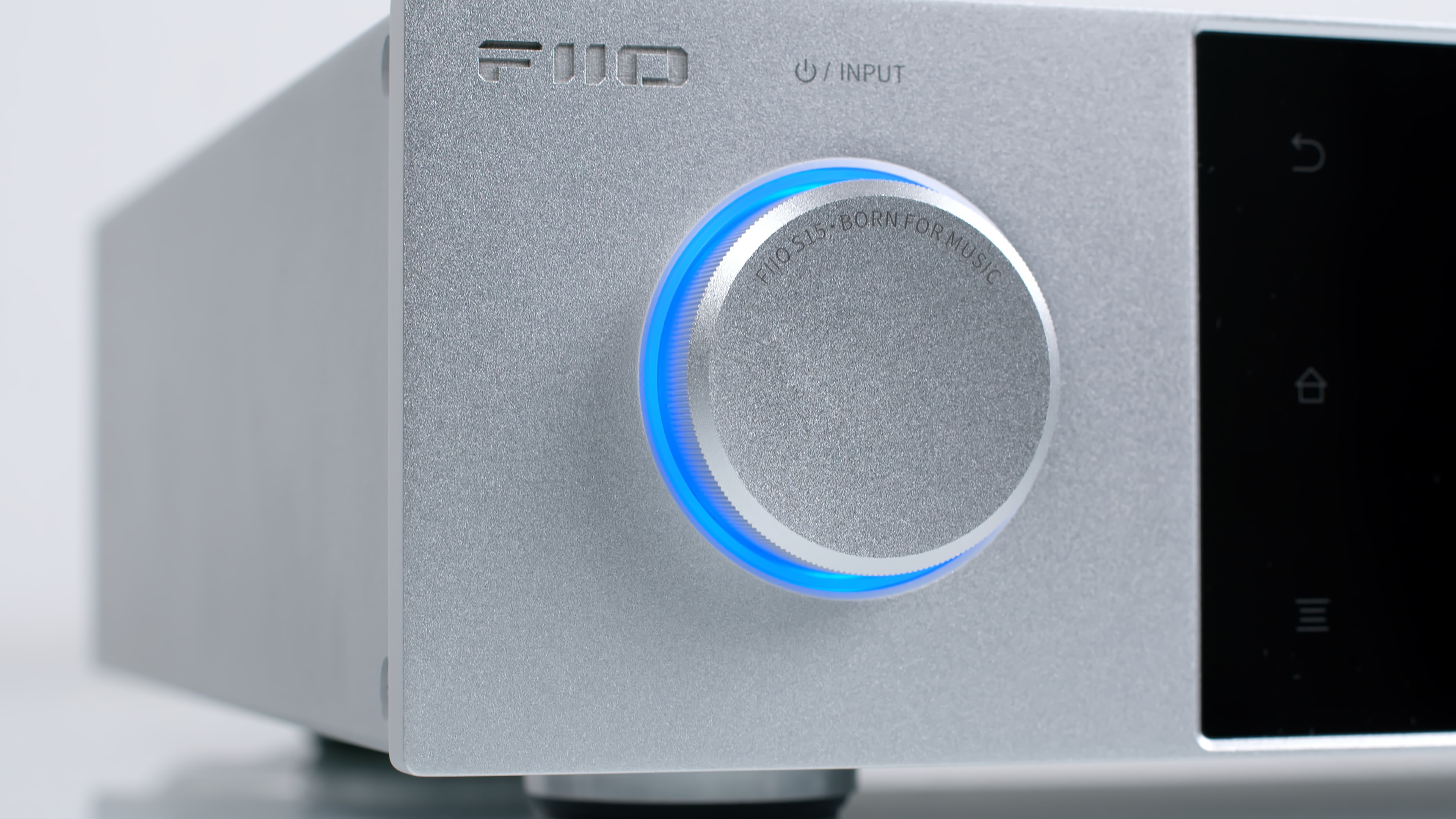
The matching left knob selects inputs. A short press confirms a selection; a long press turns off power.
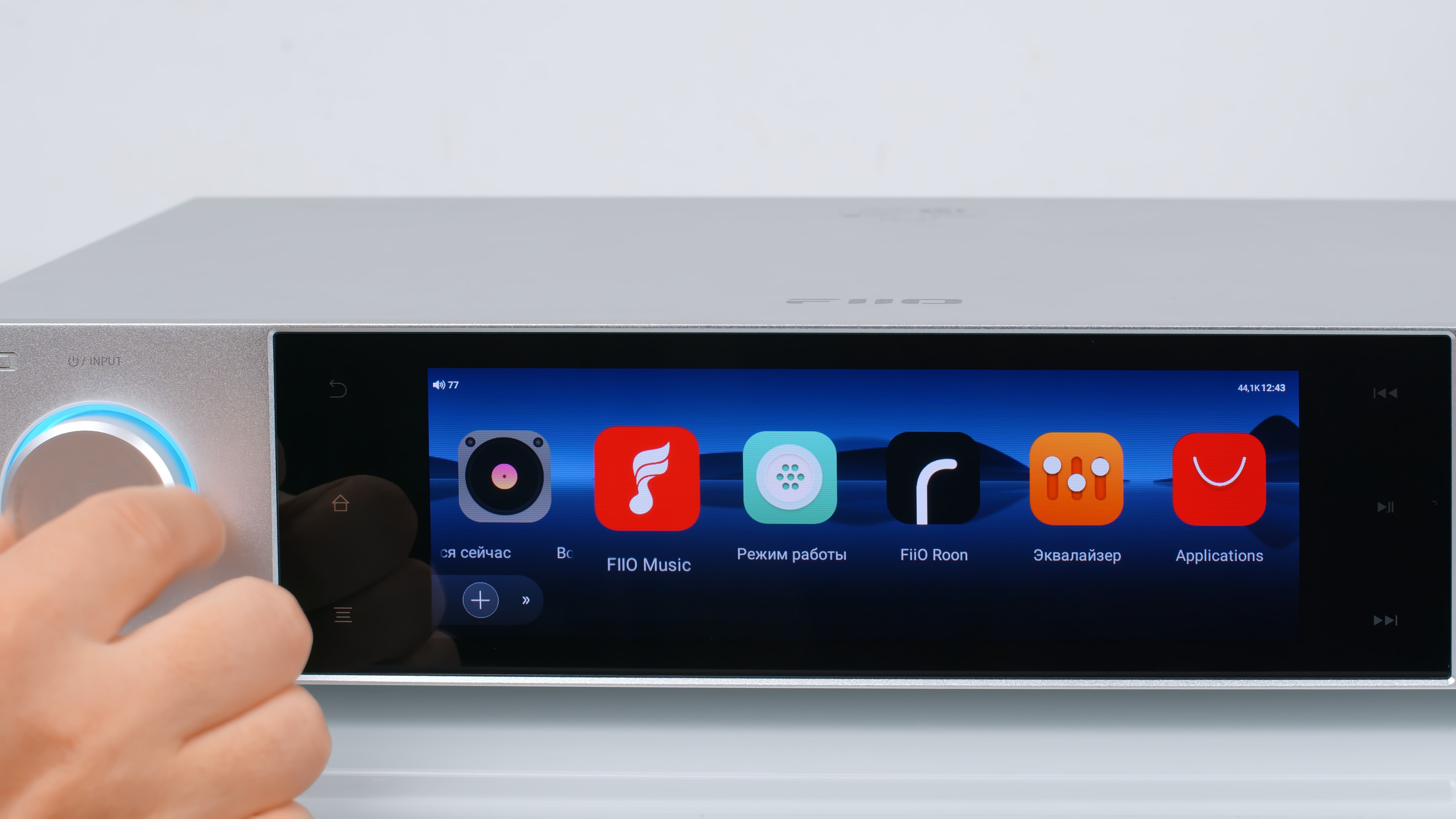
Large icons on the 8-inch screen make apps and settings visible from a distance. Tap the item you need. The touchscreen offers an alternative to the traditional knob. Operation is straightforward, with Russian language support and adjustable font size.
FiiO S15 specifications
| General specifications | |||
| Name/model | S15 | Hardware | Qualcomm Snapdragon 660; DAC: AK4191 + AK4499EX; USB decoding: XU316; Bluetooth receiver: QCC5125 |
| Operating mode | Android / Pure Music / USB DAC / Bluetooth reception / AirPlay / SPDIF / Roon Ready / Toslink / AES / HDMI IN / HDMI ARC | ||
| Color | Black/silver | Weight | 5.6 kg |
| Dimensions | 430 × 275 × 90 mm | Volume control | Volume knob |
| Display | 7.84-inch (400 × 1280) borderless display | ROM | 64 GB, about 46 GB available |
| RAM | 4 GB | M.2 portable drive | Supports 2 TB |
| Memory card | One microSD expansion slot, theoretically supporting up to 2 TB | Channel balance | L20–R20 in 0.5 dB steps |
| Controls and ports | |||
| Knobs | Volume knob + output selector | USB | Type-C USB 3.0 ×1 + USB ×2 (data) |
| Ground terminal | M6 × 23 mm ground terminal | Switch | Ground selection switch |
| Balanced line output | Balanced XLR3 port | Line output | RCA x 2 |
| Optical digital input | Optical port | Coaxial digital input | RCA port |
| Optical digital output | Optical port | Coaxial digital output | RCA port |
| AES input | Balanced XLR3 port | AES output | Balanced XLR3 port |
| TRIGGER port | Standard 3.5 mm TRIGGER OUT | HDMI port | HDMI IN, HDMI OUT (ARC) |
| Ethernet port | 100 Mbit/s Ethernet port | I2S port | HDMI I2S output |
| Special features | |||
| Wi-Fi | 2.4 GHz / 5 GHz; DLNA, AirPlay, Wi-Fi music transfer, Roon Ready and more | Bluetooth transmission (5.0) | AAC/SBC/aptX/aptX HD/LDAC/LHDC |
| Bluetooth reception (5.1) | SBC/AAC/aptX/aptX LL/aptX HD/aptX Adaptive/LDAC | FiiO Link | Android: Wi-Fi and Bluetooth control; iOS: Bluetooth control |
| HDMI decoding | Audio decoding from DVD players, set-top boxes and computers | HDMI ARC | Audio decoding from ARC-capable devices |
| HDMI I2S | Audio decoding for devices with I2S input | DSD conversion | Supported |
| EQ settings | 10-band dynamic EQ (±12 dB), 8 factory EQ presets and parametric EQ support | MQA | Full decoding supported |
| Operating mode | Gesture, two-button and three-button navigation | Bluetooth codec indicator (knob lighting) | Blue: SBC |
| Maximum supported sample rate | USB DAC: up to 768 kHz/32-bit; DSD512 | Cyan: AAC | |
| Up to 384 kHz/32-bit; DSD256 | Purple: aptX / aptX LL | ||
| USB audio: 768 kHz/32-bit; DSD512 with DoP/D2P/native support | Yellow: aptX HD | ||
SPDIF coaxial input: up to 192 kHz/24-bit |
White: LDAC | ||
| AES: up to 192 kHz/24-bit | Green: aptX Adaptive | ||
| Optical input: up to 96 kHz/24-bit | Orange: LHDC | ||
| SPDIF coaxial output: up to 384 kHz/24-bit; DSD128 (D2P/DoP) | Knob lighting colour | Blue: Lossy | |
| AES output: up to 384 kHz/24-bit; DSD128 (D2P/DoP) | Cyan: SQ | ||
| Optical output: up to 192 kHz/24-bit | Yellow: HR | ||
| HDMI input: up to 192 kHz/24-bit | Green: DSD | ||
| HDMI output: up to 192 kHz/24-bit | Magenta: MQA | ||
| Screensaver | Supported | Double-tap to wake | Supported |
| Firmware update | Updates from local storage, microSD or OTA | ||
| Power supply specifications | |||
| Power source | AC 110–120 V / 220–240 V, 50/60 Hz; 230 V / 115 V input selector | ||
| Audio specifications | |||
| XLR output specifications | |||
| THD+N | 0.00026% (1 kHz/-0 dB into 10 kohms) | Signal-to-noise ratio | 126 dBA |
| Crosstalk | 120 dB | Noise level | 2.5 µV (A-weighted) |
| Frequency response | 20 Hz–70 kHz: 2.8 dB attenuation | Line output level | 4.8 V |
| 20 Hz–20 kHz: 0.3 dB attenuation | |||
| RCA output specifications | |||
| THD+N | 0.00027% (1 kHz/-0 dB into 10 kohms) | Signal-to-noise ratio | 122 dBA |
| Crosstalk | 117 dB | Noise level | 1.8 µV (A-weighted) |
| Frequency response | 20 Hz–70 kHz: 2.8 dB attenuation | Line output level | 2.4 V |
| 20 Hz–20 kHz: 0.3 dB attenuation | |||
FiiO deserves praise for publishing detailed specifications and measurements. Compared with its other streamers, the S15 mainly lacks a headphone output. This is not a major problem for its audience: many separate headphone amplifiers and DAC/amplifiers are available. Speaker listeners may even prefer not paying for an integrated amplifier they do not need.
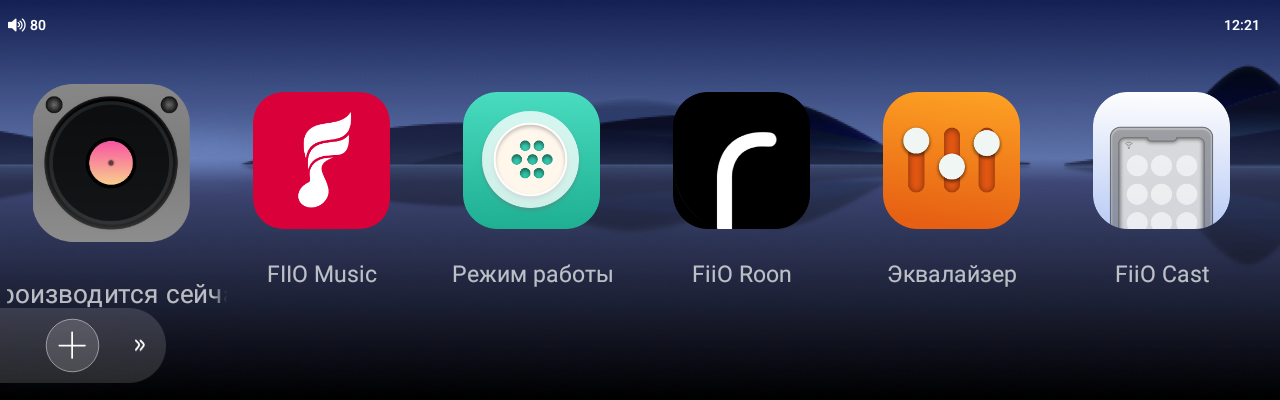
You can switch between Android app mode and a music-only mode running FiiO Music.
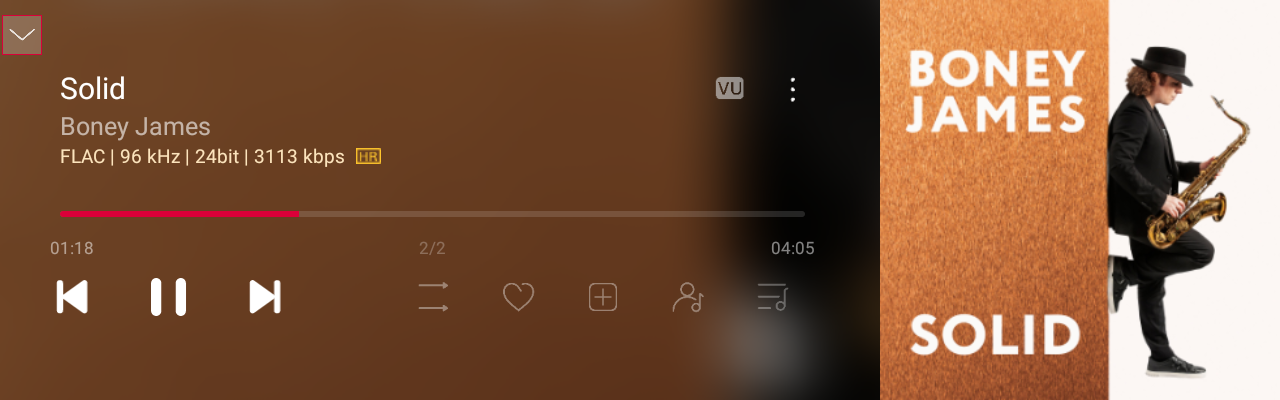
The player's attractive interface shows artwork and all essential controls. Touch-sensitive hardware buttons to the right of the screen duplicate playback controls and work in any mode.
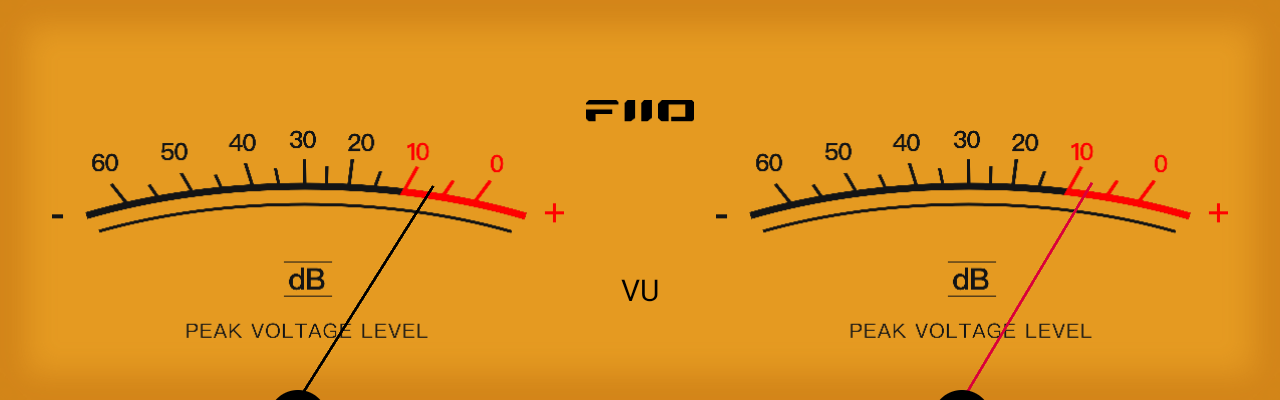
The player can display a retro needle level meter. It looks impressive on the large screen and is easy to see from a distance.

With the screensaver enabled, the streamer eventually shows the date, time and brief track information. This view is the same for any audio app, including streaming services.
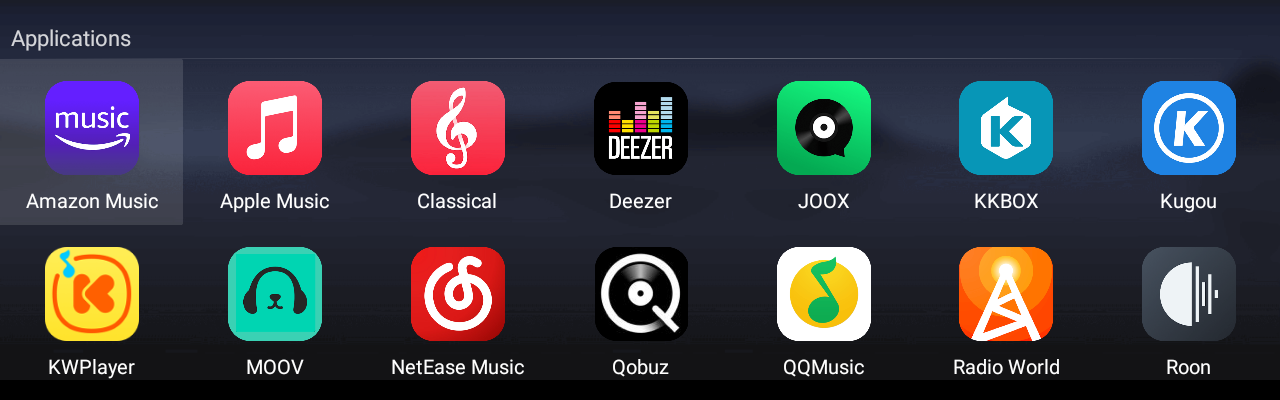
The FiiO app store installs popular international services, from Apple Music to Spotify, without registration.

The official Google Play store is also available if you have a Google account, which many users will welcome.
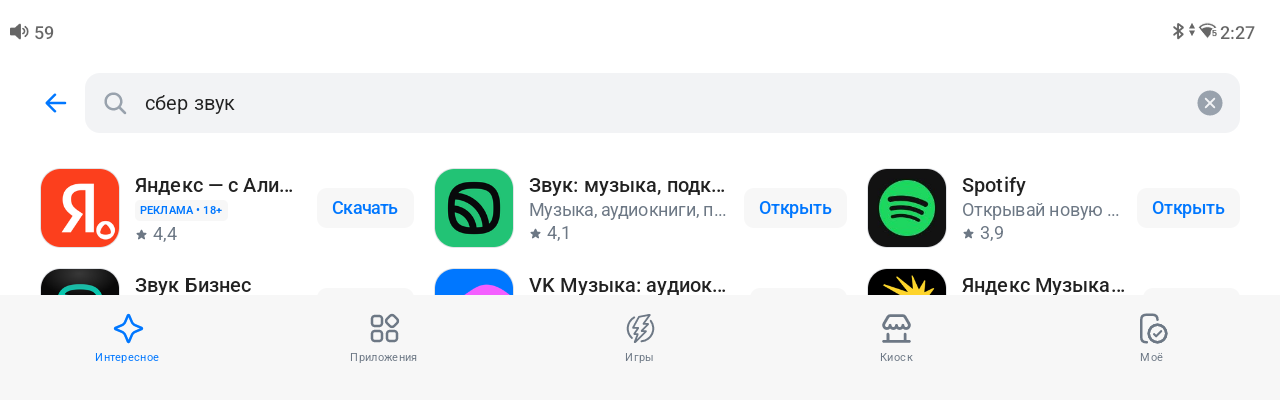
RuStore provides easy installation of Yandex Music, VK Music, Sber Zvuk and other Russian services.
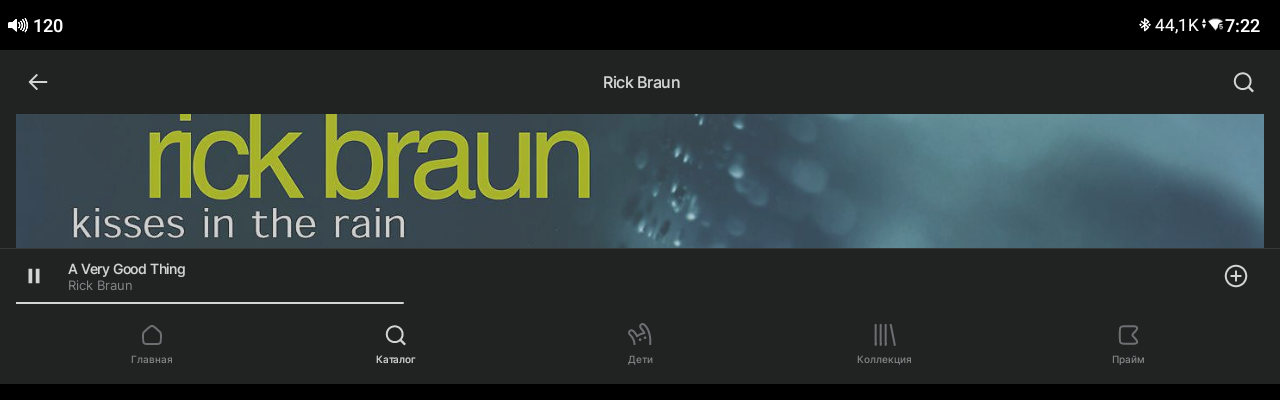
We tested Sber Zvuk. Everything worked correctly, although its interface was not optimized for this wide screen.
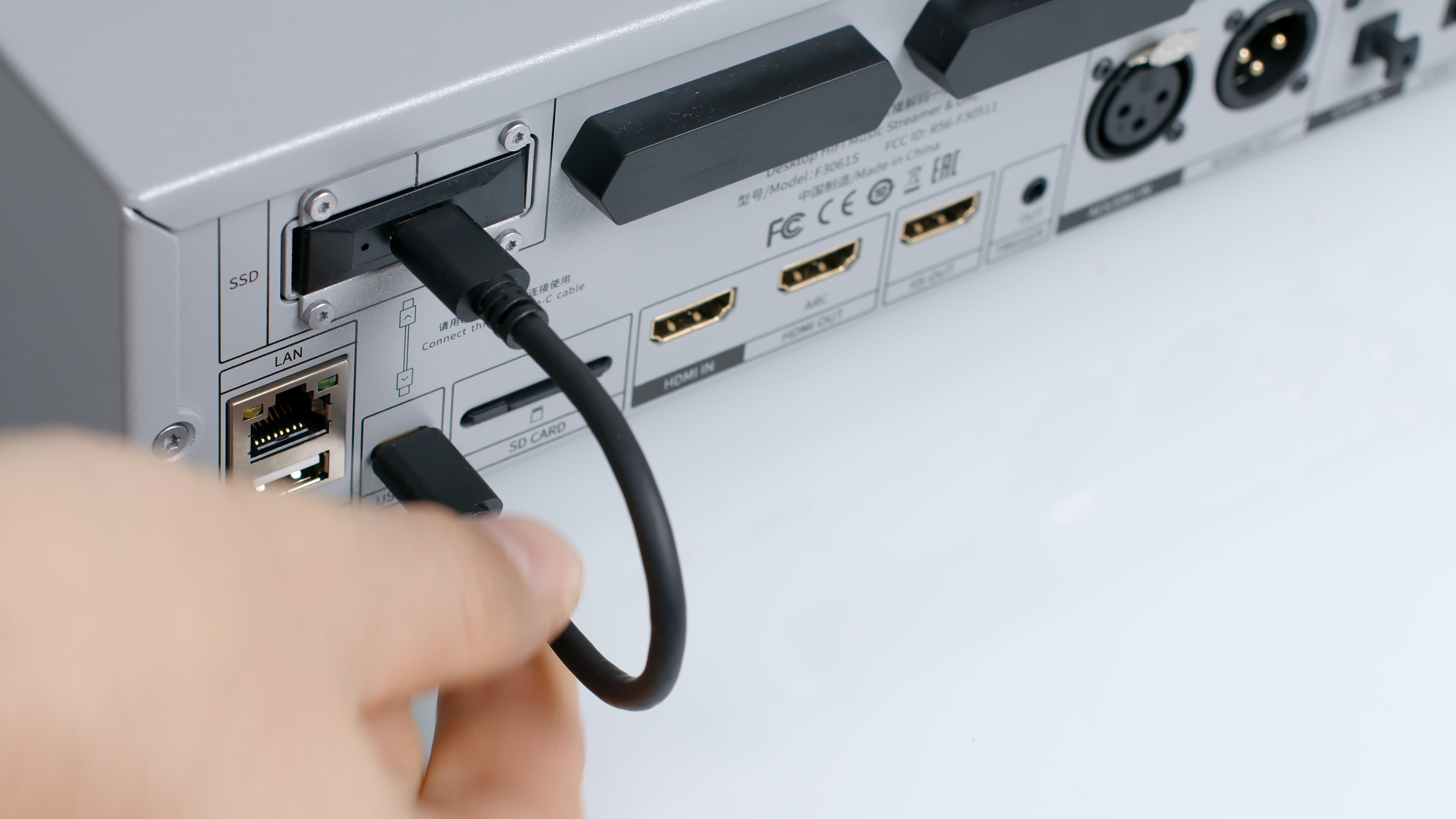
An external enclosure for an NVMe drive up to 2 TB lets the FiiO S15 hold a local file library over a fast USB 3.0 connection.
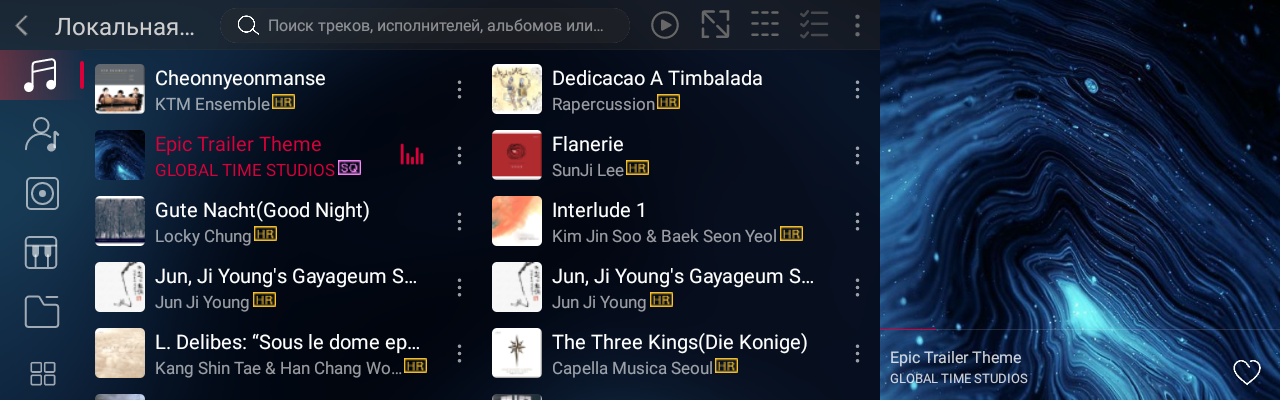
FiiO Music scans the library and offers standard browsing by artist, album, folder and other categories.
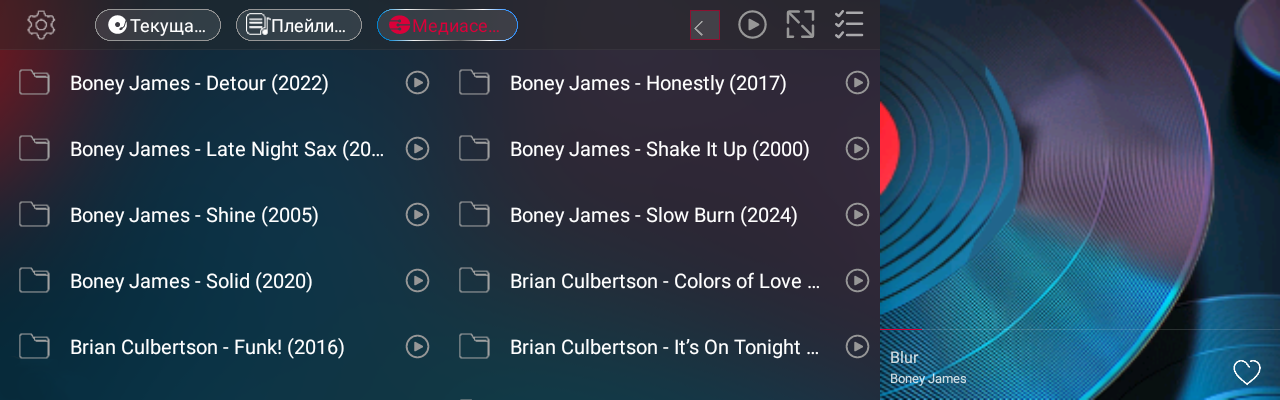
The player also accesses network storage or a computer on the local network, for example over DLNA. We tested Windows 11's built-in DLNA server and the free third-party Plex Music Server with high-resolution files. Setup is simple enough for a beginner.
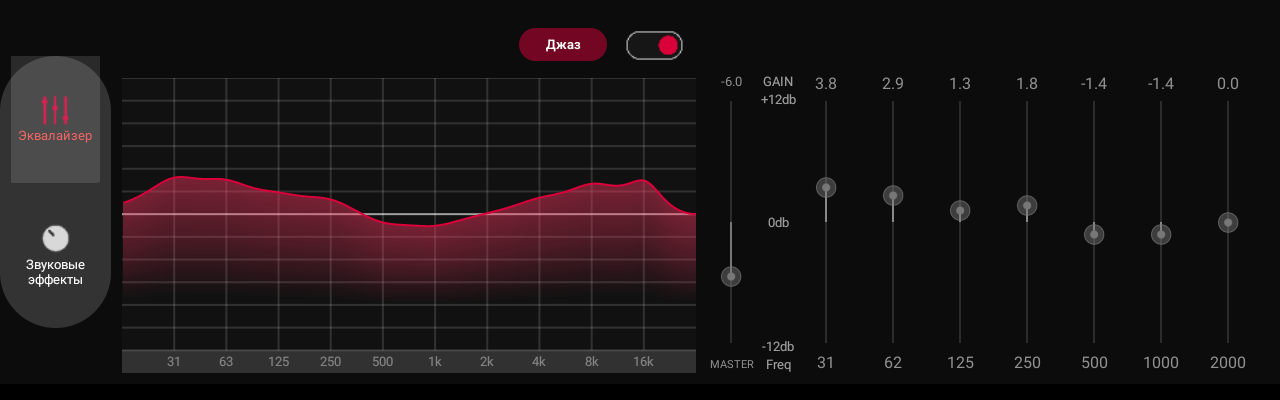
FiiO is proud of its system-wide EQ, which works with all apps. It offers factory presets and user settings, including advanced parametric EQ. Separate effects include a compressor, bass boost and stereo widening.
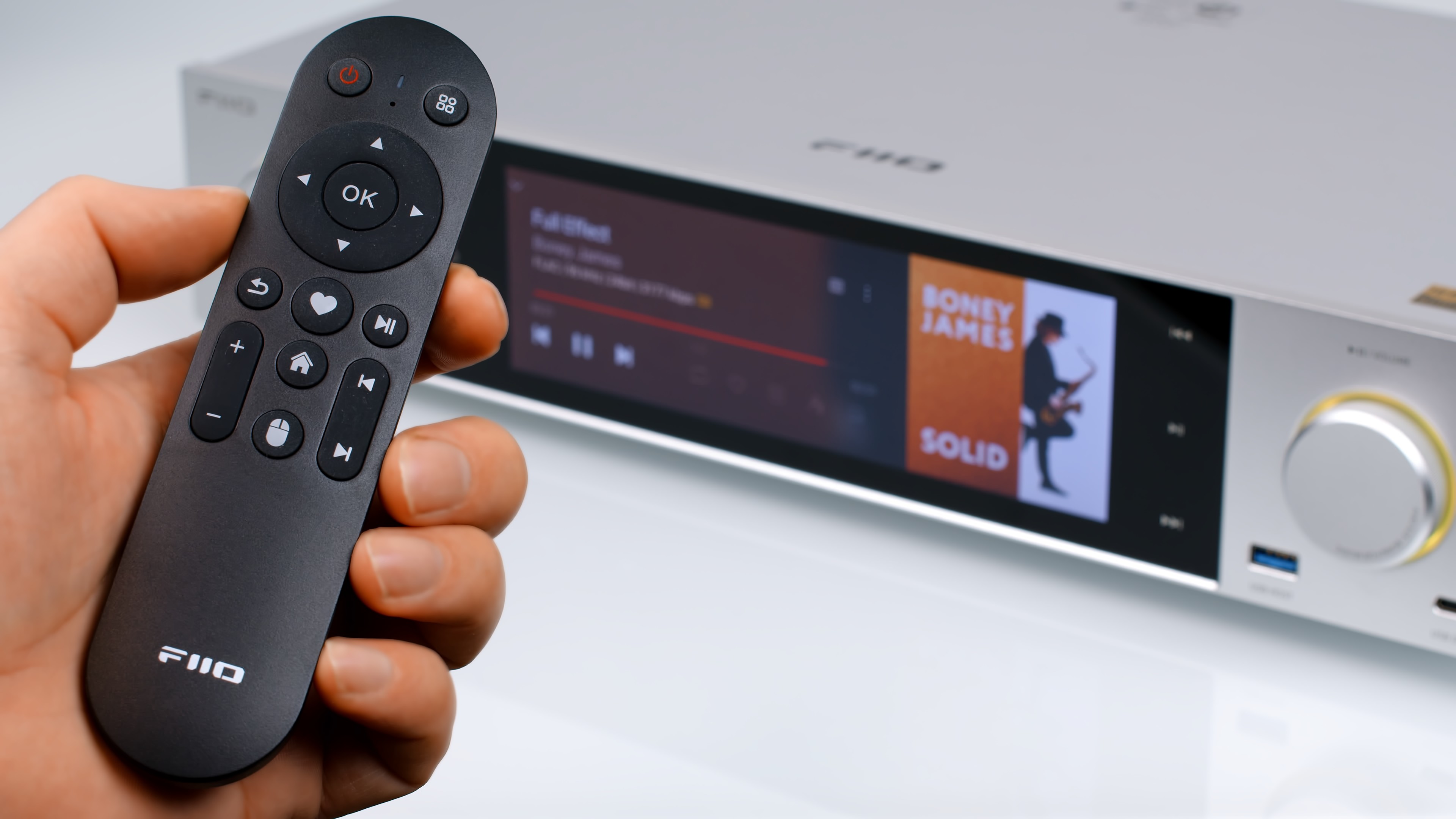
The modern Bluetooth remote does not need to be aimed at the streamer for its buttons to work.
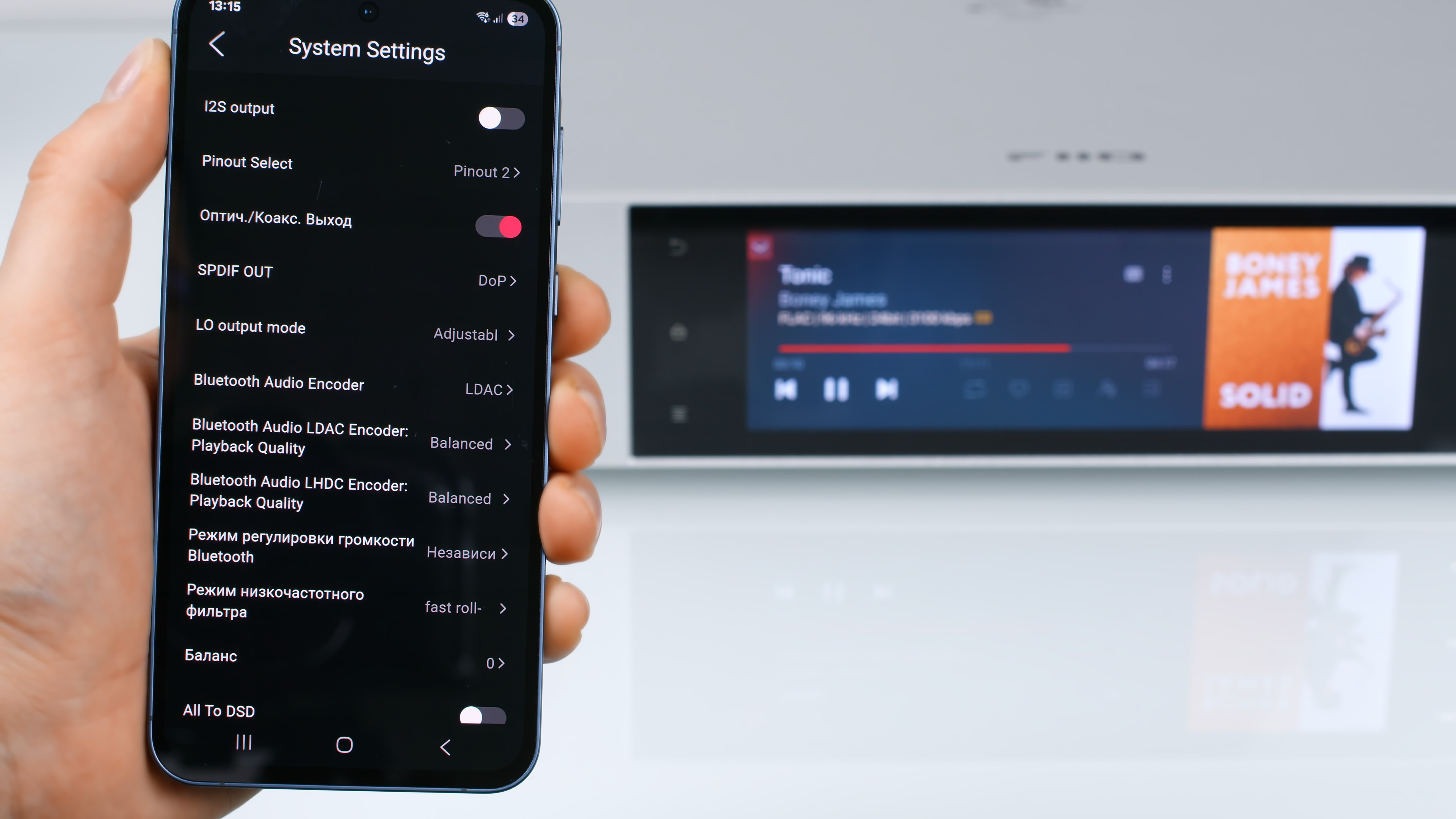
FiiO Control connects over Wi-Fi and provides detailed settings.
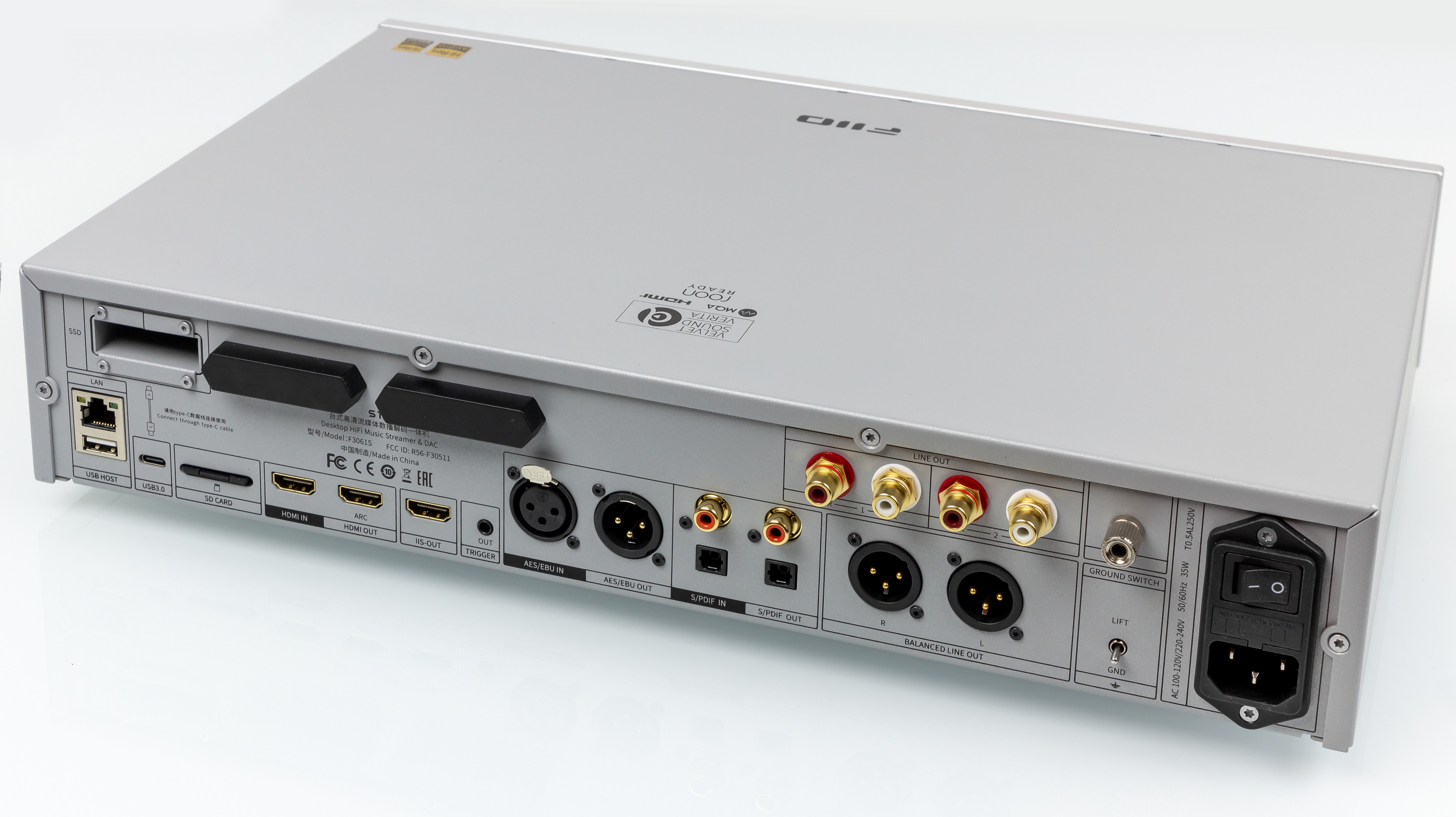
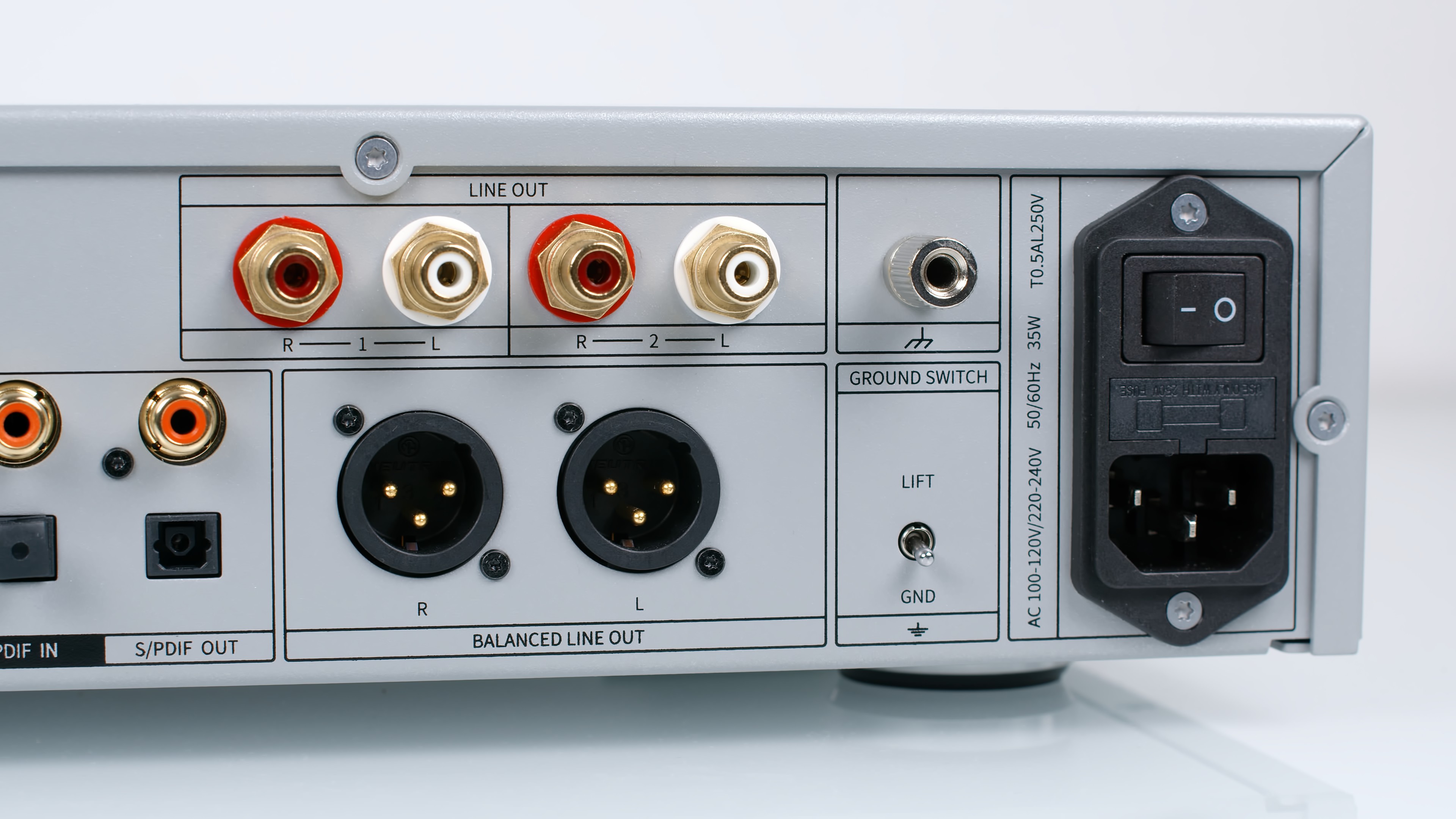
For audiophiles, FiiO provides both RCA and balanced XLR connections. Digital inputs and outputs are extensive, from consumer SPDIF and Toslink to AES and even HDMI. This makes integration with an existing system easy. Storage devices and external DACs can also be connected.
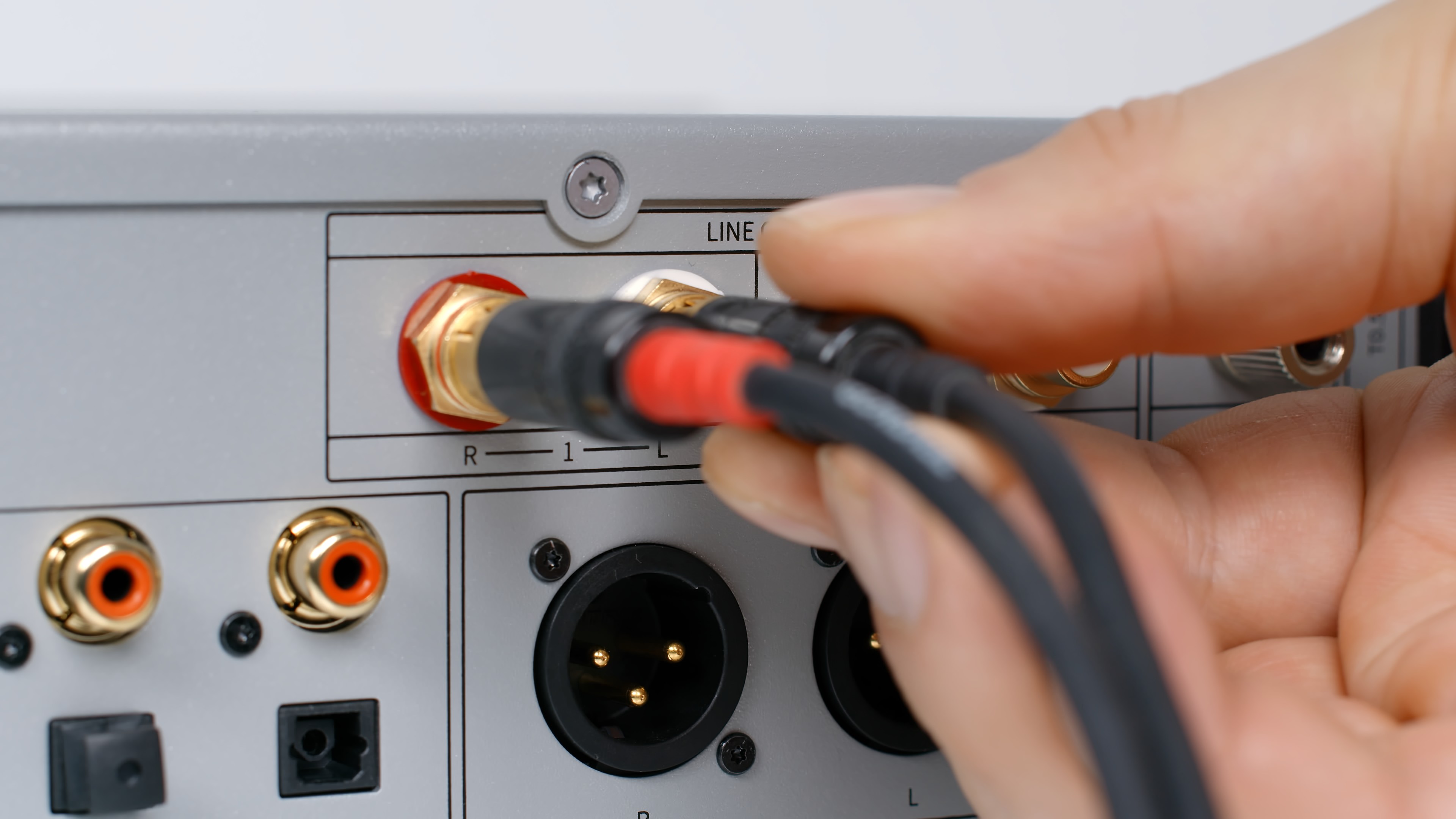
There are two pairs of gold-plated RCA sockets, with adjustable output volume.
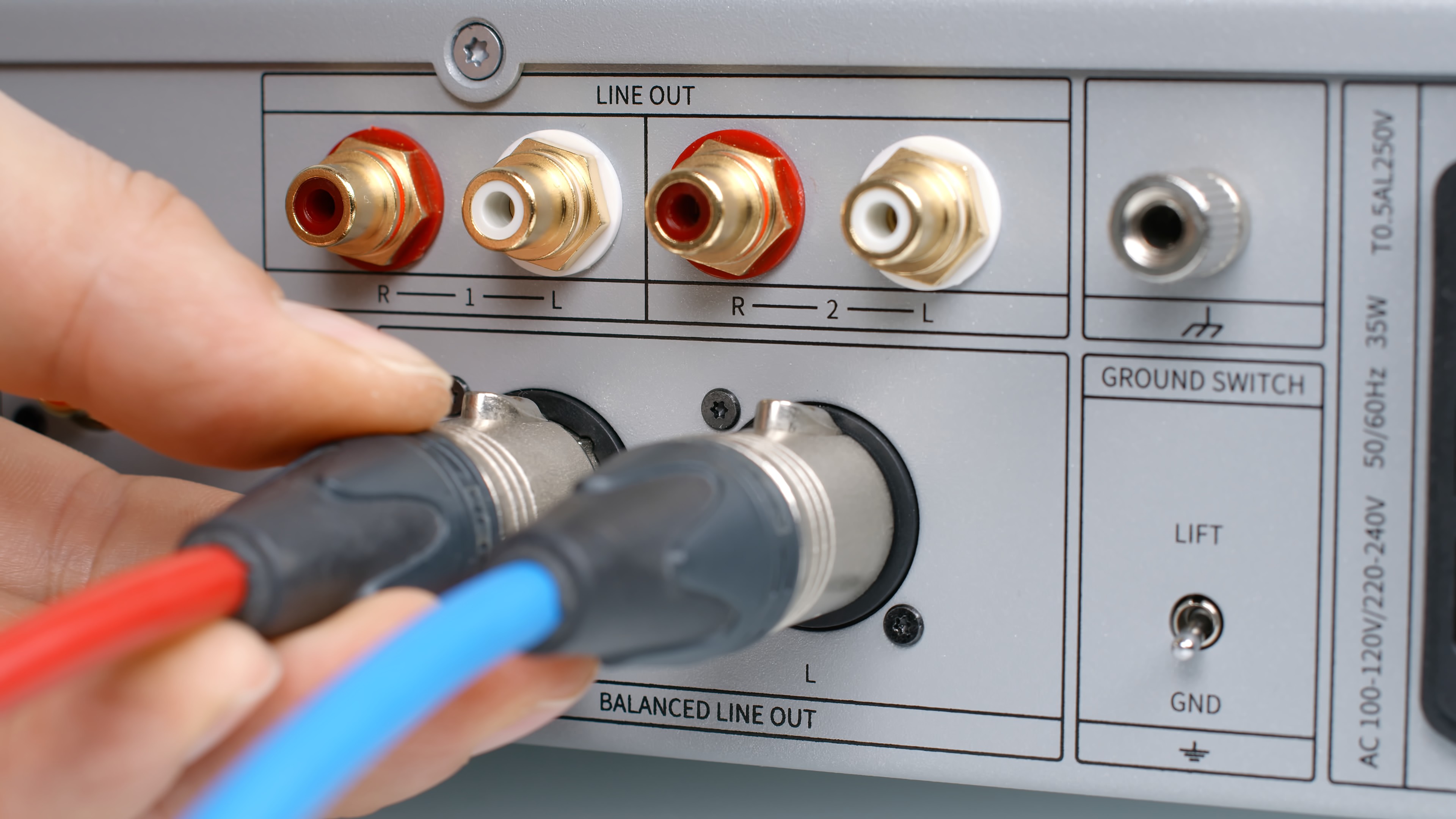
Balanced XLR outputs connect active speakers or high-end hi-fi equipment.
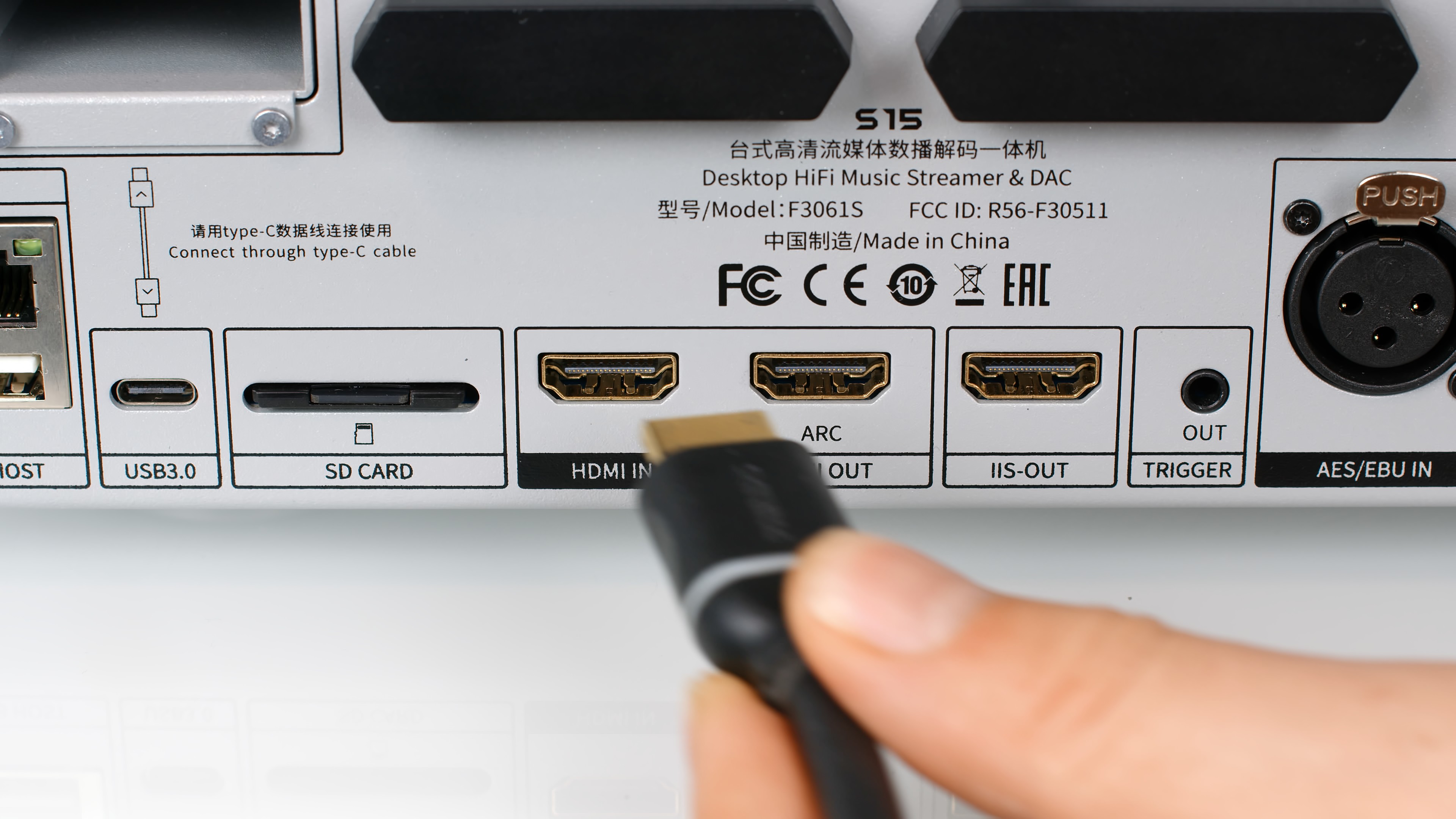
HDMI input and output with ARC allow audio decoding. An I2S audio output also connects external DACs.
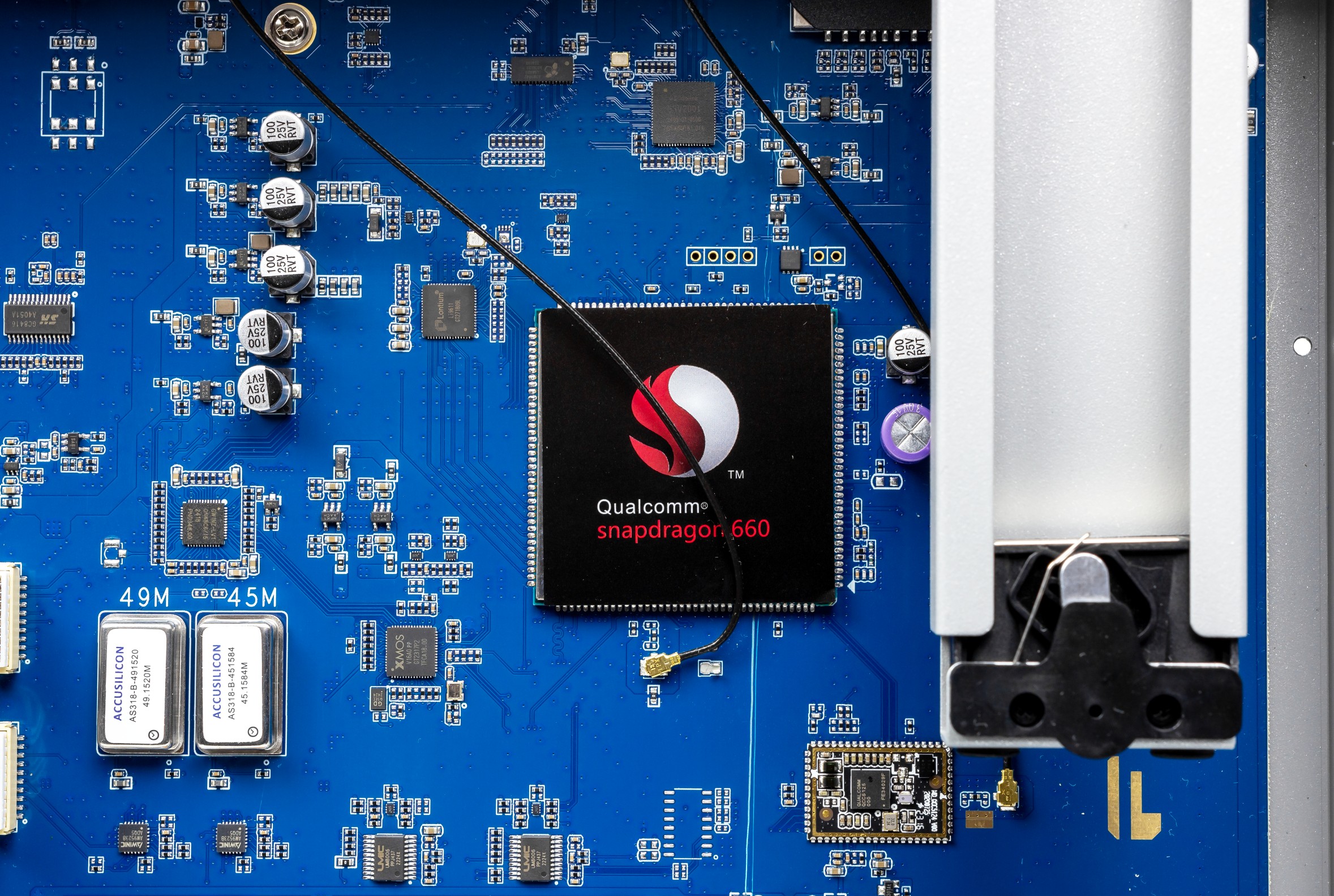
Despite the large cabinet, advanced electronics fill the internal space. Power, digital functions and DAC circuitry use separate boards. Another front board handles the touchscreen and controls.
The digital section uses a Qualcomm Snapdragon 660 main ARM processor, XMOS XU316 USB audio chip and QCC5125 Bluetooth 5.0 receiver.
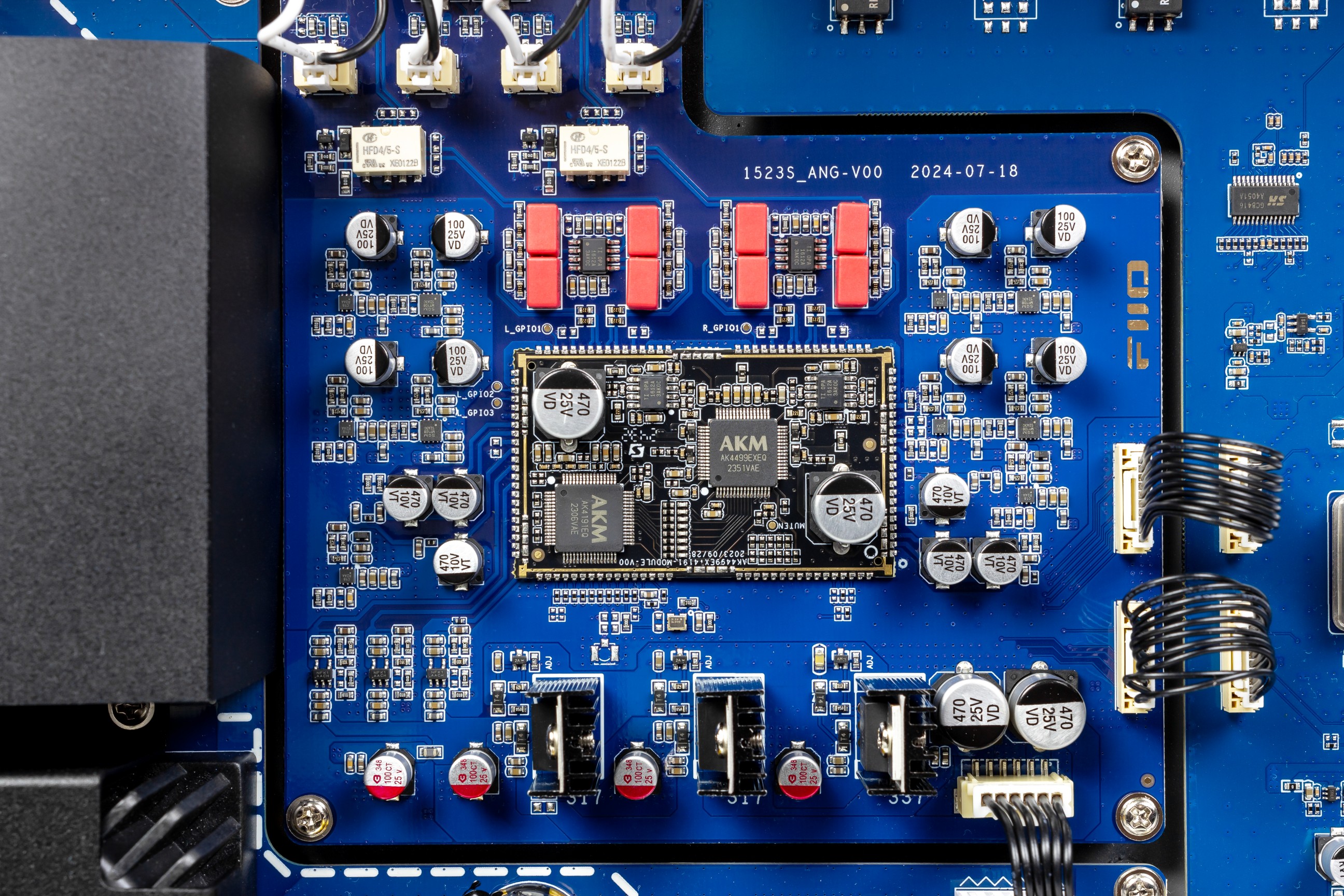
The advanced DAC uses AKM's flagship AK4499EX chipset with a separate interpolation filter. High-quality TI OPA1612A operational amplifiers and recognizable red German WIMA capacitors are used. Hybrid power regulation and electromechanical output relays are also worth noting.
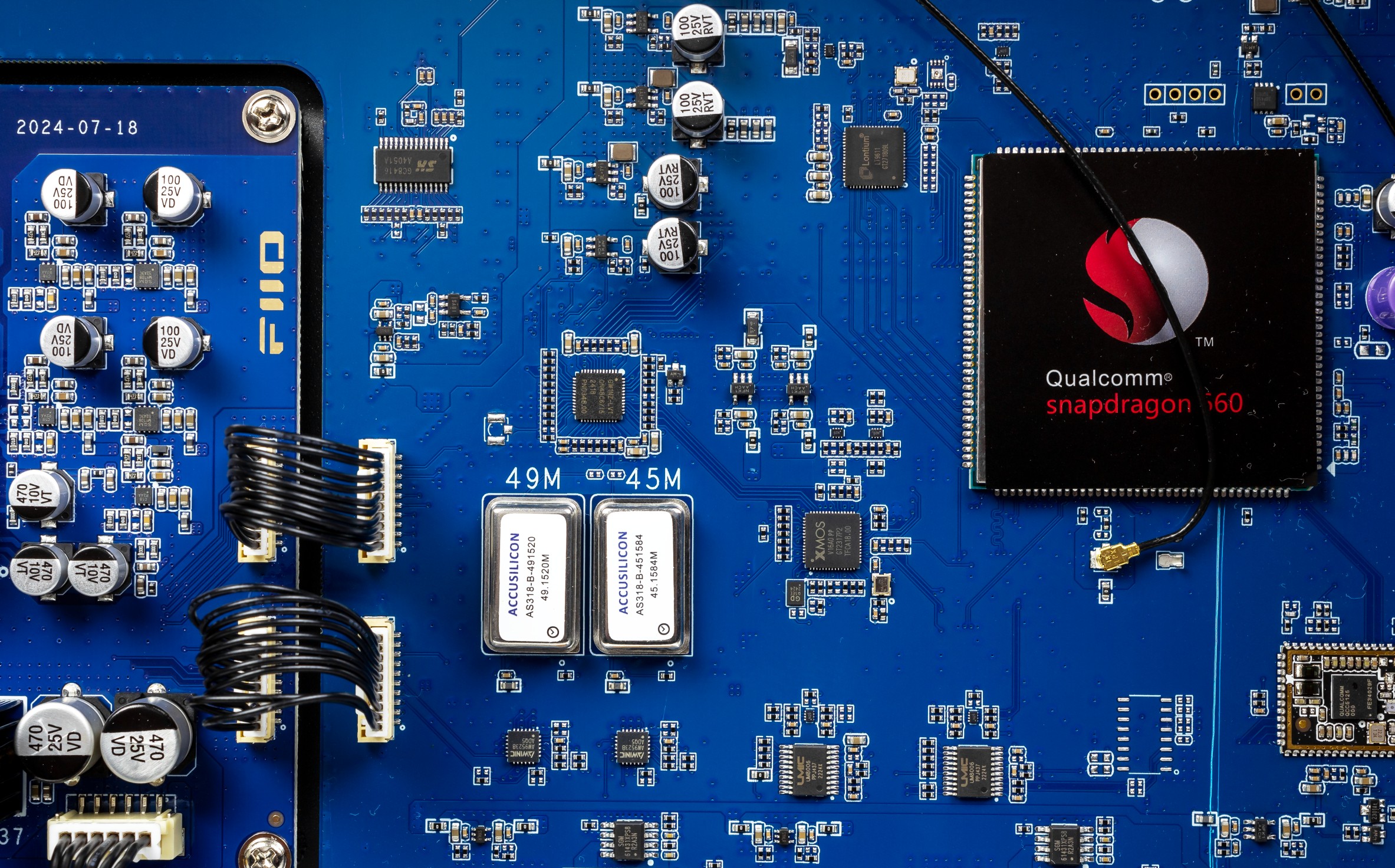
Clocking and digital signal conditioning use an FPGA and two femtosecond oscillators at 45 and 49 MHz, under metal shields.
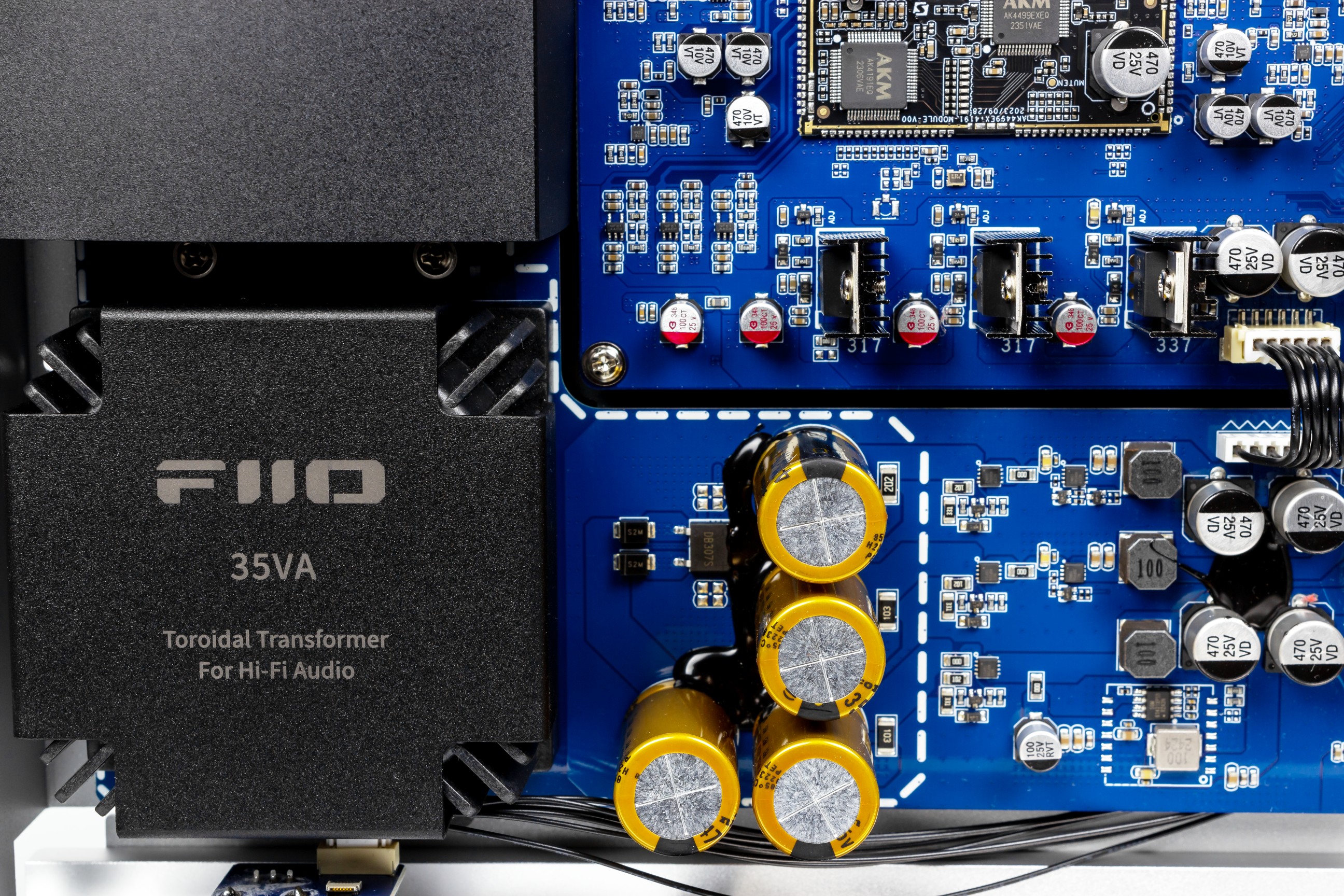
Nearly half the device's space and weight comes from the linear transformer power supply. It has a shielded toroidal transformer, large electrolytic capacitors and multiple noise-filtering stages.
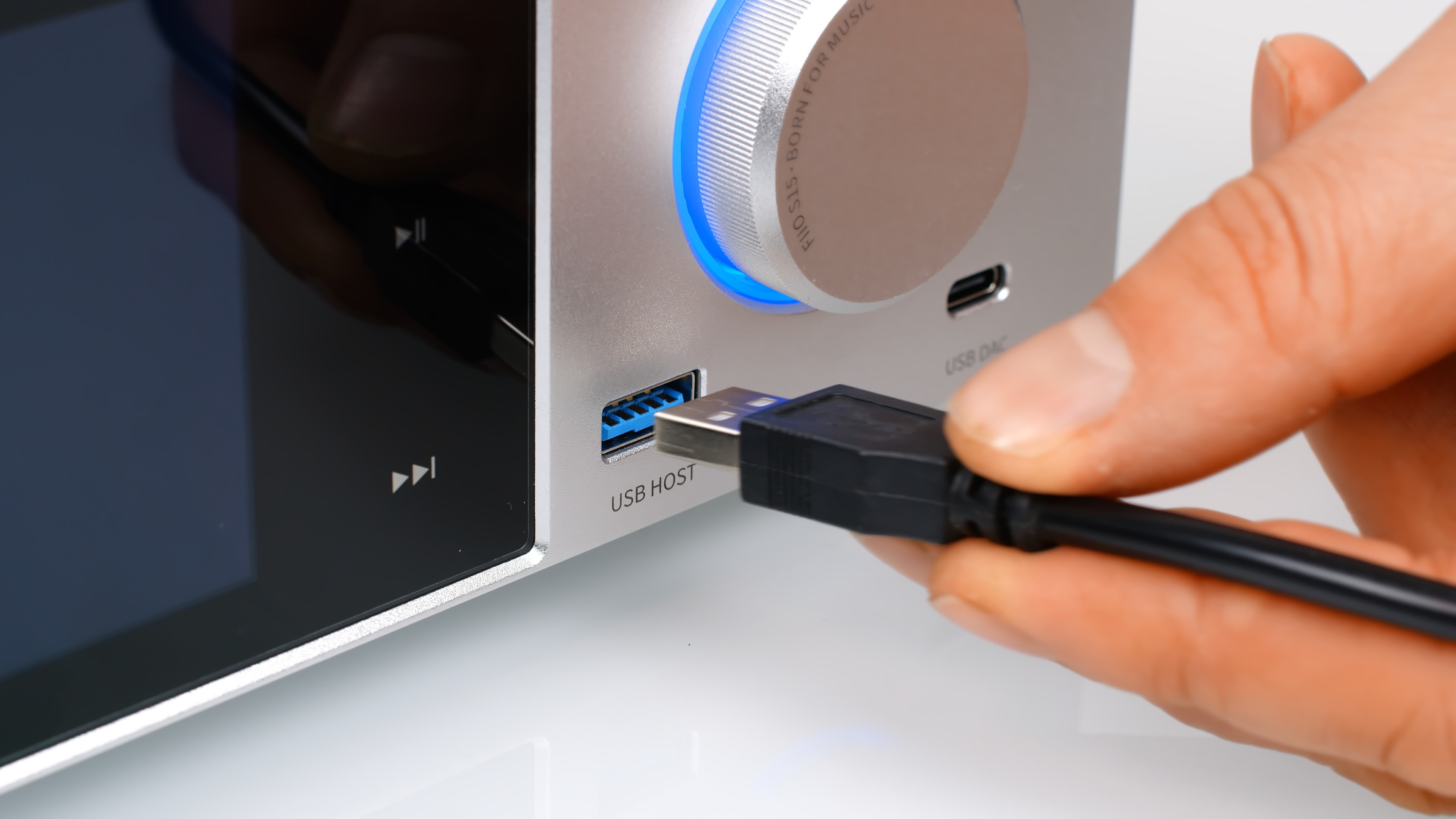
USB HOST connects external USB DACs, allowing the FiiO S15 to serve as a digital source.
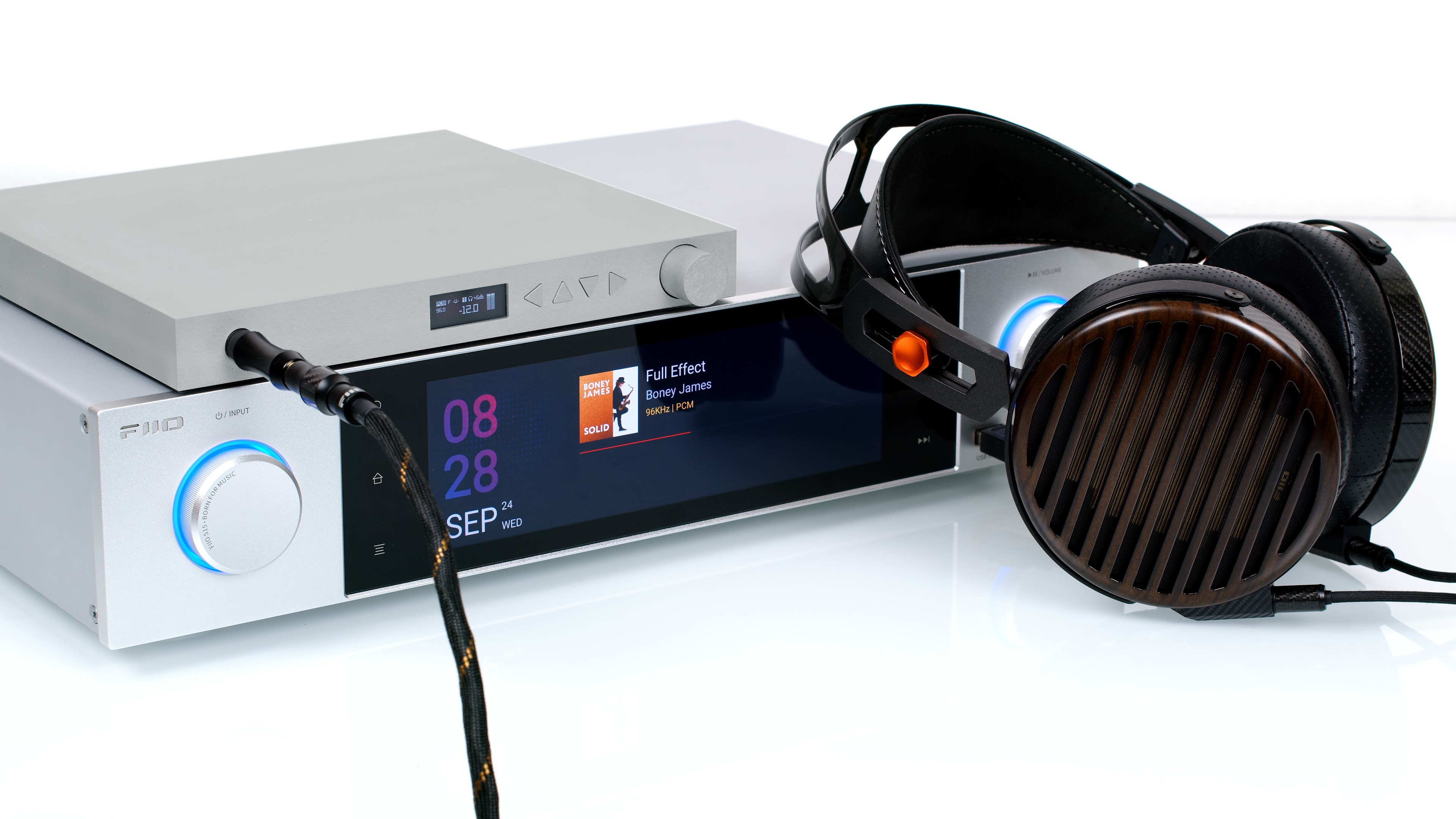
We connected an external DAC/amplifier and listened through FiiO FT7 open-back planar headphones. The sound was excellent: no bass boom, an even midrange, a very wide stereo image and clear detail. These are advanced headphones that are difficult to stop listening to.
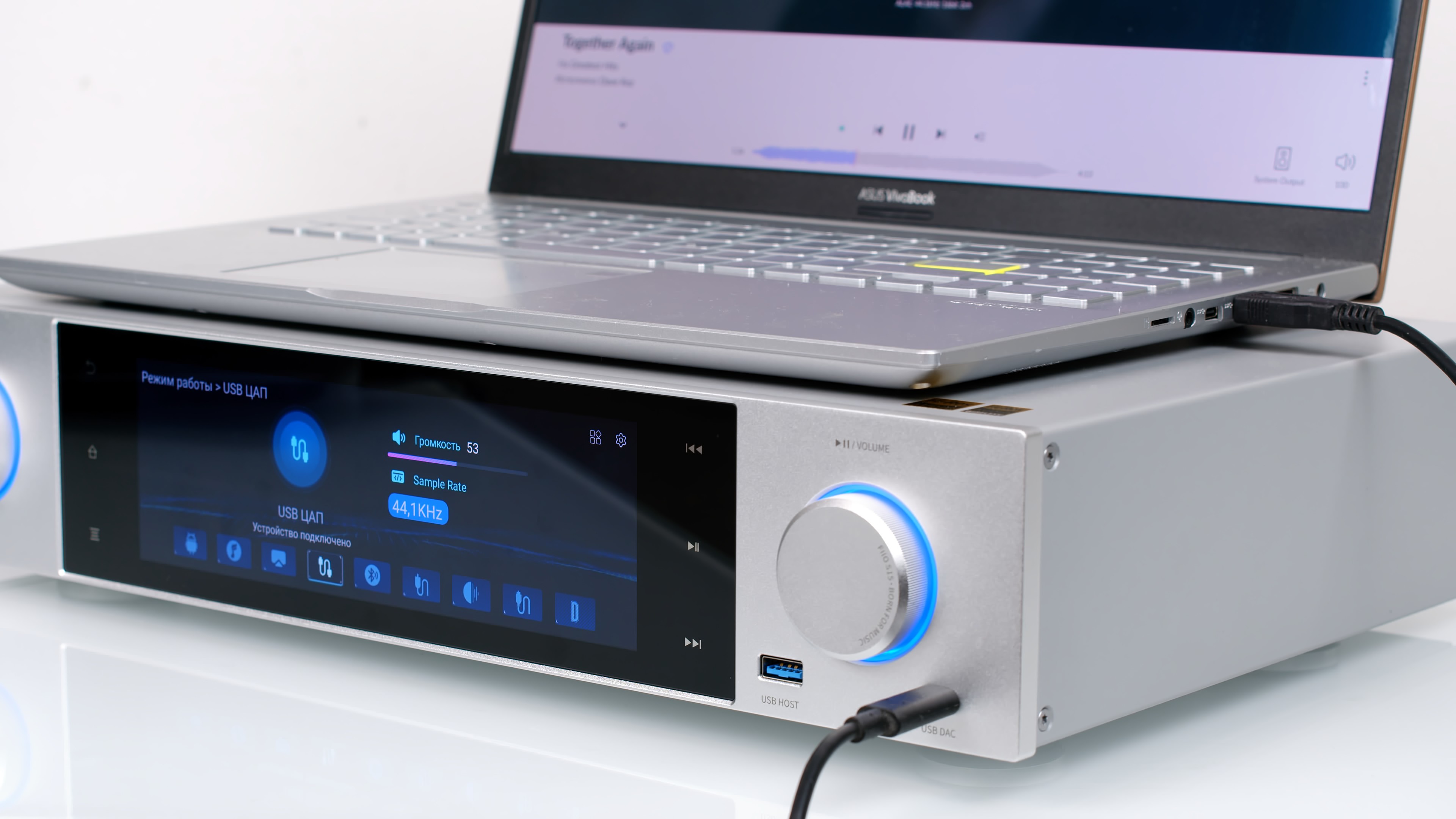
USB DAC mode is equally useful. A USB cable connects the source to the streamer for browser audio, films, games or anything else. A dedicated driver supports ASIO.
RMAA measurements
| Device under test | FiiO S15 |
| Operating mode | 24-bit, 44 kHz |
| RMAA version | 6.4.5 PRO |
| Signal path | XLR OUT |
| Frequency response variation (40 Hz–15 kHz), dB | +0.01, -0.04 |
Excellent |
| Noise level, dB(A) | -125.6 |
Excellent |
| Dynamic range, dB(A) | 125.0 |
Excellent |
| Harmonic distortion, % | 0.00010 |
Excellent |
| Harmonic distortion + noise, dB(A) | -108.3 |
Excellent |
| Intermodulation distortion + noise, % | 0.00062 |
Excellent |
| Stereo crosstalk, dB | -125.0 |
Excellent |
| Intermodulation at 10 kHz, % | 0.00022 |
Excellent |
| Overall rating | Excellent |
Detailed 24-bit/44 kHz output measurements in the RMAA report
Our balanced XLR output measurements confirm the streamer's high specified performance. Figures and graphs do not describe sound quality on their own, but many users will find them useful.
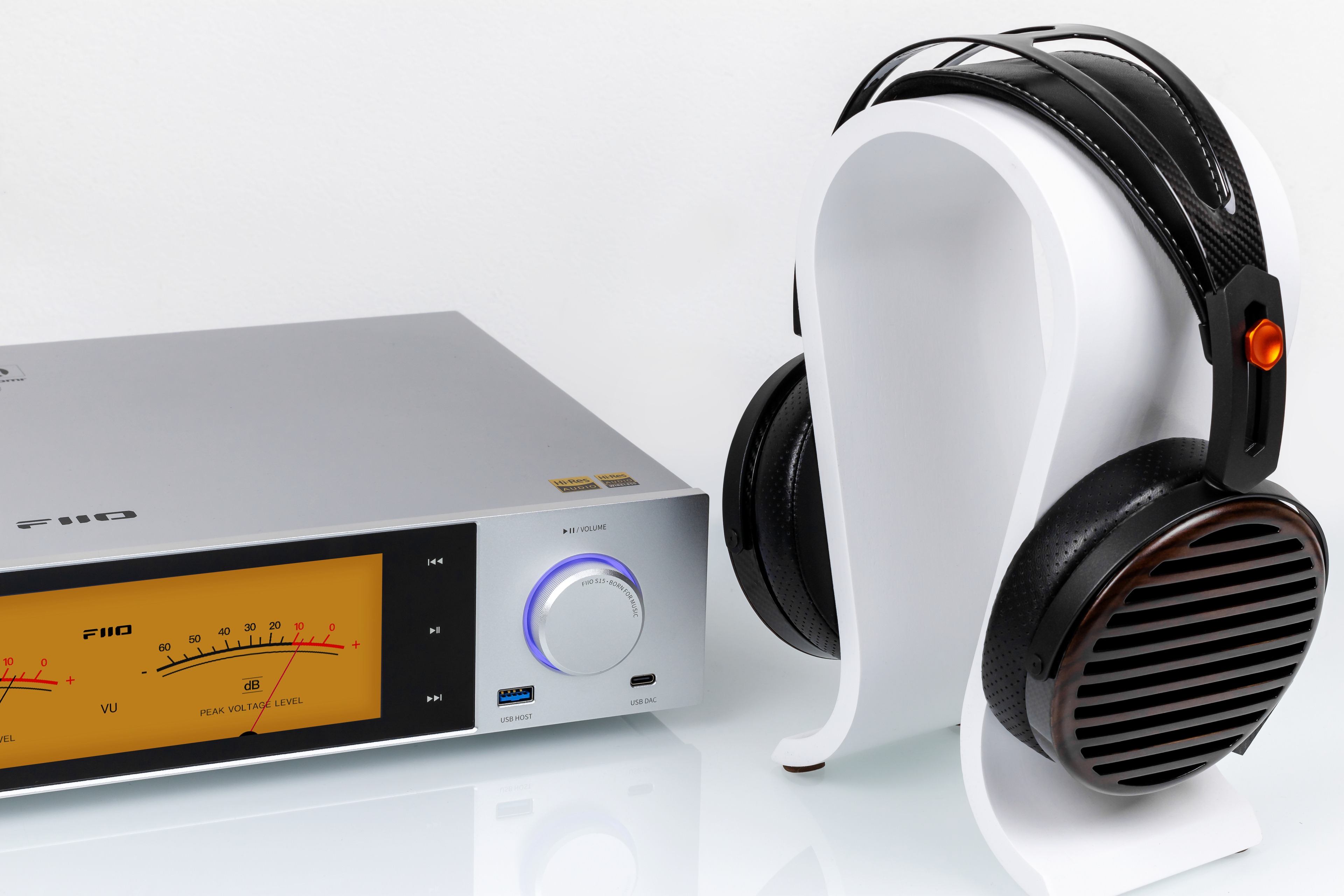

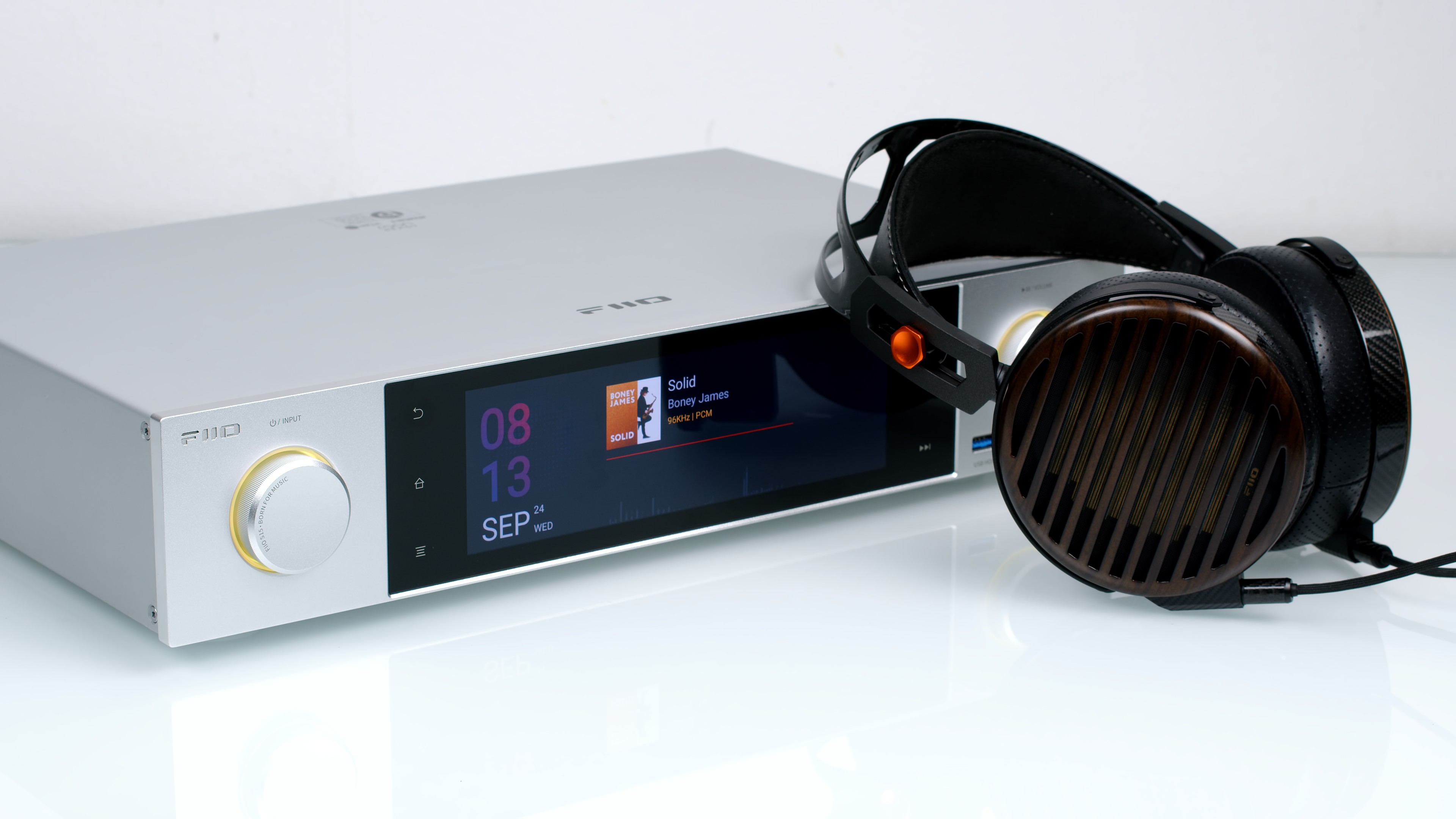
We listened to the FiiO S15 through active speakers using balanced and unbalanced outputs. Sound quality is high. Although streaming is its main role, the DAC is a serious feature rather than a cheap extra. It can serve as the main DAC in an audiophile system. We welcome its own sound character, which differs greatly from FiiO devices using ESS Sabre32 chips. Music had high resolution, strong attack and fine performance detail. At its price, the S15 makes a strong impression and deserves praise.
Conclusions
Our tests suggest that the full-sized FiiO S15 works best in a living room as the central source for an audio system. It offers many connections, including HDMI input and HDMI eARC. Audiophiles will appreciate the linear transformer power supply and new high-quality flagship AKM DAC, with balanced XLR and unbalanced RCA outputs delivering interesting sound. We liked USB DAC mode for a computer and USB host mode for an external DAC/headphone amplifier. An 8-inch touchscreen and customized Android system make operation convenient. Music can come from popular streaming services, a local media server or connected NVMe storage up to 2 TB. We are confident that users will appreciate the extensive work behind the FiiO S15.
Note. This is an adapted machine translation into English. It follows the “In simple terms” approach. Read the original article at https://prosound.ixbt.com/interfaces/fiio-s15.shtml.