
FiiO K17 review and test: headphone DAC/amplifier
Maxim Liadov
China's FiiO is known as a leader in portable players and desktop DAC/headphone amplifiers. Today we test its latest FiiO K17. This is one of the company's top products and goes well beyond previous FiiO models. For a fairly moderate flagship price of 100000 rubles, it offers a top AKM DAC chipset, a discrete headphone amplifier delivering 4000 mW per channel and a fully balanced analogue signal path. Features also include hardware parametric EQ, USB, Wi-Fi, Ethernet, Bluetooth and many audio connections. A colour touchscreen with retro-style needle meters and a wireless remote complete the package.
FiiO K17 specifications
| General specifications | |||
| Name/model | K17 | Hardware | X2000, ESP32-S3, AKM AK4191EX + AK4499EQ ×2, XMOS XU316, Qualcomm QCC5125; amplifier: discrete transistor headphone amplifier with MJE243 current amplification |
| Operating mode | USB DAC / Toslink / SPDIF / line input / balanced input / Bluetooth reception / media streaming / local playback | ||
| Color | Black/silver | Weight | 2.75 kg |
| Dimensions | 244.6 × 213 × 66.8 mm | Volume control | Knob / touchscreen / remote |
| Screen | 3.93-inch (240 × 1020) borderless display | FiiO Control | Yes |
| Controls and ports | |||
| Knobs | Power knob, analogue output mode knob, gain knob, push-button volume knob, push-button menu knob | USB | Type-C USB 3.0 ×3 + USB-A (data) |
| Balanced headphone outputs | 4.4 mm Pentaconn, 4-pin balanced XLR | Single-ended headphone output | 3.5 mm |
| Balanced line output | 3-pin balanced XLR | Line output | RCA x 2 |
| Optical digital input | Optical port | Coaxial digital input | RCA port |
| Optical digital output | Optical port | Coaxial digital output | RCA port |
| Balanced line input | 4.4 mm Pentaconn | Line input | RCA x 2 |
| TRIGGER | Standard 3.5 mm | HDMI port | HDMI IN, HDMI OUT (ARC) |
| Ethernet port | 1000 MB Ethernet | Ground connection | M4 with switch |
| Special features | |||
| Wi-Fi | 2.4 GHz / 5 GHz, supports AirPlay and Roon | Bluetooth transmission (5.0) | AAC/SBC/aptX/aptX HD/LDAC/LHDC |
| MQA | Full decoding | Driver-free mode | Yes |
| Gain | 5 modes | Bluetooth | SBC/AAC/aptX/aptX LL/aptX HD/atpX A |
| PEQ | 31-band parametric equalizer (except digital output) | Firmware update | SOC: rear USB-A port MCU: rear RS232 port XMOS: front or rear USB-C port |
| Remote control | Infrared remote | RGB knob lighting | Adjustable colour and brightness; steady or pulsing light |
| Touchscreen | Yes | Screen status information | Operating mode, output mode |
| Maximum supported sample rate | USB DAC: up to 768 kHz/32-bit; native DSD512 | Track format, sample rate | |
| Coaxial input: up to 192 kHz/24-bit; DSD64 | Equalizer, volume | ||
| Optical input: up to 96 kHz/24-bit | Network status, Bluetooth codec | ||
Coaxial output: up to 192 kHz/24-bit; DSD64 |
Gain, time | ||
| Optical output: up to 192 kHz/24-bit | |||
| Streaming audio decoding: up to 384 kHz/32-bit; DSD256 (DoP) | |||
| Local file playback: up to 384 kHz/32-bit; DSD256 | |||
| Power supply specifications | |||
| Power source | AC 110–120 V / 220–240 V, 50/60 Hz | ||
| Audio specifications | |||
| Headphone output specifications (6.35 mm, Ultra high gain) | |||
| Output power 1 | L+R ≥1800 mW + 1800 mW (16Ω, THD+N<1%) | Output impedance | <1 ohm (32 ohms) |
| Output power 2 | L+R ≥1850 mW + 1850 mW (32Ω, THD+N<1%) | Crosstalk | ≥76 dB (1 kHz into 32 ohms) |
| Output power 3 | L+R ≥240 mW + 240 mW (300Ω, THD+N<1%) | THD+N | <0.0005% (1 kHz/-12 dB into 32 ohms) |
| Noise level | <5 µV (A-weighted) | Signal-to-noise ratio | ≥124 dBA |
| Frequency response | 20 Hz–20 kHz: <0.05 dB; 20 Hz–90 kHz: <3 dB |
Signal swing | >24 V |
| Headphone output specifications (6.35 mm, Super high gain) | |||
| Output power 1 | L+R ≥1800 mW + 1800 mW (16Ω, THD+N<1%) | Output impedance | <1 ohm (32 ohms) |
| Output power 2 | L+R ≥1000 mW + 1000 mW (32Ω, THD+N<1%) | Crosstalk | ≥76 dB (1 kHz into 32 ohms) |
| Output power 3 | L+R ≥120 mW + 120 mW (300Ω, THD+N<1%) | THD+N | <0.00056% (1 kHz/-9 dB into 32 ohms) |
| Noise level | <5 µV (A-weighted) | Signal-to-noise ratio | ≥121 dBA |
| Frequency response | 20 Hz–20 kHz: <0.05 dB; 20 Hz–90 kHz: <3 dB |
Signal swing | >17 V |
| Line output specifications | |||
| THD+N | <0.00053% (1 kHz/-10 dB into 10 kohms) | Signal-to-noise ratio | ≥121 dBA |
| Crosstalk | ≥118 dB (1 kHz into 10 kohms) | Noise level | <2.2 µV (A-weighted) |
| Frequency response | 20 Hz–20 kHz: <0.05 dB; 20 Hz–90 kHz: <3 dB |
Signal level | 2.5 V RMS (1 kHz into 10 kohms) |
| Balanced headphone output specifications (4.4 mm/XLR4, Ultra high gain) | |||
| Output power 1 | L+R ≥1800 mW + 1800 mW (16Ω, THD+N<1%) | Output impedance | <1.5 ohms (32 ohms) |
| Output power 2 | L+R ≥4000 mW + 4000 mW (32Ω, THD+N<1%) | Crosstalk | ≥119 dB (1 kHz into 32 ohms) |
| Output power 3 | L+R ≥950 mW + 950 mW (300Ω, THD+N<1%) | THD+N | <0.00049% (1 kHz/-13 dB into 32 ohms) |
| Noise level | <7.9 µV | Signal-to-noise ratio | ≥124 dBA |
| Frequency response | 20 Hz–20 kHz: <0.05 dB; 20 Hz–90 kHz: <3 dB |
Peak output voltage | >48 V |
| Balanced headphone output specifications (4.4 mm/XLR4, Super high gain) | |||
| Output power 1 | L+R ≥1800 mW + 1800 mW (16Ω, THD+N<1%) | Output impedance | <1.5 ohms (32 ohms) |
| Output power 2 | L+R ≥3900 mW + 3900 mW (32 ohms, THD+N <1%) | Crosstalk | ≥119 dB (1 kHz into 32 ohms) |
| Output power 3 | L+R ≥480 mW + 480 mW (300Ω, THD+N<1%) | THD+N | <0.00054% (1 kHz/-10 dB into 32 ohms) |
| Noise level | <7.9 µV | Signal-to-noise ratio | ≥123 dBA |
| Frequency response | 20 Hz–20 kHz: <0.05 dB; 20 Hz–90 kHz: <3 dB |
Signal swing | >34 V |
| Balanced XLR line output specifications | |||
| THD+N | <0.00045% (1 kHz/-10 dB into 10 kohms) | Signal-to-noise ratio | ≥125 dBA |
| Crosstalk | ≥121 dB (1 kHz into 10 kohms) | Noise level | <2.6 µV (A-weighted) |
| Frequency response | 20 Hz–20 kHz: <0.05 dB; 20 Hz–90 kHz: <3 dB |
Signal level | 5 V RMS (1 kHz into 10 kohms) |
The manufacturer deserves praise for publishing real, measurable specifications. The K17 provides much more power: 4000 mW, or 2 times the previous flagship K9 PRO. Why are such high figures needed? This extreme power is available only through the balanced output into a 32-ohm load. In other modes, output remains high and sufficient for almost any headphones.
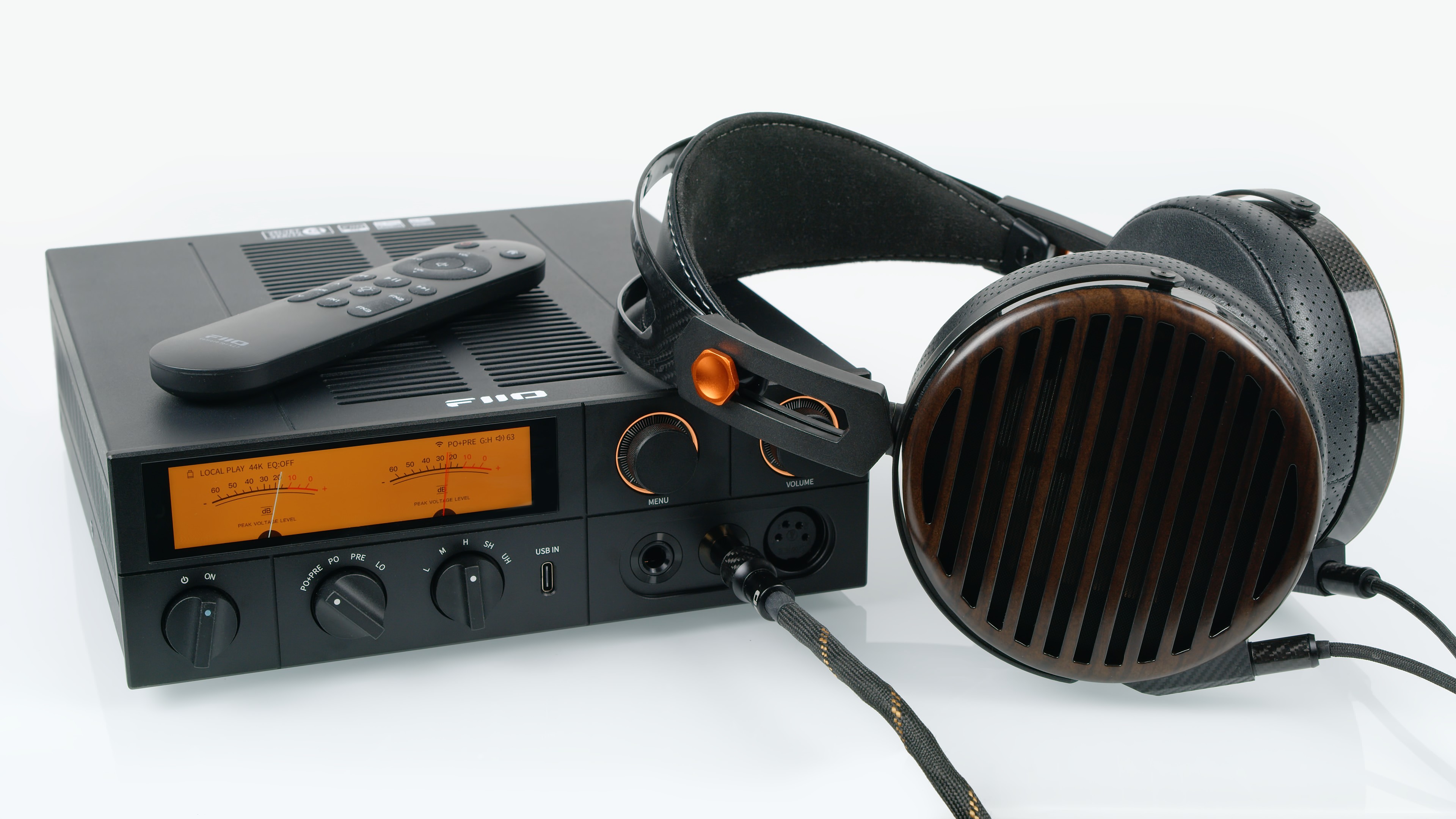
The all-metal case measures 245 × 67 × 213 mm (W×H×D) and weighs 2.75 kg. It comes in 2 colours, black and silver. We tested black. FiiO chose retro lighting and metal knobs even though the controls are fully digital.
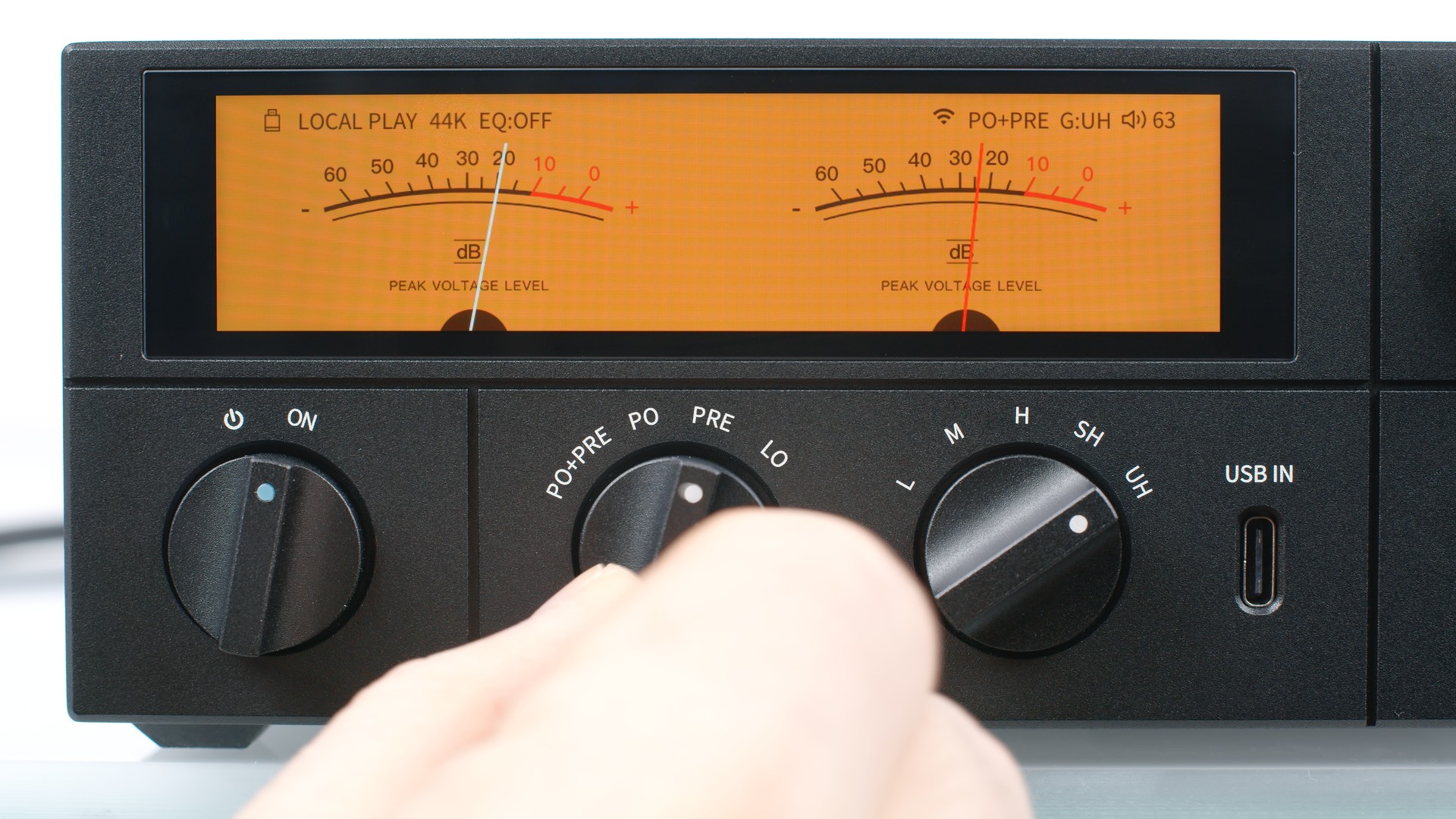
The leftmost knob starts and shuts down the device. The next selects outputs: PO means headphone output, PRE means variable-level line output and LO means fixed-level line output. This makes it easy to switch between speakers and headphones without unplugging cables. The gain knob sets headphone output from low (L) to ultra high (UH). Relays switch between two hardware settings, with extra gain levels achieved through software level adjustment. A front USB-C port provides convenient connection for external sources such as phones and tablets.
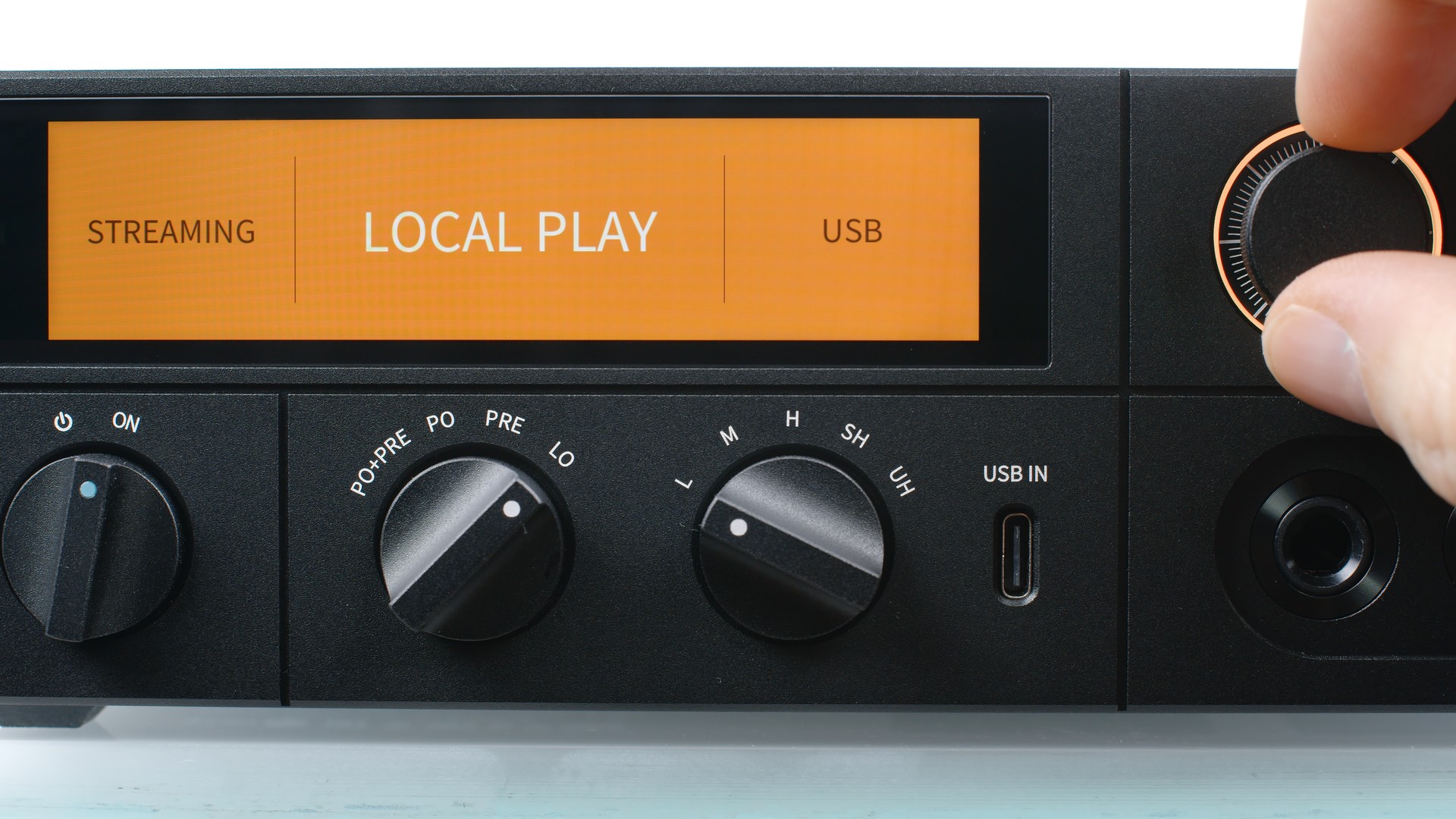
Two push-button digital knobs sit on the right. MENU selects the operating mode, much like an input selector on hi-fi equipment.

VOLUME adjusts volume. Pressing it switches off the screen. Other settings are controlled through the touchscreen, infrared remote and mobile app.
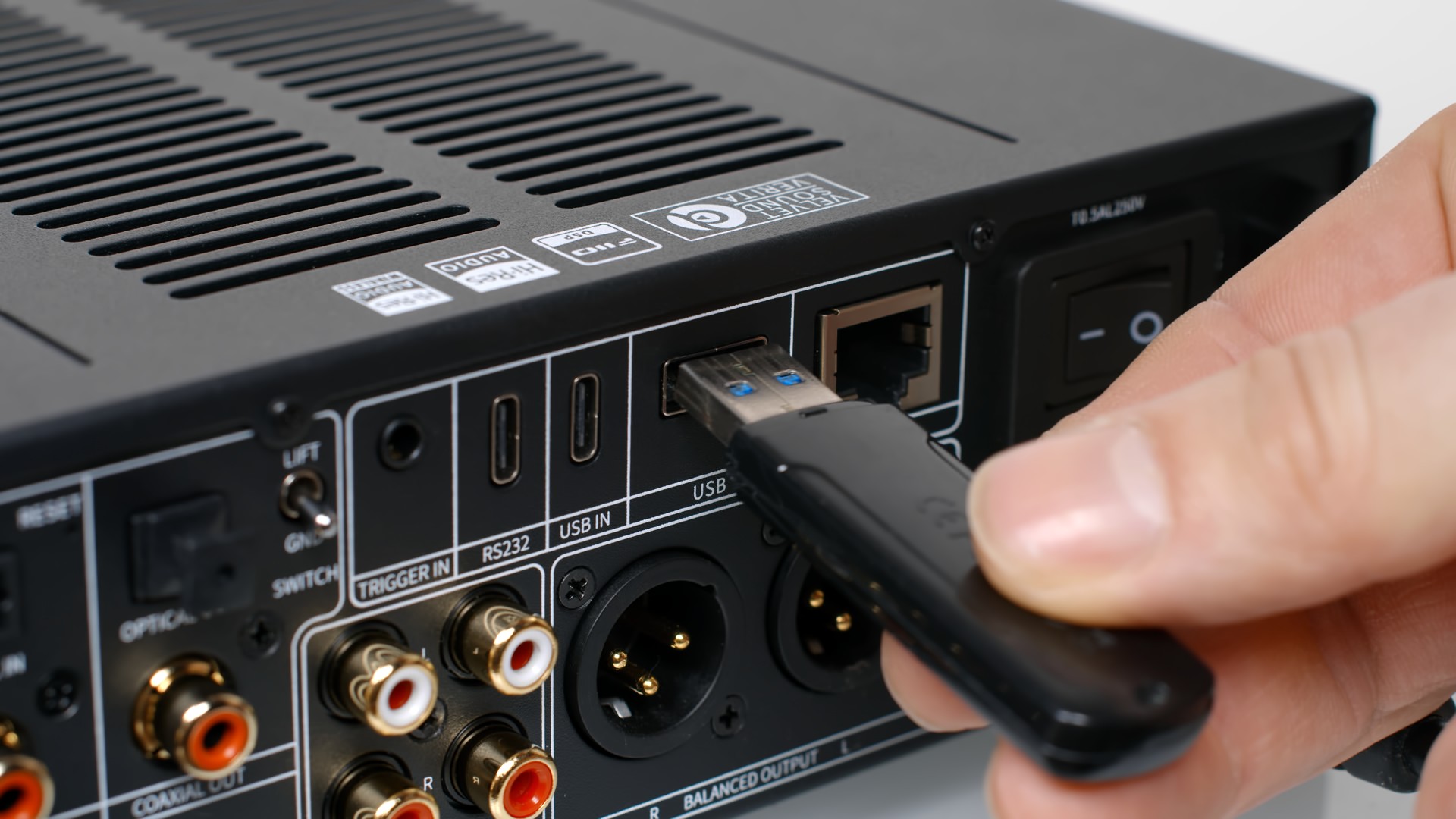
The FiiO K17 can play music from USB storage. Connect a drive and wait for it to mount, then select LOCAL PLAY and BROWSE FILE to view its files.
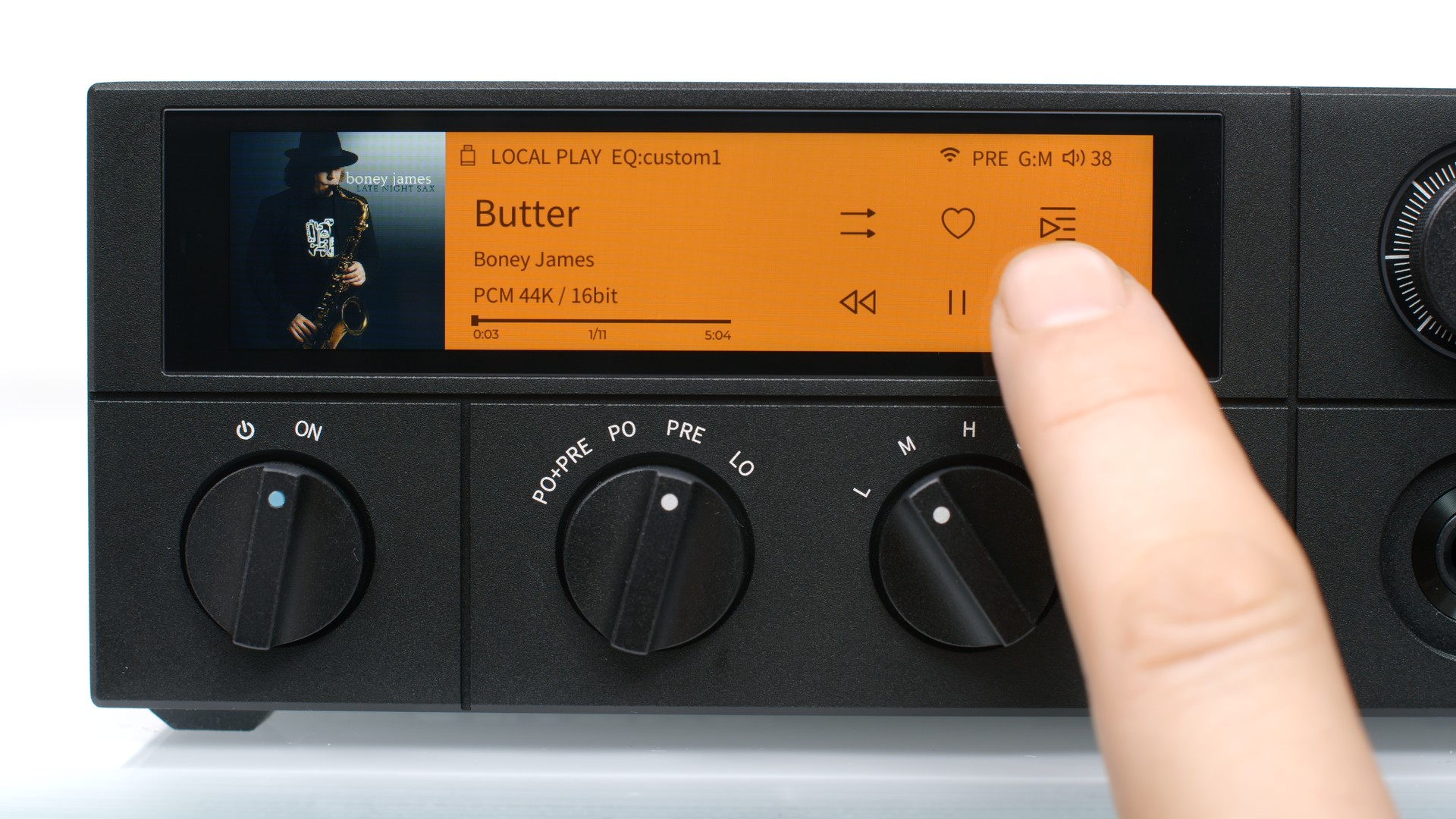
The high-resolution 4-inch 1020×240 touchscreen displays album artwork and playback controls. You can skip tracks or drag the playback position slider.
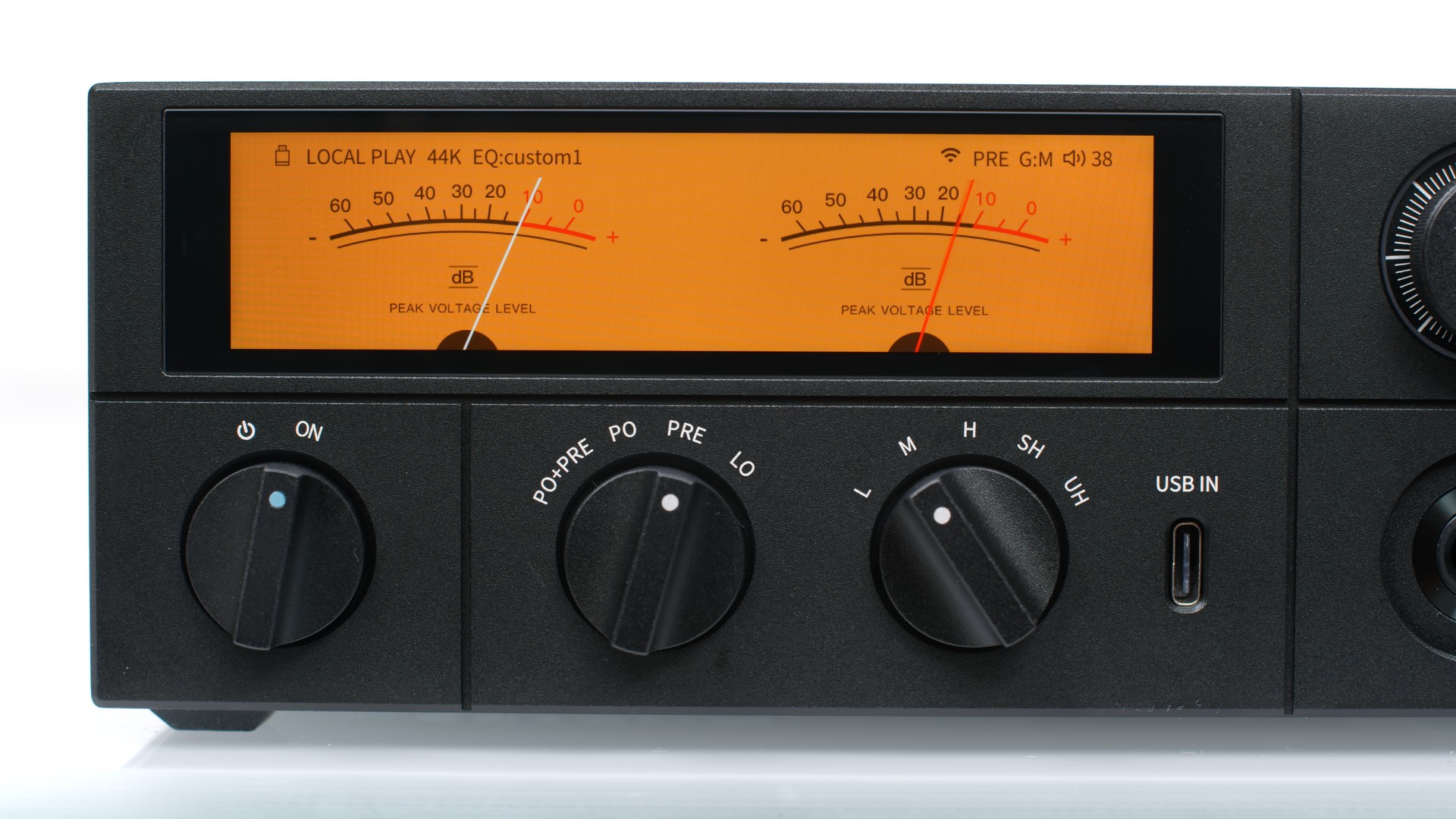
Swipe down to show the needle meters. Their animation closely follows a real analogue meter, although this is a digital simulation.
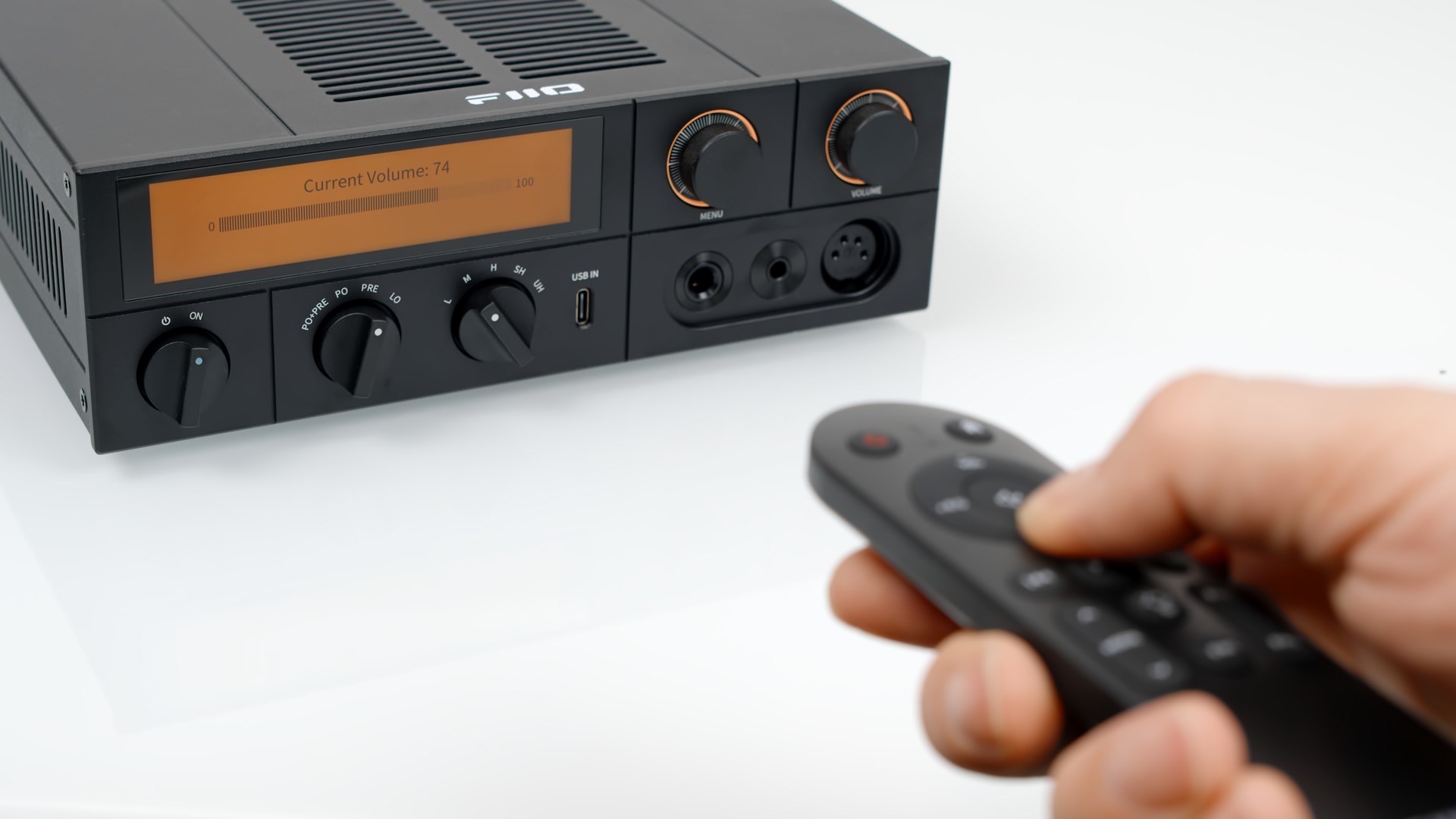
The remote adjusts volume, mutes sound, skips tracks, selects EQ presets, changes screen brightness, disables knob lighting and puts the device to sleep.
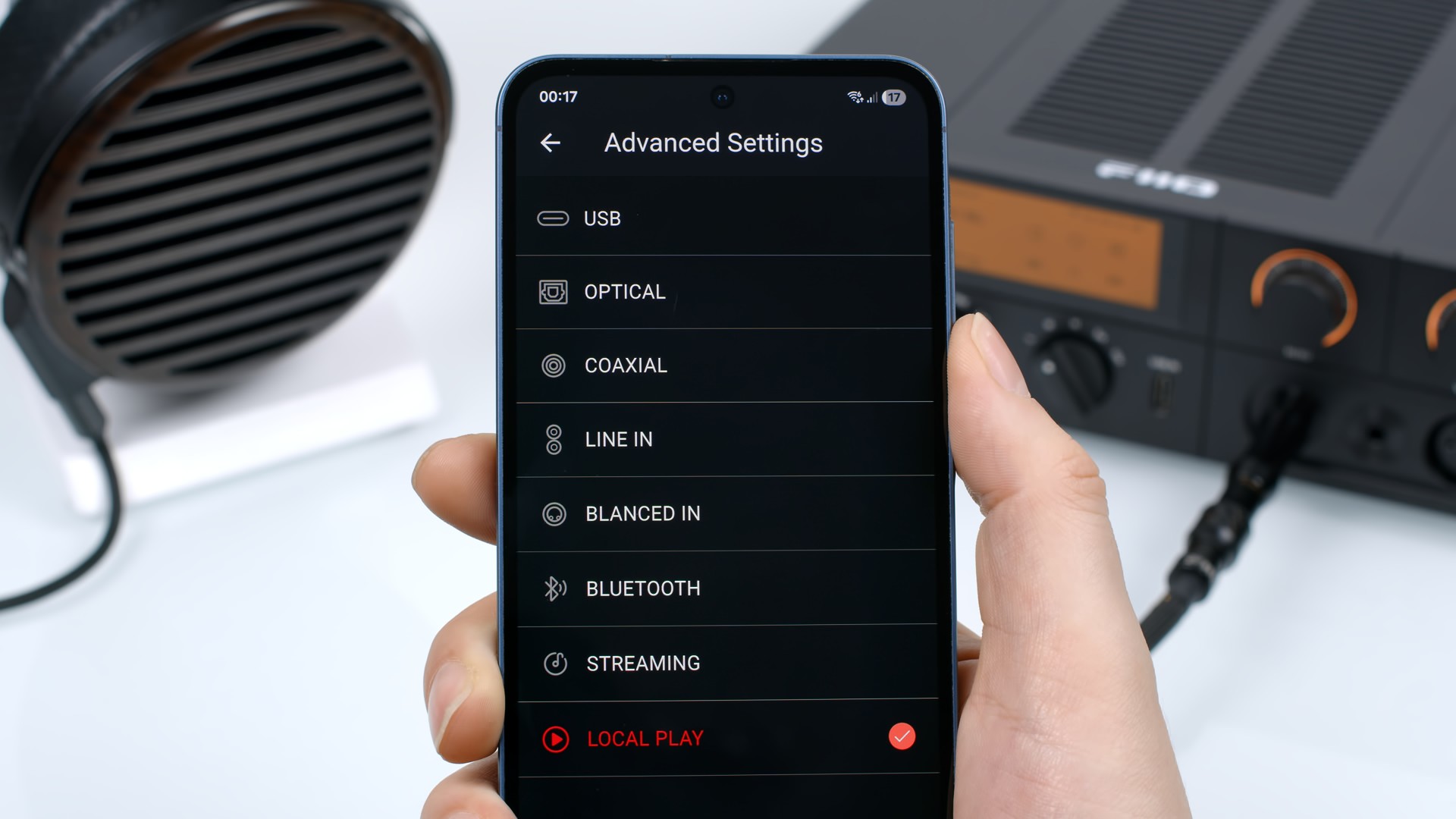
The FiiO Control mobile app connects over Wi-Fi and runs on iOS and Android.
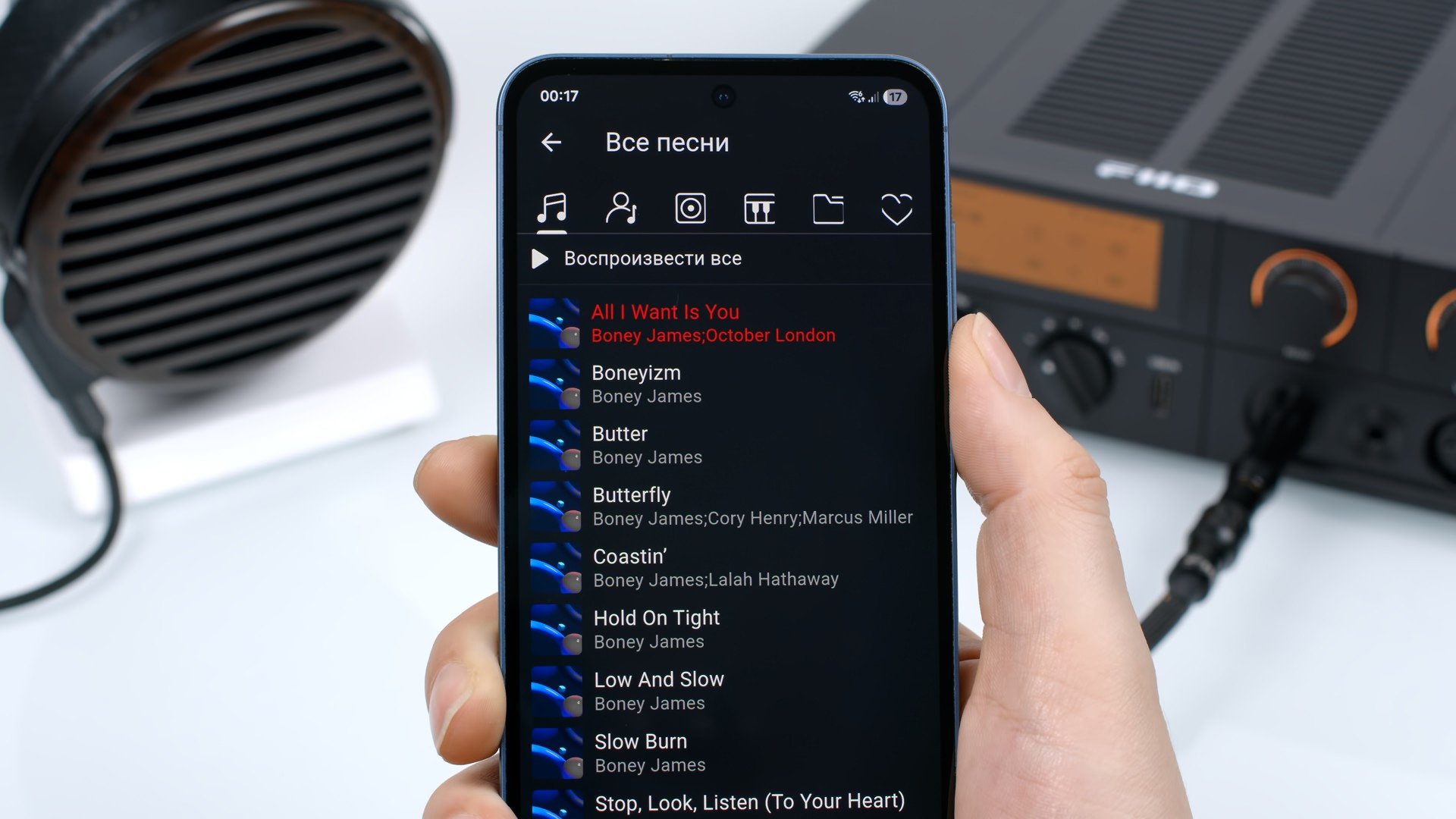
It makes browsing a media library more comfortable than using the touchscreen.
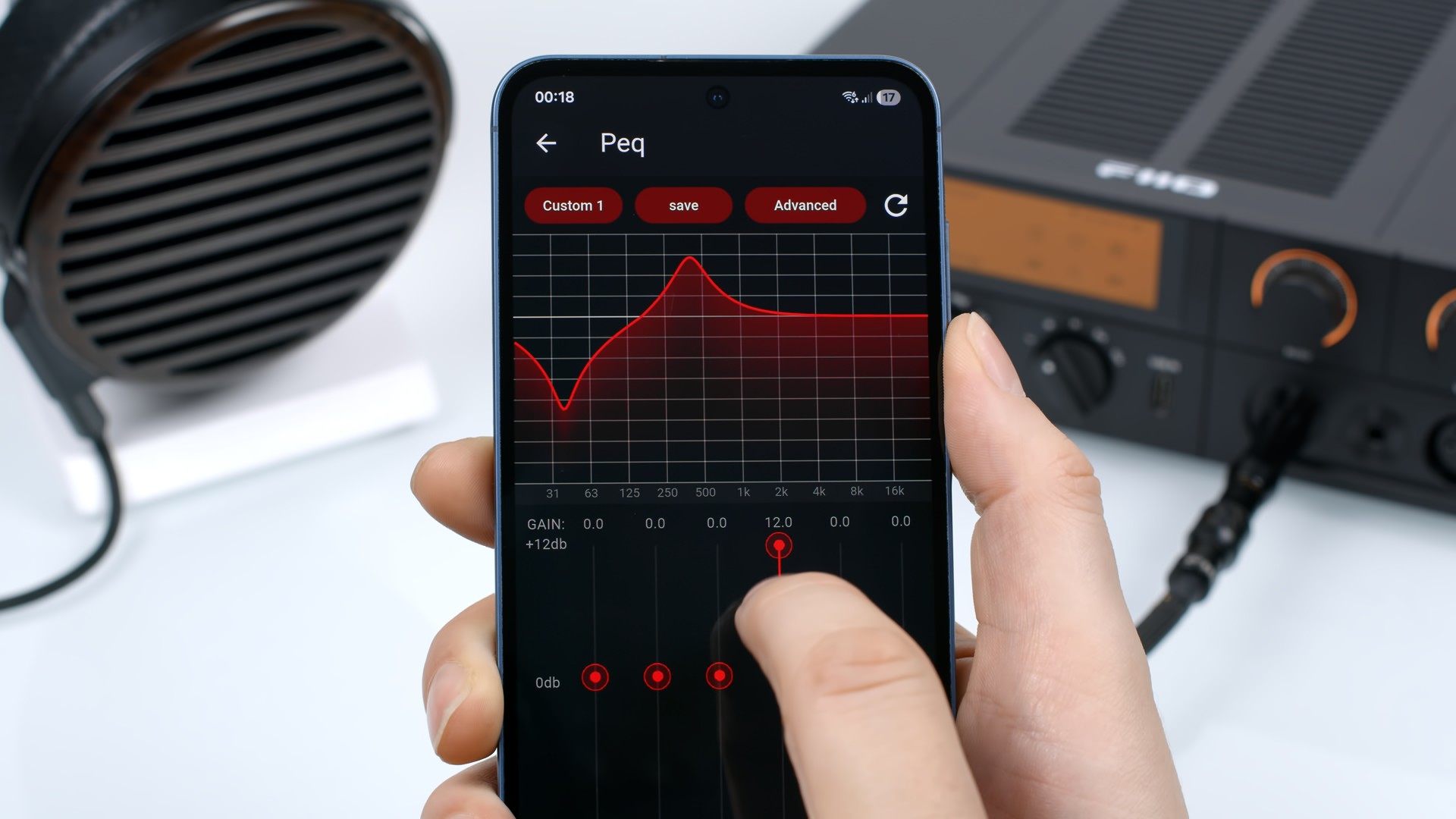
Another major benefit is clear control of the multiband parametric EQ. It has factory presets and allows custom settings to adjust headphone or speaker frequency response.
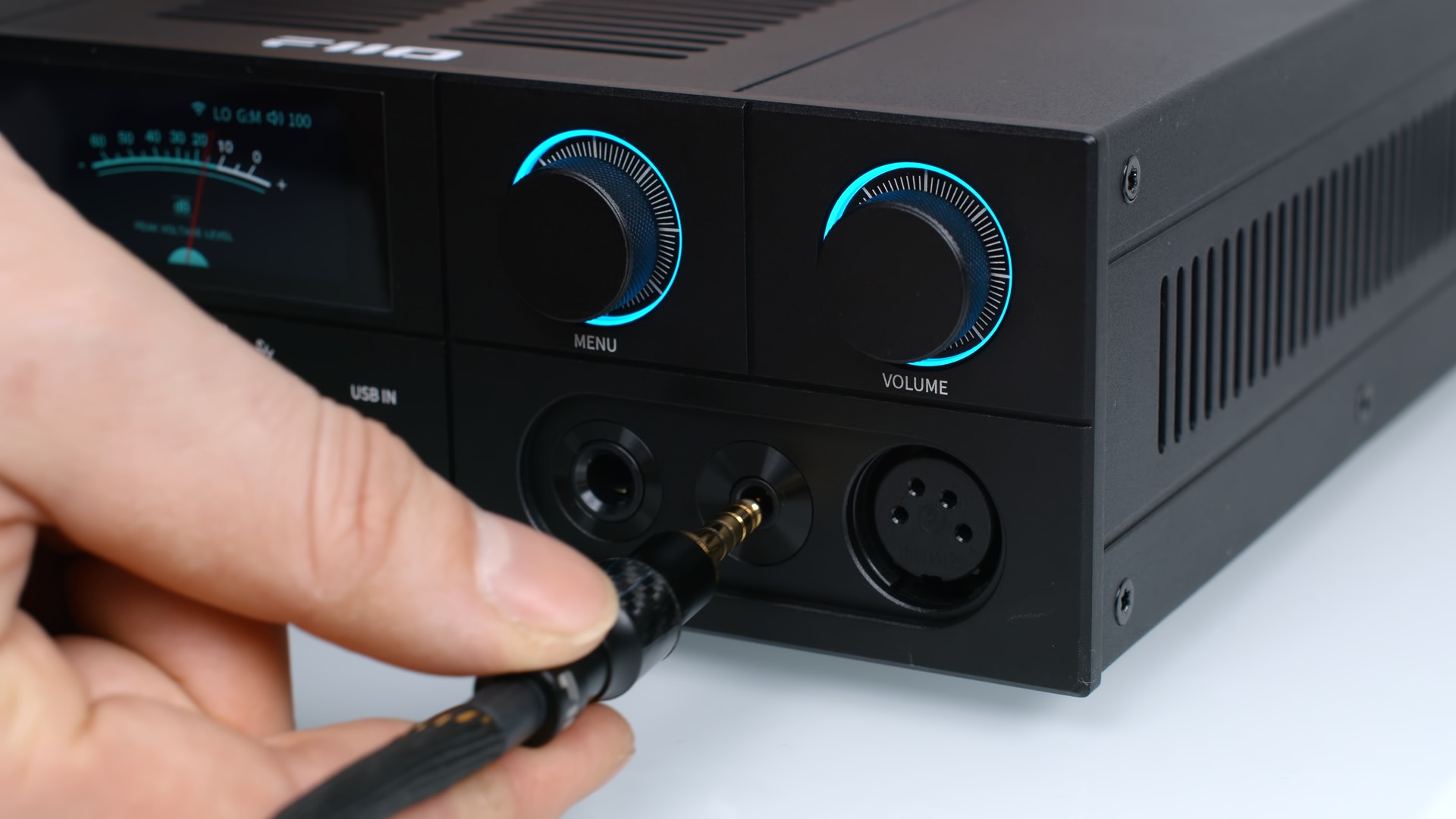
Three headphone sockets are conveniently placed on the front. Alongside standard 6.3 mm TRS, there is a balanced 4.4 mm Pentaconn output. The large 4-pin XLR also carries a balanced signal.
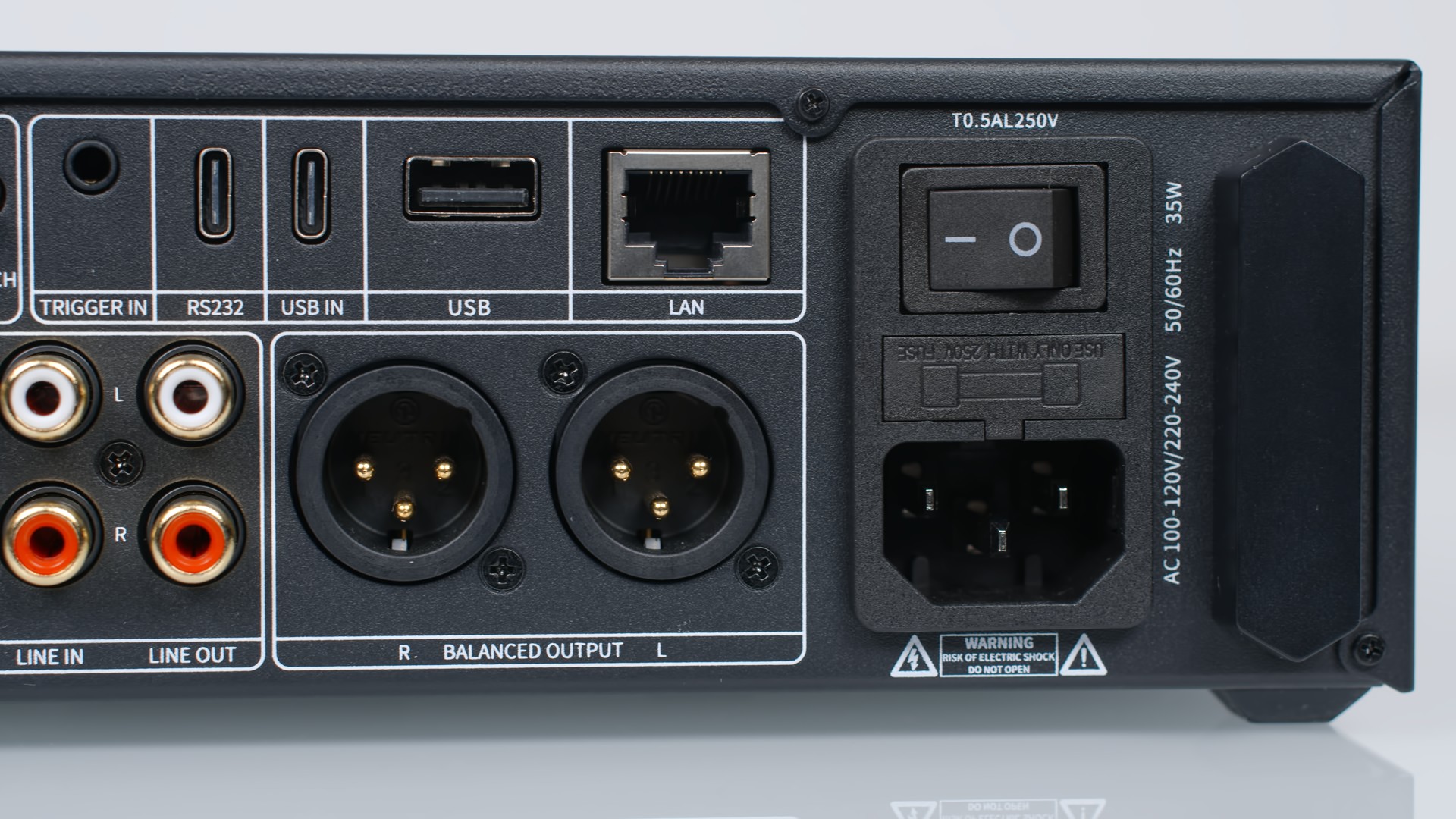
The rear has many connections: balanced and unbalanced line inputs and outputs, digital sockets, and Bluetooth and Wi-Fi antennas under plastic covers.
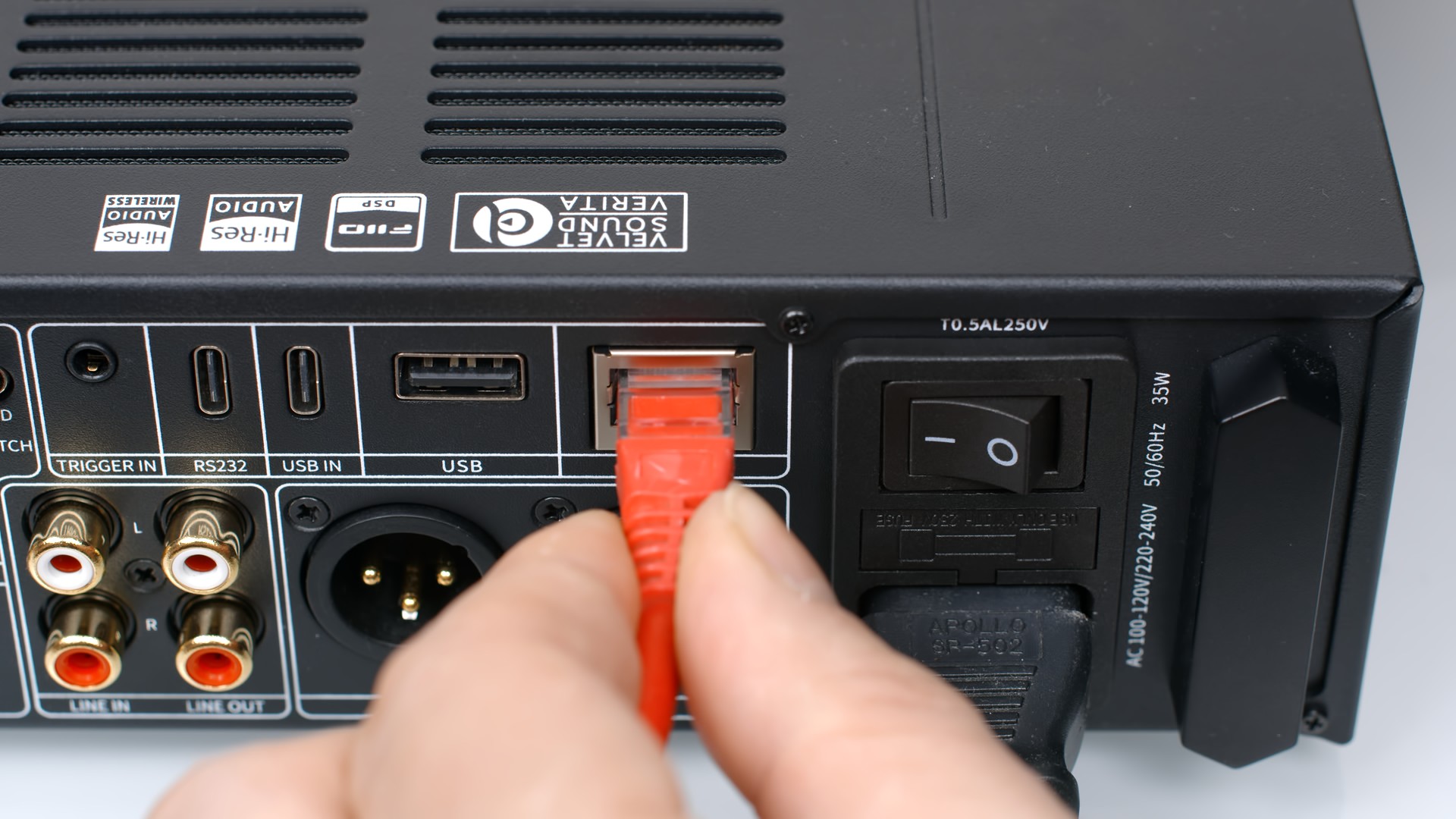
A gigabit Ethernet socket connects to a local network. It provides the same functions as the built-in 2.4/5 GHz Wi-Fi module.
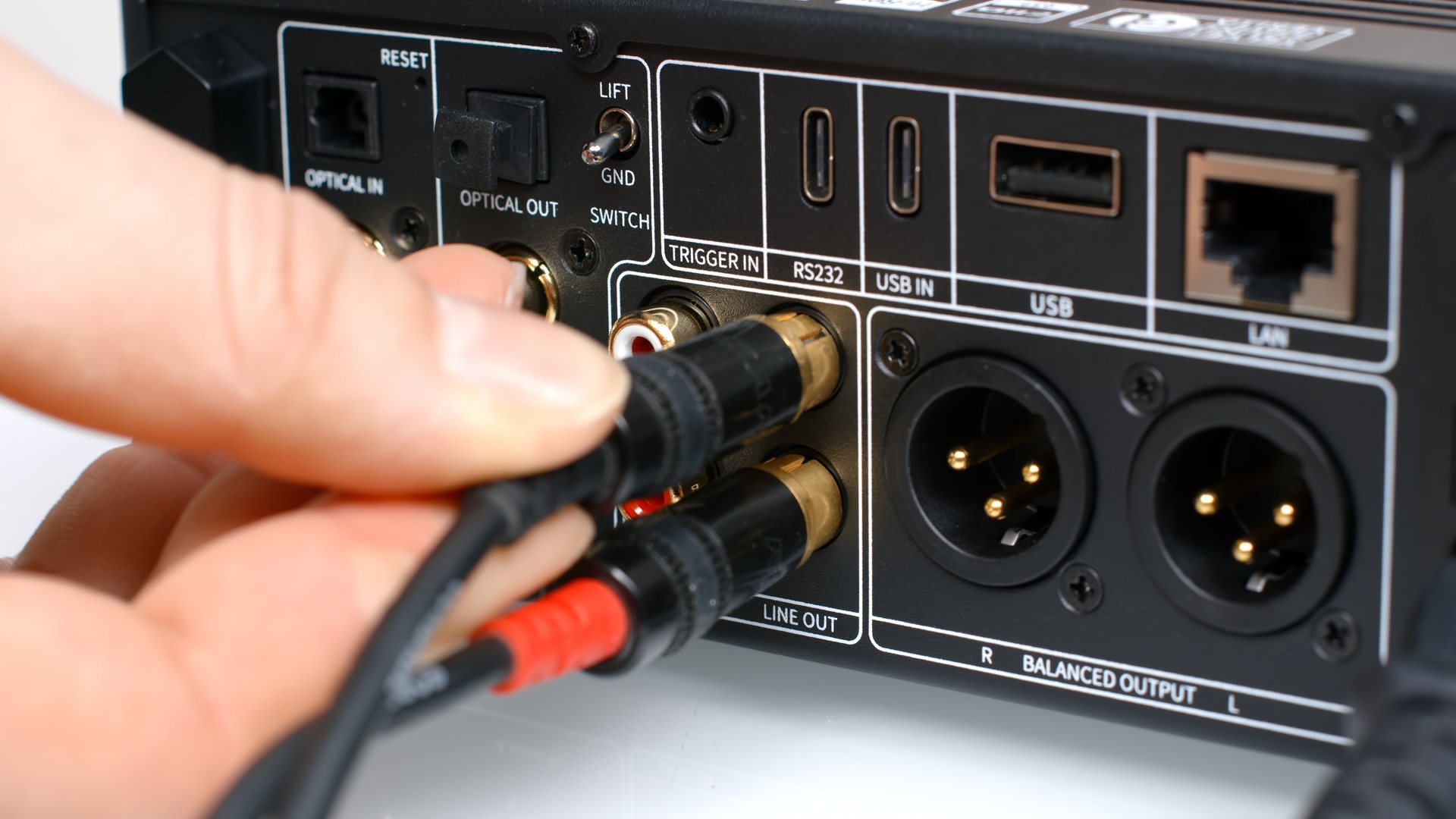
Standard RCA outputs can feed a power amplifier. The line input also lets the FiiO K17 work as a preamplifier.
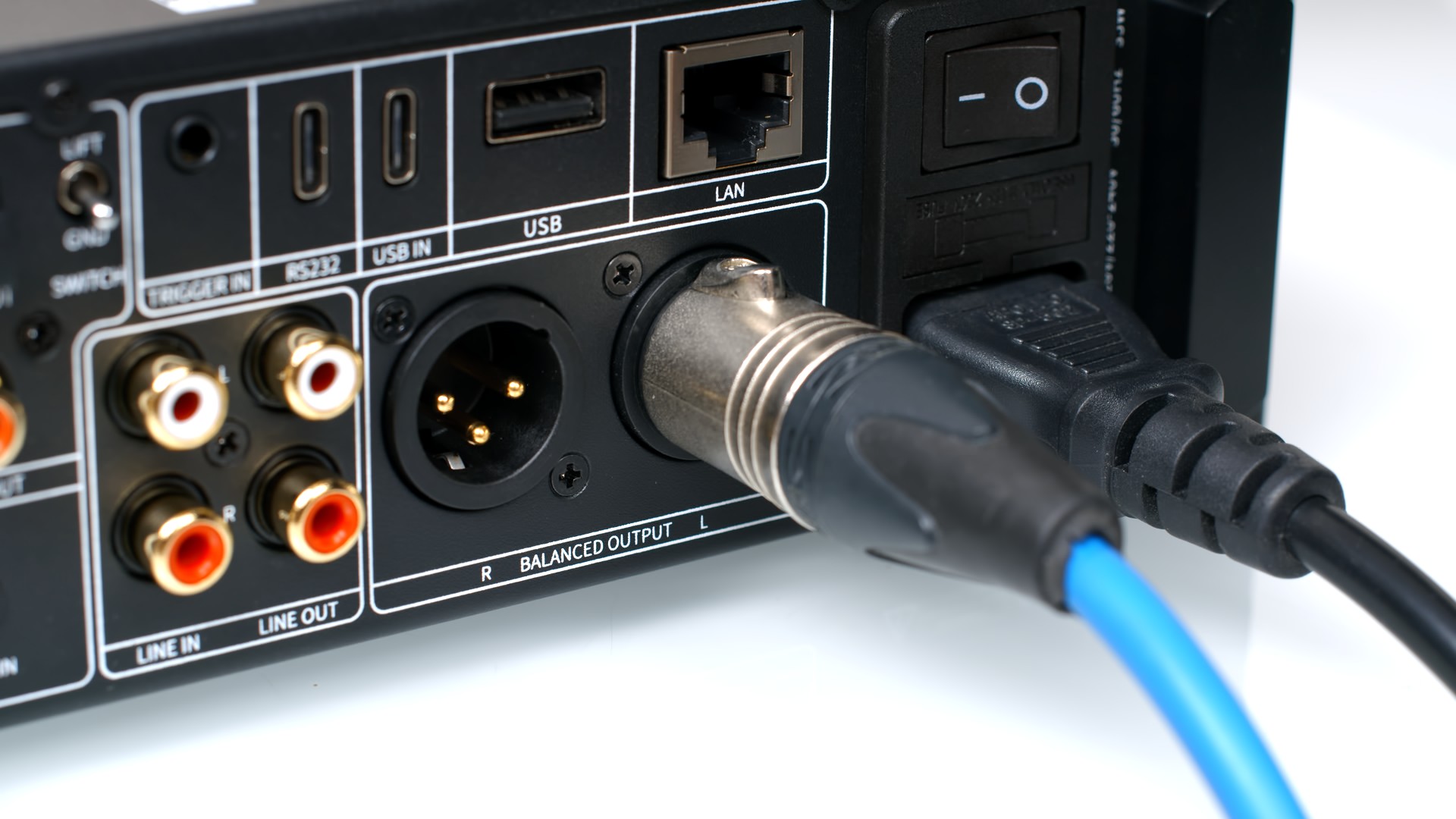
Large XLR sockets connect active monitors and other equipment using a noise-resistant three-wire balanced connection.
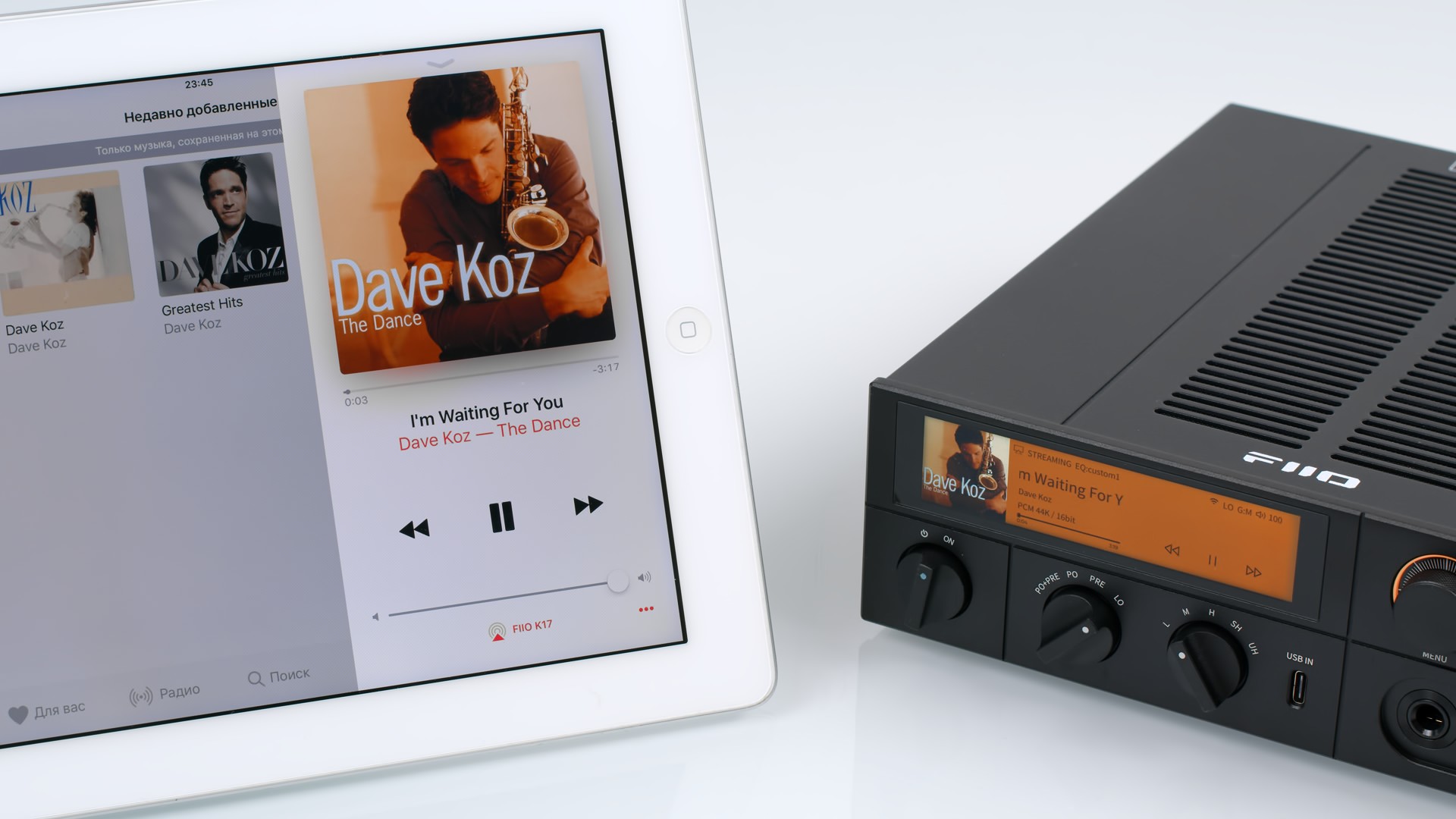
Network streaming supports AirPlay and Roon. On an Apple device, simply select the FiiO K17 as the music output. Files play over the local network, with correct artwork and titles.
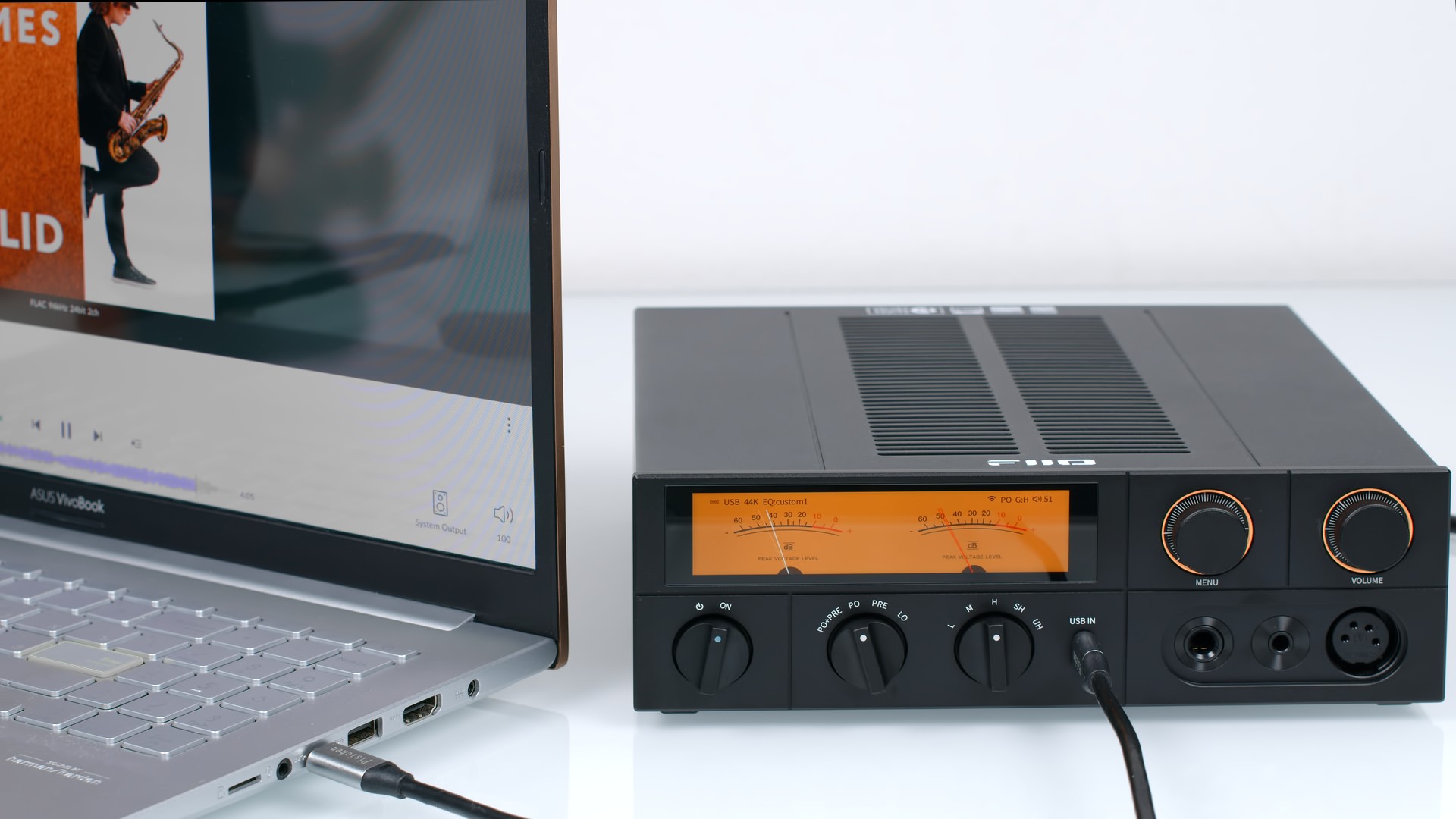
As usual for FiiO, USB DAC mode is supported. Connect to USB IN to play music from a phone, streamer or Windows, Mac OS or Linux computer. Dedicated Windows drivers support ASIO and native DSD.
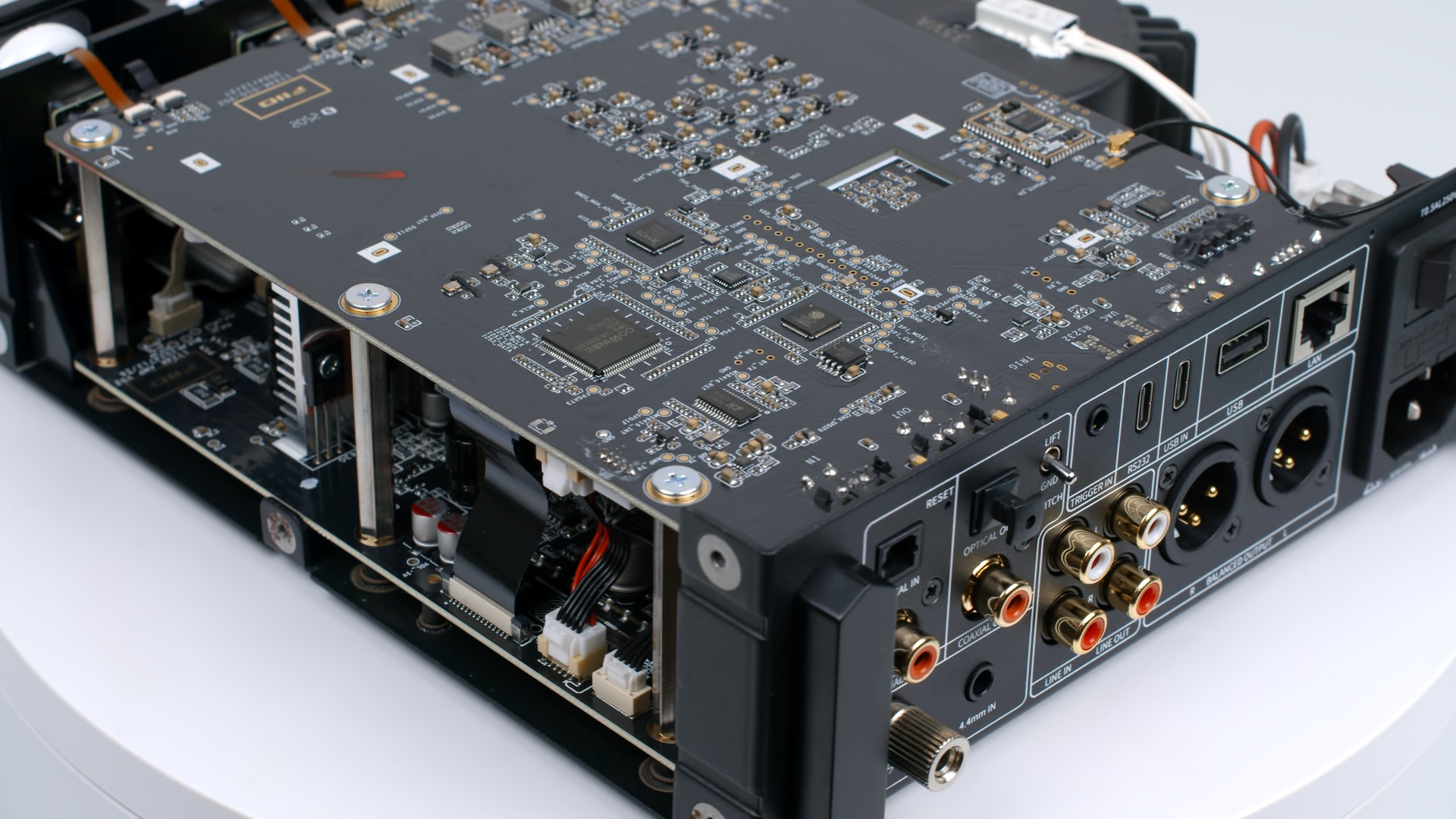
The manufacturer is proud of the latest-generation electronics. The upper board handles digital functions. Four modern microprocessors run the operating system, USB, Bluetooth/Wi-Fi and parametric EQ. The lower board carries precise Accusilicon femtosecond clocks and the latest AKM chipset: an AK4191 digital filter and dual-mono flagship AK4499EX DACs. The discrete transistor Class AB headphone amplifier delivers up to 4000 mW.
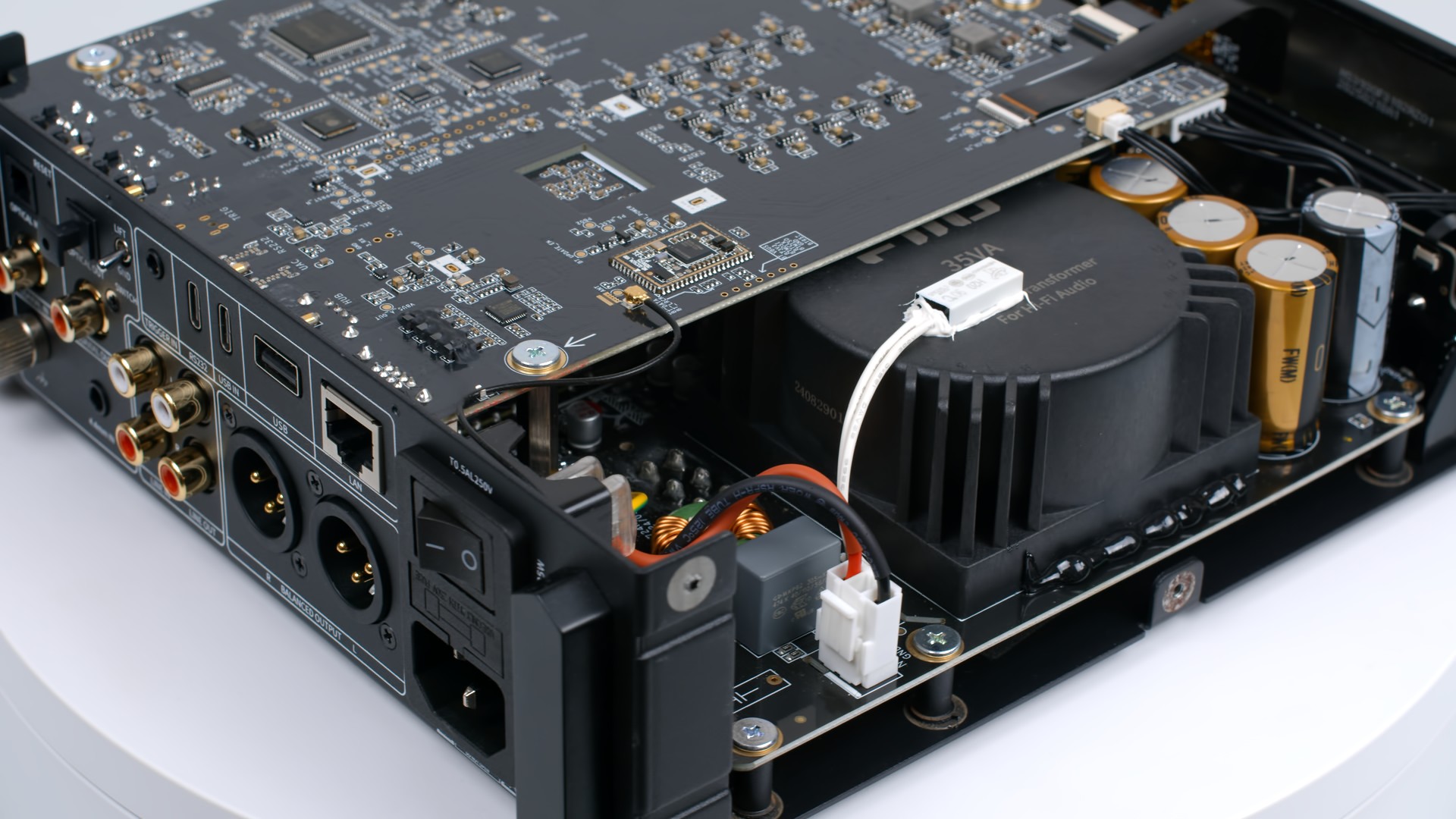
The linear power supply also deserves mention, with a toroidal transformer and large electrolytic capacitors. All signs point to a top-class device with advanced hardware and strong sound potential.
RMAA measurements
| Device under test | FiiO K17 |
| Operating mode | 24-bit, 44 kHz |
| RMAA version | 6.4.5 PRO |
| Signal path | XLR OUT |
| Frequency response variation (40 Hz–15 kHz), dB | +0.01, -0.01 |
Excellent |
| Noise level, dB(A) | -124.9 |
Excellent |
| Dynamic range, dB(A) | 124.4 |
Excellent |
| Harmonic distortion, % | 0.00152 |
Excellent |
| Harmonic distortion + noise, dB(A) | -93.7 |
Very good |
| Intermodulation distortion + noise, % | 0.00134 |
Excellent |
| Stereo crosstalk, dB | -123.0 |
Excellent |
| Intermodulation at 10 kHz, % | 0.00166 |
Excellent |
| Overall rating | Excellent |
Detailed 24-bit/44 kHz output measurements in the RMAA report
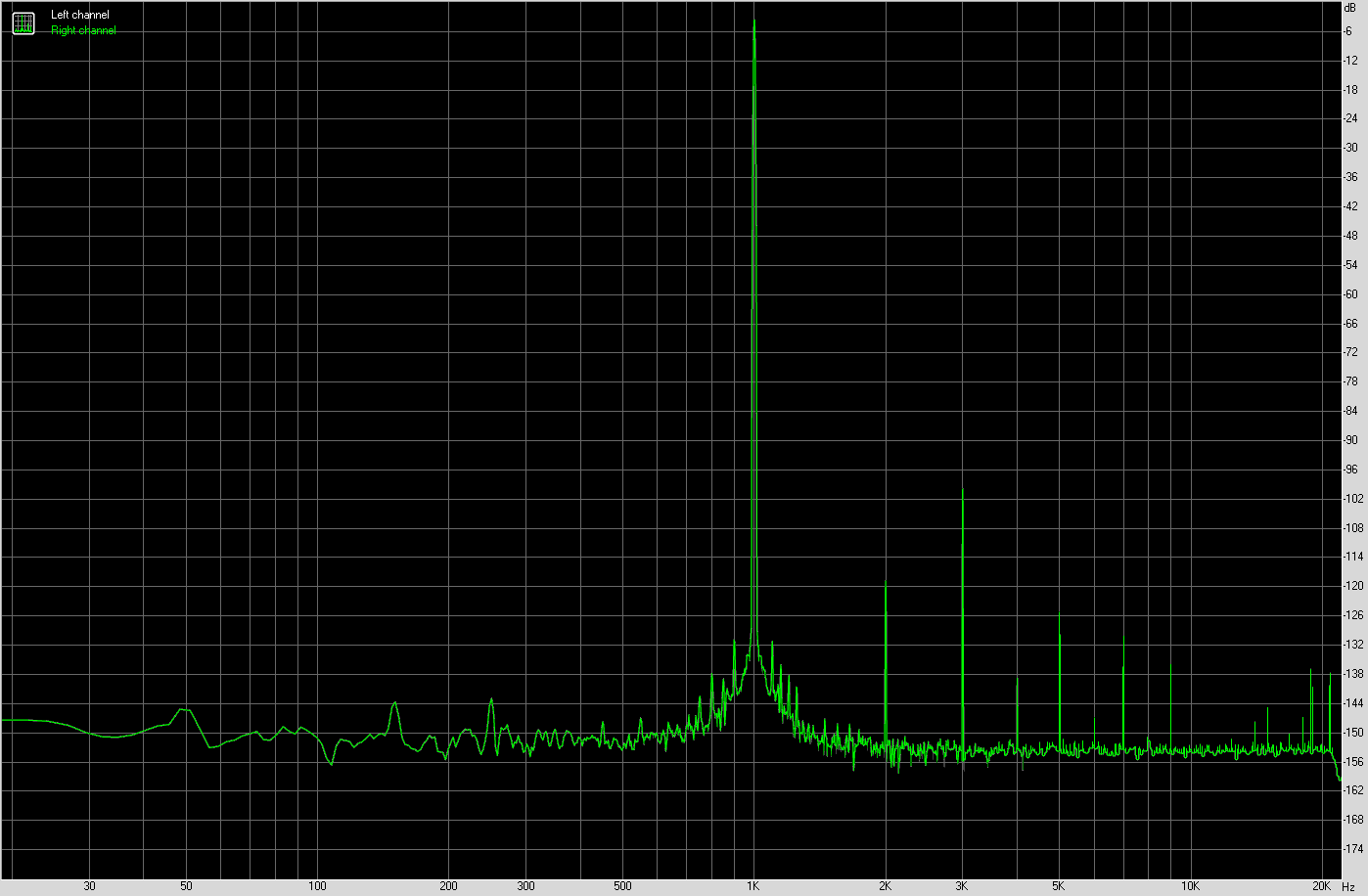
Figures and graphs cannot directly show sound quality, but many users want them. We therefore measured the audio path carefully.
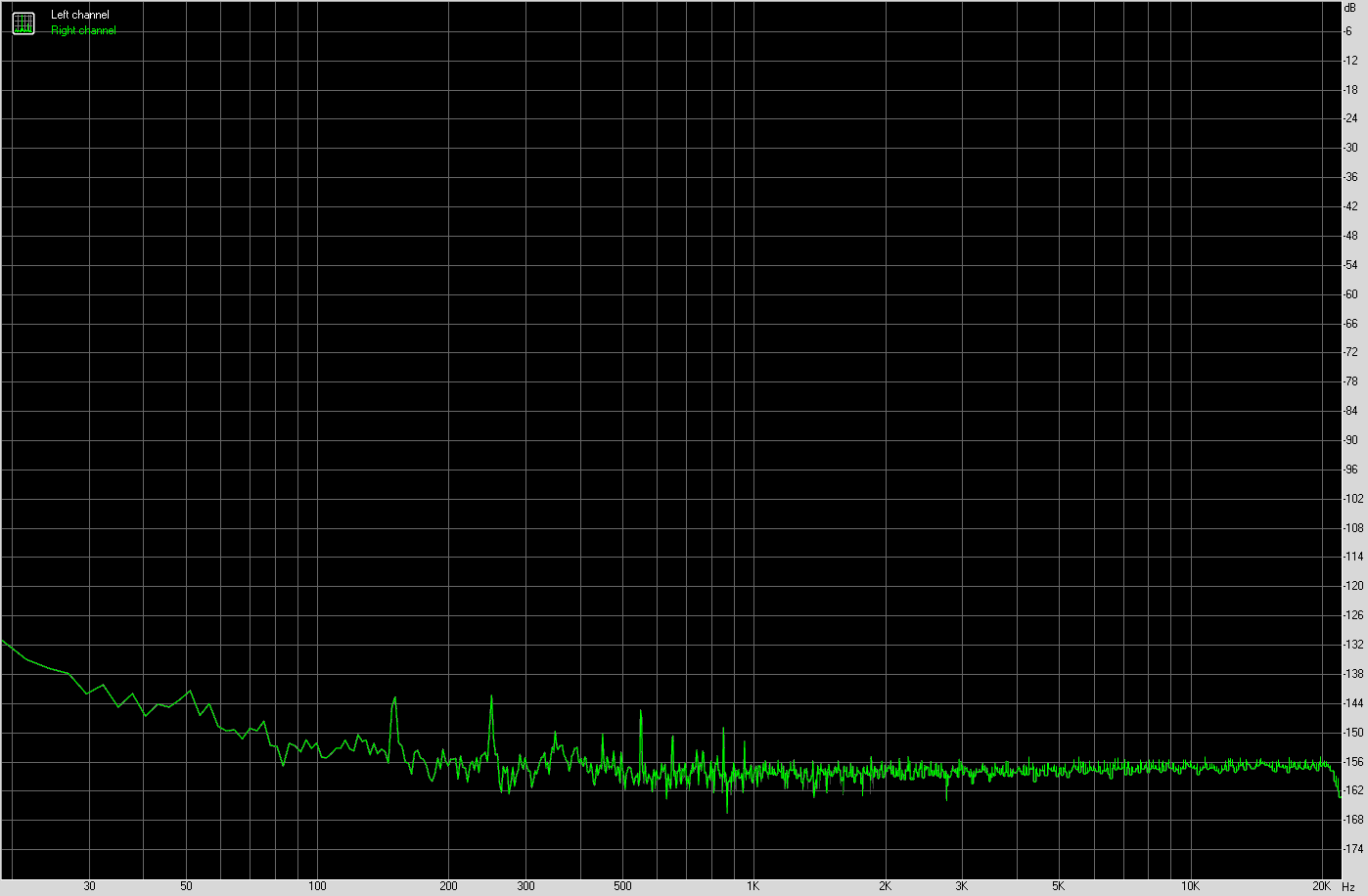
Our measurements confirm high performance, including 125 dBA signal-to-noise from the balanced output.

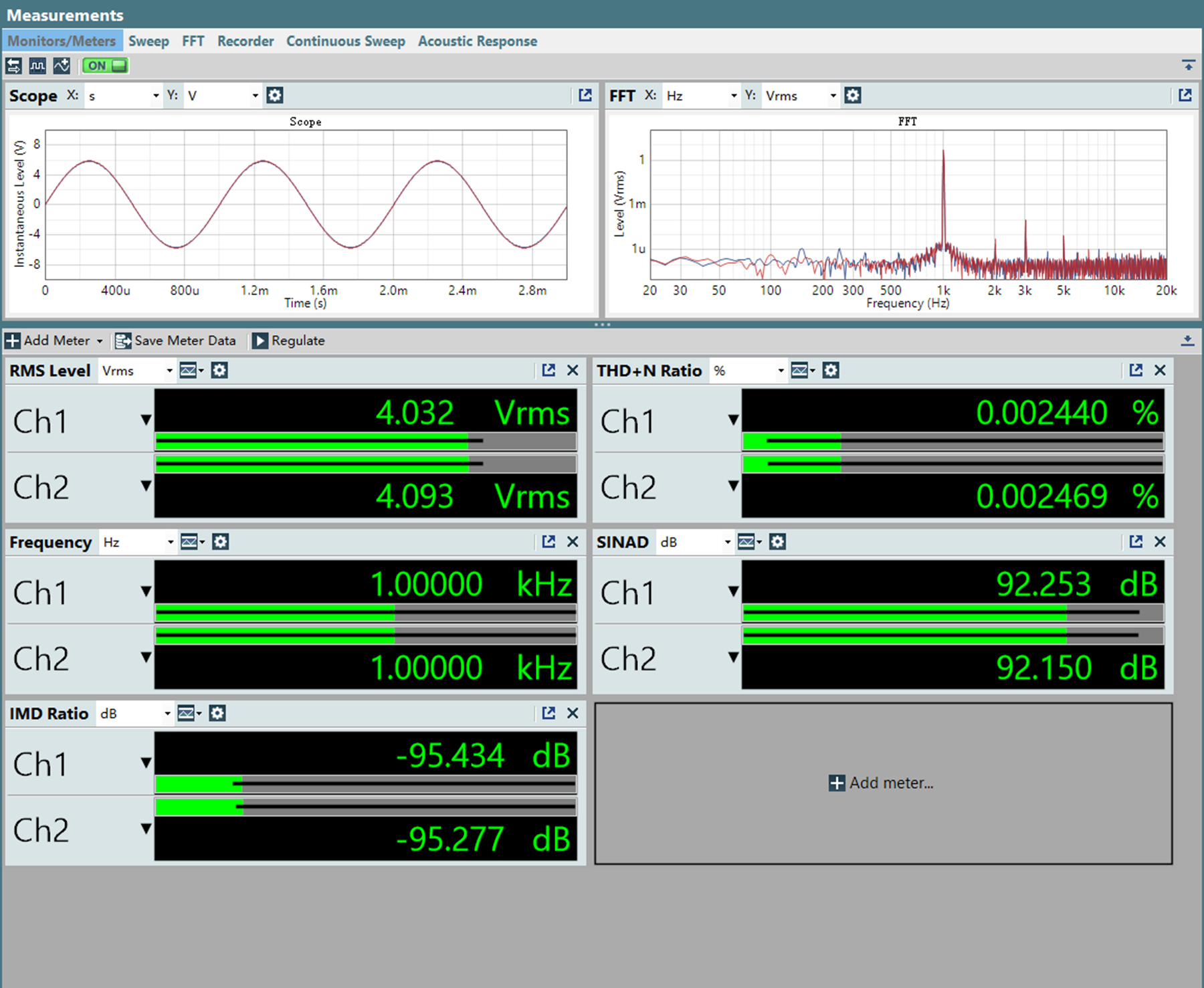
To support our results, here is the manufacturer's illustration. It gives 0.002% THD+N and the same spectrum shape as our measurements:
We also measured headphone output power into 32-ohm ceramic resistors and confirmed the specifications. The amplifier is extremely powerful and exceeds all previous FiiO models.
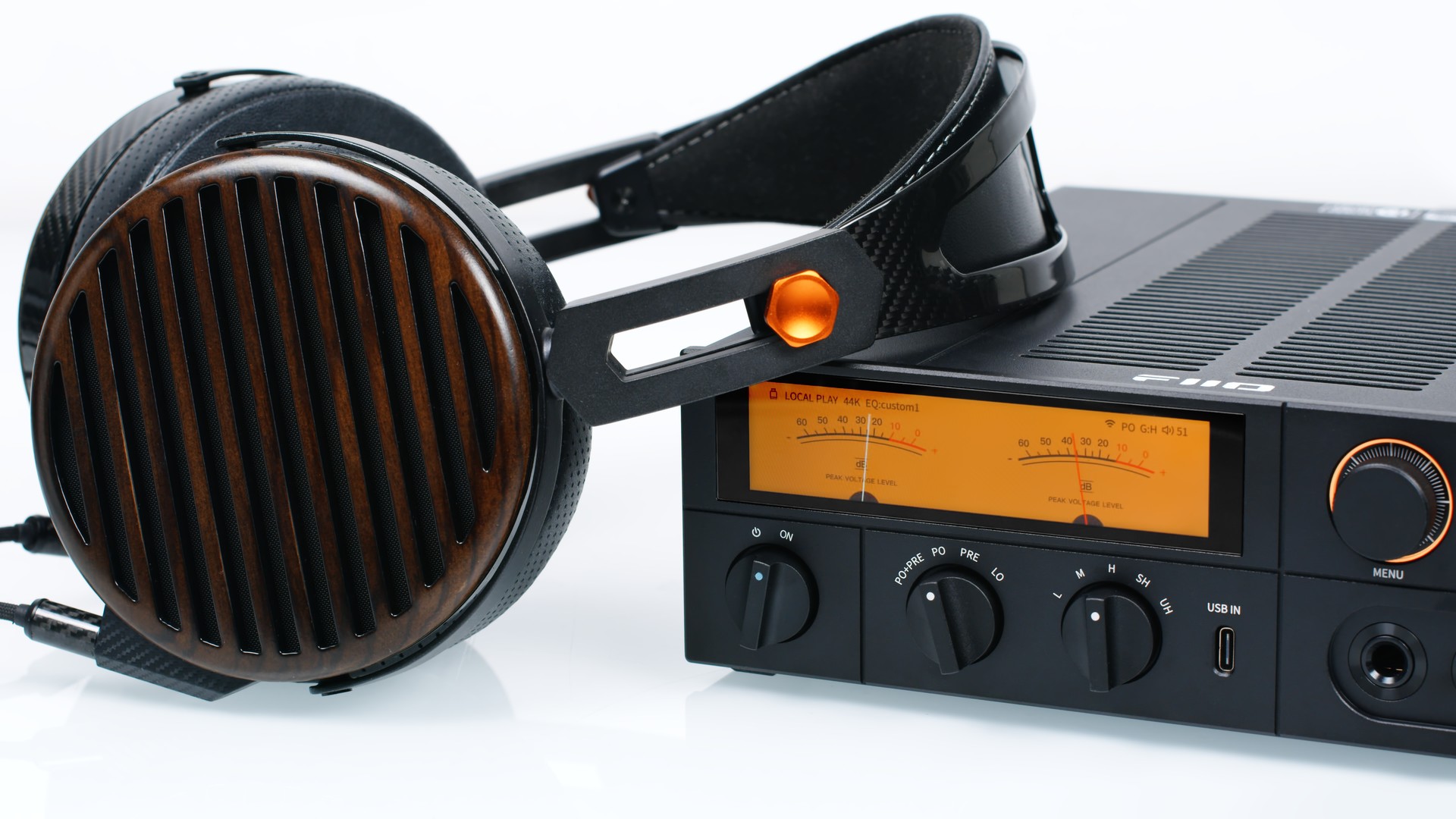
For listening, we used FiiO's flagship FT7 open-back planar headphones. They have 106 mm drivers, ultra-thin diaphragms with multilayer gold and silver traces, zebrawood cups and a good supplied cable made from copper treated with liquid nitrogen. Most importantly, they sound excellent. Many listeners sell their other headphones after trying this model. The FiiO FT7 is an excellent partner for the K17. We also tested the line output, connecting high-quality active studio monitors with balanced XLR cables.
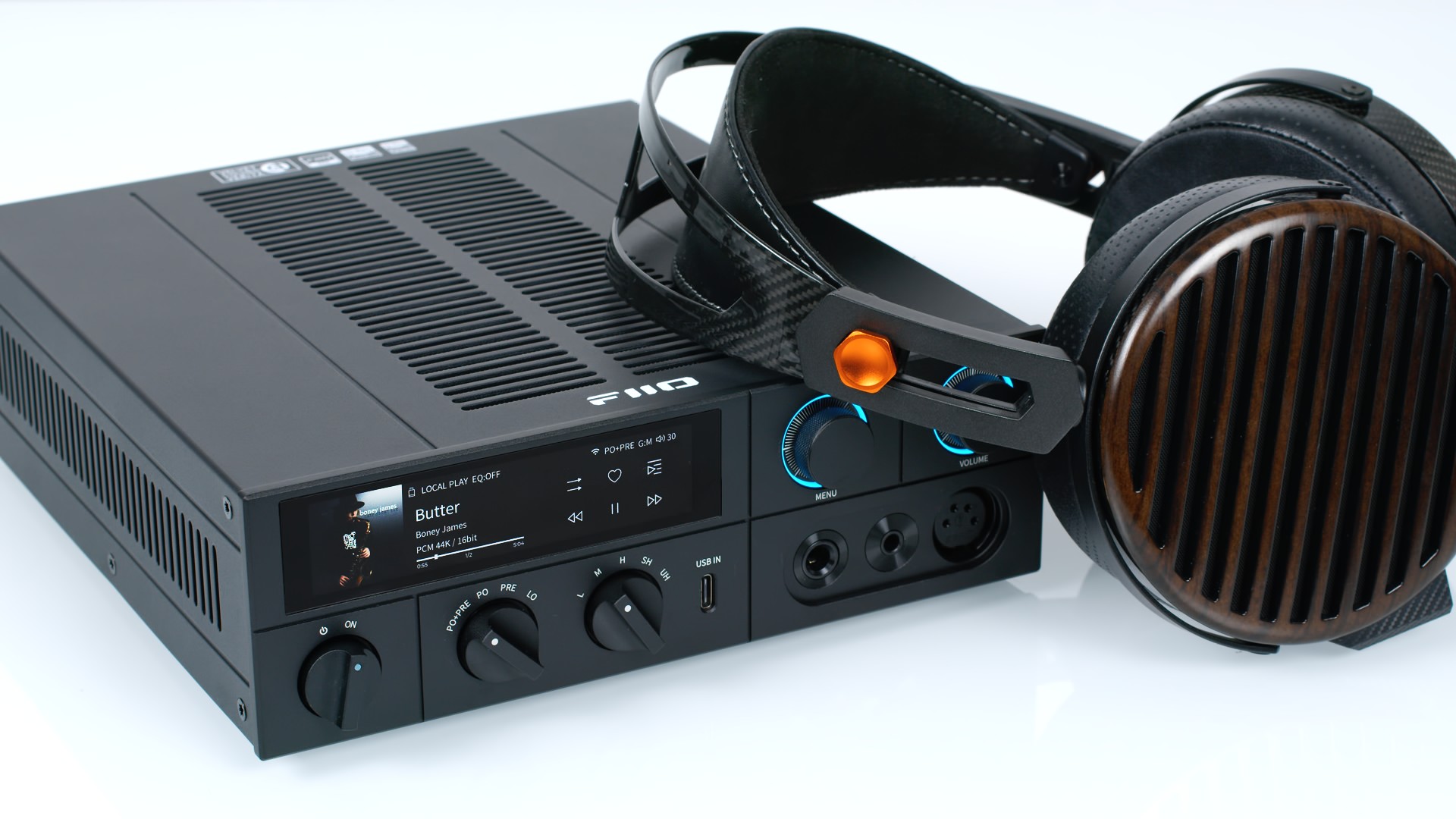
The sound reaches a new quality level, far above previous FiiO models. It is detailed, spacious and highly engaging. The K17 received a 2025 DAC/amplifier-of-the-year award in its price category, and we agree with that assessment.
Conclusions
The FiiO K17 confirms the company's strength in the mainstream market. It brings together advanced developments and suits technology enthusiasts and owners of high-quality headphones and speakers. We especially liked the care taken with its design. Its advantages are numerous, but the main ones are a linear transformer power supply, fully balanced circuitry, new flagship dual-mono AKM DACs, femtosecond clocks, a discrete balanced headphone amplifier delivering up to 4000 mW, precise 31-band parametric EQ and a colour touchscreen with needle meters. We are confident that audiophiles will appreciate the FiiO K17 and find a place for it in their systems.
Note. This is an adapted machine translation into English. It follows the “In simple terms” approach. Read the original article at https://prosound.ixbt.com/interfaces/fiio-k17.shtml.